

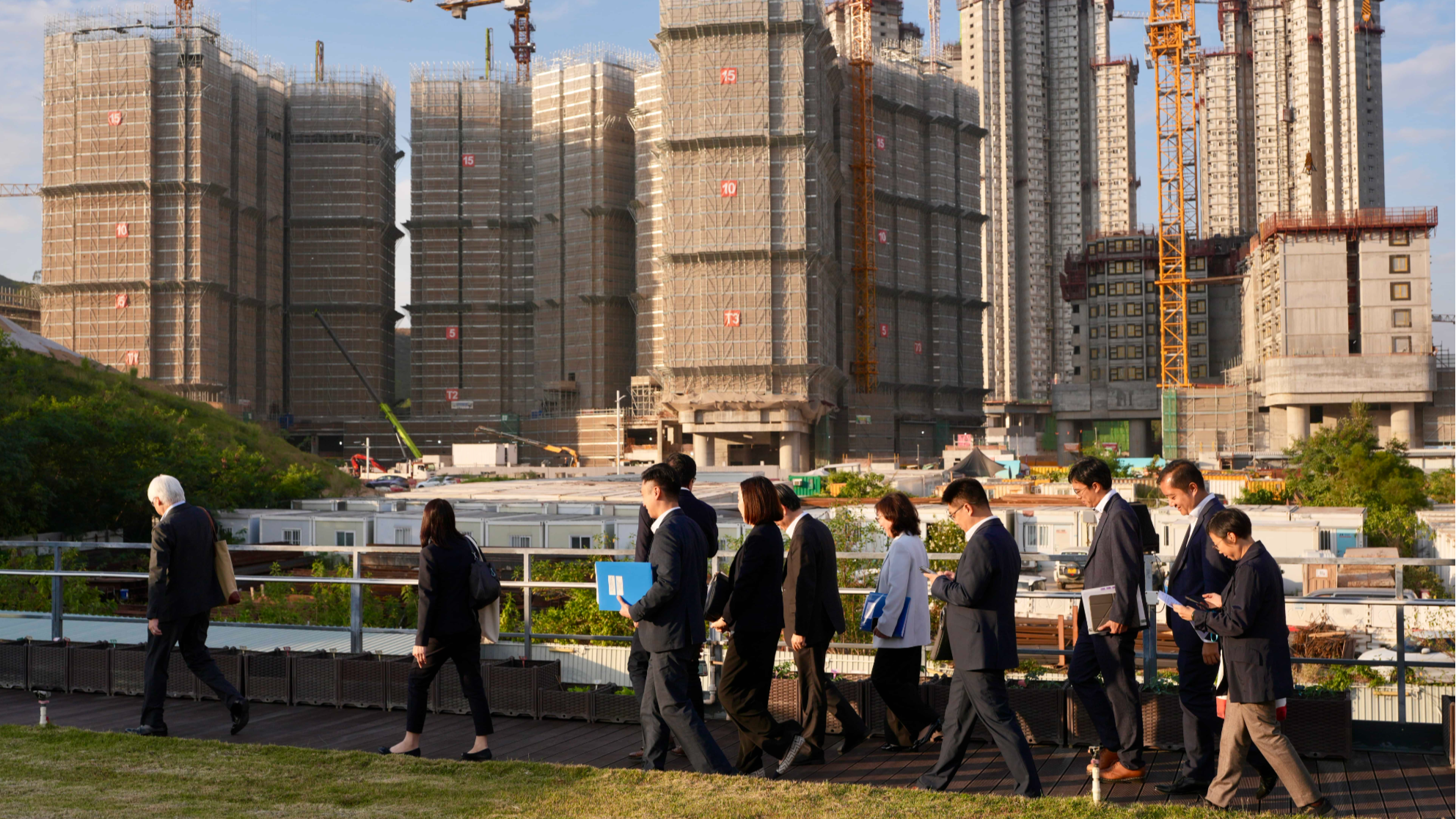
Hong Kong is stepping up policy and financial support to fast-track development of the Northern Metropolis, with senior officials of the special administrative region government saying on Thursday that the authorities aim to boost private sector confidence and accelerate the build-out of innovation and technology infrastructure through public-private partnerships.
 The remarks came a day after Financial Secretary Paul Chan Mo-po announced in his annual Budget address that the SAR government will transfer HK$150 billion ($19.2 billion) from the Exchange Fund to the Capital Works Reserve Fund over the next two years to support the Northern Metropolis and other major infrastructure projects.
The Exchange Fund, Hong Kong’s investment vehicle established to safeguard the stability of the city’s currency peg, delivered a record return of HK$331 billion in 2025, with total assets exceeding HK$4.1 trillion.
“(Its scale) is sufficient to maintain Hong Kong’s monetary and financial stability,” Chan said at a Legislative Council meeting.
The move will be the first transfer from the Exchange Fund in 42 years. Secretary for Financial Services and the Treasury Christopher Hui Ching-yu said the Fund is required to maintain adequate liquidity.
Investing part of the fund in infrastructure projects such as the Northern Metropolis would enhance the resilience of its asset portfolio and represents a prudent approach, he said.
To support the long-term development of the Northern Metropolis, which is regarded as a new engine for Hong Kong’s future economic growth, particularly in innovation and technology, the government also plans to raise its borrowing ceiling under the Government Sustainable Bond Programme, previously known as the Green Bond Programme, and the Infrastructure Bond Programme to a combined HK$900 billion.
Chan said the government will increase bond issuance and place greater emphasis on longer-tenor bonds to provide sustained funding for these long-term projects.
ALSO READ: New Budget reflects a long-term vision
Despite the stepped-up borrowing, Chan said the government expects its debt-to-GDP ratio to remain below 20 percent over the medium forecast period, well below levels in most advanced economies and a range he described as “prudent and manageable”.
“As always, funds raised through bond issuance will be used only for infrastructure investment and not for recurrent government expenditure,” Chan said.
Moreover, the Budget proposed seeking approval from the Legislative Council to inject HK$10 billion into the operating company of the Hetao Hong Kong Park, an innovation cooperation zone in the Northern Metropolis that began operations in December.
The SAR government also plans to establish a dedicated company this year for San Tin Technopole, another innovation hub in the Northern Metropolis, and to seek approval for an initial HK$10 billion capital injection to support its early-stage development.
Kevin Choi, permanent secretary for innovation, technology and industry, said the funding demonstrates the government’s commitment to advancing both the Hetao Park and the San Tin Technopole, with the aim of boosting market confidence and accelerating development through public-private partnerships.
Most of the funds will be used to public-private cooperations, under which the government or park operators will establish subsidiaries to co-develop projects with private investors, Choi said.
