

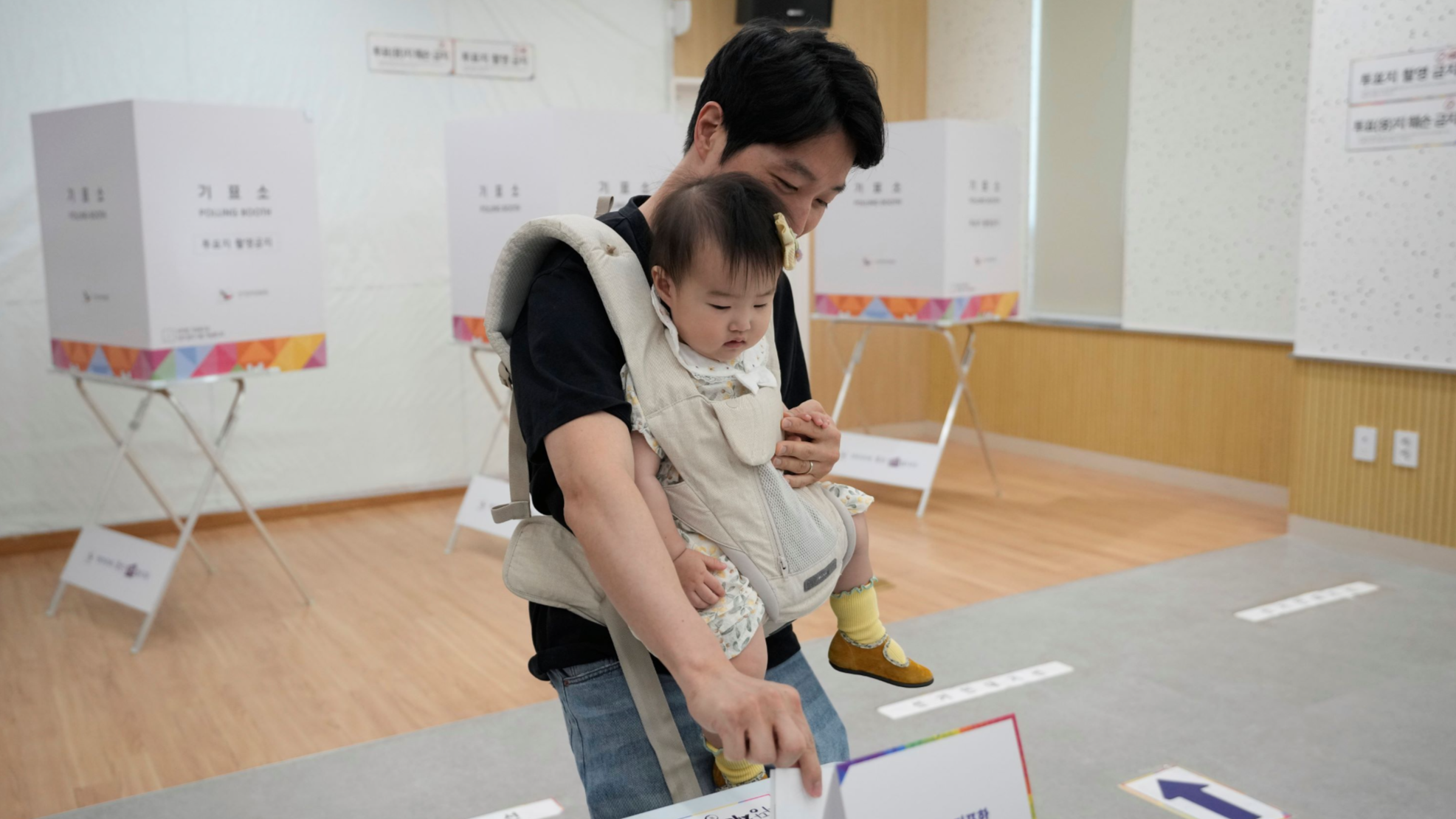
South Korea’s fertility rate rose for a second consecutive year in 2025, a rare bright spot for a country that has long struggled with the world’s lowest birth rate.
The number of babies a woman is expected to have over her lifetime increased to 0.8 last year from 0.75 in 2024, preliminary data released Wednesday by the Ministry of Data and Statistics showed. Births in 2025 climbed 6.8 percent from the previous year to 254,500, the highest total since 2021, when about 260,600 babies were born.
The improvement comes as marriages show signs of recovery after a prolonged slump, supported by incentives designed to ease the financial burden of raising children. Authorities have expanded cash allowances, childcare services and housing support, including preferential mortgage programs for families with newborns.
ALSO READ: S. Korea's births mark 10 consecutive months of growth in April
Marriages have been picking up since 2023, as weddings resumed following pandemic-era delays, a trend that has helped underpin the recent uptick in the fertility rate, according to Bumki Son, an economist at Barclays Bank PLC.
“That said, structurally the marriage rate itself remains in the low teens, and with labor force participation among women in their 20s and 30s continuing to rise, it is still difficult to expect a sharp turnaround in births going forward,” Son said.
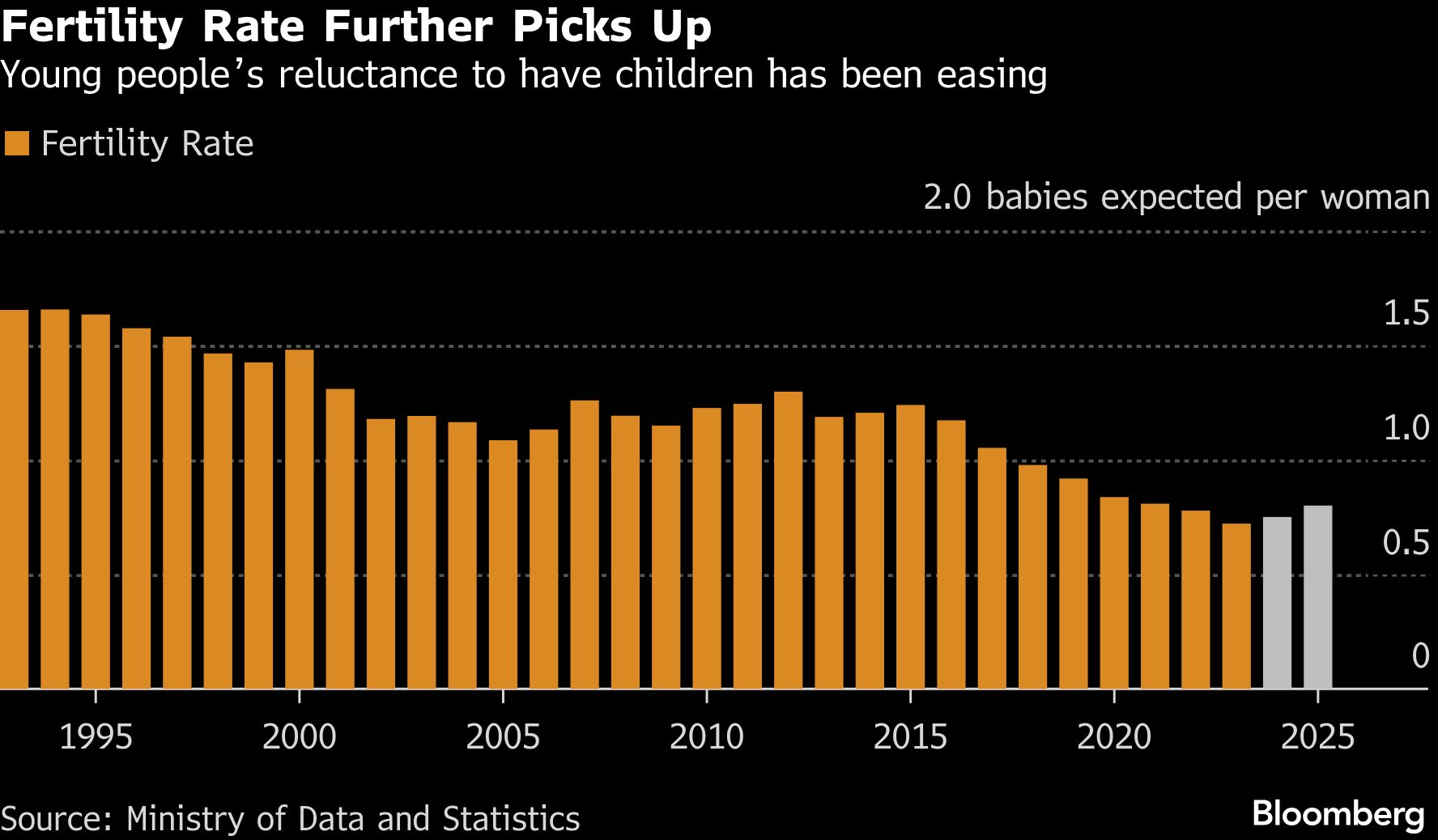
While the increase remains modest — and too recent to declare a lasting trend — it suggests some government programs aimed at reversing population decline may be gaining traction.
For years, South Korea’s plunging population — with a fertility rate that was among the lowest in the OECD — has loomed as a threat to the economy and society. A shrinking workforce with a rapidly aging population adds to strains on the pension and care systems, driving the government into crisis mode. The nation faces issues ranging from labor shortages to the military’s ability to recruit enough personnel.
ALSO READ: South Korea's policy push springs to life as world's lowest birthrate rises
Successive governments have poured resources into reversing the decline, spending an estimated 380 trillion won ($280 billion) on fertility incentives and family support programs between 2006 and 2023.
The country allocated 28.6 trillion won in 2025 for programs directly aimed at addressing its low birth rate, a 13 percent increase from a year earlier, according to Presidential Committee on Ageing Society and Population Policy.
Despite these efforts, progress has been slow, and deeply entrenched social and economic factors — high housing costs, steep private education expenses and persistent gender gaps in the workplace — have dampened the impact of policy measures.
READ MORE: South Korea birthrate rises for first time in 9 years, marriages surge
Beyond government programs, some private companies have jumped in with their own incentives. Real estate developer Booyoung Co’s pledge of 100 million won cash bonuses for employees who have children, resonated with young families stressed by the high cost of living.
Regional disparities remain stark: Seoul recorded one of the lowest fertility rates among major cities, second only to Busan, underscoring the impact of high living costs and housing pressures, while the administrative city of Sejong has historically posted comparatively higher rates.
