

Chief Executive John Lee Ka-chiu’s recent decision to launch a five-year development plan marks a breakthrough in Hong Kong’s governance model and a significant step toward “executive-led” principles. In fact, government-formulated plans are common in Western capitalist nations, typically aimed at promoting economic growth and industrial upgrading from a pragmatic standpoint. Far from clashing with capitalism or markets, such planning often complements them.
 Hong Kong participated less actively in the nation’s 12th, 13th, and 14th five-year plans. Constrained by the “small government, big market” philosophy, the Hong Kong Special Administrative Region government showed little inclination to align with national planning efforts.
Over the years, critics argued that the government lacked the need, capacity, talent, resources, and experience for long-term planning. Others claimed that capitalism and market economies were incompatible with government intervention. Meanwhile, the central government has viewed Hong Kong’s development through the lens of its national strategy, incorporating it into a broader vision for the country.
As a free, open, market-driven society with limited government resources and talent, Hong Kong cannot adopt a “planned economy” with mandatory directives. Yet the State’s five-year plans and Western economic strategies offer valuable models, as both rely heavily on markets and private enterprise to realize strategic goals. The HKSAR’s key task in crafting its own five-year plan is thus to provide top-level design, policy guidance, coordination, resource mobilization, and targeted public investment — while closely aligning with the national plan.
Given Hong Kong’s unique circumstances and the government’s limited resources and capabilities, there are some key points to consider when formulating Hong Kong’s five-year plan.
First, Hong Kong’s five-year plan need not be as comprehensive as the national one. Still, it does need to chart a long-term, fundamental development path that benefits Hong Kong’s development, industrial transformation and upgrading, and improvement of people’s livelihoods, taking into account domestic and international developments, the opportunities and challenges that Hong Kong faces, the central government’s support and expectations for the city, the national development strategy, and the SAR’s competitive advantages and unique conditions. Second, it should propose a set of specific goals aligned with the development path and formulate the essential policies necessary to achieve them, while ensuring that the various goals are mutually reinforcing and that the policies under each goal are coordinated to form a coherent system. Third, it should propose plans to mobilize, organize, coordinate, and integrate resources from government and society, including the investment and allocation of public funds. Fourth, it should propose institutional and organizational restructuring and reforms necessary for implementing the development strategy. Fifth, Hong Kong’s significant development policies should be precisely aligned with relevant national policies to ensure that the policies of both places work together and benefit both the development of the country and Hong Kong. Sixth, the SAR government needs to maintain close communication and cooperation with the central ministries, particularly the National Development and Reform Commission, to ensure that Hong Kong’s development strategy aligns with the national development strategy and leverages Hong Kong’s strengths to serve the country’s needs. Seventh, the government and society need to invest more resources in strategic and policy research. Finally, there needs to be a clear understanding of the various difficulties and obstacles that will be encountered in implementing Hong Kong’s development strategy, and feasible solutions to address and overcome them should be proposed.
In addition to aligning with and supporting the national development strategy, Hong Kong also needs to explore and create new economic growth engine. To this end, when formulating Hong Kong’s five-year plan, the SAR government should consult with central ministries, mainland think tanks, and various sectors of Hong Kong society
Specifically, Hong Kong’s first five-year plan, formulated by the SAR government, should not only outline Hong Kong’s development path for the next five years but must also align with and serve the national development strategy reflected in the 15th Five-Year Plan (2026-30). In fact, the recommendations for formulating the 15th Five-Year Plan already provide the necessary guidance on how Hong Kong’s development strategy can align with and serve the national development strategy. It pledges to support Hong Kong in better integrating into and contributing to the country’s overall development, to strengthen cooperation between the SAR and the Chinese mainland in trade, science and technology, and culture, and to improve policies and measures to facilitate the development and quality of life of the city’s residents now living on the mainland. It also undertakes to support Hong Kong in leveraging its international connections to serve as the country’s linkage with the world, to consolidate and enhance the city’s status as an international financial, shipping, and trade center, to support the SAR in building a global innovation and technology center, and to support Hong Kong in creating a high ground for international high-end talent. This statement clearly identifies, from the central government’s perspective, the areas where Hong Kong’s efforts can simultaneously benefit its own and the country’s development.
In addition to aligning with and supporting the national development strategy, Hong Kong also needs to explore and create new economic growth engine. To this end, when formulating Hong Kong’s five-year plan, the SAR government should consult with central ministries, mainland think tanks, and various sectors of Hong Kong society. As early as 2009, the SAR government’s Central Policy Unit — which I headed — proposed six advantageous industries for Hong Kong to develop: cultural and creative; medical and health; environmental; education; innovative technology; and testing and certification. These industries were also incorporated in the nation’s 12th Five-Year Plan (2011-15). Over the past decade, Hong Kong’s innovative technology industry has received substantial government attention and investment, and the education industry has also achieved remarkable results, thanks to the efforts of the city’s educational institutions. However, the development of other advantageous industries has not yet progressed appreciably. Nevertheless, their development potential in the new era should not be underestimated. They can complement the development of related industries on the mainland and therefore warrant serious attention from the SAR government and all sectors of society in planning Hong Kong’s future growth.
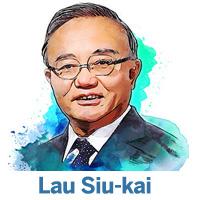
The author is a professor emeritus of sociology, the Chinese University of Hong Kong, and a consultant for the Chinese Association of Hong Kong and Macao Studies.
The views do not necessarily reflect those of China Daily.
