

Once afraid of heights, a PhD graduate now scales extra-high-voltage towers, finding purpose where courage meets engineering skill.
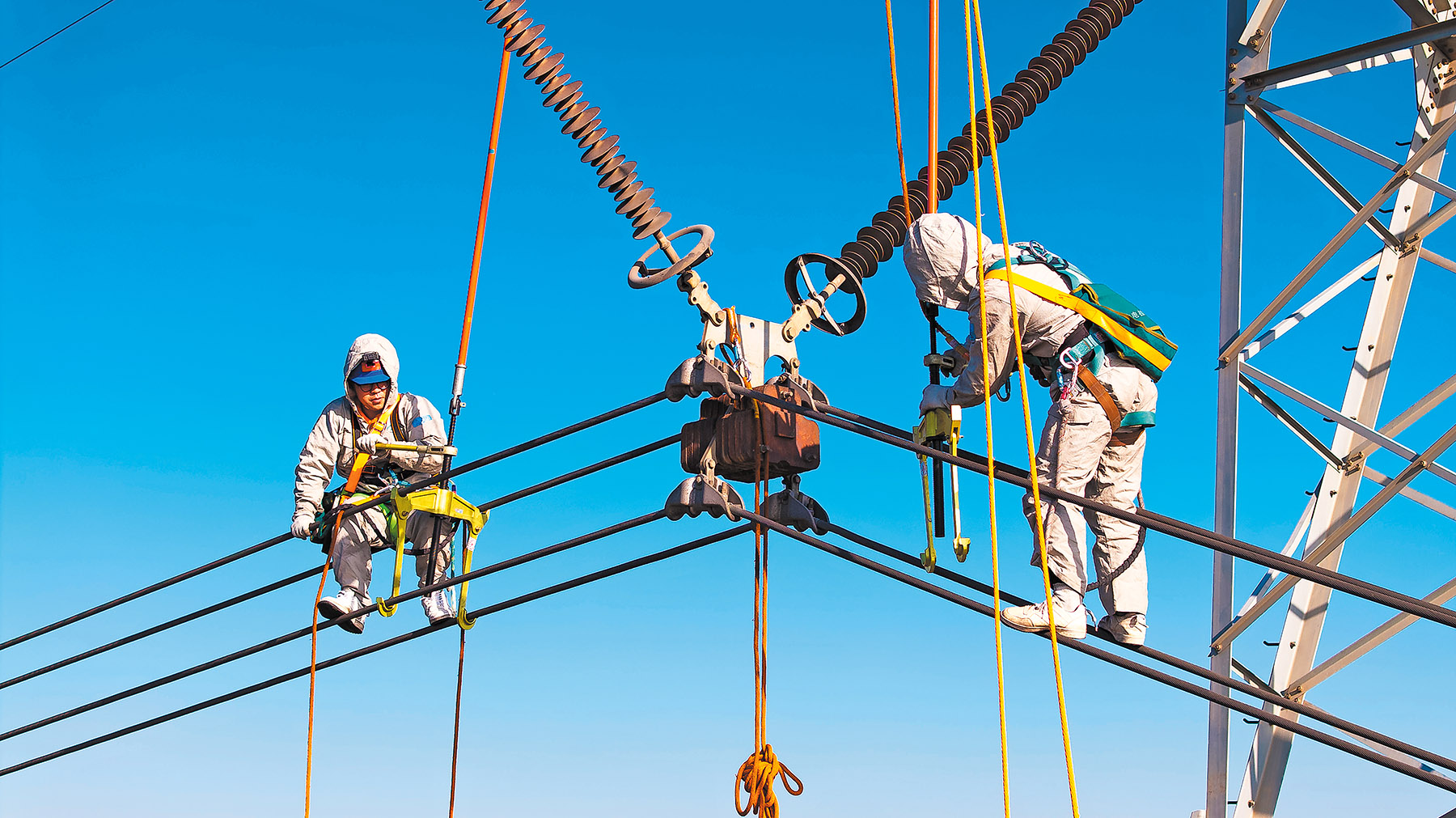
Chen Haoyuan still remembers the moment he looked down from a second-floor balcony — his palms sweaty and his legs trembling uncontrollably. For someone with a fear of heights, the career path he would eventually choose seemed almost unimaginable.
Now 35, Chen spends his days climbing and maintaining extra-high-voltage transmission towers, many soaring over 80 meters, with some reaching as high as 135 meters.
The challenge was daunting at the start.
"For the first six months, every climb felt like starting a new life," Chen said. "But now, I enjoy working at such heights because it represents two things to me: courage and skill."
In 2023, after earning a PhD in structural engineering from Wuhan University, Chen made a surprising career choice. Instead of joining a university lab or research institute, he accepted a frontline position at the Transmission Maintenance Center of the Extra-High Voltage Company of State Grid Hubei Electric Power, based in Wuhan.
"Compared with office work, I prefer being outdoors," he explained. "It's a life that never grows monotonous."
Yet the reality proved to be tougher than he had anticipated. Frequent trips to remote mountainous areas far from urban centers became routine, and the physical demands of the job were intense.
What truly reshaped his understanding of the work was its technical complexity. Initially, Chen assumed that transmission maintenance would require limited specialized knowledge. But he soon discovered that it draws on a vast, interdisciplinary system — spanning electricity, meteorology, lightning science, and even bird migration.
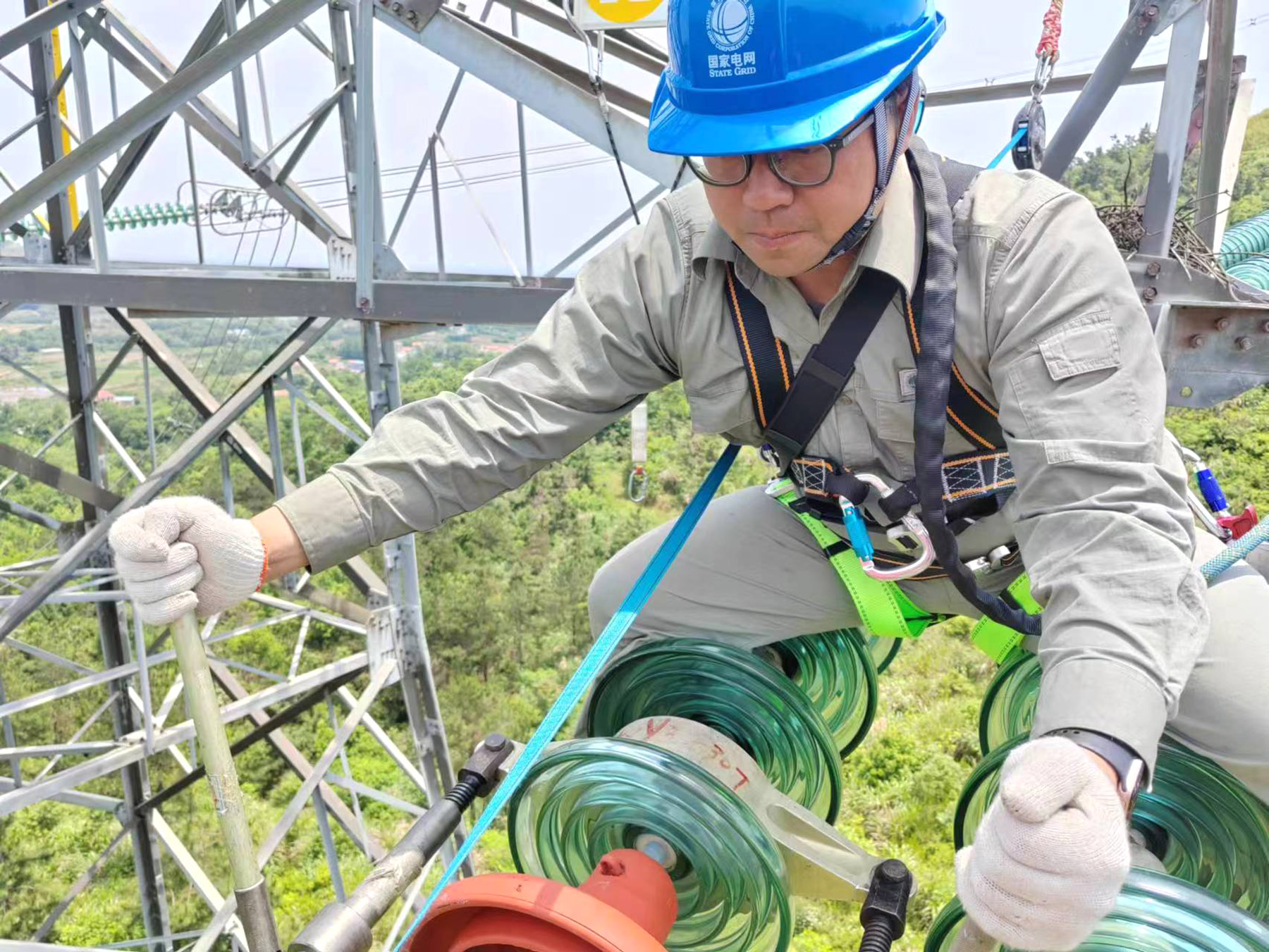
Bird activity, for example, is a common cause of circuit faults. To prevent such incidents, workers study local bird species, migration routes, and behavioral patterns to identify vulnerable sections of the line and implement targeted protective measures.
"Only by understanding the root causes can we take precise actions to eliminate risks and hidden dangers," Chen said.
Despite the difficulties, Chen finds deep satisfaction in the rapid fusion of theory and practice in his work.
"In the past, my research focused largely on reviewing academic literature," he recalled. His advisor once told him bluntly that some studies, though academically intriguing, were like "building castles in the air" — detached from real-world application.
Today, Chen's work is firmly grounded in reality because it grows directly out of the engineering challenges he and his colleagues face every day. "I used to struggle to come up with research ideas," he said. "Now it feels like ideas are everywhere."
He noticed that veteran workers, through years of hands-on experience, had developed remarkable strength and skill. They could effortlessly lift heavy loads high on transmission towers — tasks that left younger workers exhausted.
"They're like superheroes," Chen said."And I started wondering: how can we help everyone become a superhero?"
While physical strength takes years to build, technology can provide immediate support. This is where Chen's engineering background came into play. Inspired by what he observed, he led the development of a lower-body exoskeleton suit designed specifically for power line workers.
"Most existing exoskeletons are designed to assist leg lifting," he explained. "But our work requires strong downward force from the legs, especially when climbing."
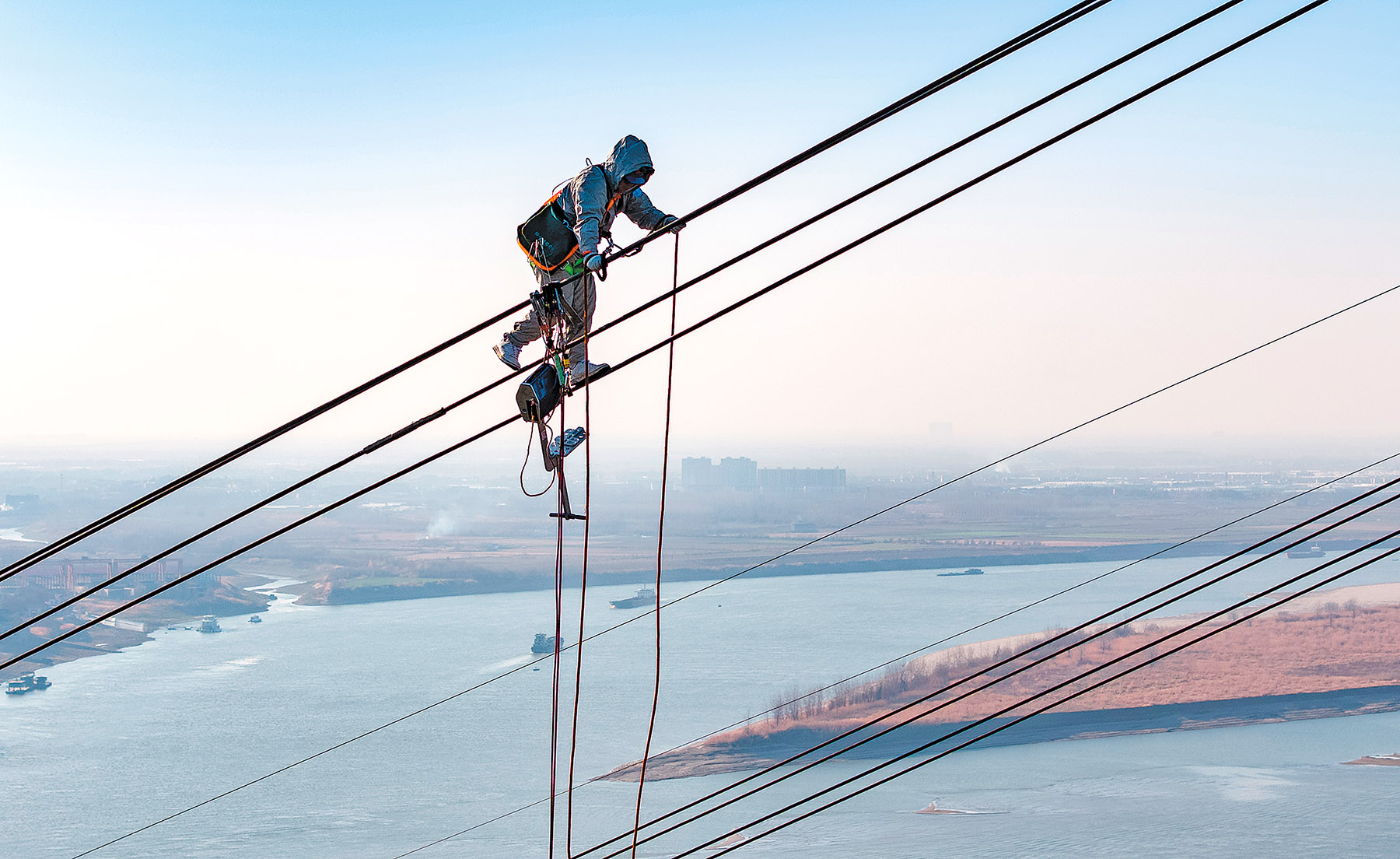
After extensive research, Chen tested the exoskeleton at the center. It delivers three times the support of typical models and uses an adaptive algorithm that adjusts to each worker's height, body shape, and working habits.
Another project Chen takes pride in is the redesign of insulator replacement tools. Previously, these tools were bulky and weighed up to 40 kilograms — far too heavy for a single person to operate at great heights. By optimizing both structure and materials, Chen reduced their weight by more than 60 percent.
"When veteran workers tried the new tool, they were amazed at how much lighter it felt," Chen recalled. "That moment gave me an immense sense of satisfaction."
Looking back on his earlier lab research, Chen admits that many outcomes lacked immediate practical impact. Now, he is deeply involved in solving real-world problems on the front lines. "Seeing how my solutions help my teammates instantly is incredibly rewarding," he said.
Chen's innovations have earned him 23 provincial awards within the power industry. Manufacturers have also sought to license his patents for broader production and promotion.
At first, Chen's family struggled to understand his unconventional career choice. Like many, they had expected a PhD graduate to follow a traditional academic path.
But his three-year-old son sees things differently, proudly calling him the "hero who climbs towers".
"In his eyes, I'm no different from dads who are professors," Chen said with a smile.
For him, academic titles and conventional definitions of success are not the ultimate goal. What matters most is finding passion in his work and experiencing a unique kind of feedback: the intellectual joy of solving real problems, the warmth of teamwork, and the spark of recognition in colleagues' eyes when he presents a new idea.
"A career lasts for decades," Chen said. "It would be frightening to spend every day doing work you don't love."
Contact the writers at mengwenjie@i21st.cn
