

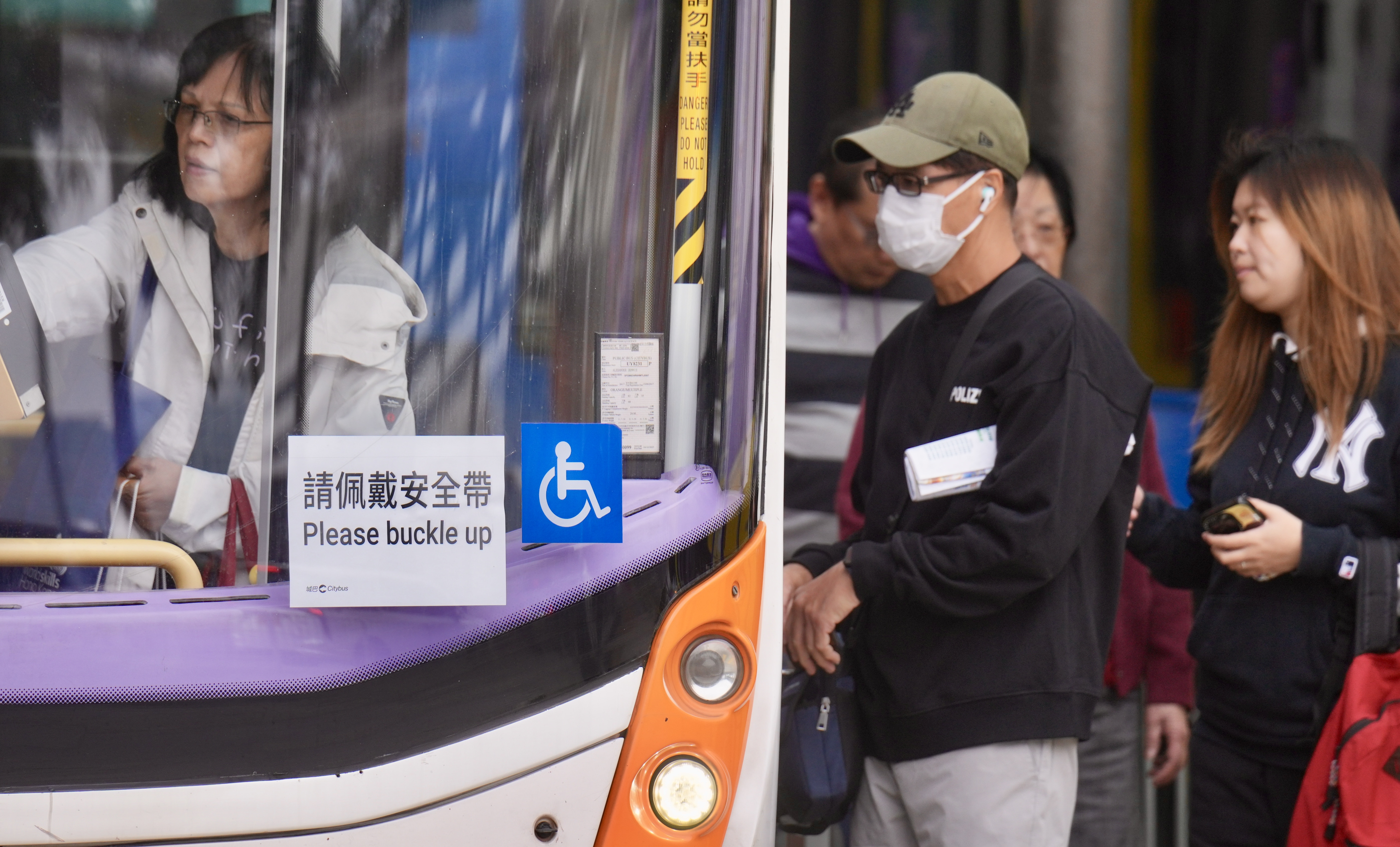
A new regulation mandating the use of seat belts on public and private buses will be suspended and later revised, after it sparked widespread controversy having come into force on Sunday.
According to a Hong Kong Special Administrative Region government press release published on Jan 8, seated passengers had to wear seat belts on “all public transport and commercial vehicles” starting Sunday. Anyone convicted of breaching the law faced a maximum fine of HK$5,000 ($640) and up to three months’ imprisonment.
Speaking to the media on Friday afternoon, Secretary for Transport and Logistics Mable Chan admitted there are “technical deficiencies” in some of the articles of the seat belt law, which failed to fully reflect the legislative intent.
Chan said some clauses will be deleted and reintroduced after consultation with the Legislative Council. The authorities will suspend enforcement of the rule.
The government’s decision follows an incident on Thursday in which a Citybus passenger had be had to be rescued by firefighters after becoming trapped in a seat due to a suspected seatbelt malfunction caused by a piece of tin foil.
The seat belt regulation is included in the latest amendment to the Road Traffic (Safety Equipment) Regulation, which was gazetted by the government on Sep 5 and tabled to the legislature five days later for the negative vetting procedure.
In a press release on Nov 3, the Transport Department said the amendment was passed by the Legislative Council and would come into effect on Jan 25.
ALSO READ: Buckle up, HK: New seat belt rule takes effect Sunday
Also on Thursday, former legislator Doreen Kong Yuk-foon — who also served on the subcommittee reviewing the proposed amendment last year — posted on Facebook that the wording of the regulation remained unclear.
Kong pointed out that the law, as written, would only apply to buses newly registered from the following Sunday onward, contrary to the government’s previous statement, fueling public discussion.
Chan said that the government has received extensive feedback from the public, media, and legislators over the past few days, adding that the fundamental purpose of the law is to provide safeguards for passengers, and the government will prioritize education and publicity at this stage.
“The primary task now is to explore ways to enhance the implementation of the relevant regulation, gather broad public feedback, and refine the arrangements before consulting the Legislative Council,” Chan said.
After Chan’s announcement, Secretary for Security Chris Tang Ping-keung suggested passengers buckle their seat belts when taking any kind of vehicle, whether there is a regulation in place or not.
“Past traffic incidents indicated a stark contrast in injury severity and fatality rates between those who buckled up and those who did not. That is why we strongly urge all passengers to wear a seatbelt — once an accident happens and serious harm occurs, regret offers no protection,” Tang said.
Legislator Priscilla Leung Mei-fun said that implementing the relevant law was aimed at promoting social welfare. Should deficiencies in a law lead to public inconvenience, she said, it is appropriate for the government to address these concerns directly and act to remove the problematic clauses.
Contact the writer at stacyshi@chinadailyhk.com
