

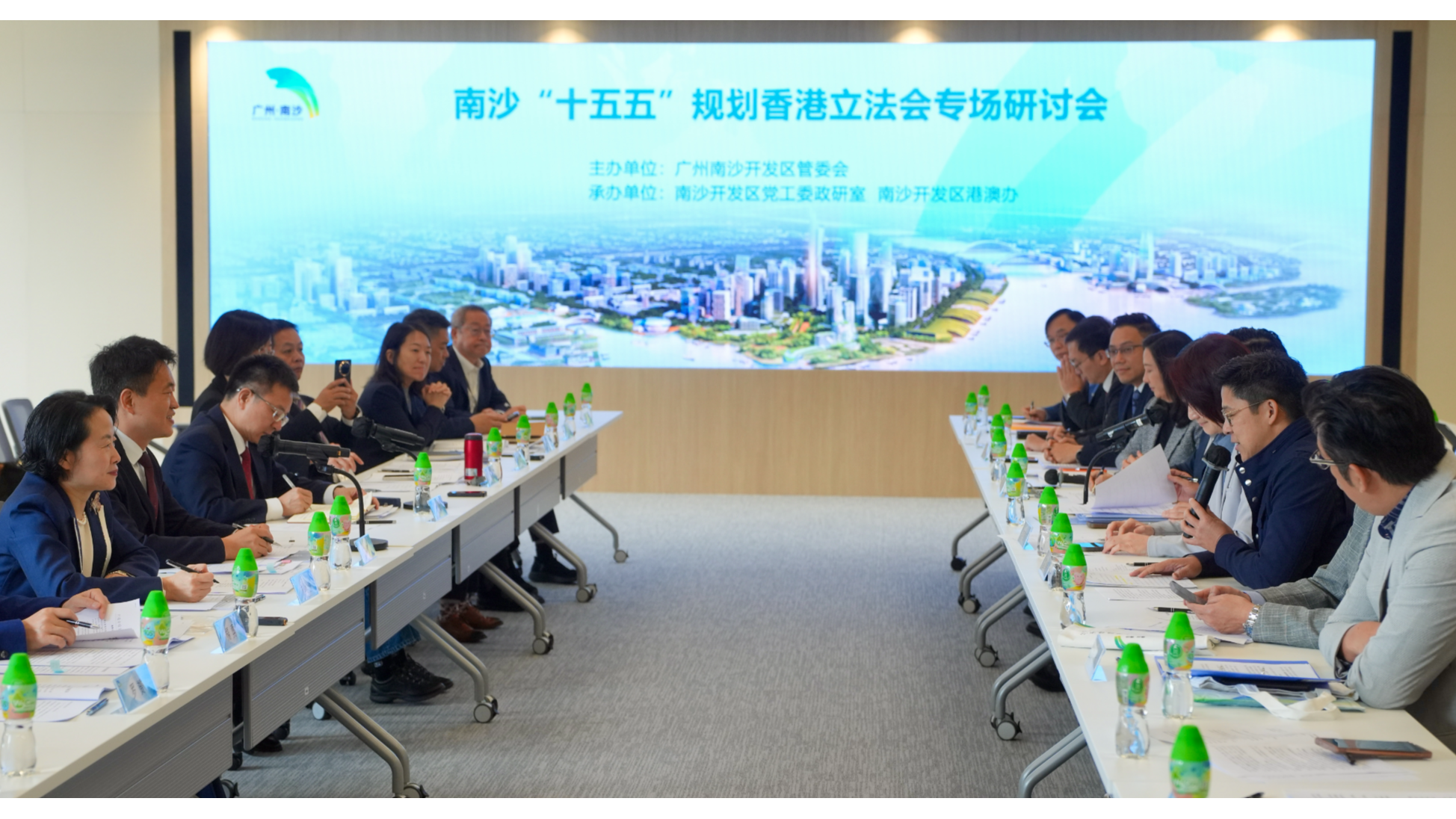
Hong Kong lawmakers and officials from Guangzhou’s Nansha district agreed on Friday to deepen cooperation in strategic sectors, including biomedicine, AI, and the low-altitude economy, aligning with China’s 15th Five-Year Plan (2026–2030).
They made the remarks at a symposium, organized by the Guangzhou Nansha Economic and Technological Development Zone’s administrative committee and held in the Hong Kong Special Administrative Region’s Legislative Council complex.
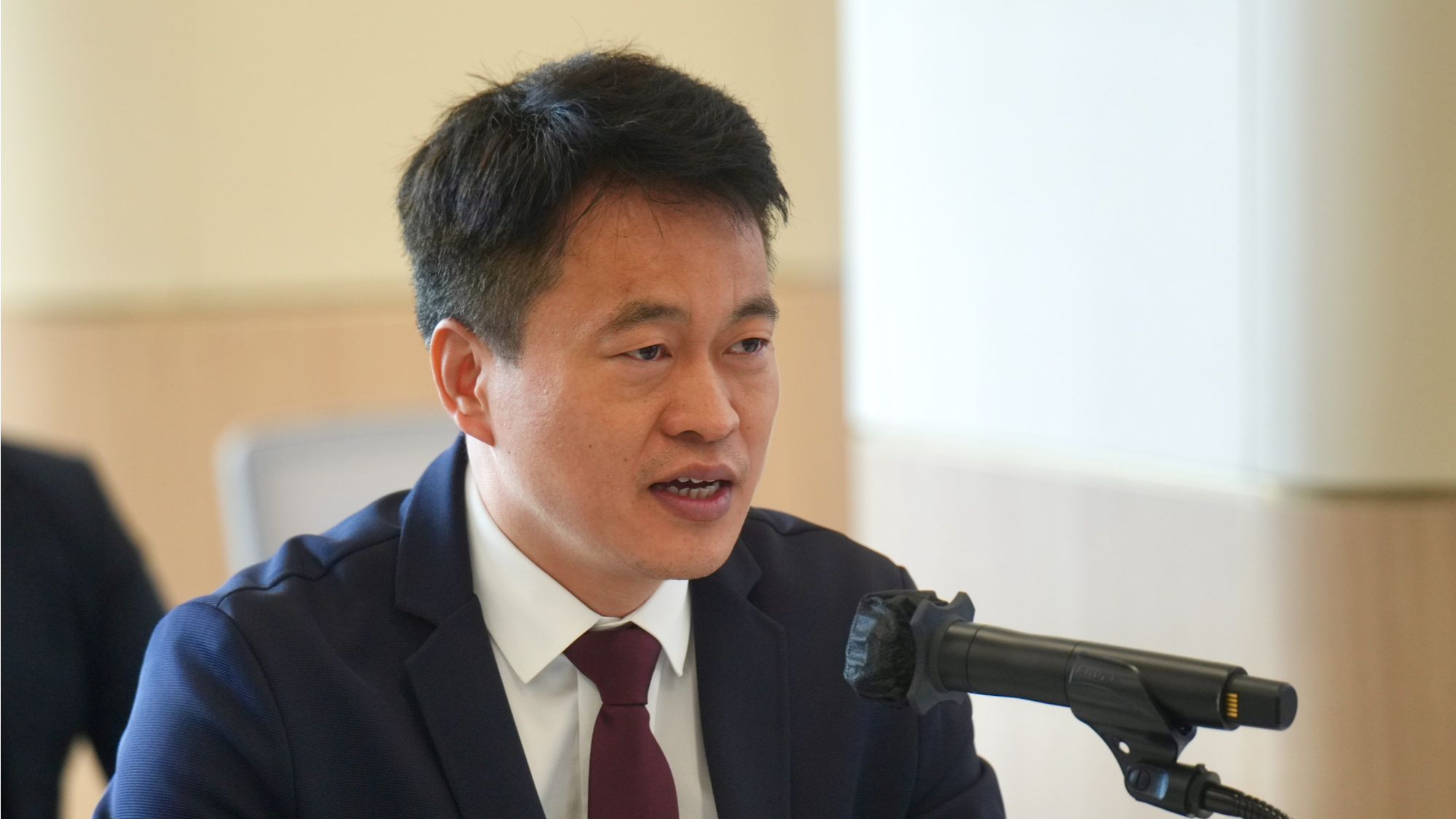
Xie Wei, deputy secretary-general of the Guangzhou Municipal Government, deputy secretary of the Communist Party of China Working Committee of Nansha Development Zone, Guangzhou, outlined Nansha’s main development goals — to introduce additional, more innovative policy levers to boost cross-border “soft connectivity”, as well as to further strengthen collaboration with Hong Kong in I&T, port economy, financial markets, international high-caliber talent exchange, transportation infrastructure, education and healthcare.
READ MORE: Hong Kong, Nansha at the heart of GBA’s growth
Hong Kong legislators — with their dual insight into the city and the Chinese mainland — are essentially “live guiding maps” for advancing Guangdong-Hong Kong cooperation, Xie said.
“We very much look forward to closer exchanges, consensus-building, and partnerships that can drive ‘hard’, ‘soft, and ‘heart-to-heart’ links between the two regions,” said he. “Such synergy will empower Nansha to better support Hong Kong’s integration into national development and the common efforts to build the Guangdong-Hong Kong-Macao Greater Bay Area into a world-leading urban cluster.”
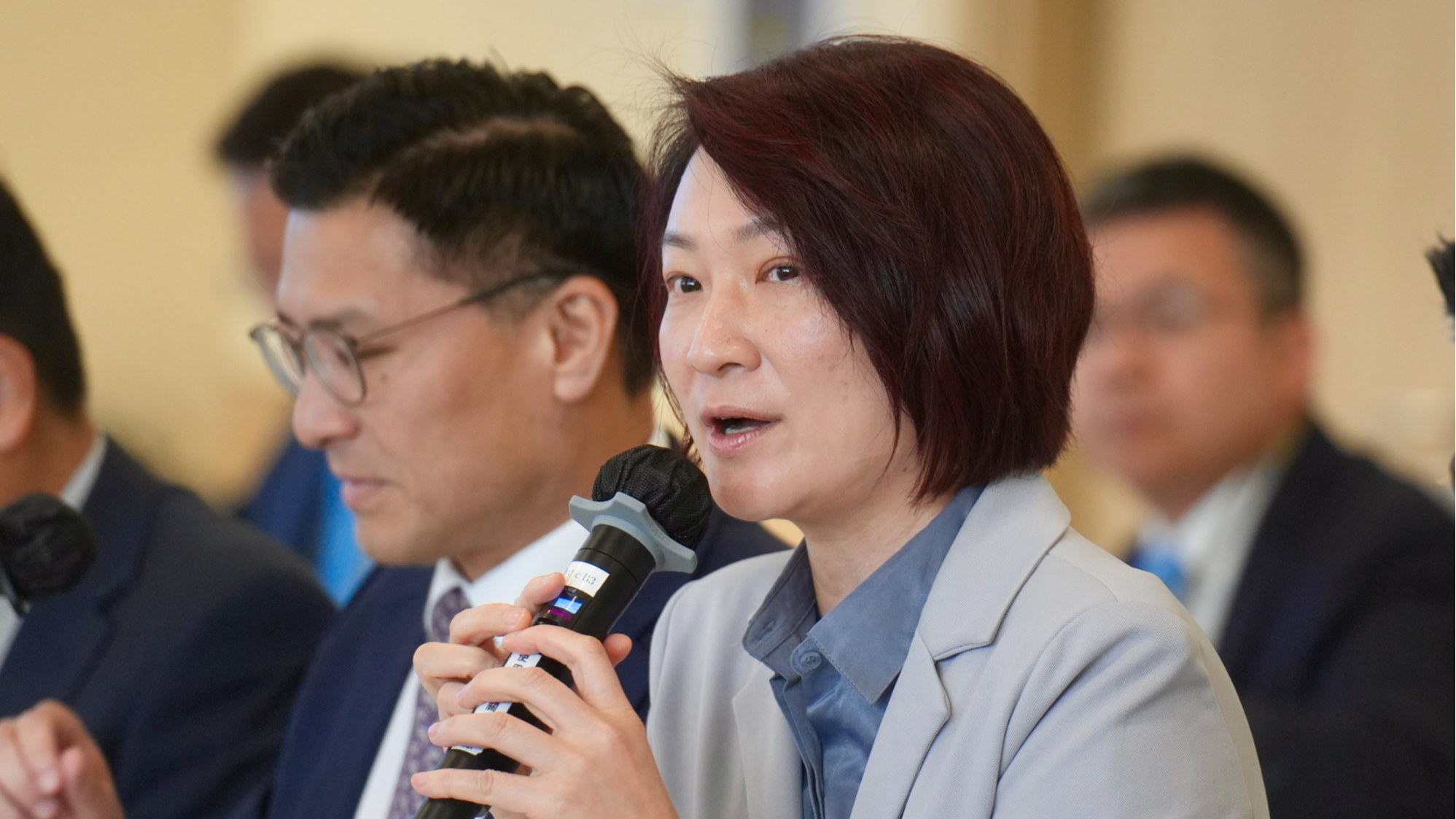
Hong Kong LegCo President Starry Lee Wai-king emphasized the legislature's duty to support the Special Administrative Region government in aligning local development with national goals under the executive-led system. She urged a more “active and proactive” approach, stating the symposium helps lay essential groundwork for Hong Kong’s preparation under the 15th Five-Year Plan.
Looking to strengthen the regional ties of livelihoods and industries, Hong Kong Chief Executive John Lee Ka-chiu in his 2025 Policy Address pledged plans to deepen medical and healthcare cooperation with Nansha.
Lawmaker Simon Lee Hoey urged closer Hong Kong-Nansha cooperation in healthcare and biomedicine, recommending a shared technology platform with joint laboratories and test sites. He also proposed a cross-border fund for aerospace biomedicine, coupled with tax incentives, research subsidies, and a fast track for listing approvals.
Lawmaker William Wong Kam-fai called for stronger AI partnerships, linking them to Hong Kong’s upcoming “AI Plus” action plan. He stressed that Hong Kong’s AI success depends on practical applications in core sectors like finance, healthcare, and shipping.
While Hong Kong excels in R&D, Wong said scaling up requires the Greater Bay Area’s resources. He proposed using the Hong Kong part of the Hetao Shenzhen-Hong Kong Science and Technology Innovation Co-operation Zone for pilot testing, and Nansha for mass production.
This pipeline, he added, would also smooth entry into the national market, with Hong Kong serving as a funding and international gateway.
Such a model — described as a “front shop, back factory” and “front shop, back warehouse” arrangement between Hong Kong and Nansha — gained wide endorsement from lawmakers at the meeting, who also floated interests to deepen ties in areas including finance, the low-altitude economy, life sciences, and embodied intelligence.
READ MORE: Nansha, Hong Kong sign elderly care agreement
Lawmaker Elizabeth Quat Pei-fan called for a rollout of a Hong Kong-Nansha low-altitude air route, which, she envisaged, can become one of the world’s first such cross-border corridors and help create a “half-hour transport circle” across the Greater Bay Area.
LegCo member Duncan Chiu endorsed the “Hong Kong-Macao R&D, Nansha Commercialization” model, noting a growing trend of researchers and firms seeking to deploy projects in the district.
He proposed establishing a dedicated cooperation park in Nansha to focus these efforts and suggested the Hong Kong Investment Corporation Limited should invest there to accelerate the commercialization of technologies like smart robotics and autonomous vehicles.
Contact the writer at wanqing@chinadailyhk.com
