

Undoubtedly, the turnout in the geographical constituency elections was of particular interest. Because “anti-China insurgents” are barred from candidacy, the elections became a contest among patriotic candidates. Under these circumstances, it was expected that voters who previously supported the political agitators would not vote. Although the social atmosphere was somber because of the Tai Po fire, the turnout in the geographical constituency election (31.9 percent) was higher than the previous one (30.2 percent) in 2021. Arguably, if the fire hadn’t happened, voter turnout would likely have been much higher.
 The political significance of a higher turnout is greater. First, it indicates that the new electoral system is gaining increasing support from Hong Kong residents. Second, it reflects growing public affirmation of the Hong Kong Special Administrative Region government’s work and performance, as well as that of LegCo, over the past few years. Third, this signifies residents’ appreciation of and gratitude for the central government’s solicitude and support for Hong Kong over the years. Fourth, this indicates that the new political order of Hong Kong, reshaped with the central authorities’ authorization, is gaining increasing acceptance in society.
For a considerable period after the 1997 handover, Hong Kong’s democratic development, distorted and sabotaged by anti-China elements and external forces, deviated significantly from the original intent, norms, and design of the “one country, two systems” principle. From a practical perspective, the new electoral system has allowed Hong Kong’s democratic development to return to the right track and gradually advance Hong Kong-style democracy. Some of the key characteristics exhibited in these LegCo elections are concrete manifestations of Hong Kong-style democracy.
 The most distinctive feature is that its electoral system is not separate from, but integral to, and in sync with, Hong Kong’s political system under the “one country, two systems” framework. Therefore, its value cannot be measured solely by Western standards. Western-style democracy holds that, as long as the electoral process adheres to the principles of “fairness, impartiality, and openness”, any election result should be accepted by all parties, including its uncertain political, social, and economic consequences. Hong Kong-style democracy, however, has an entirely different logic. The electoral system is designed to ensure that election outcomes must necessarily support the full and accurate implementation of the “one country, two systems” principle. Therefore, no “uncertainty” is permissible.
In December 2021, the State Council Information Office of the People’s Republic of China released a white paper titled Hong Kong: Democratic Progress Under the Framework of One Country, Two Systems. The white paper states that Hong Kong’s democratic development cannot simply copy the models of Western sovereign states. It must instead promote democracy with Hong Kong characteristics within the framework of “one country, two systems” As Hong Kong is a part of China, its democracy “must take the safeguarding of national security as a basic prerequisite ”.
Besides safeguarding national security, Hong Kong-style democracy must also be conducive to the full and accurate implementation of the “one country, two systems” principle and the achievement of its main objectives. The white paper states: “The political system of the HKSAR must … aim to safeguard Hong Kong’s prosperity and stability. To this end, it must consider the interests of all sectors of society and be conducive to the development of the capitalist economy; it must both maintain the effective parts of the original political system and gradually develop a democratic system suitable for Hong Kong’s circumstances. … Implementing ‘Hong Kong people governing Hong Kong’ and a high degree of autonomy under ‘one country, two systems’ with patriotic Hong Kong people governing Hong Kong, is Hong Kong’s greatest democracy.”
As one of the main vehicles of Hong Kong-style democracy, the LegCo elections must adhere to the central government’s principles on Hong Kong’s democratic development. Specifically, the LegCo elections must be conducive to safeguarding national security, ensuring the full and accurate implementation of the “one country, two systems” principle, maintaining Hong Kong’s prosperity, stability, and long-term peace and security, realizing the governance of Hong Kong by patriots, reflecting balanced political participation, promoting executive-led governance, advancing positive interaction between the executive and the legislature, facilitating Hong Kong’s integration into national development, and achieving political inclusiveness.
The LegCo electoral system is designed to ensure the objectives listed above are achieved: establishing three electoral modes for producing LegCo members (Election Committee, functional constituencies, and geographical constituencies) to bring about balanced participation; establishing a fifth sector of the Election Committee comprising members with close connections with the Chinese mainland to ensure adequate protection and advancement of national interests; installing a candidate qualification review system to ensure that all LegCo members are patriots; and promoting positive interaction between the executive and the legislature by having the Election Committee simultaneously elect some LegCo members and the chief executive. An entirely patriotic LegCo will safeguard national security, facilitate the comprehensive and accurate implementation of the “one country, two systems” principle, and energetically promote Hong Kong’s integration into the nation’s overall development.
The new electoral system also introduces changes to Hong Kong’s electoral culture, thereby allowing the LegCo elections to reflect the characteristics and spirit of Hong Kong-style democracy. These were already evident in the previous LegCo elections. Still, they are even more visible in the current polls, gradually taking shape as a novel political culture in Hong Kong.
First and foremost, the most evident aspect was the high degree of unity and cooperation between the SAR government and patriotic forces in organizing and promoting the election. For the first time, the SAR government organized many election forums, providing candidates with more eye-catching arenas to present their platforms and engage with the public. By contrast, governments in most countries do not undertake the task of encouraging and promoting voter turnout.
Second, the LegCo elections help foster social unity, whereas elections in other places often foment social divisions. The collaborative efforts of the government and various sectors of society to promote the election and encourage voter turnout strengthen mutual relationships. The competition among candidates from different classes and sectors deepens their understanding, concern, and attention to the demands, interests, and conditions of other classes and sectors, thereby fostering consensus on significant public policies and common goals in society.
Third, under Hong Kong’s democratic system, electoral competition is a benign gentleman’s contest rather than a vicious squabble among mean people. Regardless of their social strata or sectors, candidates, political parties, and groups refrain from verbal abuse, exposing each other’s shortcomings or spreading rumors, thus preempting future rivalries and unresolved conflicts. In this gentleman’s contest, candidates, political parties, and groups evince rationality, pragmatism, objectivity, persuasion through reason, consideration for the overall situation, and mutual respect. Ultimately, the winner or loser generally does not damage relationships or hinder future cooperation. On the contrary, squabbles among mean people are often abundant in foreign elections.
Fourth, in other jurisdictions, and even in Hong Kong in the past, legislative elections were essentially contests between political parties, making partisan politics dominant. In Hong Kong’s democracy, political parties represent only a small portion of the numerous social groups participating in LegCo elections. Many business, professional, labor, and social organizations field representatives to the LegCo elections, materializing the principle of balanced participation and making LegCo broadly representative.
Fifth, the LegCo elections allow society to focus on practical issues rather than divisive ones that frequently arise in foreign elections. In the past, when political agitators were rampant, they often made political reform — that is, Western-style democracy — the core issue in LegCo elections, attempting to gain votes by dividing society. Under Hong Kong-style democracy, all patriots wholeheartedly support Hong Kong’s constitutional order. Therefore, political reform is not an issue in LegCo elections. All candidates focus on practical problems affecting residents.
Finally, in foreign legislative elections, the ruling party’s administration is often the target of attacks by opposition candidates, and the government’s performance is an important election issue. Under Hong Kong’s democratic system, the SAR government and LegCo share responsibility for governing Hong Kong, and politically they constitute a community of shared political destiny. Although LegCo has a check and balance function, its primary role is to enhance the SAR’s governance capacity and quality, not to undermine the executive’s authority or boost LegCo’s or individual legislators’ popularity and reputation. In the LegCo elections, the SAR government is not the target of candidates’ criticisms. The policy suggestions put forward by candidates stem from a good intention to improve governance. LegCo elections will help promote mutual trust and cooperation between the executive and the legislature.
In conclusion, the LegCo elections showcase the characteristics and advantages of Hong Kong-style democracy and refute the accusations and slanders that defame it.
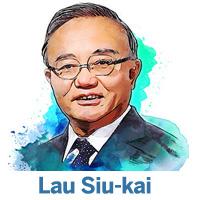
The author is a professor emeritus of sociology at the Chinese University of Hong Kong, and a consultant for the Chinese Association of Hong Kong and Macao Studies.
The views do not necessarily reflect those of China Daily.
