

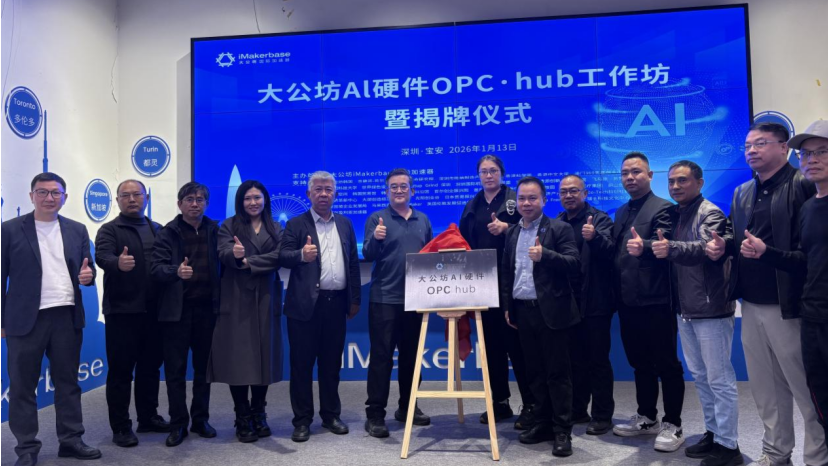
One-person companies (OPC) in Shenzhen and other Chinese mainland innovation hubs — fortified by deeply integrated artificial intelligence (AI) —are set to reshape business operation structures, enrich the entrepreneurial ecosystem, and enhance the nation’s economic vitality, industry insiders believe.
The emergence of this dynamic business model is seen as an inevitable result of technological transformation and industry demands. OPCs’ flexible structure and lower innovation costs mean they are better positioned to foster super entrepreneurs and develop into the next generation of unicorns.
According to an action plan released by the Shenzhen government on Jan 14, the city aims to establish 10 nationally leading OPC communities by the end of 2027, with each spread over at least 10,000 square meters, while fostering more than 1,000 high-growth AI startups.
READ MORE: Advancing opening-up in Shenzhen
Across China, such communities have also emerged in Beijing, Shanghai, Hangzhou, and Nanjing since September, 2025.
The OPC concept is not limited to companies with a single person. It also covers businesses where one or two core founders lead a small team, leveraging AI to efficiently handle various complex operations.
Zhang Guoping, associate researcher at the Shenzhen Academy of Social Sciences, said that the growing emphasis on OPC represents earlier support for sources of innovation, which is primarily driven by the rapid development of AI, significant industry demand, and intense global competition.
“Such a new organizational model, involving a few individuals and AI, transforms the traditional pyramid management structure of enterprises into a horizontal format, adapting to the rapidly evolving world at the lowest organizational cost. It is poised to trigger profound changes in both economic and social structures,” he said.
With the unique perspectives on innovation brought by different founders, OPC help galvanize conventional thinking and enrich market diversity. They could play a significant role in driving industry iterations and serve as trailblazers for larger enterprises at the forefront of innovation, Zhang believes.
Leveraging its vast network of electronic component suppliers, Huaqiangbei is committed to building an AI hardware hub and launched Shenzhen’s first OPC community on Jan 13, pledging support in space, policy, application scenarios, tools and services.
Zhang Jibin, who started selling eyeglasses with AI and augmented reality functions in the electronic market last year, said his business volume has roughly quintupled in just six months.
Operating the shop with a partner, he frequently utilizes AI to search for suppliers and manage financial statistics. Amid the constantly changing market, he believes that a small team is better suited to adapt to the latest trend.
With the support of the OPC community, he is more optimistic about future development, hoping the community will help boost their visibility by collectively showcasing products featuring AI functions.
Wang Wanghong, who also runs a shop in Huaqiangbei on his own, primarily focuses on customizing AI products for overseas clients, such as interactive toys, badges, and alarm clocks.
Noting a growing demand for personalized AI products overseas, he said Huaqiangbei is well-suited for small teams to develop customized services. He hopes that in the future, AI hardware can flourish in diversity and reduce homogenization.
IMakerbase, a Shenzhen-based startup incubation hub, is also among the city’s first group of OPC communities. Inaugurated in mid-January, the community is expected to attract 200 online and offline members in the first half of this year, according to its CEO Ding Chunfa.
He mentioned that there has been a strong response to community enrollment. In addition to Shenzhen, interested teams are also coming from nearby cities in Guangdong province, the Hong Kong and Macao special administrative regions, as well as Beijing and Singapore.
Their projects include smart medical devices, AI eyeglasses, and AI content production tools, among others, highlighting the potential of "human-AI collaboration" across various application scenarios.
READ MORE: Shenzhen thrives as high-tech hub
Aiming to address the pain points of OPCs, iMakerbase plans to offer services that include understanding and mastering AI tools, accessing hardware development supply chain resources, and establishing personal intellectual property.
To better facilitate the early development of OPCs, Zhang recommends that these communities also offer auxiliary services such as legal, financial, and intellectual property support. He also encourages leading enterprises to outsource certain fragmented tasks to OPCs, allowing them to focus on their core business while also enhancing market vitality.
Ding advises OPC founders not to overly depend on policy support, but to focus on identifying business opportunities, enhancing their capabilities, and continuously iterating their products to thrive.
