

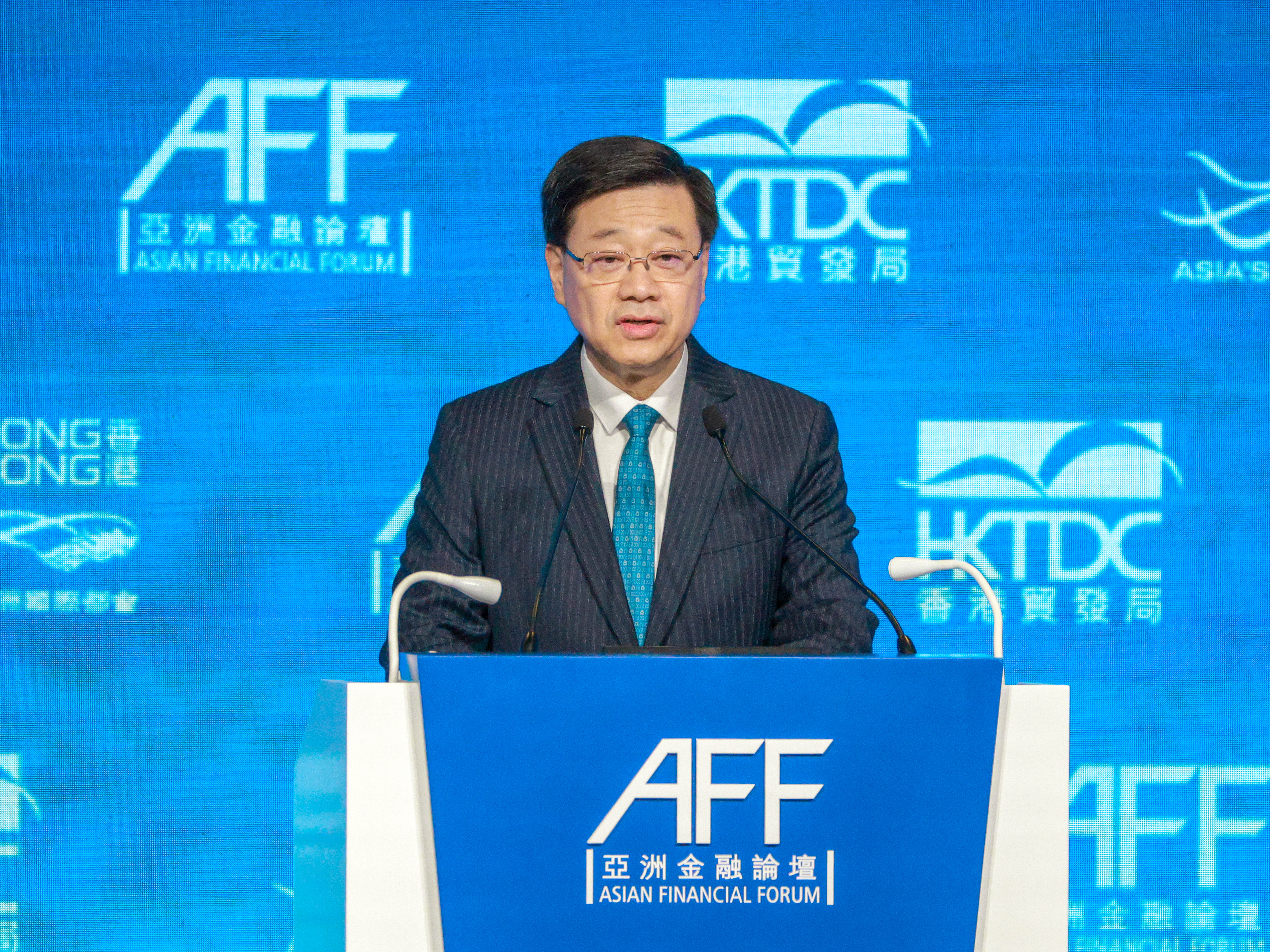
Hong Kong is steadfast in consolidating its role as the world’s leading offshore renminbi business hub, with plans to expand the pool of renminbi funds and launch new offshore treasury-bond futures.
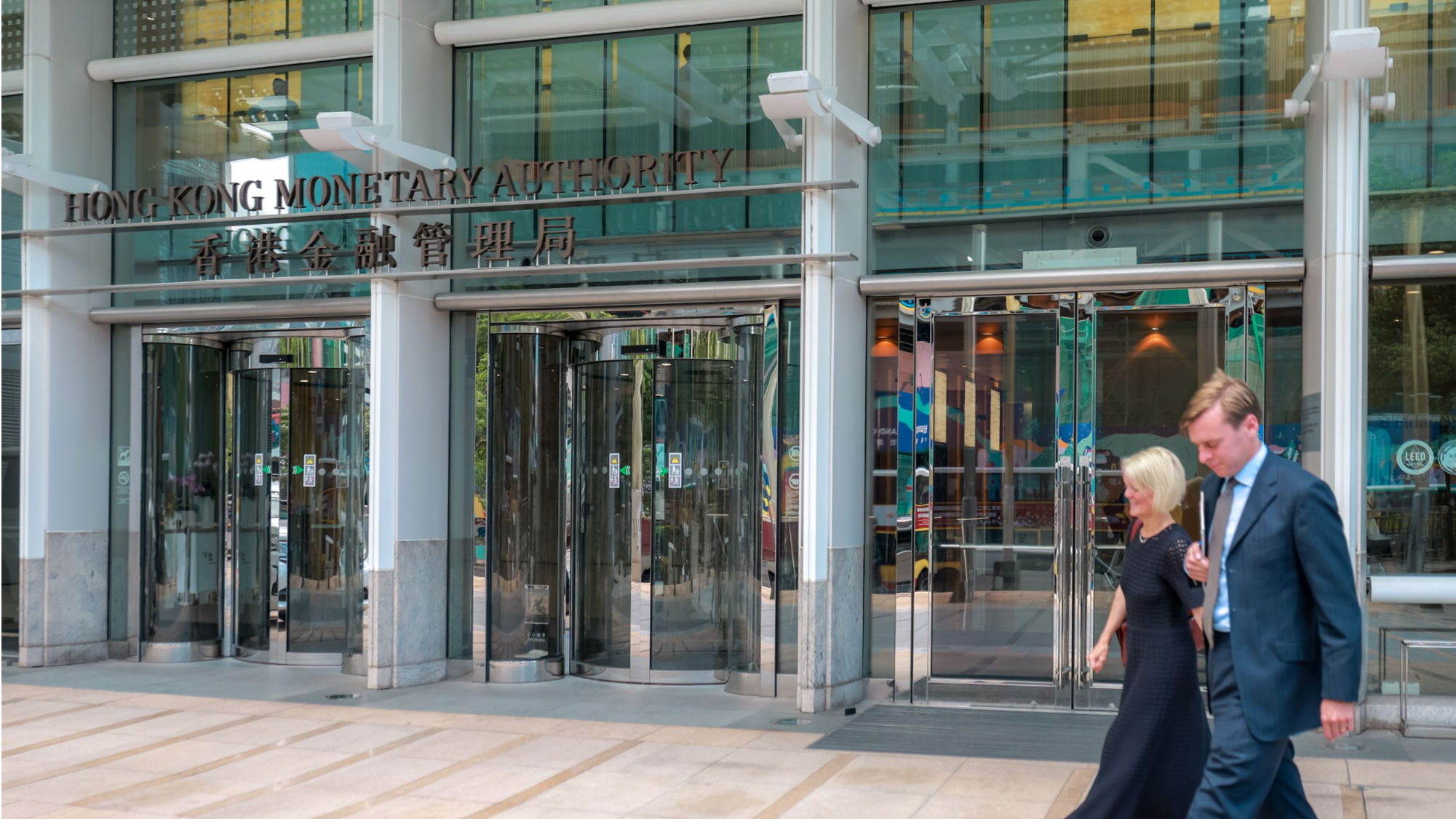
The Hong Kong Monetary Authority on Monday announced that it will double the size of its RMB Business Facility (RBF) from the current 100 billion yuan ($14.4 billion) to 200 billion yuan effective Feb 2, in a move aimed at boosting renminbi trade financing liquidity in the Hong Kong Special Administrative Region.
This move came as Chief Executive John Lee Ka-chiu expressed the SAR government’s resolve to deepen mutual access between the Chinese mainland and Hong Kong financial markets at the 19th Asian Financial Forum (AFF), which had kicked off earlier in the day.
“As the world's largest offshore renminbi business hub, Hong Kong processes about three quarters of global offshore renminbi payments and has the largest offshore renminbi liquidity pool,” Lee told the global financial community.
He said the rising investor interest in renminbi-denominated bonds has highlighted Hong Kong's pivotal role as a gateway for cross-boundary capital flow.
To further facilitate the liquidity, the city will introduce offshore treasury-bond futures and expand interest rate derivatives under the Swap Connect program, Lee added.
ALSO READ: HKMA enhances RMB liquidity facilities to support offshore market
Also speaking at the forum, Zou Lan, deputy governor of the People’s Bank of China, said Hong Kong is a vital gateway for the opening-up of the mainland’s financial market, given its highly open business environment, deep financial system, and internationally aligned regulatory framework.
He said that the Connect programs linking mainland and Hong Kong exchanges — the Stock Connect, Bond Connect, and Swap Connect — have significantly bolstered the SAR’s international standing.
More than 800 overseas institutional investors have participated in the mainland’s bond market through the Bond Connect, holding bonds valued at over 810 billion yuan, while their trading volume reached 9.7 trillion yuan last year, accounting for more than 60 percent of all overseas institutional trading, Zou said.
He added that the Swap Connect has played an increasingly important role in managing risks associated with renminbi assets in Hong Kong, stressing the PBOC will firmly support the city’s offshore renminbi market development.
He also said the PBOC will further improve these Connect systems, steadily advance the listing of renminbi treasury-bond futures in Hong Kong, and explore expanding the mechanism of using renminbi bonds as offshore qualified collateral.
The RBF is a program aimed at providing stable and relatively lower-cost source of renminbi funds to banks in Hong Kong, enabling them to offer renminbi financing to clients and support the wider use of the renminbi in the real economy.
READ MORE: HKMA, PBoC to launch payment connect Sunday
HKMA Chief Executive Eddie Yue Wai-man said expansion of the RBF pool will provide “timely and sufficient” liquidity to meet market development needs, and further reinforce the SAR’s status as an international financial center and global offshore renminbi business hub.
Themed “Co-creating New Horizons Amid an Evolving Landscape”, this year’s AFF invited over 140 influential speakers, including government officials, business leaders, financial experts and scholars, to exchange insights on the world economy through an Asian lens.
At a panel on global economic cooperation, speakers urged stronger multilateral collaboration to foster shared growth in the face of mounting global uncertainty.
Klemen Bostjancic, Slovenia’s deputy prime minister and finance minister, said the crisis facing the world today presents “an enormous opportunity to build bridges between Asia and the rest of the world”. Bostjancic called on global stakeholders to deepen mutual understanding and work toward consensus.
Zou Jiayi, president of the Asian Infrastructure Investment Bank, said, “Across Asia and beyond, countries continue to face pressing needs for reliable energy, resilient infrastructure, digital connectivity, effective climate mitigation, and adaptation”. These demands, however, are becoming more pressing even as borrowing costs rise and public budgets come under strain, she added.
Zou said that cooperation is essential to navigating uncertainty, maintaining confidence and sustaining long‑term investment momentum.
Co-hosted by the HKSAR government and the Hong Kong Trade Development Council, the two-day AFF, which ends today, was expected to attract more than 3,600 participants from more than 60 countries and regions.
Contact the writer at gabylin@chinadailyhk.com
