

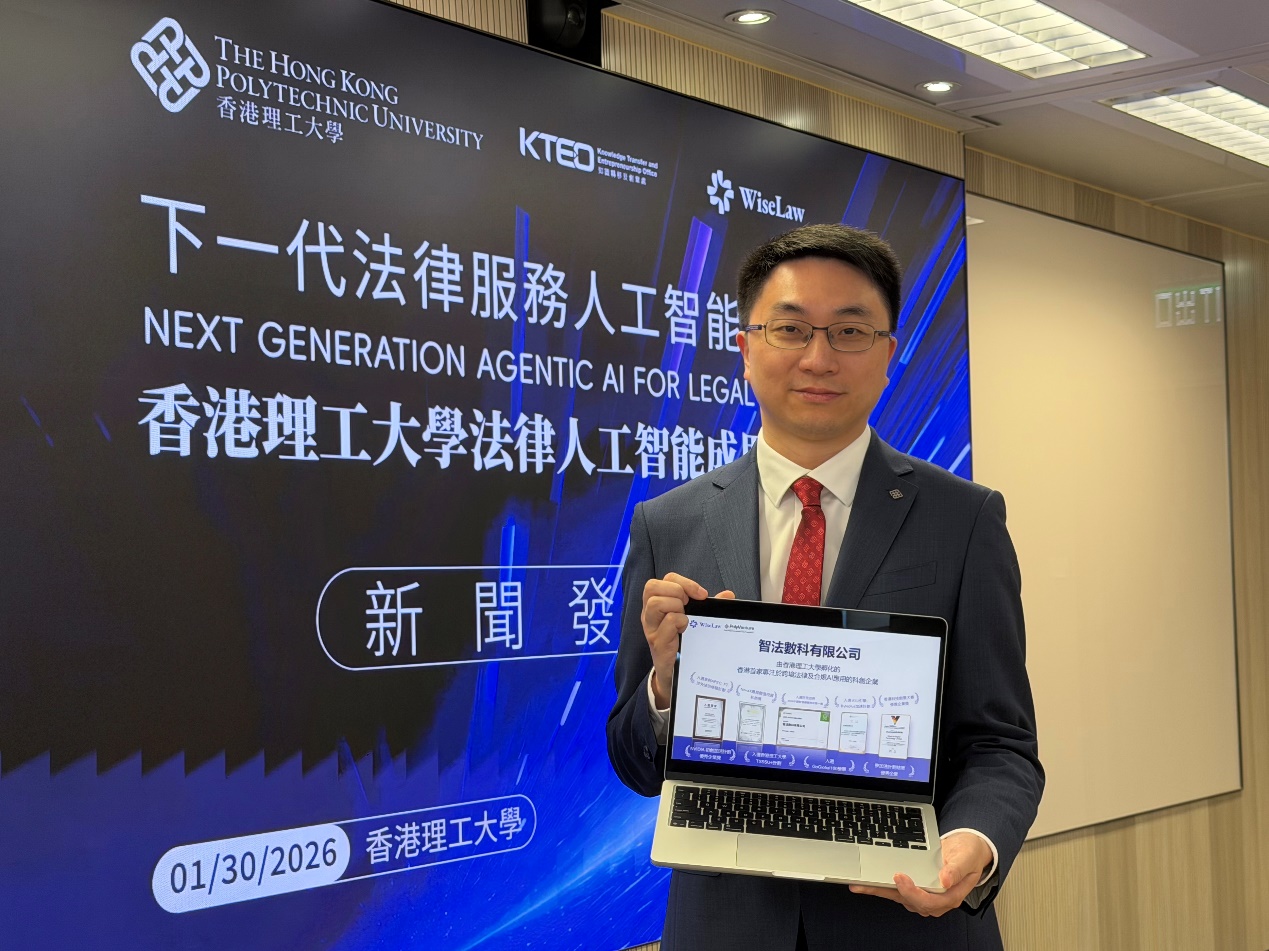
The Hong Kong Polytechnic University announced on Friday it plans to launch Hong Kong’s first artificial intelligence agent designed to provide cross-border legal services, as part of the city’s efforts to digitalize the legal sector and support Chinese mainland companies expanding overseas.
Developed by WiseLaw Digital Technology, a PolyU-incubated startup, the platform is expected to be fully ready in the first half of this year; its core functions are still under development.
WiseChat, integrating a professional legal knowledge database, is capable of handling cross-border compliance consultations with a high level of accuracy and logical reasoning. The company said it can improve efficiency by 80 percent.
Another function, WiseTools, is used for contract review. It can identify risky clauses and suggest revisions, reducing review times from hours to minutes. WiseSearch, meanwhile, provides a one-stop search function for Hong Kong-listed company filings, corporate announcements and Hong Kong legislation, cutting research time by up to 98 percent, according to the company.
“Hong Kong is the best testing ground for the integration of law and AI,” said Lu Haitian, a professor of accounting and finance at PolyU’s Hong Kong Sustaintech Foundation and founder of WiseLaw.
Hong Kong’s high labor costs are a key driver for efficiency-enhancing technologies, he said. Moreover, as the first stop for many mainland companies going global, the special administrative region is well placed to help address their compliance challenge.
“Our aim is to make legal services more accurate, efficient and accessible through the application of AI, instead of replacing legal professionals,” he said, adding that more than 1,500 legal professionals in Hong Kong are using the tool.
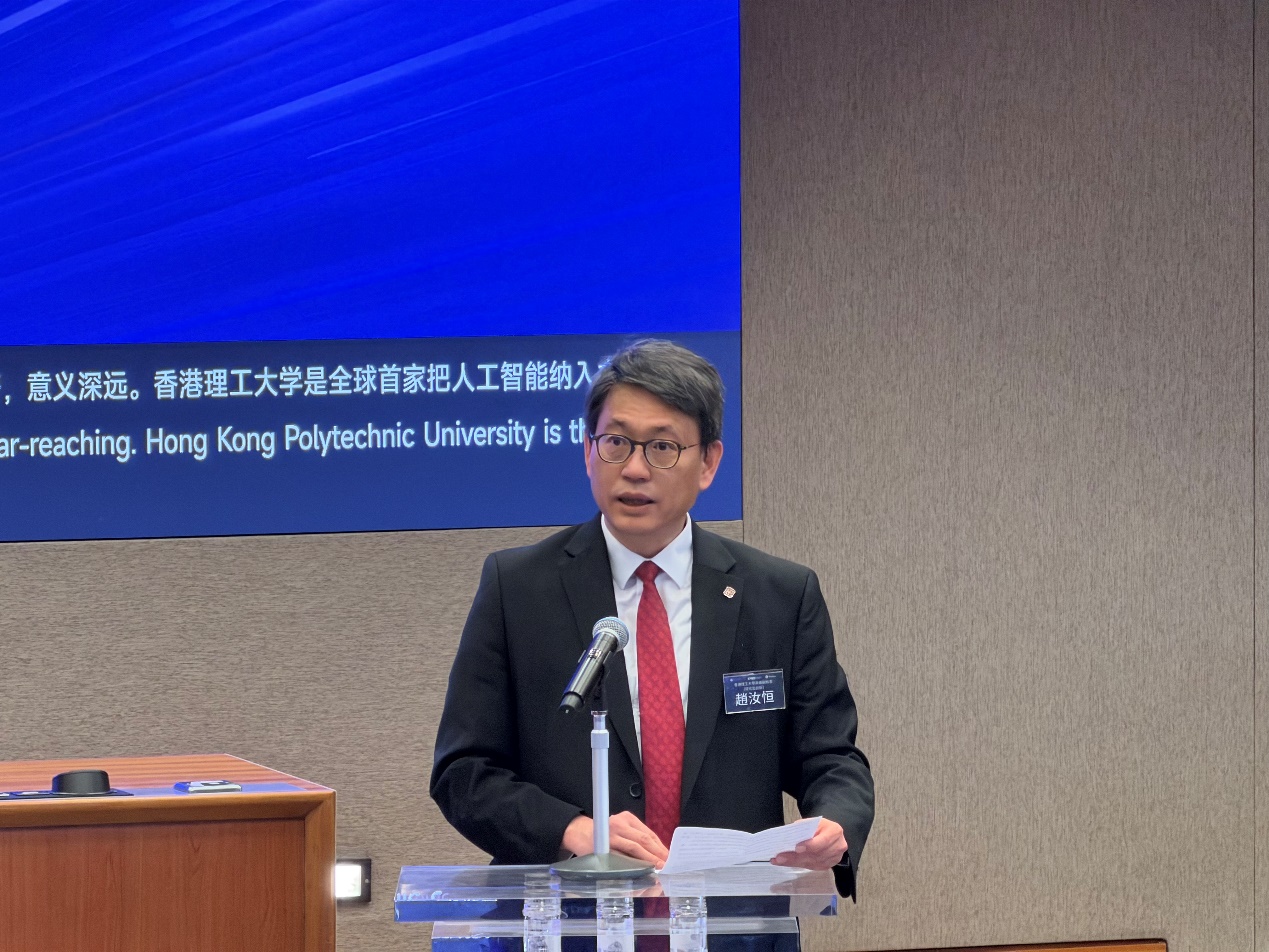
Christopher Chao, PolyU’s senior vice-president for research and innovation, said Hong Kong has the potential to play a significant role in technological innovation for cross-border legal services, as it has a well-established common law system as well as the distinct advantages of enjoying strong support of the motherland and being closely connected to the world.
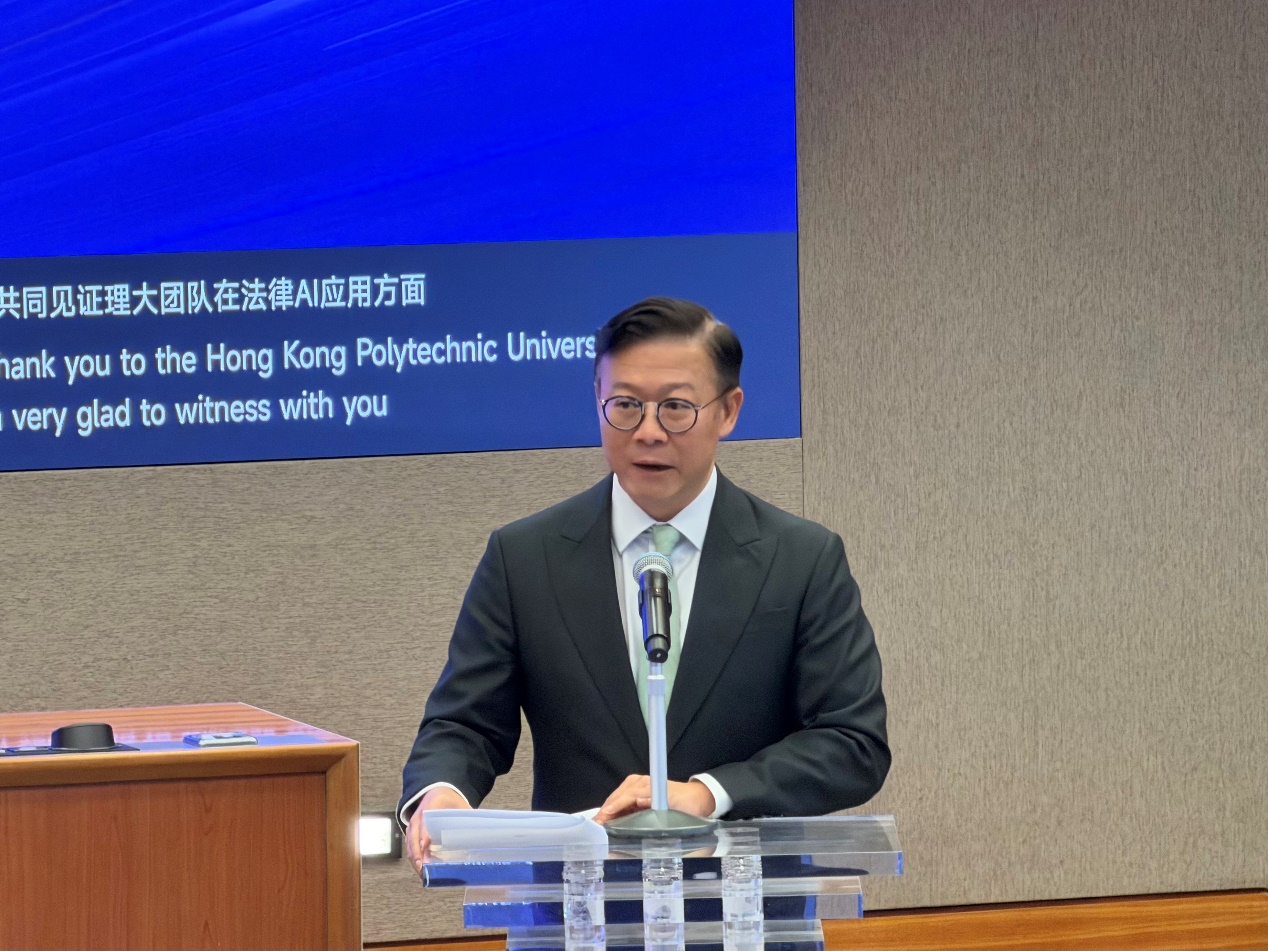
Deputy Secretary for Justice Horace Cheung Kwok-kwan said Hong Kong’s legal profession must leverage technology to raise the efficiency and quality of cross-border legal services, given that mainland companies expanding overseas face various compliance requirements and legal risks in different markets.
Cheung said AI tools can reduce the time lawyers spend on documents, data processing and translation, enabling them to focus on higher-value work that AI cannot replace, such as strategic planning, professional judgment and client engagement.
Contact the writer at irisli@chinadailyhk.com
