

Hong Kong Chief Executive John Lee Ka-chiu on Friday pledged to accelerate the city’s push to become a global artificial intelligence hub, outlining a multifaceted strategy backed by government investment, research capacity, and an open market.
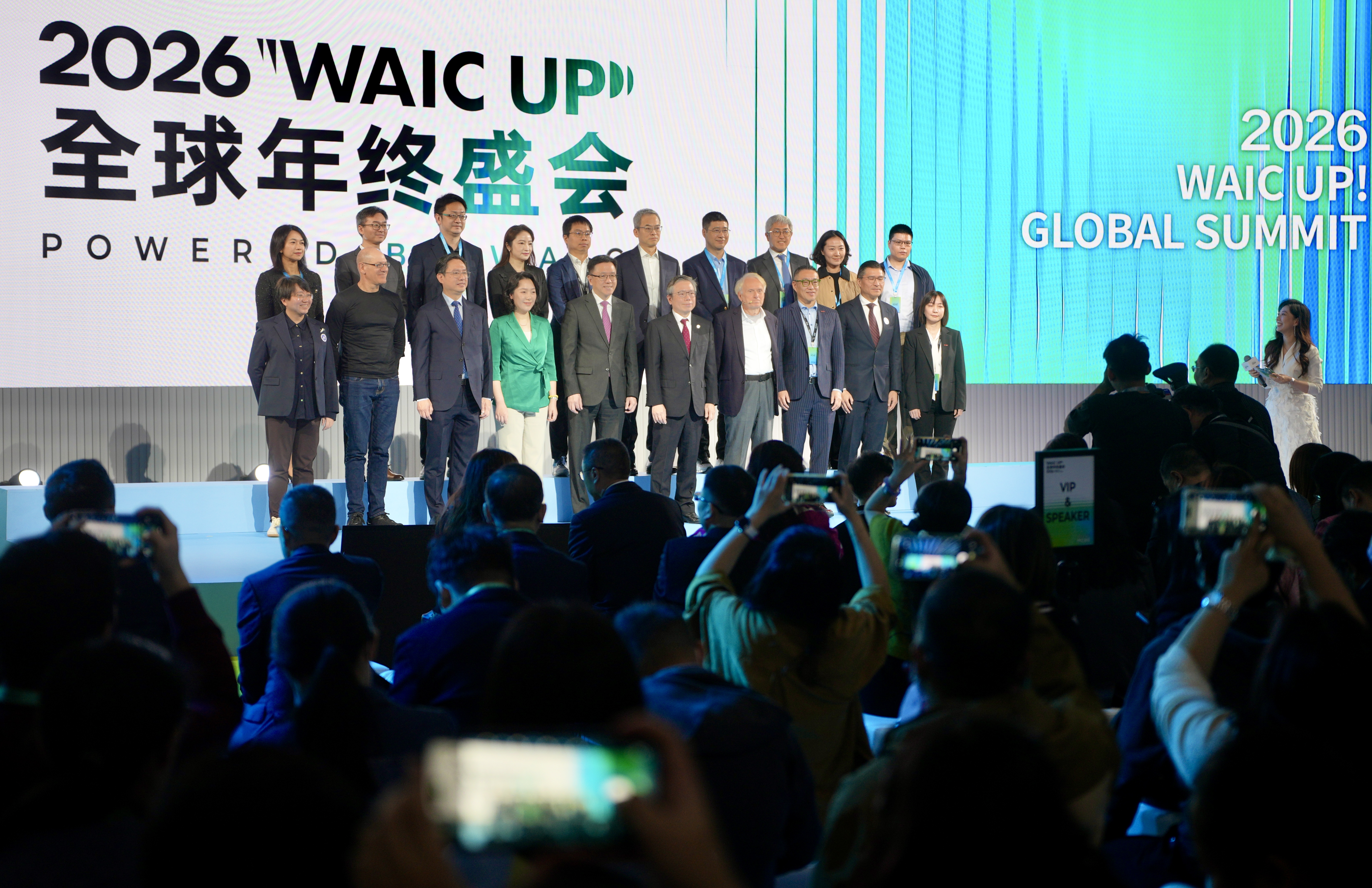
Lee made the remarks at the inaugural WAIC Up Global Summit, launched in Hong Kong as a platform under the 8-year-old World Artificial Intelligence Conference (WAIC), with the goal of shaping an equitable and sustainable AI future.
The one-day event, held at the Hong Kong Science and Technology Park under the theme “WAIC up! Wake up more”, featured keynote speeches, panel discussions and cutting-edge tech showcases from leading global voices. Topics focused on embodied intelligence, quantum technology, globalization strategies, and industrial applications.
“Hong Kong is moving full steam ahead to develop into an international innovation and technology center. Central to this vision is our commitment to advancing the development of AI,” Lee told the summit.
“Our approach is multifaceted, built upon the solid pillars of government investment, world-class research, strategic infrastructure, and a dynamic, open market.”
ALSO READ: HK launches HK$500m AI scheme to support schools

He said that the Hong Kong Special Administrative Region government has earmarked HK$1 billion ($128 million) for the establishment of the Hong Kong AI Research and Development Institute this year. The institute will facilitate upstream AI R&D, promote midstream and downstream outcomes, and expand use cases.
“This will significantly improve government efficacy to better meet public demands, through the important tool of AI,” Lee said.
Lee also highlighted the recent opening of the Hong Kong Park of the Hetao Shenzhen-Hong Kong Science and Technology Innovation Co-operation Zone a significant milestone. The park is designed to allow AI projects to progress rapidly from fundamental research in Hong Kong to commercialization and large-scale application in the broader market.
Secretary for Innovation, Technology and Industry Sun Dong said that the future of AI cannot be shaped by individual efforts alone but requires the collective drive of the global community.
“AI has become a core engine in driving global technological and economic progress,” he said, adding that the HKSAR government has funded the establishment of 16 R&D laboratories dedicated to AI and robotics technology, with the city’s total computing power now reaching 5,000 petaflops, 3,000 of which is supplied by the Cyberport AI Supercomputing Centre.
READ MORE: Chan: HK aims to be global innovation hub with AI at core
Petaflops are a measure of computational performance, with one unit representing 1 quadrillion floating-point operations per second.
“This center is a critical hub that supports Hong Kong’s AI development, and its capacity will continue to expand to meet growing demand,” Sun said.
He also highlighted the upcoming data facility cluster at Sandy Ridge in North district, which will provide advanced computing infrastructure to further promote data and AI industries.
Sun said that people — not algorithms — will ultimately shape AI’s future. “We have expanded the talent list to include more roles in the Innovation and Technology sector, including experienced AI specialists, to facilitate global experts to develop their careers in Hong Kong,” he said.
Since its launch in 2018, the annual WAIC has attracted over 6,000 experts from around the world.
Contact the writer at akirawang@chinadailyhk.com
