

From community mediation to emergency rescue, police officers in China uphold fair law enforcement, strict discipline, and a commitment to serving the people.
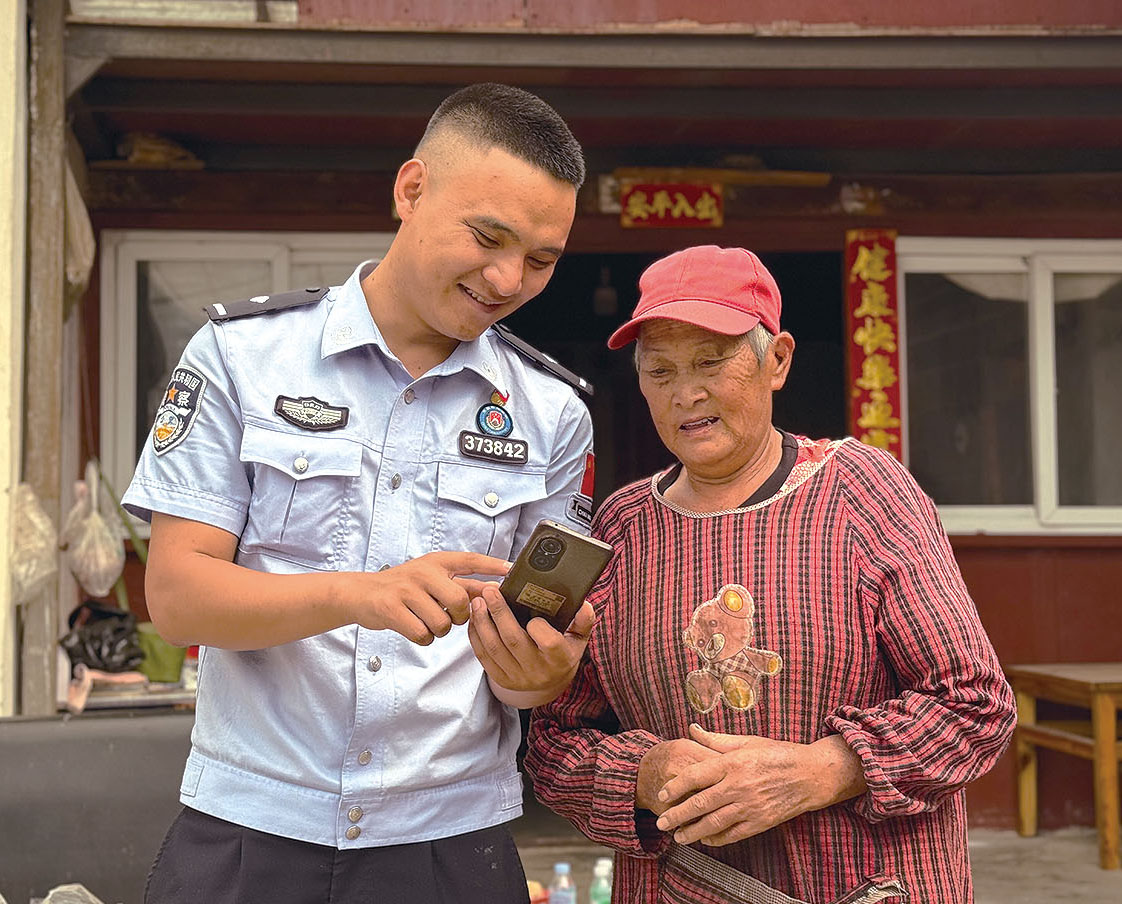
For Zheng Xinyang, the idea of becoming a police officer took shape early in childhood. Influenced by his father, a criminal investigator, he once pictured policing as a world of arrests, chases and high-stakes confrontations.
That image began to change in 2021, after he graduated from Beijing Police College and joined the Beijing Public Security Bureau's Dongcheng branch as a community police officer.
His days were soon filled with routine but essential work: registering residents, checking rental housing records and mediating neighborhood disputes.
It was far from what he had imagined. But over time, he came to see that this was where he truly began to understand what policing means.
"When you put on the uniform, every word you say represents the law," Zheng said. "It's not about authority or showing power. It's about using administrative discretion fairly and responsibly."
"If your mindset is wrong from the start, you can't enforce the law impartially," he added. "You can't let personal emotions or interests affect how you handle conflicts."
Beyond legal knowledge, he said, effective policing depends heavily on communication.
"My mentor knows almost every household in the community," Zheng said. "To balance law enforcement with empathy and care, we have to see issues from the residents' perspective."
Chang Zhijun, a community police officer with the border police station in Longchuan county, Yunnan province, shared a similar view.
In Yunnan — home to many ethnic minority groups, including the Jingpo, De'ang and Dai — day-to-day police work requires sensitivity to different languages, customs and traditions, Chang noted.
"Each ethnic group has its own way of communicating," he said. "Understanding those differences is essential if you want to do the job well."
Xu Liwei, also a community police officer in Beijing's Dongcheng district, emphasized the importance of strong foundational information.
"All police work relies on accurate basic information — data on people, locations and organizations," Xu said."If that foundation is shaky, everything that follows becomes much harder."
While information checks may seem routine, Xu said they rely largely on trust. Instead of rigid questioning, he prefers a conversational approach — especially with elderly residents — chatting about daily life and gradually piecing together the details he needs.
That kind of grassroots work plays a crucial role in criminal investigations.
In Gongxian county, Yibin city, Sichuan province, He Kaiyuan, head of the criminal investigation brigade, said information collected by local police stations often lays the analytical foundation for major cases.
"Initial reports, routine screenings and background checks help us spot patterns and potential risks," He said, especially in cases involving telecom and online fraud — a key focus in both 2024 and 2025.
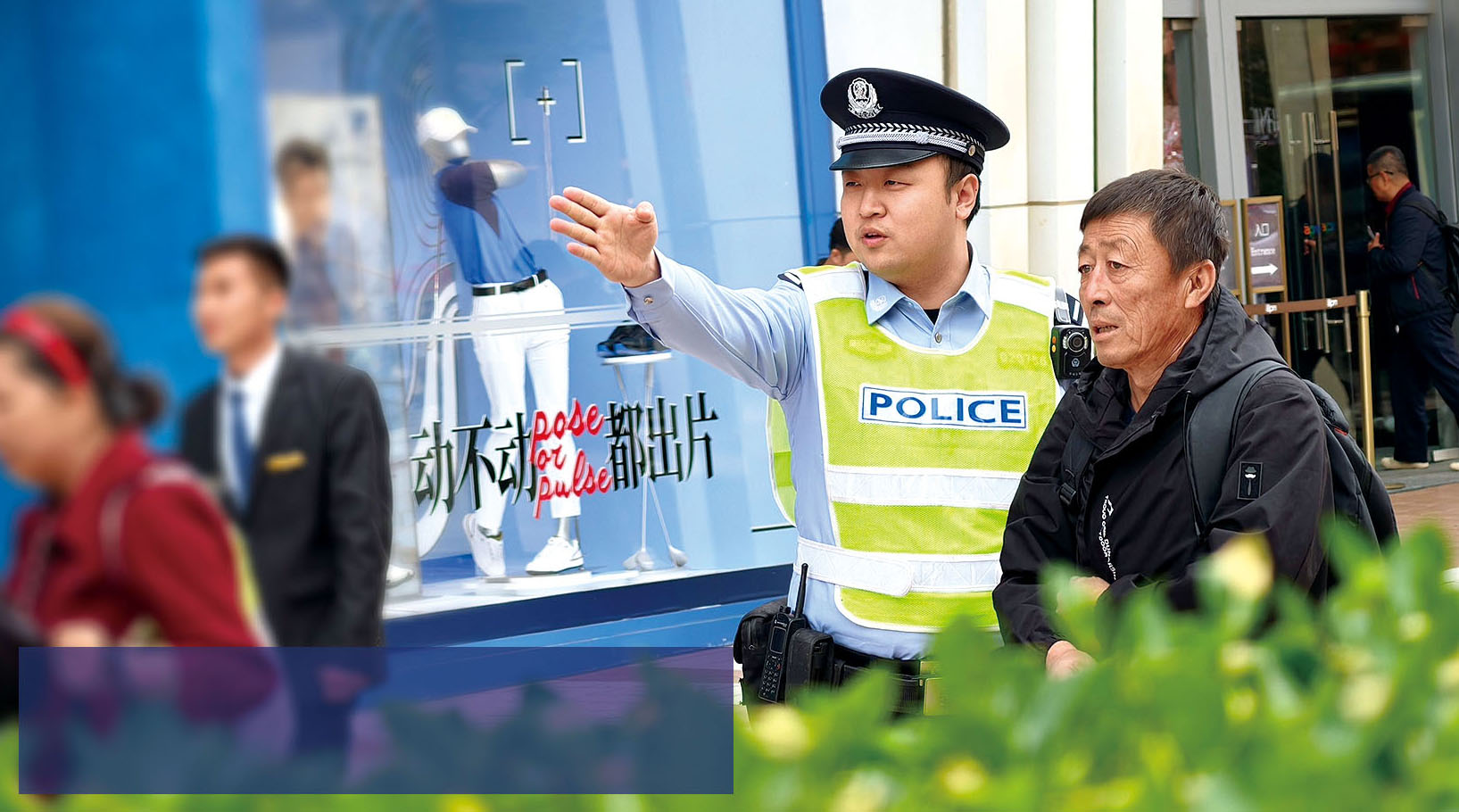
High standards
Unlike community policing, which centers on everyday governance, criminal investigation units typically handle cases with broader social impact.
"In the police system, criminal investigation often takes the lead in major cases," He said. "We coordinate resources and organize joint operations."
That role, he added, requires strict self-discipline and continuous learning. With nearly 30 years on the force, He believes effectiveness comes from constantly assessing new situations and flagging problems early.
"When I train younger officers, I'm very strict," he said.
"But strictness is a form of care. The real problem is failing to notice an issue. Once you identify it, the key is solving it — together."
Discipline becomes even more critical in emergencies.
Zhang Xin, an officer with the special police unit of Gongxian's public security bureau, is responsible for emergency response and high-risk operations.
He said some missions involve confronting armed suspects. Officers may face knives, firearms or even explosives, often while assisting criminal investigators in the arrest of dangerous individuals.
To meet those demands, Zhang said, daily training is essential. It includes physical conditioning, weapons handling and tactical coordination, along with the constant refinement of operational procedures.
But skill alone is not enough. Zhang emphasized the importance of psychological resilience and clear judgment under pressure.
"The real challenge is applying tactics accurately in complex, fast-changing environments — and doing so strictly within the boundaries of the law," he said.
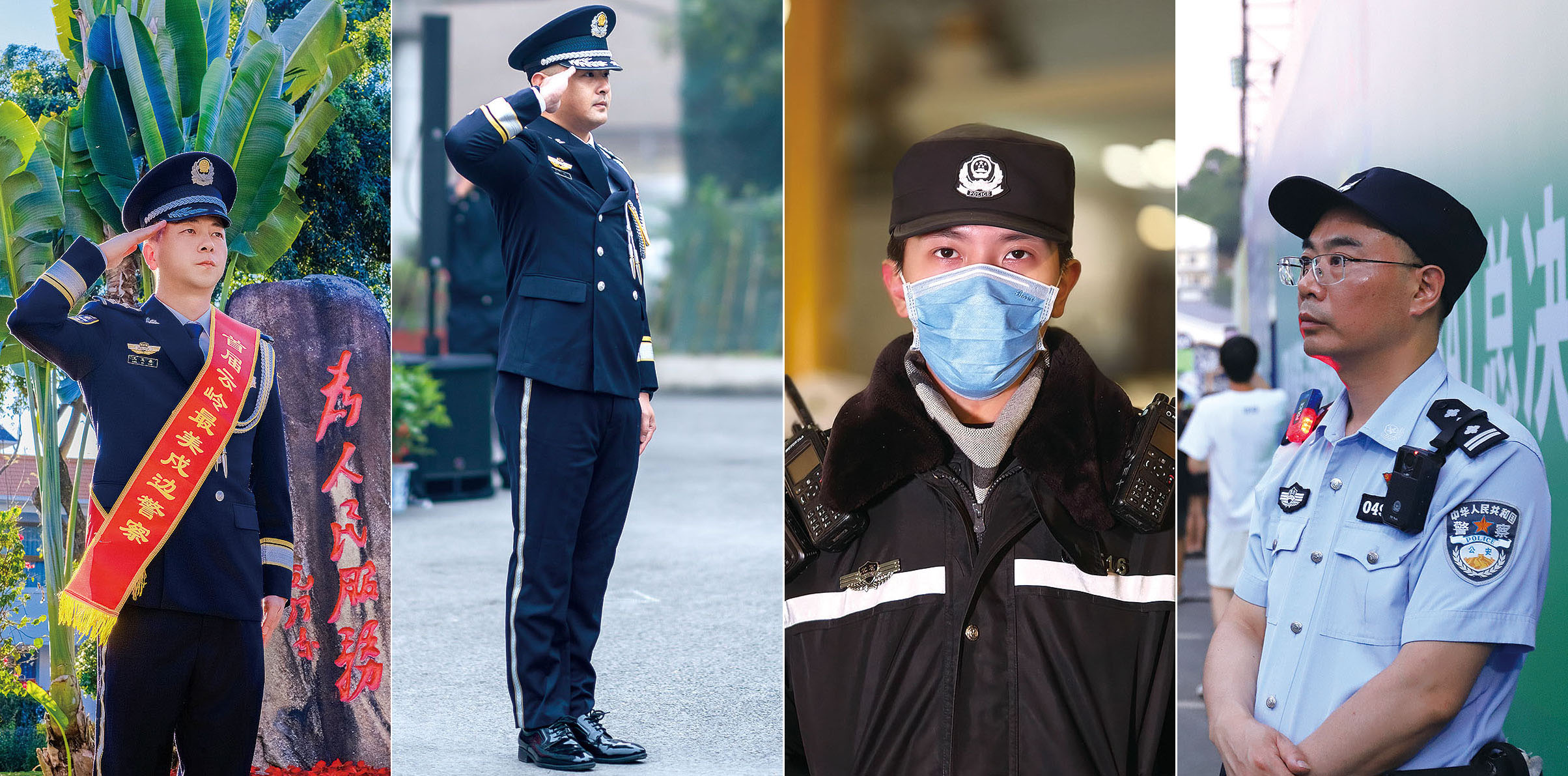
A shared call
For Zhang, being a member of the special police unit is more than a job."It's a belief," he said. "It comes with both reverence and passion."
"The weight of policing isn't just the uniform you wear," he added. "When people are at their most desperate, police officers are a helping hand — or even the only light in the darkest moments."
Zhang recalled participating in earthquake rescue operations, where police officers were among the first to arrive.
"In those moments, you don't even have time to feel tired," he said. "When you pull someone to safety, you truly understand the mission of the police: to be the most reliable support when people are most helpless."
But not every challenge comes in a crisis.
Wang Yuxin, an instructor at the Xima border police station under the Dehong border management detachment in Yunnan, spoke about the hardships of long-term service in remote border areas.
After joining the force, he was posted step by step from major cities to border prefectures, then counties, and eventually remote townships. His current station is more than 50 kilometers from the county seat.
"Young officers sometimes joke that even eating hot pot feels like a luxury here," he said.
Even so, Wang has long cared about the lives of local students. For more than 13 years, he has led charitable initiatives to support children in remote areas, mobilizing volunteers and donations from across the country. Thousands of students have received books, school supplies, and financial assistance.
For Zheng, community policing has become deeply personal over time.
"Now, when I return to the neighborhood each day, it feels like coming home," he said. "Residents are happy to see me, and they're willing to join the anti-fraud activities I organize. They treat me like family."
Helping people solve everyday problems brings him the greatest sense of fulfillment.
"Seeing their smiles means more to me than any award. I'm like a small night-light: always on, quietly watching over everyone so they can live and work in peace," Zheng said.
Contact the writers at guojiatong@i21st.cn
