

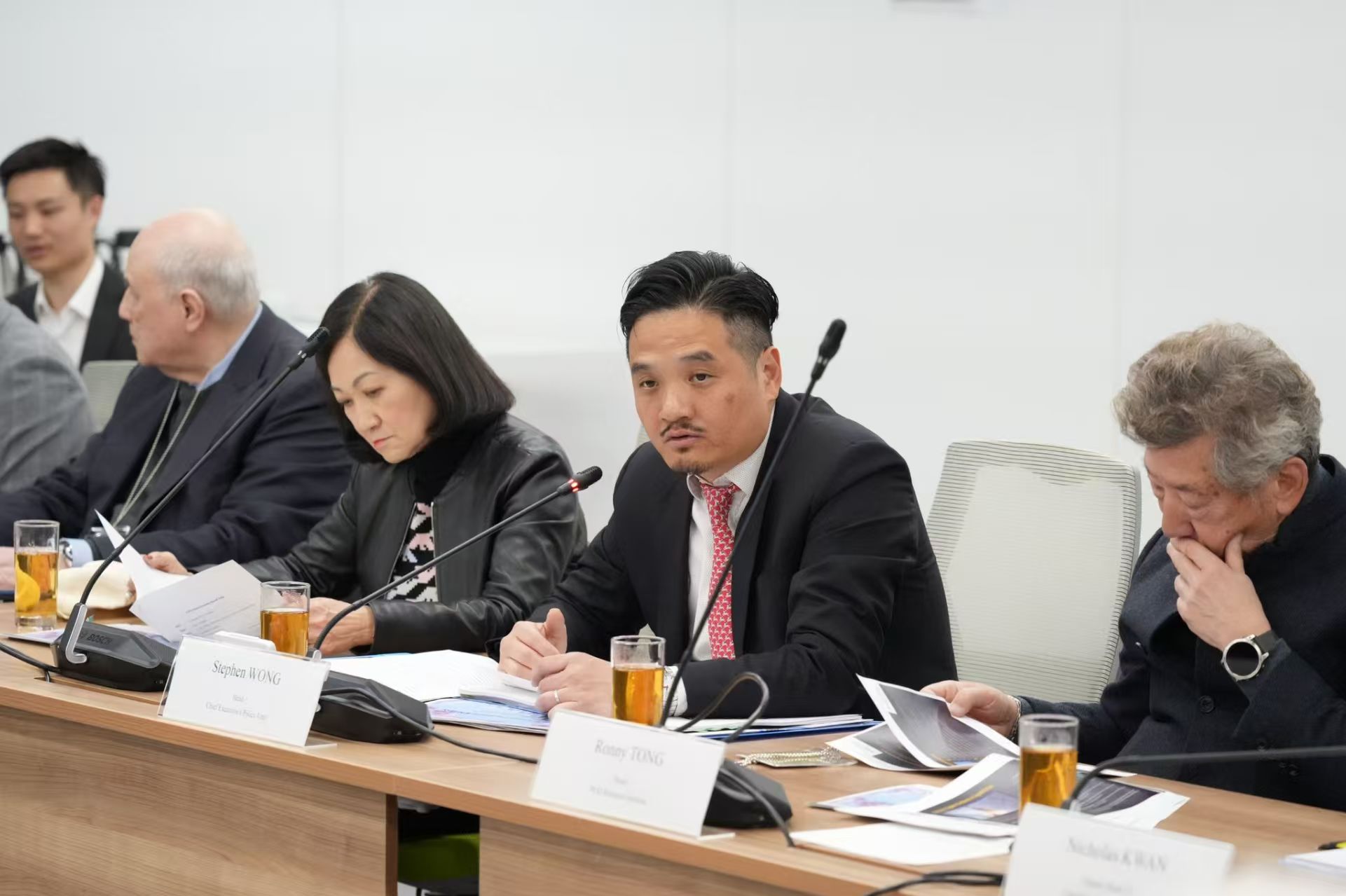
The emergence of the new space economy has opened new potential for the Hong Kong Special Administrative Region to align with the central government’s 15th Five-Year Plan (2026-30), which is expected to include aims to accelerate the nation’s push to become a global aerospace power, according to Hong Kong’s Chief Executive’s Policy Unit (CEPU).
Hong Kong, positioned as both a “superconnector” and a “super value‑adder”, can harness its strengths in research, finance, and professional services to play a pivotal role in driving innovation and development in the space, said Wong Yuen-shan, head of CEPU, during a roundtable event featuring space sector heavyweights from the State, the SAR and international organizations.
The plan is expected to elevate aerospace development to a national strategic priority and call for Chinese commercial space enterprises to expand globally, including across Belt and Road and ASEAN markets. “For Hong Kong, space development is not only a scientific or industrial challenge but a full‑chain opportunity covering basic research, professional services, intellectual property, finance, and data governance,” he said.
As countries race to secure resources and technological advantages in orbit, the space economy is emerging as a key driver of global growth. The World Economic Forum’s 2024 report estimates that the global space market will surge from about US$630 billion in 2023 to US$1.8 trillion by 2035, growing nearly 9 percent annually — far faster than world GDP.
Anthony Neoh, chairman of the Asian Academy of International Law, emphasized Hong Kong’s advantages in space finance, insurance, and legal arbitration under its common‑law system.
Ye Shalin, innovation and overseas business director at the mainland’s LandSpace Technology, said he believes Hong Kong could play a role in the global supply chain in the commercialization of the space.
Academics from some of Hong Kong’s prestigious universities highlighted local contributions to China’s lunar, satellite, and robotics missions, underscoring the city’s scientific foundation for future aerospace innovation.
The 2025 Policy Address has already earmarked more than HK$100 million ($13 million) for six research projects in materials, energy, robotics, and communications, including support for China’s Chang’e‑8 mission. Hong Kong Investment Corp will intensify its investments in aerospace and space‑related ventures, further consolidating the city’s role as an innovation and financing hub within the Guangdong-Hong Kong-Macao Greater Bay Area and beyond.
Wong said that CEPU will continue working with mainland agencies — including the China Academy of Space Technology and commercial enterprises — to identify new directions for collaboration and industrial growth.
The dialogue strengthened cross‑sector understanding and provided valuable insights for Hong Kong’s continued participation in the national and global space economy, said Quentin Parker, head of the Laboratory for Space Research at the University of Hong Kong .
China has the will, technical capacity and scale to tackle space issues for the global good, he added, with the HKSAR playing a vital role as a superconnector and outward-looking common law jurisdiction.
Contact the author at jessicachen@chinadailyhk.com
