

Green approach propels Chenzhou toward becoming leading computing power base
Editor's note: As protection of the planet's flora, fauna and resources becomes increasingly important, China Daily is publishing a series of stories to illustrate the country's commitment to safeguarding the natural world.
The term "the cloud" evokes images of something light and ethereal, but the reality of the digital infrastructure that stores our photos, streams our movies, and trains our artificial intelligence models is far more energy-intensive — and hot. Data centers around the globe are voracious consumers of electricity, with a significant portion dedicated to cooling.
In Central China's Hunan province, a visionary project is challenging this paradigm. Beneath the surface of a picturesque lake nestled between mountains in Zixing, Chenzhou city, the water maintains a constant, chilly 8-13 C year-round. This natural asset has been transformed from a mere scenic marvel into the lifeblood of a burgeoning "green data castle" on its shores.
Dongjiang Lake, an artificial reservoir in the Xiangjiang River water system, spans 160 square kilometers with a total storage capacity of 8.1 billion cubic meters. It is a renowned scenic area and serves as a vital source of drinking water to over 2 million people, according to the Sustainable Development Promotion Center in Chenzhou.
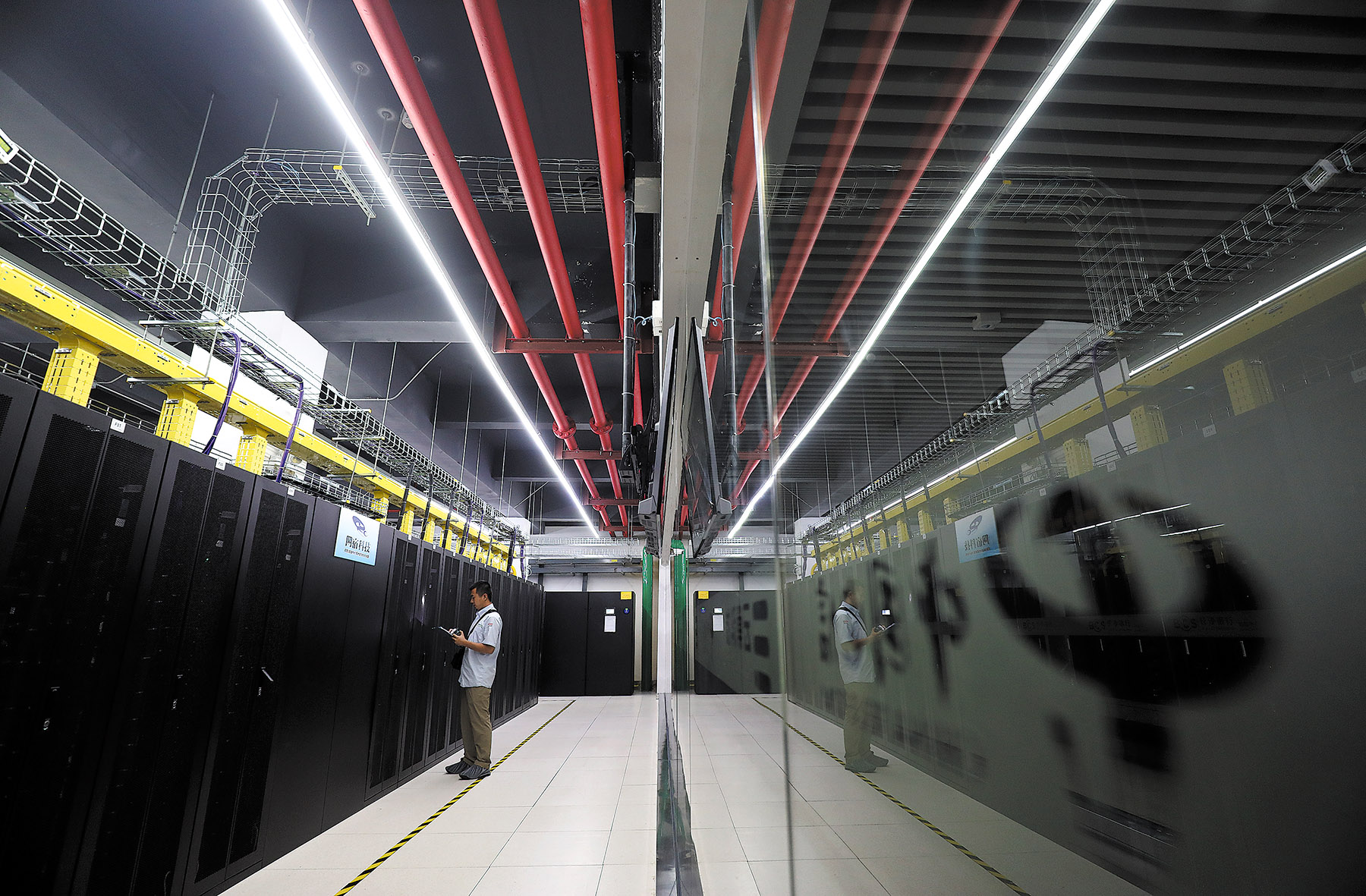
A few kilometers away, in the Dongjiangwan area, the Yunchao Dongjiang Lake Big Data Center hosts over 3,800 server racks from the country's top information platforms. To maintain optimal temperatures and prevent malfunctions, the servers are cooled using the lake's cold water. According to local authorities, the center, which started operation in 2017, is one of China's first big data centers fully cooled by natural water.
Traditionally, data centers use compressors, which are also widely used in household air-conditioning, to cool servers — a method that consumes significant power.
To improve the energy efficiency of the industry, in 2014, entrepreneur Lei Jianjun envisioned using natural cold water to cool a data center. After evaluating water resources and construction conditions in multiple locations, Lei and his team chose Dongjiang Lake.
On its shore, they built a big data center, designed to provide data storage, computing and internet access services for the internet and finance industries across the region and beyond.
"We pioneered the direct supply and full natural cooling technology of lake water," said Kuang Bin, an official from the Dongjiang Lake Big Data Industry Development Promotion Center.
After pumping up the lake water, plate heat exchangers and pipelines are used to bring the cold air carried by the water to cool down the equipment, Kuang said, keeping the temperature inside the data center between 18-27 C, which is optimal for the function of the equipment.
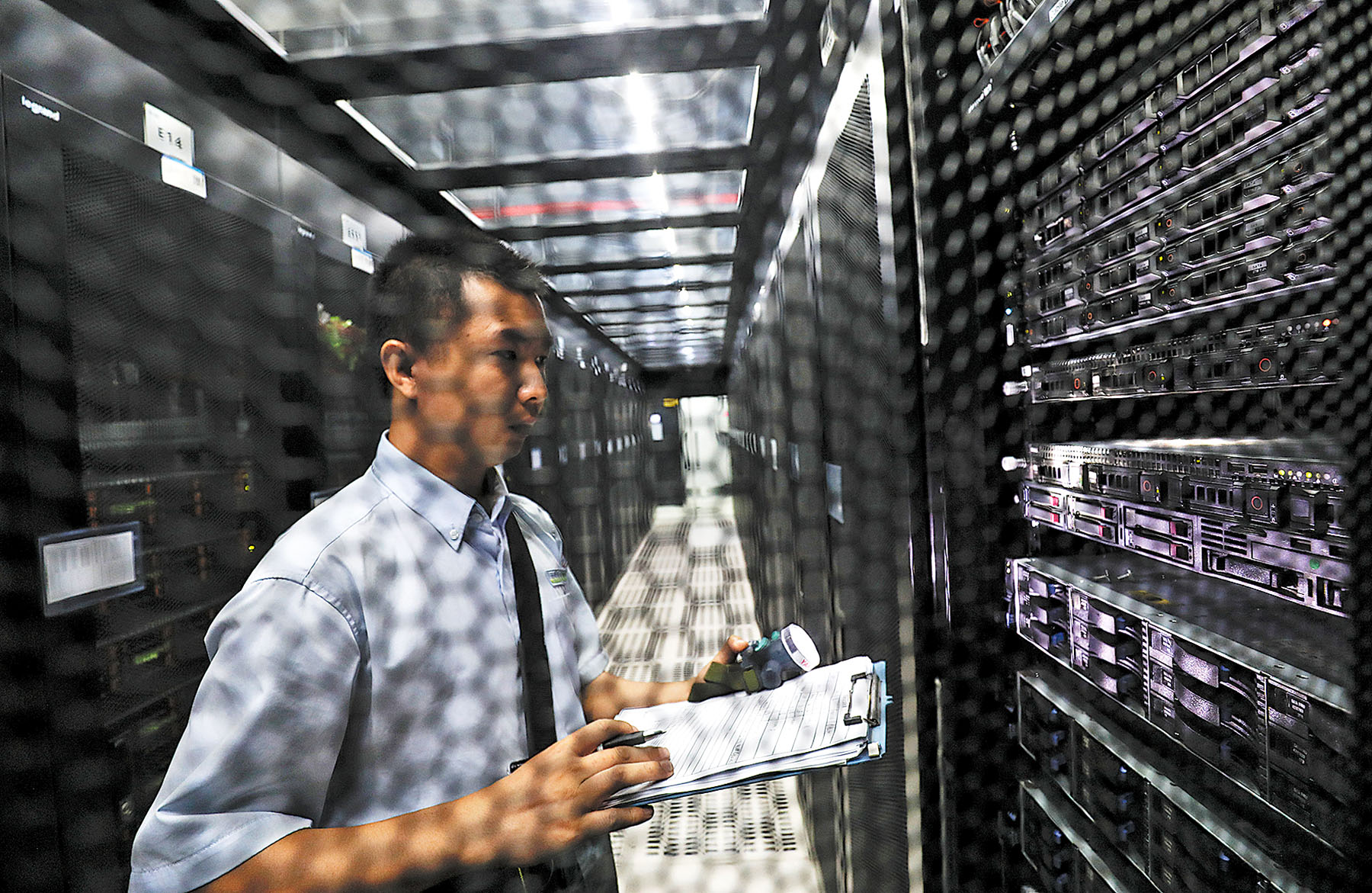
The water, after finishing its job in the data center, is returned to the downstream river, with its temperature rising only by 2-5 C, aligning with the river's natural thermal rhythm, Kuang said.
Most importantly, the entire process is pollution-free and does not affect water quality, he added.
"For 99 percent of the year, we rely entirely on lake water," he said. Traditional chillers like compressors are activated only under extreme conditions, such as flooding, when water quality or temperature becomes unsuitable for natural cooling.
An internationally adopted key metric for data center efficiency is power usage effectiveness, or PUE, calculated by dividing total energy entering a facility by the energy used solely for IT equipment. A lower PUE indicates better efficiency, meaning less energy is spent on overheads like cooling and lighting, with a PUE of 1 being the optimal figure.
According to the Uptime Institute Global Data Center Survey 2024, the industry average PUE for data centers worldwide stands at 1.56, meaning that for every watt powering a server, an additional 0.56 of a watt is consumed in overheads.
Through its eco-friendly cooling system, the Dongjiang Lake center achieves an annual average PUE under 1.2. Compared to a data center with a PUE of 1.5, it saves more than 25 percent more energy, according to data from the center.
However, the center still faces pressure to reduce electricity costs while enhancing its green credentials, said Tang Ling, director of the center. To tackle this challenge, the center has explored ways to deploy more renewable energy resources.
Photovoltaic panels have been installed on the rooftops of the center's buildings, converting sunlight into clean power, feeding directly into operations. The center is also working on research projects to integrate more wind and photovoltaic power from nearby areas into its grid, Tang said.
To enhance energy efficiency, innovations at the center extend beyond cooling.
In 2021, the center launched a waste-heat recovery demonstration project with local government and research teams from institutions like Hunan University and Central South University in Changsha. Instead of discharging warmed lake water directly back to rivers, the project aimed to collect and reuse excess heat produced by the cooling process.
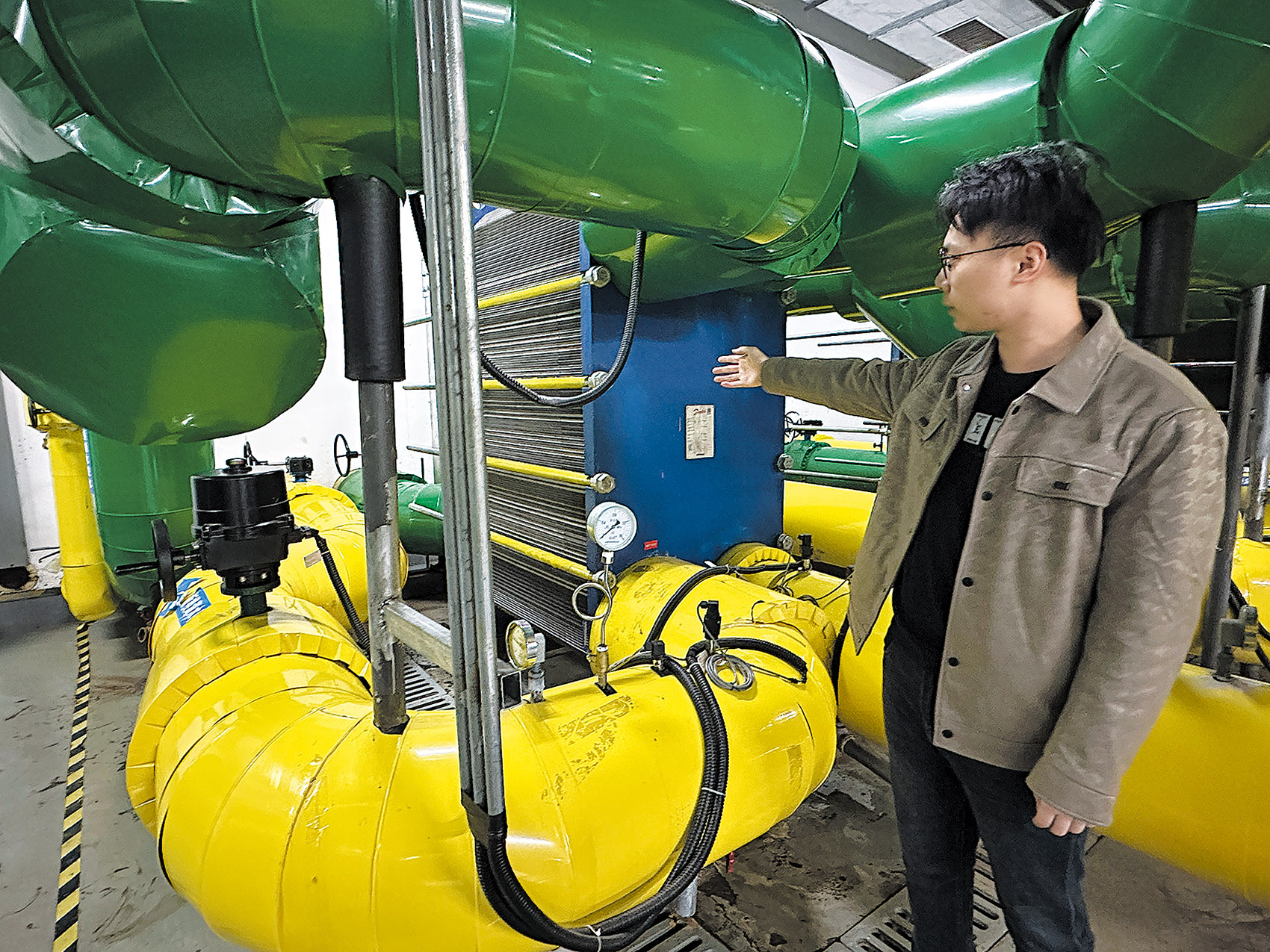
In 2023, the team developed a system to capture waste heat from the return side of the water pipelines used for cooling servers and put it into operation. This recovered thermal energy is used for winter heating in the data center's office area.
"Compared to traditional heating solutions, this system provides a 50 percent energy saving," Tang said.
Outside the center, a big data industrial park is under development, which will cover more than 3.3 square kilometers, and has a planned investment of 50 billion yuan ($7.15 billion), according to the Chenzhou government. Upon completion, the park will host data centers capable of accommodating 200,000 server racks, or 5 million servers.
The park has secured five data center projects and provides services, including computing power and data storage, to 74 enterprises. Its computing power has reached 700 petaflops, with 500 petaflops of general-purpose computing and 200 petaflops of intelligent computing. Last year, the park generated 580 million yuan in revenue, it said.
In 2021, the park was recognized by the Ministry of Ecology and Environment as a green and low-carbon development model for the country.
In recent years, Zixing, a county-level city under Chenzhou, has been utilizing its natural resources to build a National New Data Valley, which will serve as an important green data base for the region and the country.
"We have prioritized the big data industry in the city's development plan," said Yang Licheng, Party secretary of Zixing.
The government is dedicated to establishing a comprehensive computing power base, attracting leading enterprises and top talents in intelligent computing and the big data industry, and constructing a fully integrated industrial ecosystem, Yang said.
Tang, the Yunchao Dongjiang Lake big data center director, sees the center's heat recovery system as being part of the city's broader big data industry plan.
Calculated at the planned scale of 10,000 racks running at full capacity, the industrial park could save approximately 2.5 billion kilowatt-hours of electricity annually by applying this technology, he said.
"Once the park is fully operational, this technology will save enterprises substantial electricity costs and may also benefit surrounding residents in the future," he added.
Contact the writers at limuyun@chinadaily.com.cn
