

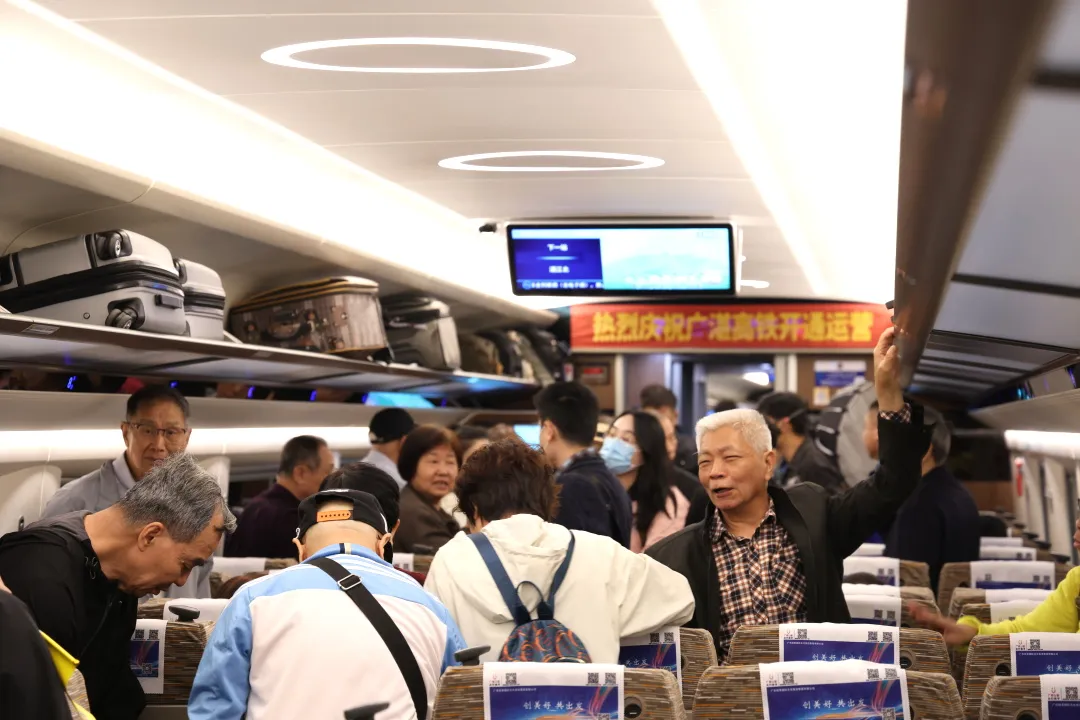
Two high-speed rail lines started operations in Guangdong province on Monday, dramatically shortening travel times between the province’s eastern and western regions and the Guangdong-Hong Kong-Macao Greater Bay Area.
The opening of the Shantou to Shantou South section of the Shantou-Shanwei High-Speed Railway and the Guangzhou-Zhanjiang High-Speed Railway marks a milestone in Guangdong’s railway network, enhancing the economic connectivity in the province.
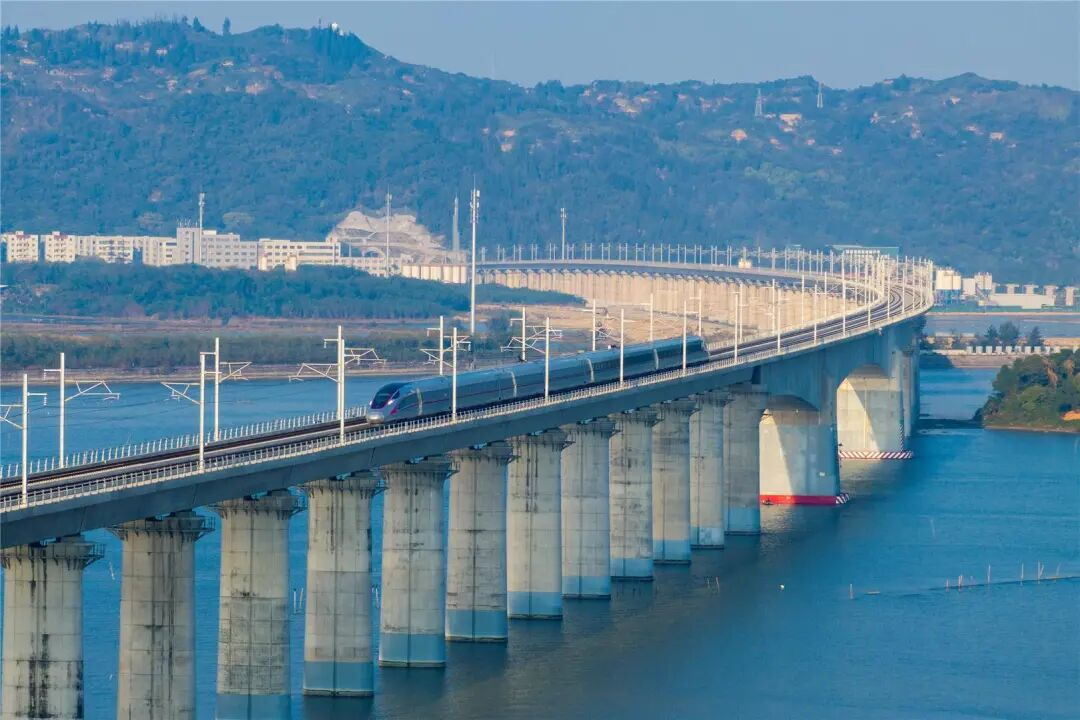
The 19.8 km Shantou to Shantou South section is the final segment of the 162-km Shantou-Shanwei High-Speed Railway, designed for speeds of 350 km/h and passing through three cities – Shantou, Jieyang and Shanwei. The new section features a 9,781-meter Shantou Bay Subsea Tunnel, the world's first single-tube, double-track tunnel designed for 350 km/h trains.
The new section brings about a dramatic reduction in travel times. The fastest journey between Shenzhen and Shantou is now 1 hour and 39 minutes, while the trip from Guangzhou to Shantou has been slashed to 1 hour and 50 minutes, effectively integrating Shantou into the Greater Bay Area's "90-minute life circle."
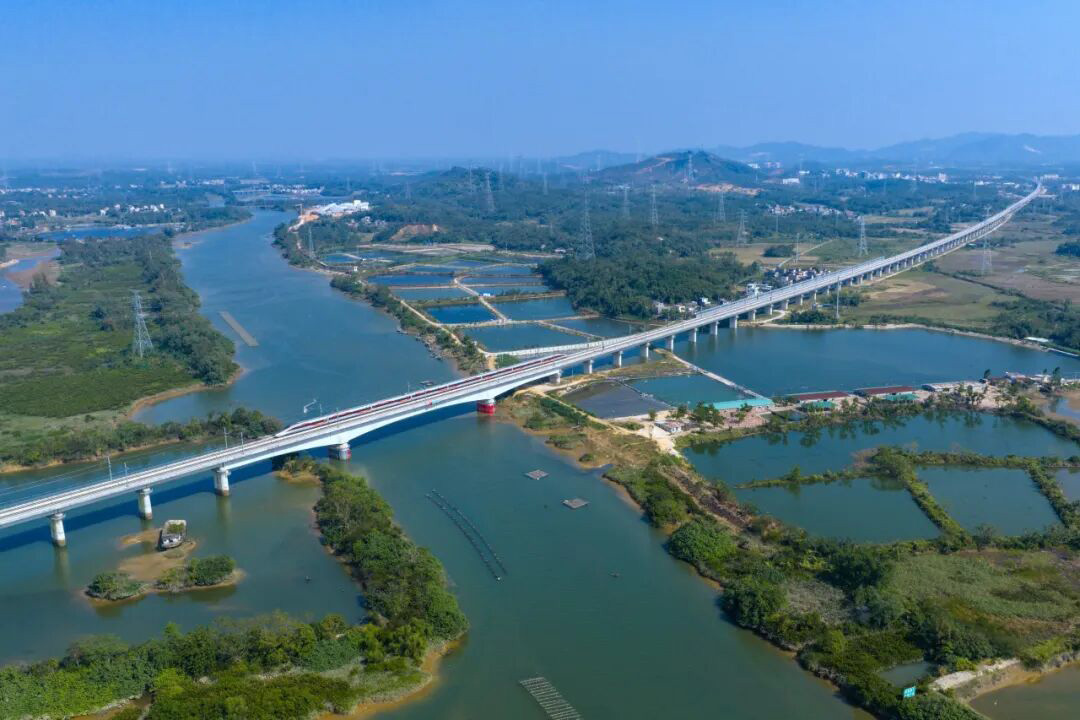
Also on Monday, the Guangzhou-Zhanjiang High-Speed Railway was officially launched. This 401-km line, also designed for 350 km/h, connects Guangzhou with Zhanjiang via Foshan, Zhaoqing, Yunfu, Yangjiang, and Maoming. The travel time between Guangzhou and Zhanjiang will be cut by half from about 3 hours to just an hour and a half.
Both lines are integral components of China's “Eight Vertical and Eight Horizontal” high-speed rail network, specifically forming key parts of the coastal corridor.
ALSO READ: Two cross-border projects 'to connect HK, SZ metro networks seamlessly'
The full opening of the Shantou-Shanwei High-Speed Railway completes a critical link along the southeastern coast. In the future, it will connect with the under-construction Zhangzhou-Shantou High-Speed Railway.
Similarly, the Guangzhou-Zhanjiang High-Speed Railway’s strategic importance extends beyond Guangdong. It paves the way for a future connection to the Hainan Free Trade Port via the planned Zhanjiang-Haikou railway, solidifying Guangdong's role as a vital hub in the national transportation framework.
