

Driven by empathy and experience, Cui Yameng opens her home to travelers with disabilities, offering comfort, dignity and new possibilities.
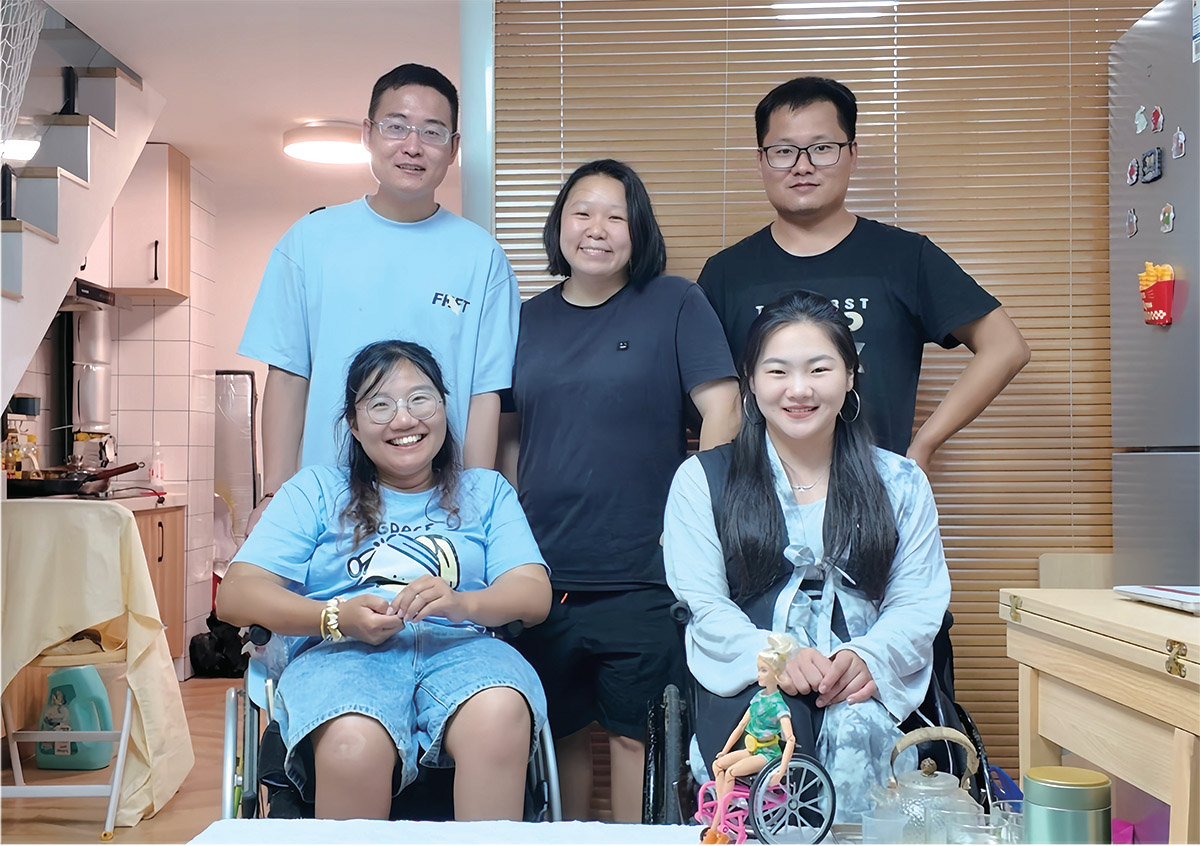
When you step into "Yameng's Home", a guesthouse in Qingdao, Shandong province, the first things that may catch your eye are a Barbie doll in a wheelchair and a three-legged cat named Joy happily roaming around.
The guesthouse is run by 29-year-old Cui Yameng, a passionate advocate for public welfare who is dedicated to breaking down barriers for people with disabilities.
In 2023, Cui returned to her hometown of Qingdao after working in Beijing and Chongqing and purchased a loft apartment. She kept the second floor as her own living and working space while transforming the first floor into a fully inclusive guesthouse. "I want to invite people of all abilities to come to Qingdao and enjoy the sea," she said.
This decision wasn't made on a whim. While in high school, Cui volunteered with a public welfare organization and later applied to Nanjing Normal University of Special Education. During her university years, she traveled with friends with disabilities and witnessed firsthand how everyday obstacles — a small step, a narrow doorway, or a high washbasin — could keep them from moving forward.
It was then that Cui set her long-term goal: to open a fully accessible hotel. Opening her home to guests, she said, was simply "a more achievable starting point".
ALSO READ: Theater that unites all abilities
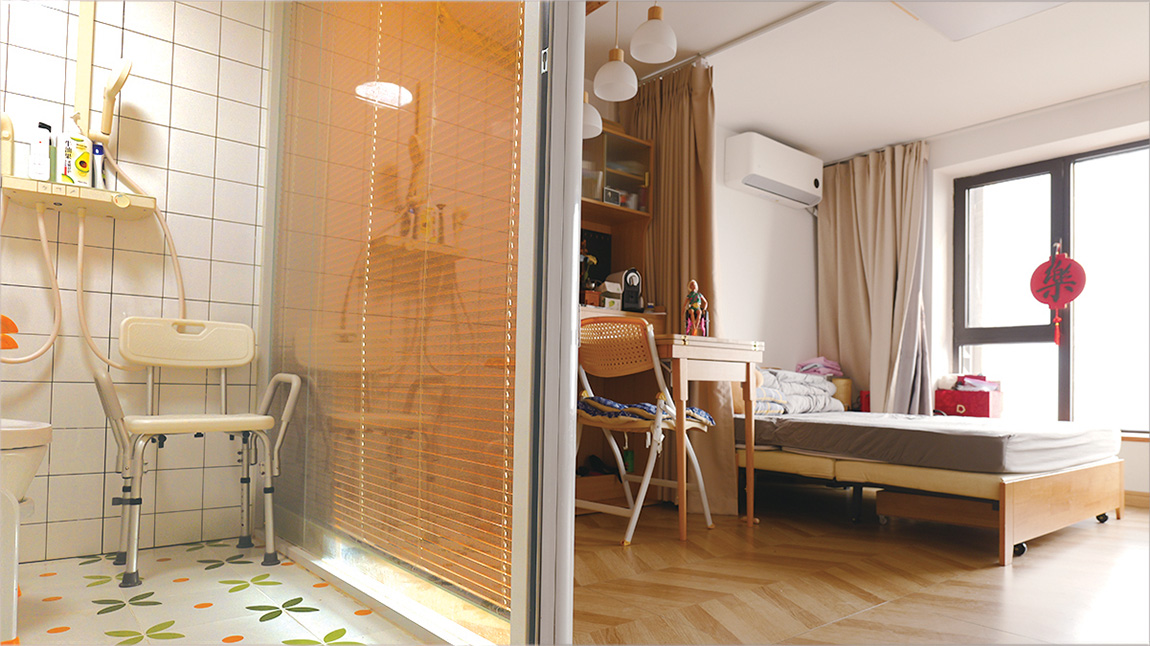
At Yameng's Home, every detail has been thoughtfully designed. At the entrance, a 3-centimeter-high ramp allows easy access for wheelchair users. In the kitchen, the counters are lowered to make cooking more convenient for guests with limited mobility. The bathroom mirror is mounted on a pivot so it can be adjusted for both seated and standing users. In the bedroom, the bed height can be altered by adding or removing mattresses to suit different needs.
Cui also offers free accommodation to guests with disabilities — though not entirely "free". In return, visitors are invited to share a story about themselves. "Some people might hesitate when they hear there's no charge. I want guests to feel they can stay here with dignity and peace of mind," Cui said.
In April 2024, Cui welcomed her first guest — a young woman who had lost both legs. The guest had never ridden a bicycle before, so Cui invited her to visit a local cycling enthusiast. Together, they rode a tandem bike along the Qingdao coastline, feeling the sea breeze as they went.
The visitor later shared her experience on Xiaohongshu (RedNote), a popular Chinese social media platform. Her story resonated deeply and inspired many of her followers with disabilities. One of them, Cui recalled, had been hesitating to take his first solo trip in nearly two decades. After seeing the post, he finally decided to go.
"These stories can encourage more people with disabilities to step outside and embrace life," Cui said.
She explained that people with disabilities are often invisible in everyday life, even though they make up a significant portion of the population. According to the World Health Organization, around 16 percent of people worldwide live with disabilities."What we truly lack is not accessible facilities, but awareness of disabilities," she said.
Beyond running her guesthouse, Cui also works full-time at Weiai, a public welfare service center in Qingdao. "I first volunteered here when I was in high school," she recalled. "That experience planted the seed for both my academic path and my career in public service. Returning to work with old friends feels like a natural continuation of that journey."
At Weiai, Cui and her team organize activities designed to help children better understand the challenges faced by people with disabilities. In one activity, for example, children wear blindfolds to experience daily life without sight; in another, they use wheelchairs to navigate stairs without elevators.
"I'm not disabled myself, but through my life and work I've made many friends with disabilities, which has given me a deeper understanding of their experiences," Cui said. "I hope to be the bridge between them and the wider society."
And she has done just that. After her guesthouse attracted attention on social media, Cui began receiving numerous inquiries about accessible design. In early November, for example, the owner of a newly opened dumpling shop contacted Cui for advice on creating an inclusive renovation plan for her restaurant.
Reaching further
Cui said that when she finds herself in the spotlight, she would rather the attention not be on her, but on how people can make a positive impact within their own fields.
"If someone like me — with limited resources — can make a difference, just imagine what business owners, guesthouse hosts, and restaurant operators could do to build more inclusive environments."
Cui's home has already welcomed 28 guests from across China, but she has no intention of stopping there. She hopes to extend her hospitality to international visitors as well.
ALSO READ: The light beyond our sight
"China's accessible facilities and services have made great progress, especially over the past decade," Cui said. She noted that in 2023, the Law of the People's Republic of China on Building Accessible Environments was enacted, providing a strong legal foundation for a more inclusive society.
In Qingdao, she has noticed that when wheelchair users arrive at security checkpoints, they are promptly offered assistance. By the time they reach the platform, all necessary accessible facilities — including boarding mats that help bridge the gap between the platform and the train — are already in place.
Looking ahead, Cui has already received reservations from tourists with disabilities in Malaysia for the coming year.
Despite the growing popularity of her guesthouse, she hopes that one day she will be able to close it because it is no longer needed. "That would mean people with disabilities can easily find and book accessible, affordable accommodations anywhere," she said. "I truly look forward to that day."
Contact the writers at mengwenjie@i21st.cn
