

Families invest in children's future, paying for short-term programs in foreign countries
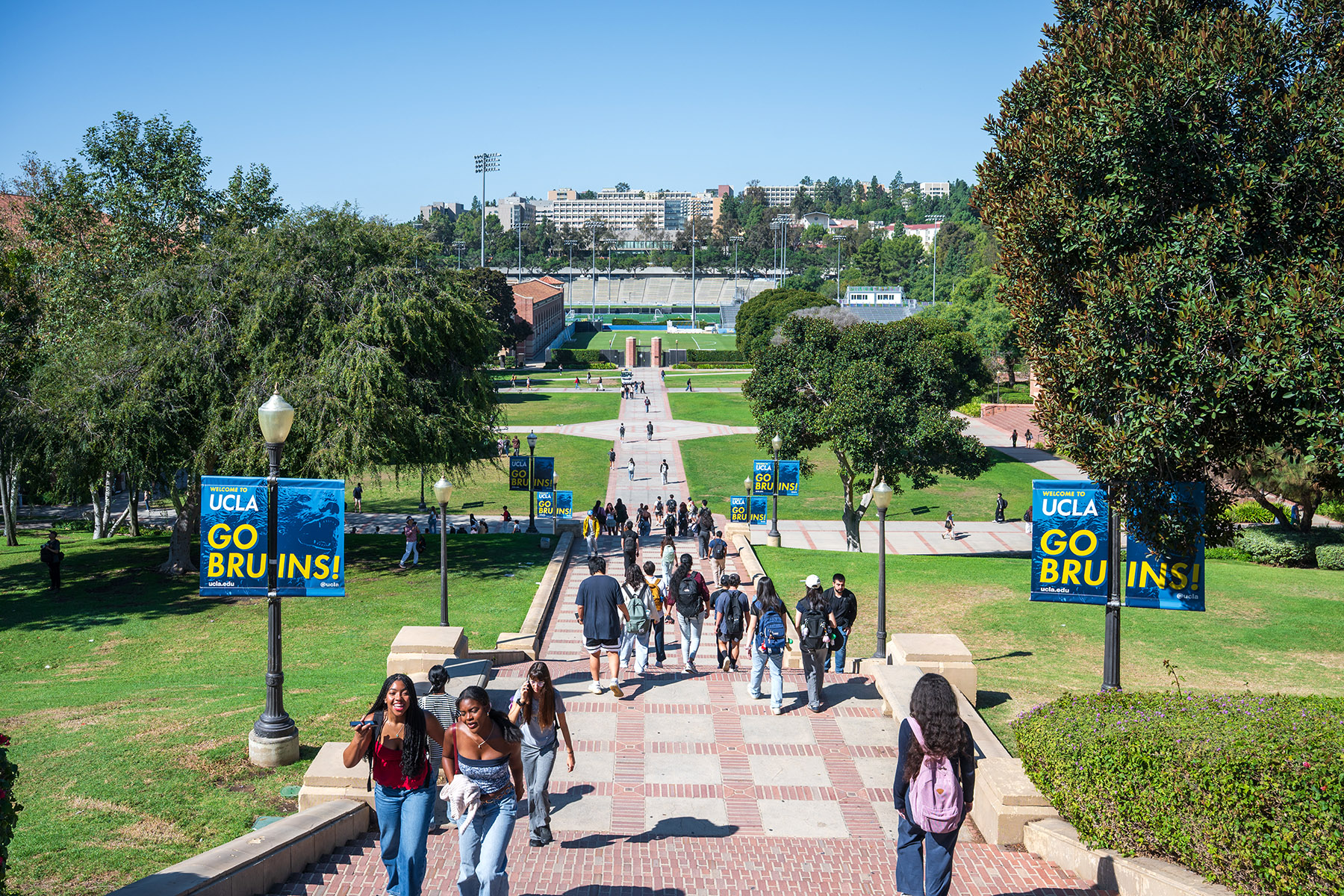
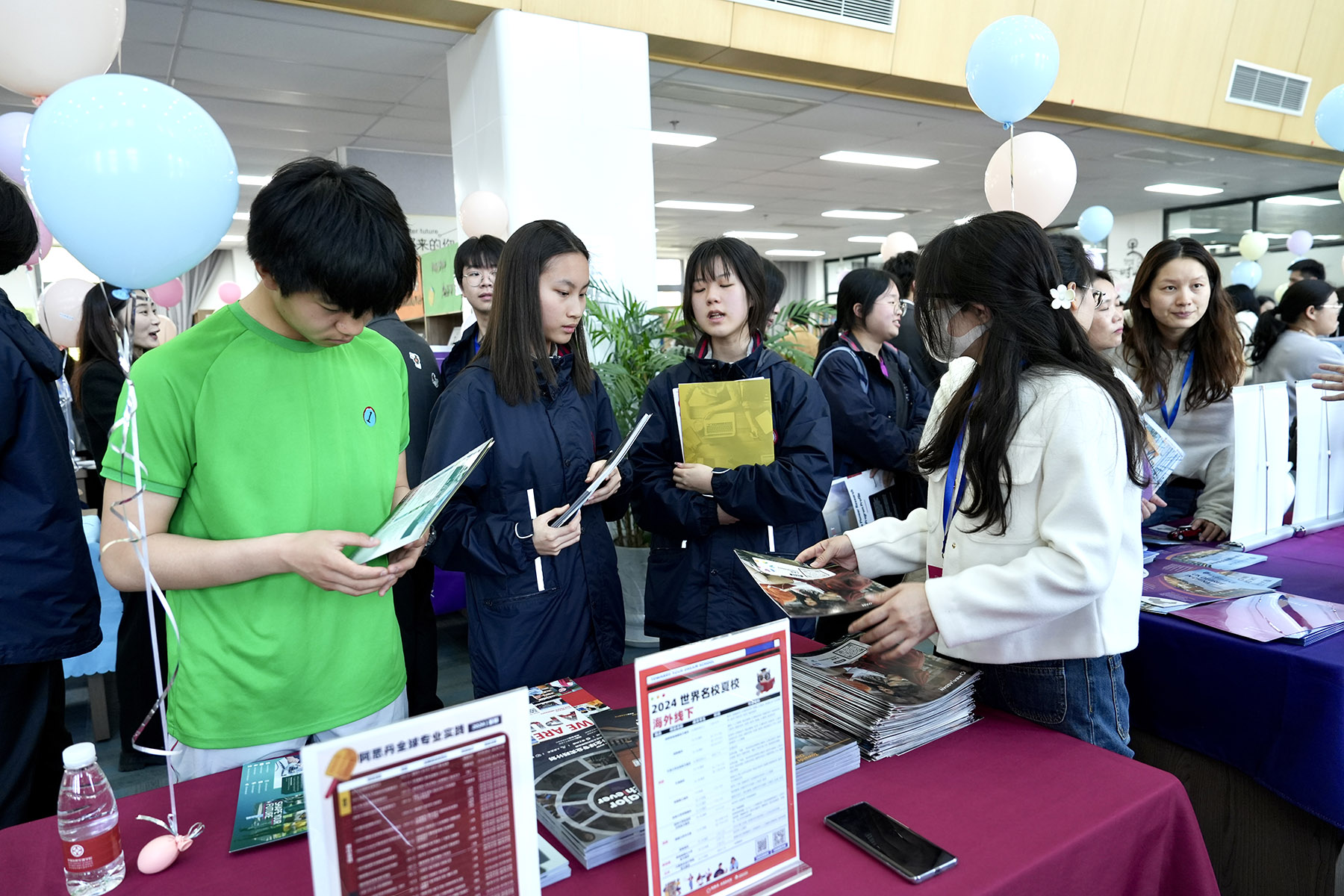
Many Chinese middle-income families are increasingly choosing short-term overseas study programs for their children, often spending tens of thousands of yuan to prepare them for attending foreign universities.
According to the 2025 China Overseas Study Development Report released by the New Oriental Education and Technology Group, an education company in China, the proportion of students who choose to study abroad after having overseas study experience has risen from 27 percent in 2015 to 43 percent in 2025.
Participation in short-term overseas programs during vacations has grown rapidly for four consecutive years, making "experience first, decide later" a common path.
"Parents today are more open-minded as they view vacations not just as a break for tutoring or travel, but as an extension of the school year — a time for both exploration and learning. Education companies have also introduced more short-term study programs from overseas, giving families more options," said Zhu Lulu, vice-principal of the high school division at Wuxi Dipont School of Arts and Science, an international school known for its blend of Chinese and Western curriculum in Jiangsu province.
She believes each type of short-term program offers different value.
"Short-term programs help students evaluate the campus environment and nearby living conditions, so they can decide whether they truly want to study there. For others, taking for-credit university courses or joining selective research programs — such as the Ross Mathematics Program or the Yale Young Global Scholars — can strengthen academic readiness and even add value to college applications," said Zhu.
Firsthand experience
Liu Yingjie, founder of Shanghai Gowell Education, has worked as a US college admissions counselor for over a decade and has watched demand for different kinds of short-term programs surge.
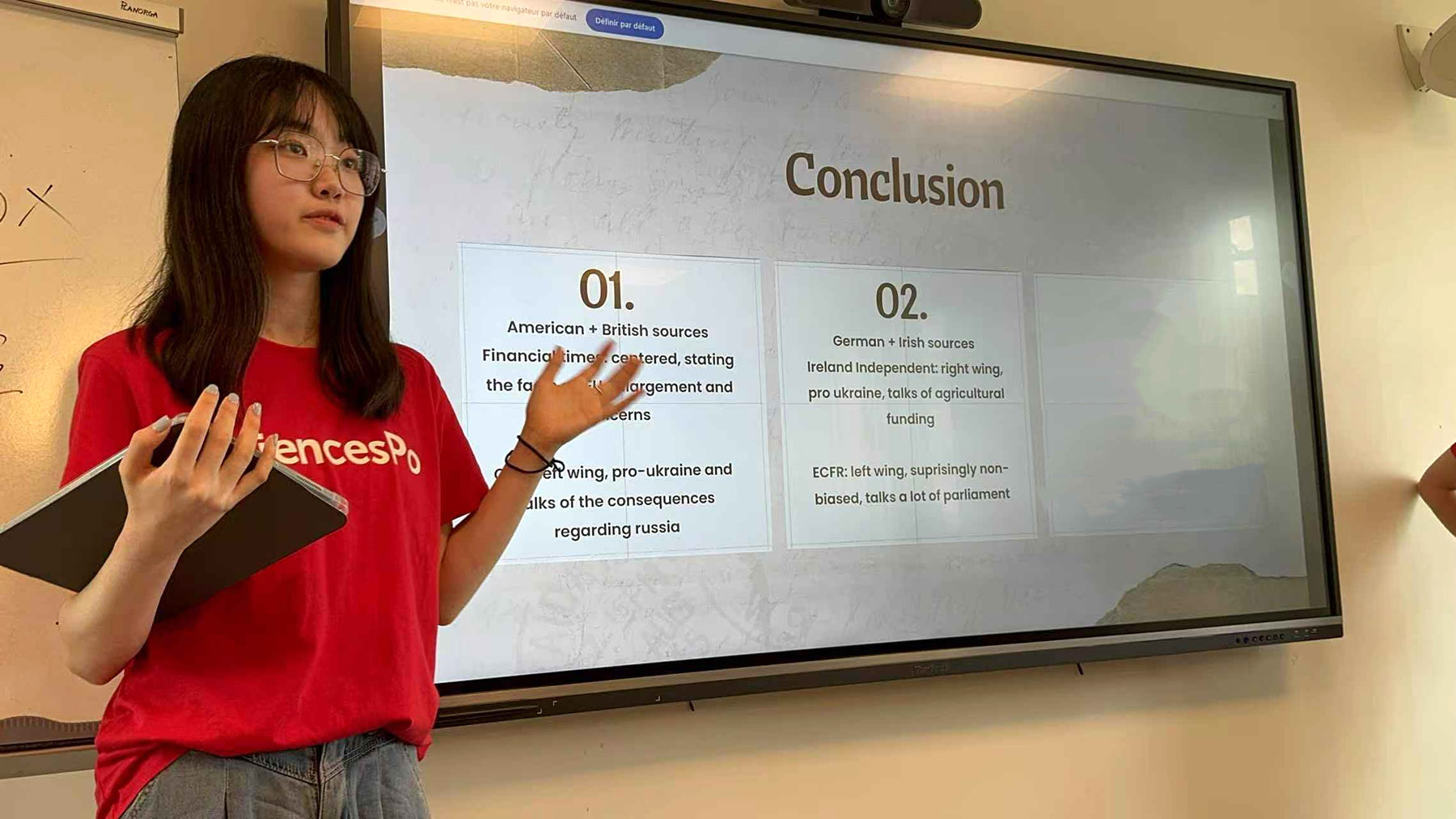
"Campus visit tours allow students to experience the learning environment firsthand — from the dining halls and dormitories to the campus culture — helping them set realistic university goals," she explained.
Exploration programs, meanwhile, allow younger students to test or rule out academic interests. Pre-college programs immerse high schoolers in actual university courses. "Professors won't chase after you like high school teachers — you have to learn to be independent and self-driven," she said.
Liu said at the highest level, research programs allow students to work in labs alongside professors and graduate students, giving them early exposure to cutting-edge science.
One student, for example, who attended a short-term program at a biomedical research institute in California, and then a four-week research project at the University of Massachusetts Amherst, successfully applied for New York University's highly competitive GSTEM program.
"Through these three summer programs, the student gradually deepened her knowledge in biology, gained lab and academic writing skills, and built the confidence to pursue DNA nanotechnology under one of the field's founding figures," Liu said.
Families need the budget — programs typically cost about $2,000 a week — and children need adequate English and self-management skills, she said.
The 2025 China Overseas Study Development Report showed that nearly 60 percent of students start preparing for overseas study one to two years ahead. For these families, the application procedure involves much preparation.
Adapting to pace
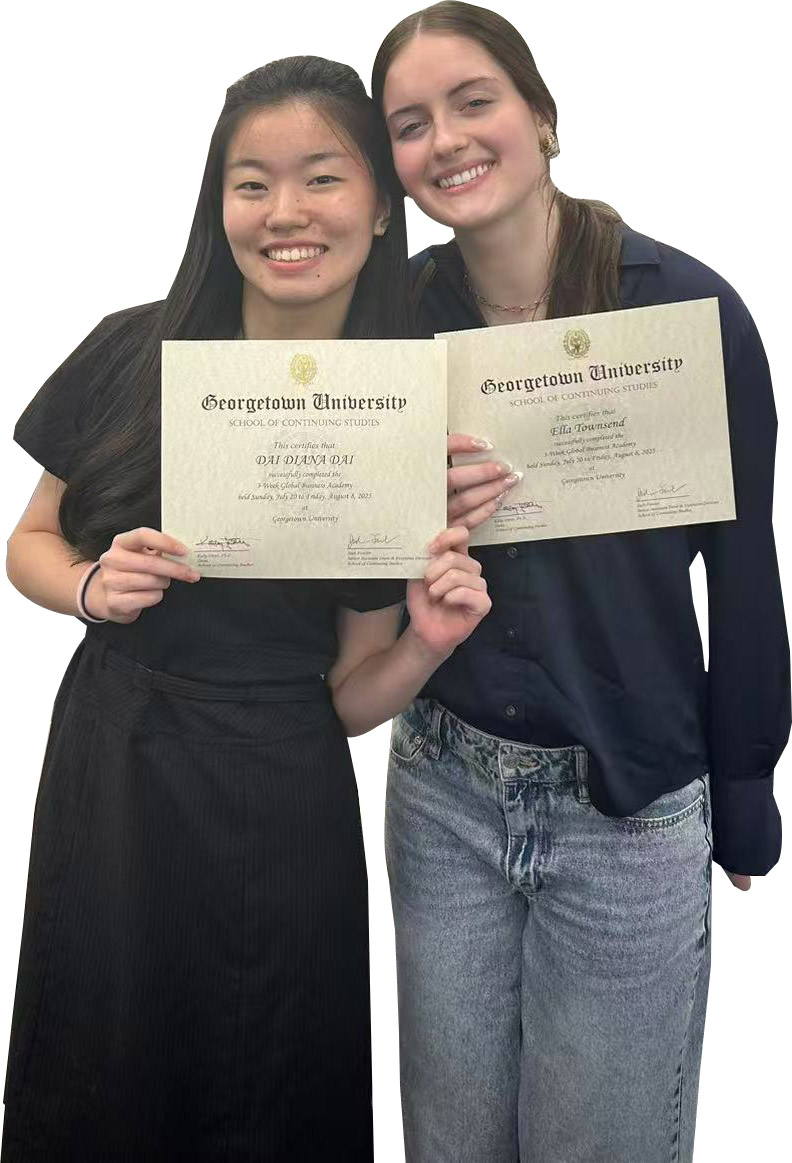
Some families view short-term programs as a strategic step. For Wang Xiaoli, a 48-year-old mother from Shenzhen, Guangdong province, sending her 17-year-old daughter Dai Dai to Georgetown University's three-week Global Business Academy in Washington DC was a serious decision.
"I wanted her to experience the reality of applying to and studying at a university. She needed to adapt to the pace of college life and gain confidence in a new environment," Wang said.
The application resembled a real college admission process: transcripts, test scores, recommendation letters, and essays submitted through official channels. Wang recalled how quickly things moved. Registration opened on March 20, materials were verified within two days, essays submitted on March 23, and by March 26 the offer was in hand.
"It was intense, but in that week, she got a preview of the real process — the deadlines, the writing, the pressure," said Wang.
Her daughter shared a dorm with an American student and made friends from Italy and France during the program.
"I was relieved to see my daughter adapt so well — she was lively, outgoing, and quickly found her place," said Wang.
Classes were taught by professors and featured guest alumni. Students worked on case studies, culminating in a business pitch. Dai Dai was a group leader and guided her project to third place overall, which was presented on stage to loud cheers. "It gave her enormous confidence while showing her leadership and communication skills were valued internationally," Wang said.
It was also the first time the teenager had traveled alone overseas, flying from Hong Kong to Washington DC.
"I had worried about her ability to manage on her own, but this trip showed she could navigate airports, flights, and a foreign environment with maturity," said Wang.
The cost — 50,000 to 60,000 yuan ($8,480) in total — was significant, but Wang thought it was worthwhile because the experience changed the family's target for their daughter's college application.
Previously, they had leaned toward admission to a top-ranked university. Now, they are more focused on whether their daughter will fit into the school and the program.
"What matters is whether the school and program match the child's abilities and passions. Not every student needs to chase Harvard or Yale. Education only makes sense if it brings out their motivation and joy," said Wang.
Zhu from Wuxi Dipont School of Arts and Science said students at her school receive university counseling from as early as Grade 9. The focus has gradually shifted from whether the college they apply for is high-ranking, to whether they can fit into the college and the program.
"We always guide students to choose programs that align with their academic interests, rather than chasing big-name institutions," said Zhu.
Beyond comfort zone
This idea of pursuing genuine academic interests over prestige is also reflected in the choices of some independent-minded students.
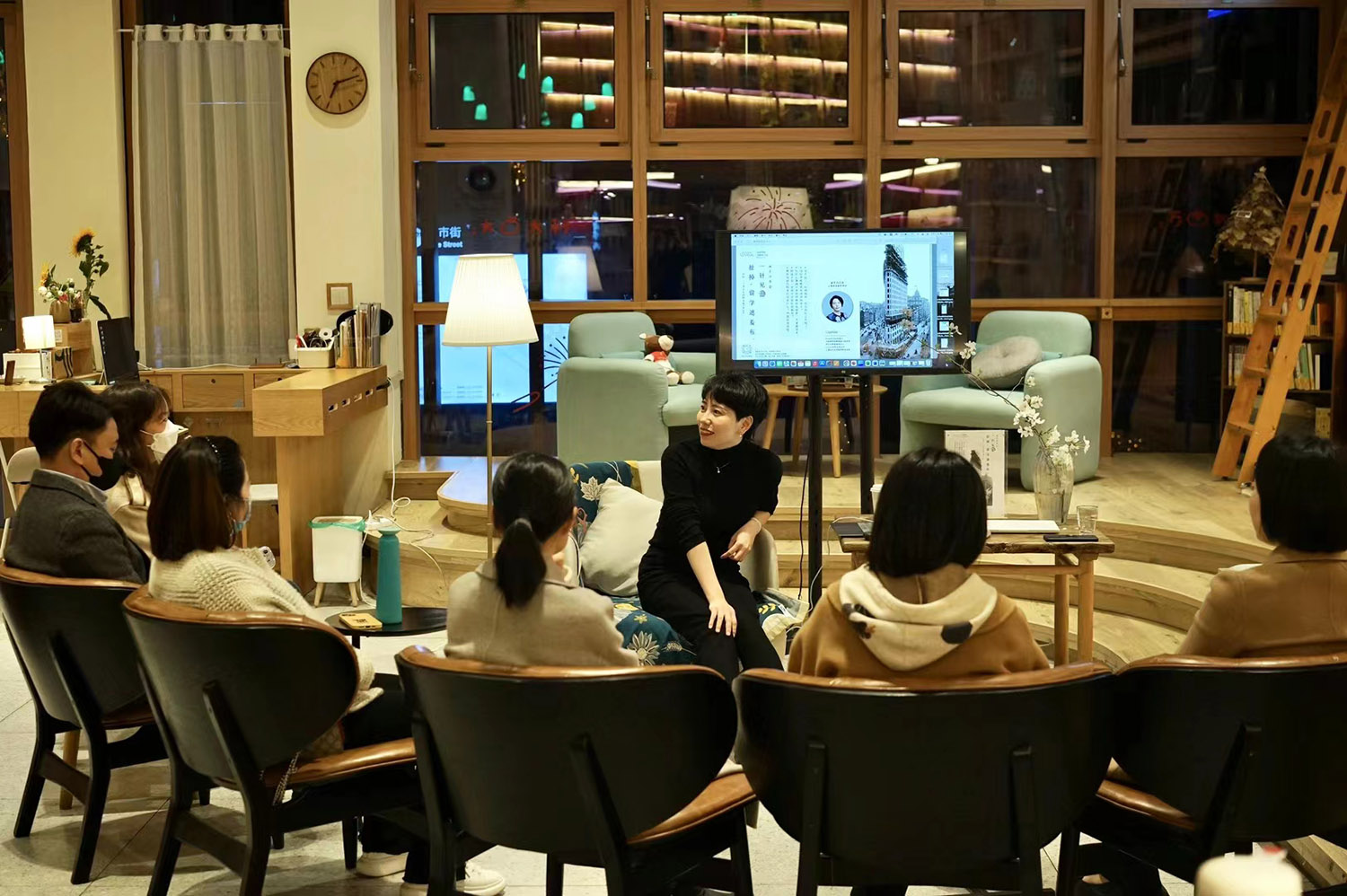
One of them is 18-year-old Qian Xinyi, a Year 12 student at Ulink College of Shanghai. Her first step came in the summer of 2024, when she discovered the pre-college program at Sciences Po's Reims campus while doing her own college research online.
"I've always liked French culture, and when I saw this opportunity, I wanted to experience it for myself," she recalled.
The program was demanding, with readings across a diverse range of topics. Language barriers made it harder — English was used in class, but French dominated outside — yet the vibrant debates pushed her to reflect on her own learning methods. One memorable assignment paired her with a United States student to compare news reports from left- and right-leaning television stations.
"That exercise opened my eyes to how media reflects political culture and showed me how differently students from other countries approach critical thinking," said Qian.
Conversations with peers from different cultural backgrounds broadened her perspective, and after returning home, she found herself more confident in sharing her views, and clearer about her academic interests.
"European students were so active in class discussions — it pushed me to step out of my comfort zone," she said.
This summer, Qian continued her journey closer to home at the University of Hong Kong with two study programs. She enrolled in the Future Legal Professionals program to test her interest in legal studies and a social sciences program, where short courses in sociology, media and journalism opened new possibilities.
"I admired the university atmosphere, but realized law wasn't for me; and those two programs helped me narrow my focus and become more certain about majoring in social sciences," she said.
Qian believes the real value of these programs wasn't how many she attended, but the clarity and growth they gave her.
Currently, she is working on her university application essays, aiming for schools in Hong Kong and the United Kingdom, with sociology being her first choice as a major.
"They helped me clarify my academic goals, gain perspective from peers worldwide, and develop confidence navigating new environments," said Qian.
However, some short-term programs have superficial courses and focus mainly on resume-building, often with high tuition fees. With the rapid expansion of the short-term program market, Zhu advises families to research carefully before making applications.
"In our school, we maintain a wall display of 273 recommended summer programs — categorized by subject and constantly updated. Students can also talk to their college counselors, who evaluate their grades and goals before suggesting suitable programs. For those applying independently, checking information directly on official university websites is essential," said Zhu.
The 2025 China Overseas Study Development Report also notes that 42 percent of returnees accept that income doesn't match expenses, but "it's still worth it". "Self-improvement", "cultural experience", and "broadening horizons" are now key priorities for students and parents.
Fun, but 'lightweight'
Li Xiaoyue, a 42-year-old mother from Hangzhou, Zhejiang province, sent her 14-year-old son, a ninth grader at a local bilingual school, to Sydney, Australia, in the summer for what was advertised as a "short-term school program". It was his first time trying studying abroad, but Li soon realized the program was more of a travel-based study tour than a genuine academic course.
"There were so many Chinese students — sometimes it felt like he was still in China. Most of the time, they were sightseeing and not really studying," said Li.
Her son attended basic English lessons in the mornings and joined excursions to landmarks and beaches in the afternoons.
"He said the fun part was seeing kangaroos and surfing for the first time," she said with a smile.
Li appreciated the chance he had to gain independence and use English naturally, but admitted it didn't fully meet her expectations. "I thought it would be more like a real school experience abroad, but it turned out to be more of a cultural trip," she said.
Still, she found some value in her son's experience.
"He became more confident speaking English and learned to take care of himself. It gave him a glimpse of life overseas, even if it was a bit lightweight," said Li.
"In the future, I will choose more carefully. When he's older and more mature, I'll invest in a program that truly supports his future studies, not just offers a fun experience."
ALSO READ: Middle East rises in popularity as overseas study destination
According to the Annual Report on the Development of Chinese Students Studying Abroad (2024-25) by the Center for China and Globalization, there were 6.86 million international students worldwide in 2022, including 1.05 million from China, accounting for 15.3 percent of the global total.
The number of international students in the US reached a record 1.1 million, up 7 percent from the previous year, with China remaining the second-largest source, the Open Doors Report released by the Institute of International Education in 2024 showed.
From an educator's perspective, Zhu thinks the long-term impact of overseas study programs depends largely on students' educational environments and personal goals.
"For students already in international schools, attending short-term programs may serve as a valuable supplement rather than a necessity. But for students in local schools with limited overseas information, these experiences can be valuable for both exploration and preparation," she said.
Zhu added that students with clear academic goals should seek more targeted programs that fill learning gaps before entering university.
"The authentic, hands-on projects addressing real community or social issues often have a more meaningful and lasting impact than simply adding program names to a resume," said Zhu.
Contact the writer at sunnyu923@163.com
