

AIGC creates immersive experience at archaeological site in Hunan

Artificial intelligence-generated content is being used to bring to life artifacts, relics and even people from the Qin Dynasty (221-206 BC) in Central China's Hunan province.
Hunan Mangowenwen Technology in Changsha has teamed up with archaeologists in Longshan county for the project, which uses AIGC to extrapolate information from documents and items uncovered from the period.
Zhang Gangyi, general manager of the company, demonstrated the technology to archaeologist Long Jingsha by creating a vivid sketch of the historical figure magistrate Hua from the some 38,000 bamboo slips discovered at an archaeological site in 2002. "I think he was pleasantly surprised when I finished," Zhang said.
The discovery of the slips uncovered a missing piece of history, providing a 15-year comprehensive record of administration, defense, economy and social life in what was known as Qianling county of the Dongting commandery, under Qin rule. Hua was one of the local officials documented on the slips, and thanks to the work of Zhang and his colleagues, he has been "brought to life" after 2,000 years.
ALSO READ: Tradition beats with a modern pulse
The AI recreation of magistrate Hua now guides visitors through history at the Liye Ancient Town Archaeological Site Park. The park underwent a comprehensive renovation earlier this year and reopened to the public in October. The reopened park features a new smart guiding system developed by Hunan Mangowenwen Technology.

Zhang led a young team specializing in visual programming, and with support from the local government and experts in archaeology and history, the team employed AIGC technology to transform the texts on the Qin slips into a series of dynamic, intuitive videos. By scanning QR codes at the park, visitors are offered an immersive experience of the social landscape of the region in the Qin era.
All the scenes, clothing and artifacts in the videos are based on historical documents and archaeological findings, Zhang said.
Magistrate Hua's clothing, for example, was partly inspired by artifacts unearthed from the Emperor Qinshihuang's Mausoleum Site in Shaanxi province.
This posed a huge challenge for the team members without an academic background in history, Zhang said. Before writing a single line of code, the team needed to immerse itself in archaeological reports and academic papers on the Liye Qin slips, gathering every detail available.
"We extracted these extremely fine 'data granules' from the documents, using them as key parameters to feed and train our AI models, which became the basis for our visual design," Zhang said.
When designing the archaeological site park's main signage, the team decided to turn directly to the ancient source. Rather than using standard typefaces, they recreated the font for the Chinese characters for "Liye Ancient Town Archaeological Site" from those on the Qin slips.
"Under the guidance of experts, we retrieved each character from the slips," said Zhang. "For the ones that couldn't be found, we deconstructed their components, piecing them together like a puzzle based on those from the slips."
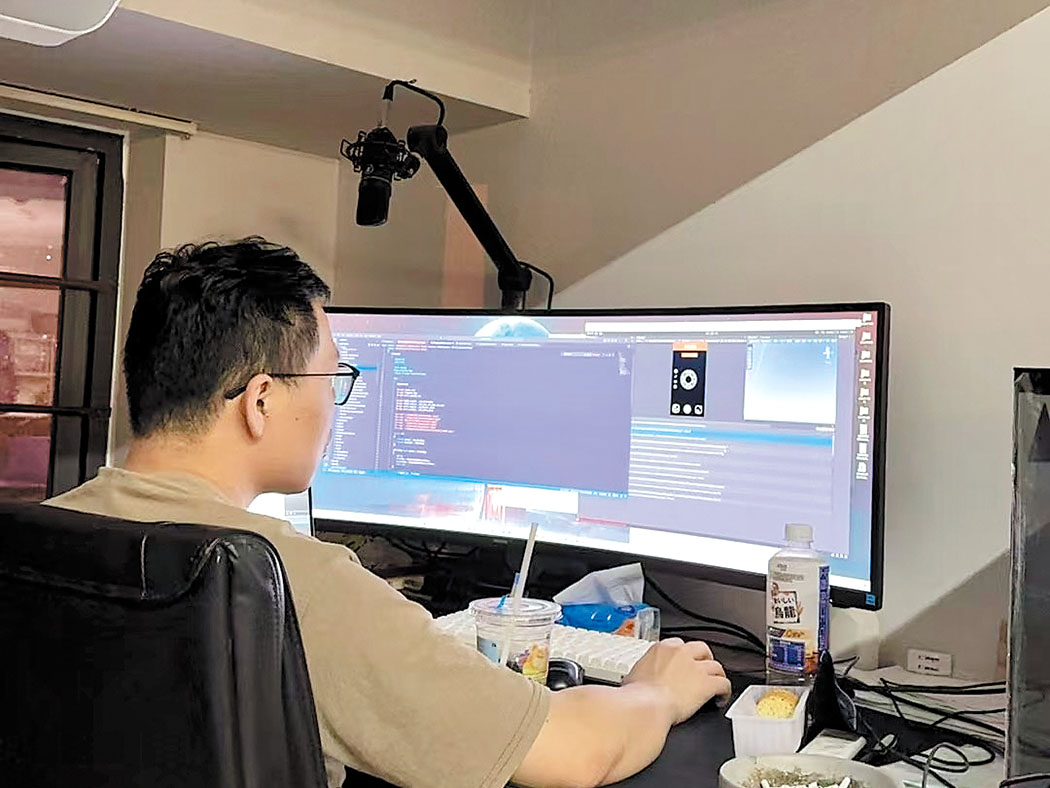
Zhang, who majored in mathematics, has long been fascinated by Chinese history and traditional culture, and saw this project as the perfect opportunity to explore the intersection of culture and technology.
With the help of technology, history is no longer confined to museum cases but becomes something visitors can "feel, question and interact with", he said. "It is the value of the cultural relics, and the shared national emotions embodied in them, that give technology its warmth."
Zhang said he believes the future of the "culture + technology" lies in making traditional culture more immersive, interactive and accessible to everyone. For example, visitors could wear virtual reality devices at heritage sites, observing digitally reconstructed Qin Dynasty buildings and engaging with virtual historical figures.
ALSO READ: Slipping into history
The foundation for realizing this vision, he firmly believes, is self-developed technology. "It is impossible to rely on technologies from other countries in our projects," he said. "If you haven't gone through the process of self-development, you cannot truly understand its real limitations, boundaries, or potential."
The Malanshan Video Cultural and Creative Industrial Park in Changsha, where Zhang's company was founded, has become a major incubator for digital innovation in cultural industries.
Established in 2017, it is home to more than 4,000 cultural and technological enterprises and over 60,000 creative talents.
Contact the writers at limuyun@chinadaily.com.cn
