

Nobel laureate and Hungarian novelist Laszlo Krasznahorkai's unique narrative fascinates Chinese scholars, Yang Yang reports.

Hungarian novelist Laszlo Krasznahorkai's writing carries a Kafkaesque aura, influenced by Russian culture. This fusion, according to Gao Xing, an expert on Eastern European literature, gives his novels a unique narrative charm at the geopolitical and cultural crossroads.
Gao shared these insights at a recent book event in Nanjing, co-organized by Yilin Press and Fangsuo Bookstore. The gathering focused on the 2025 Nobel Prize in Literature laureate under the theme "Is Humanity Progressing or Trapped in a Cycle? — Laszlo Krasznahorkai's Works and Literary Views", and brought together his Chinese translator Yu Zemin and Nanjing University foreign literature professors Jing Kaixuan and Dan Hansong. They explored topics such as Krasznahorkai's works, and Hungarian and Eastern European literature.
Gao noted, "This conscious fusion of local experience with grand traditions enables Hungarian literature, though rooted in Central Europe, to resonate globally. Its 'enchanting hybrid' quality continually offers new insights into the human consciousness."
Krasznahorkai himself embodies this blend of the local and the universal. Born in 1954 in Gyula, Hungary, a small town near the Romanian border, he studied law and mass education while working part time to support himself. Over the years, he worked as an archivist at a publishing house, a freelance journalist, and even a floor polisher.
After graduating, he became a librarian in a rural library. When the library burned down in an accident, and he could no longer remain in the countryside, he returned to the city, and it was from the ashes of this upheaval that he found the impetus to begin writing.
ALSO READ: Nobel winner cherishes hometown memories
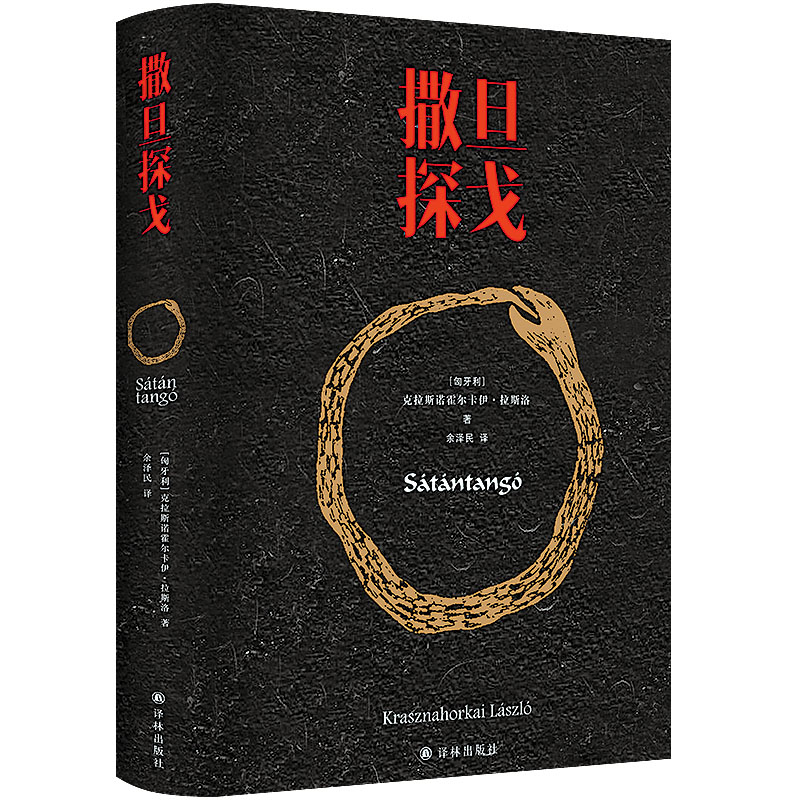
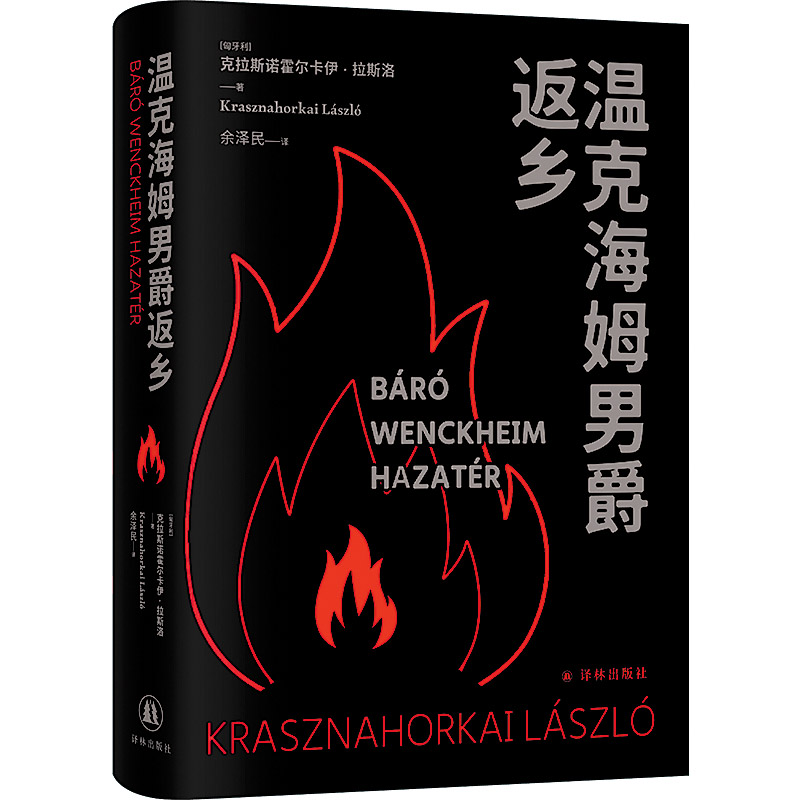
In 1985, he published his debut novel, Satantango, which quickly established his reputation in the literary world. His later works, such as The Melancholy of Resistance, War & War, and Baron Wenckheim's Homecoming, continue to explore themes introduced in Satantango.
According to Yu, a central thread running through these novels is Krasznahorkai's exploration of the human predicament. Instead of presenting the march of history as linear, the author suggests that societies repeatedly cycle through new forms of entrapment.
"This cyclical journey from despair to hope and back to despair is the fundamental narrative thread in Krasznahorkai's work," Yu explains.
Yu first met Laszlo Krasznahorkai in Hungary in 1992. They immediately started a discussion about the great Chinese poet Li Bai, whom Krasznahorkai deeply admired.
This meeting marked the beginning of a mentorship that led Yu into the world of literary translation. Fittingly, the first piece he ever translated was one of Krasznahorkai's short stories.
Yu describes translating Krasznahorkai as a challenging task.
According to Dan, Krasznahorkai is known for his long sentences, a hallmark of his literary style, though he is not alone in this approach. Writers like James Joyce, Marcel Proust, and Thomas Pynchon are also famous for their complex prose. However, Krasznahorkai takes this to an extreme, sometimes writing passages that run for seven or eight pages without a paragraph break. Combined with the agglutinative nature of Hungarian grammar, his language becomes as dense as lava, creating an almost suffocating texture, Dan explains.
Yu classifies Krasznahorkai's long sentences into two types.
The "matryoshka-style" long sentence is similar to what Chinese readers generally recognize as complex syntax. These sentences are more difficult to translate because they contain multiple subordinate clauses within a main subject-verb-object structure, with clauses either preceding or following the main clause. Although they can take days to refine in translation, they ultimately fit within the logic of Chinese grammar.
In contrast, the second category, the "train-style" sentences are like a locomotive pulling many carriages, where the narrative subject can continually shift within a single sentence. Although these could be broken into shorter segments according to Chinese syntax, they remain structurally continuous in Hungarian. This style, often characterized by pages without paragraph breaks, periods, or consistent narrative subjects, can pose significant challenges for readers.
Beyond the complexity of his syntax, Yu says two other linguistic hurdles frequently challenge translators.
First, the third-person singular pronoun in Hungarian is ambiguous — "he", "she", and "it" are all represented by the same word, which also serves as the formal "you". This ambiguity requires significant effort during translation to accurately identify the subject being referenced in the narrative.
Second, the Hungarian language uses commas instead of quotation marks to introduce direct speech, necessitating that the translator distinguish between narrative voices and differentiate between direct and reported speech.
Despite these challenges, Yu has skillfully adapted these elements to suit Chinese reading habits, carefully unraveling the complex narrative threads in Krasznahorkai's novels. This adaptation significantly eases the reading experience for Chinese audiences. Yu says that Chinese readers might actually find Krasznahorkai's works more accessible in translation than Hungarian readers do in the original.
In addition to Satantango and the recently released Chinese edition of Baron Wenckheim's Homecoming, Chinese readers will have access to the Chinese translation of another Krasznahorkai novel, Herscht 07769, which is a masterwork composed of a single, uninterrupted sentence. This translation is also being published by Yilin Press.
Krasznahorkai's writing, like that of many Hungarian authors, is influenced by Kafkaesque absurdity, the profound depth of Russian literature, and the unique cultural blend of Central Europe. Hungary itself has long been a crossroads of cultures. Even with its relatively small population — fewer than 10 million people — it has produced two Nobel laureates in literature in just over two decades: Imre Kertesz and now Krasznahorkai.
After World War II, Hungary underwent waves of political upheaval and transformation. Within this shifting landscape, a degree of cultural openness persisted. Despite being part of a small linguistic community, Hungary has developed a unique spiritual heritage by drawing on its distinctive historical path and its position at the crossroads of Central European civilizations. Krasznahorkai's "apocalyptic" narratives, Dan says, are inseparable from these national conditions.
"He has a unique talent for capturing the upheavals of society in works like Satantango and Baron Wenckheim's Homecoming. His writing not only had a powerful impact at the time of publication but continues to resonate through subsequent historical changes," he says.
Gao adds, "Krasznahorkai's works not only engage with specific historical and political contexts but also offer a profound reading experience. Readers must set aside superficial expectations and delve into the intricate details and structures of the text to fully grasp the rich intellectual significance that emerges from the tension between language and anti-language, fairy tale and anti-fairy tale."
He notes that Hungarian and Central European literature offers profound insights into the universal human condition, giving it a global significance that transcends geographical boundaries.
"Whether it's Milan Kundera's philosophical exploration of 'existence' or Krasznahorkai's creation of allegorical worlds through complex texts, these writers consistently elevate local realities to the level of novelistic art and poetic resonance," Gao says.
ALSO READ: Recognizing the reality of women
Jing highlights the connection between Krasznahorkai's work and Russian literary traditions.
In his masterpiece Satantango, Krasznahorkai uses a circular narrative structure — where the first six chapters move forward, and the next six fold backward — creating a cyclical experience of time and space. This literary approach draws from Kafkaesque modernist absurdity as well as the intellectual depth and religious concerns found in Russian literature, particularly Dostoevsky.
Krasznahorkai not only departs from traditional realist characterization, focusing instead on the expression of ideas and concepts, but also uses themes of eschatology and redemption to explore humanity's longing for a "higher existence" and the inherent dilemmas of the Enlightenment, he adds.
This approach, Jing argues, allows Hungarian literature to sustain Central Europe's shared spiritual legacy while engaging with contemporary questions about the universal human condition. Through such writing, Hungary contributes a distinctive and profound voice to world literature.
Contact the writer at yangyangs@chinadaily.com.cn
