

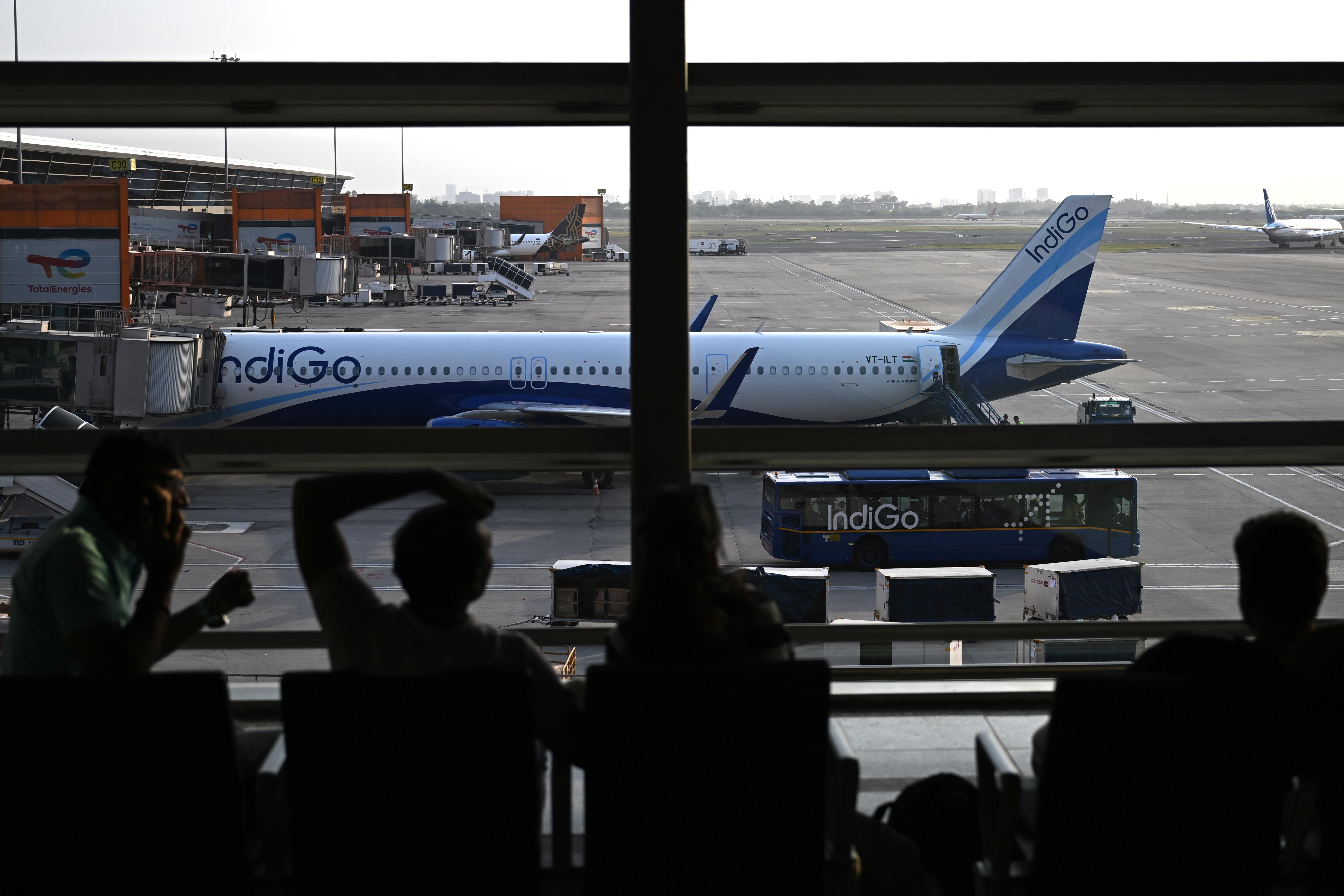
 An Indigo airlines aircraft parked at Indira Gandhi International (IGI) airport on June 20, 2023. (PHOTO / AFP)
NEW DELHI/PARIS - Record plane orders by India's top two carriers show the country's untapped potential for air travel and its rise as an aviation superpower, but recent airline failures and rows over regulations suggest progress may not be smooth.
Indian budget airline IndiGo announced at the Paris Airshow on Monday the biggest ever plane order by number of aircraft with a deal for 500 Airbus narrowbody jets.
A day later, rival Air India firmed up an order for 470 Airbus and Boeing aircraft that, until Monday, had been the industry leading plane deal.
The number of domestic air passengers in India is expected to surge to 350 million by 2030, up from 144 million in 2019, with international air travelers up to 160 million from 64 million in 2019
With a total of almost 1,000 jet orders between them, IndiGo and Air India are betting an economic boom and growing middle class will spur demand for domestic air travel, and new jets will help them grab a bigger share of international traffic.
The number of domestic air passengers in India is expected to surge to 350 million by 2030, up from 144 million in 2019, with international air travelers up to 160 million from 64 million in 2019, according to aviation consultancy CAPA India and government data.
ALSO READ: Paris air show takes off with historic plane order
The number of airports in India is also set to climb to 200 over the next five years from 150 today, as the government looks to connect the country's remotest areas by air.
"It is time to seize the skies," civil aviation minister Jyotiraditya Scindia told reporters in New Delhi on Tuesday, adding the new planes would help Indian airlines expand at home and across continents.
IndiGo, which operates a fleet of 300 planes, is yet to take delivery of some 500 jets from previous orders with Airbus.
This puts the total deliveries by planemakers to Indian carriers at more than 1,500 over the next decade and beyond - double India's existing fleet of 700 planes across all airlines.
That makes India a key market for planemakers, especially Airbus which has bagged the bulk of new orders, outdoing US rival Boeing, and engine manufacturers whose wares will be put to test.
Leasing concerns
But while the opportunity in India is big, so are the risks, says Ameya Joshi, an independent aviation analyst.
The recent failure of Go First, the third Indian airline to go under in 11 years, has exposed a gap in local regulations over the protection of rights of foreign leasing firms that finance many large plane deals. Indian budget carrier SpiceJet is also facing the ire of lessors over unpaid dues.
Leasing companies warn that restrictions on repossessing their assets in case of defaults will drive up costs for all Indian airlines - even for IndiGo and Air India.
"There needs to be a huge regulatory revamp to protect lessors' interests. It will eventually help Indian airlines by lowering risk and moderating lease rental costs," said Joshi.
ALSO READ: Air India seals record order for almost 500 Airbus, Boeing jets
India is a critical market for lessors. Sale-and-leaseback deals - where airlines sell planes to lessors to free up capital and then rent them back - accounted for 75 percent of plane deliveries in India from 2018 to 2022, compared with a global average of 35 percent, data from aviation analytics firm Cirium shows.
This is causing concerns among some leasing companies that fear being too exposed to a market fraught with risks.
Some analysts also say that the airlines could be over-ordering jets in pursuit of the same passengers.
The bullish outlooks from IndiGo and Air India, which together control about 80 percent of the domestic market, suggest both are starting to benefit from their scale compared to rivals.
Joshi expects annual passenger growth in India to taper to 6 percent-10 percent going forward, coming off highs of 20 percent seen in the immediate aftermath of the pandemic. But he thinks the market will stabilize as weaker airlines will fall by the wayside.
READ MORE: French court clears Air France, Airbus over Rio-Paris plane crash
"India is moving towards becoming a stable market where growth will not be as high but airlines will be profitable and connectivity will be better despite higher fares," he said.
