

Hong Kong is pressing ahead with a commodity trading ecosystem anchored in gold, aiming to become an international gold trading hub, as set out in the city’s first five-year plan. Data show that the market led the way, with 2023 marking a watershed, while policy has driven the process since 2024. But, as Jessica Chen reports, the ‘golden age’ may still be some time away.

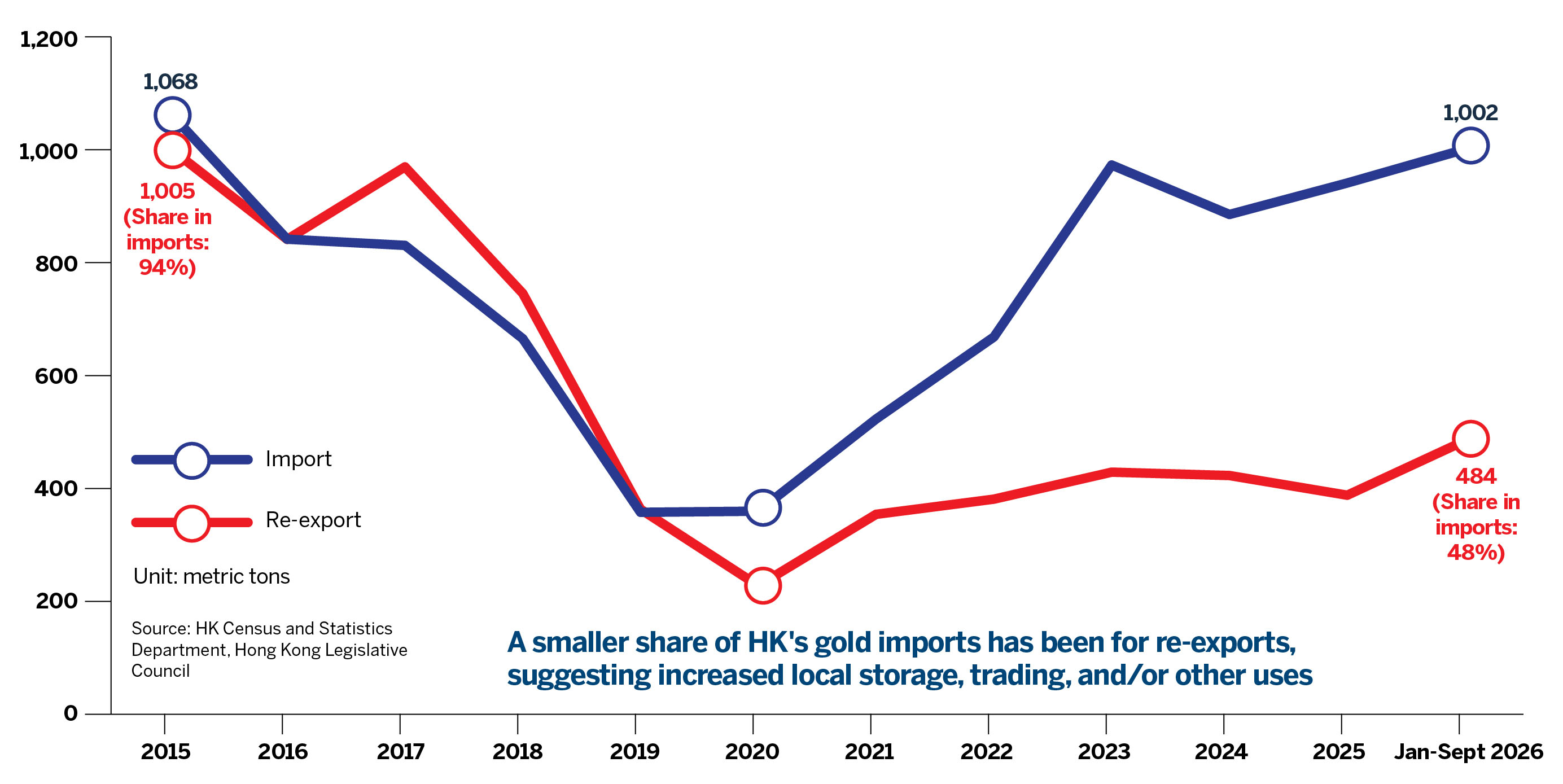
The first nine months of 2026 saw Hong Kong import 1,002 metric tons of gold — more than in any calendar year in the past decade, and 6 percent above the 942 tons that arrived in 2025. Turnover on the local gold exchange has more than doubled within a year. Shanghai has opened a vault in the city, banks are testing out a central clearing system, and the special administrative region’s authorities are talking of building a “full-chain gold trading ecosystem”.
When Chief Executive John Lee Ka-chiu vowed in his 2024 Policy Address to make Hong Kong a world gold trading center, the momentum was already in place, with 2023 marking a turning point in dealings in the sparkling commodity.
READ MORE: Hong Kong aims to build full-chain gold trading ecosystem
The data tell the story in two stages. In 2023, the market moved first, pulled along by the Chinese mainland’s gold imports. From 2024, the direction reversed: the SAR’s policy, aligned with that of the nation, began to drive the market.
2023: the momentum
In the decade from 2012 to 2022, the city’s gold imports each year fluctuated between a high of 1,158 tons in 2013 and a low of 356 tons in 2019. Hong Kong was then a transit spot more than a trading site, with a substantial portion of its gold imports, sometimes as high as 90 percent, re-exported.
Then, in 2023, imports soared almost 46 percent to 974 tons — up nearly threefold from a pre-pandemic low of 2019 — and have stayed at 886 to 974 tons annually since. Hong Kong has ceased to be merely a transit point for gold — it has begun positioning itself to grow with the metal. Nine months in, 2026 has already passed the 974 tons of 2023, the previous high of the period.
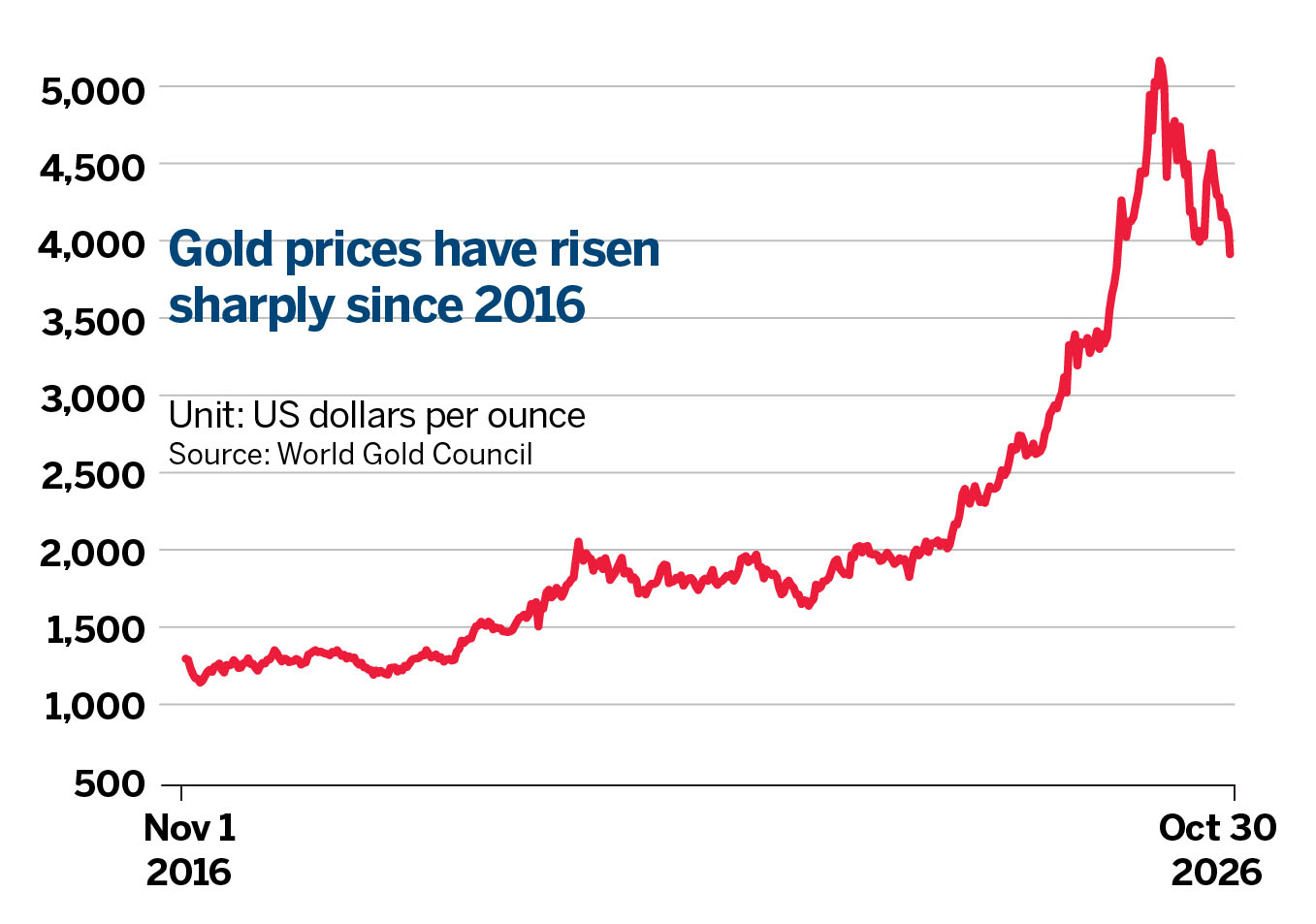
Yet, while gold imports climbed nearly 46 percent in 2021 — from 358 tons to 522 tons, representing a rebound from the COVID-19 trough — Hong Kong’s share of the mainland’s gold imports fell that year, indicating that 2023 had been transformative.
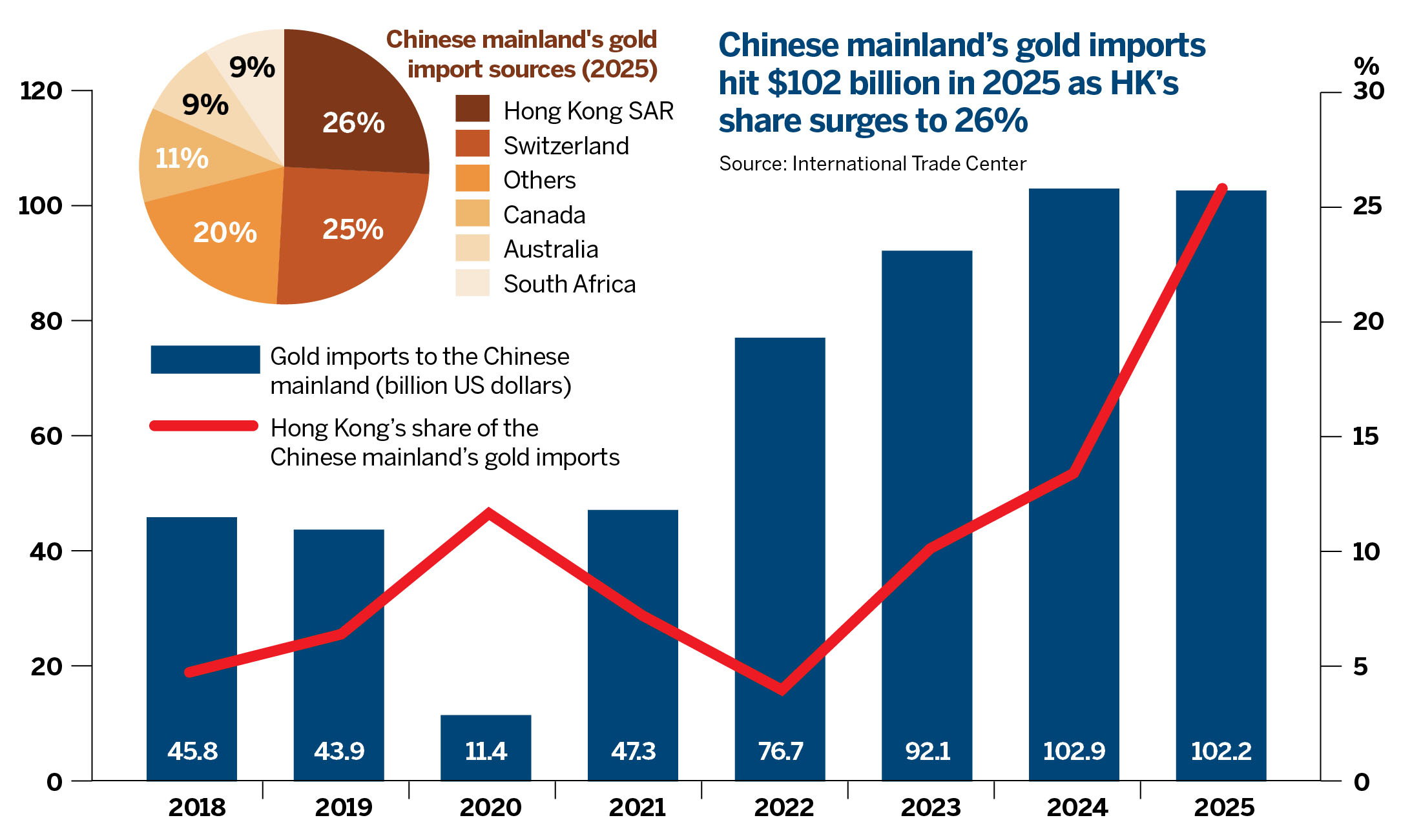
The mainland was the engine. According to International Trade Centre data, Hong Kong’s share of the mainland’s gold imports rose from 4 percent in 2022 to 10 percent in 2023 — the very year that Hong Kong’s own imports jumped. The surge was not only about Hong Kong’s own demand.
Where does Hong Kong’s imported gold go? In 2015, 94 percent of its imports were re-exported — 1,005 tons of 1,068. By 2024, the share had fallen to 48 percent, or 422 tons of 886, based on calculations from Legislative Council Secretariat data. Over that period, re-exports to the mainland alone fell by 65 percent — from 863 tons to 303 tons. Imports that were not sent back rose from 63 tons to 464 tons.
The Secretariat sees the shift as more gold going into local storage, trading and businesses like jewelry.
2024: policy steps in
Policy followed the flows in 2023. The 2024 Policy Address turned that market shift into a stated goal and tied it to the mainland. Imports did not accelerate that year — at 886 tons, they were below 2023’s 974 — so the policy was a bet on infrastructure and connection rather than on a sudden rise in volume. Beginning in 2024, the pattern reversed: The surge in gold influxes and transactions came after the policy, especially for the infrastructure construction in 2025 and 2026.
From 2024, the data show the market following the policy. Imports in 2025 were 942 tons, within the range set in 2023. What grew after the policy push was what was done with the gold: vaults, trading, clearing and the mainland link.
2025-26: from vision to volume
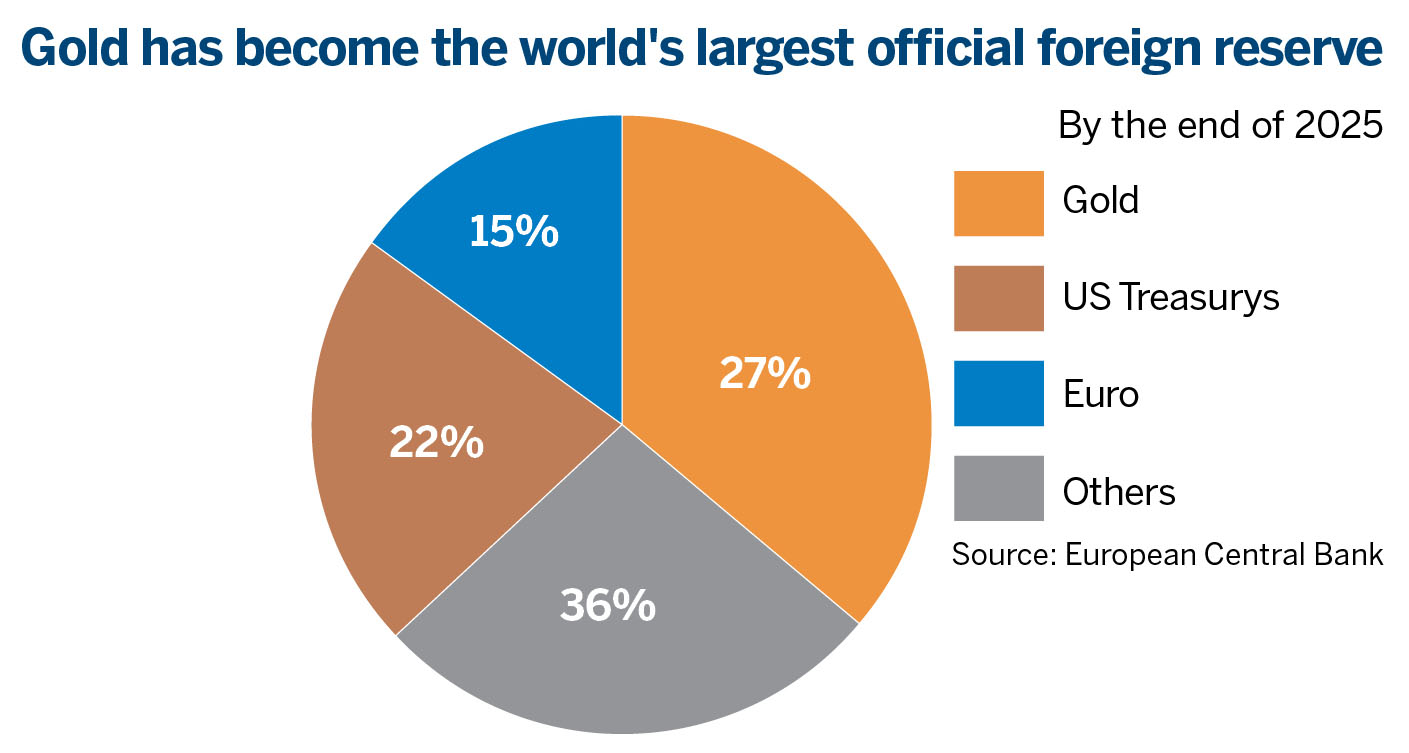
Bank of China (Hong Kong) was appointed by the Shanghai Gold Exchange on June 26, 2025, to operate its first designated vault for the exchange’s International Board in Hong Kong. The vault formally opened the same day, and gold contracts deliverable in the city were launched simultaneously, with several Chinese and foreign institutions completing trades. Then came the surge in the market volume of Loco London gold on the Hong Kong Gold Exchange — formerly the Chinese Gold and Silver Exchange Society that became a corporation in January that year — with a remarkable quarter-on-quarter gain of 82 percent toward the end of 2025.
Data shows the same shift. The mainland imported $102 billion of gold in 2025, and the city supplied about 26 percent of it — up from 4 percent in 2022 and 10 percent in 2023 — according to the International Trade Centre data.
Dollar values also move with the gold price, but shares do not. On those rounded shares, the value of the mainland’s gold imports sourced from the SAR in 2025 was roughly $27 billion, compared with about $3 billion three years earlier — up almost ninefold. The mainland’s total gold imports were broadly unchanged in 2024 and 2025, at $102.9 billion and $102.2 billion respectively.
The momentum continued as Hong Kong and Shanghai joined forces in gold clearance in January 2026. Linking the SAR’s over-the-counter market with the Shanghai Gold Exchange through shared vaults and the Delivery Connect mechanism, Hong Kong has offered mainland and international participants a more direct route to trade, deliver and transact gold.
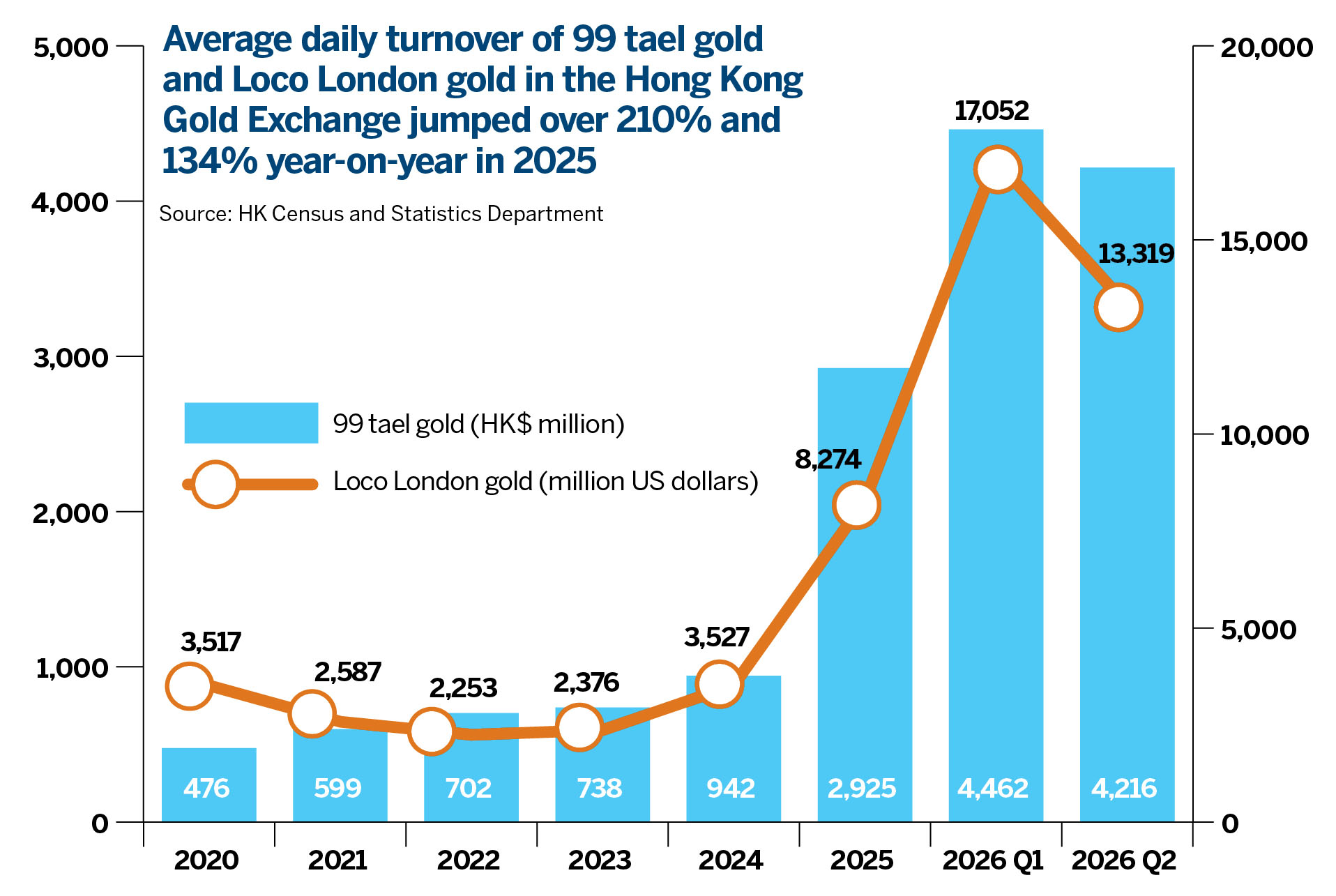
The results were stunning. In the first quarter of 2026, average daily turnover in 99 tael gold rose 263 percent year-on-year to HK$4.46 billion, while that in Loco London gold climbed 183 percent to $17.05 billion.
On July 7, the Delivery Connect began letting participants move metal between two designated vaults and tap Shanghai’s exchange and Hong Kong’s over-the-counter market. Shanghai needs an outward door; Hong Kong is supplying it.
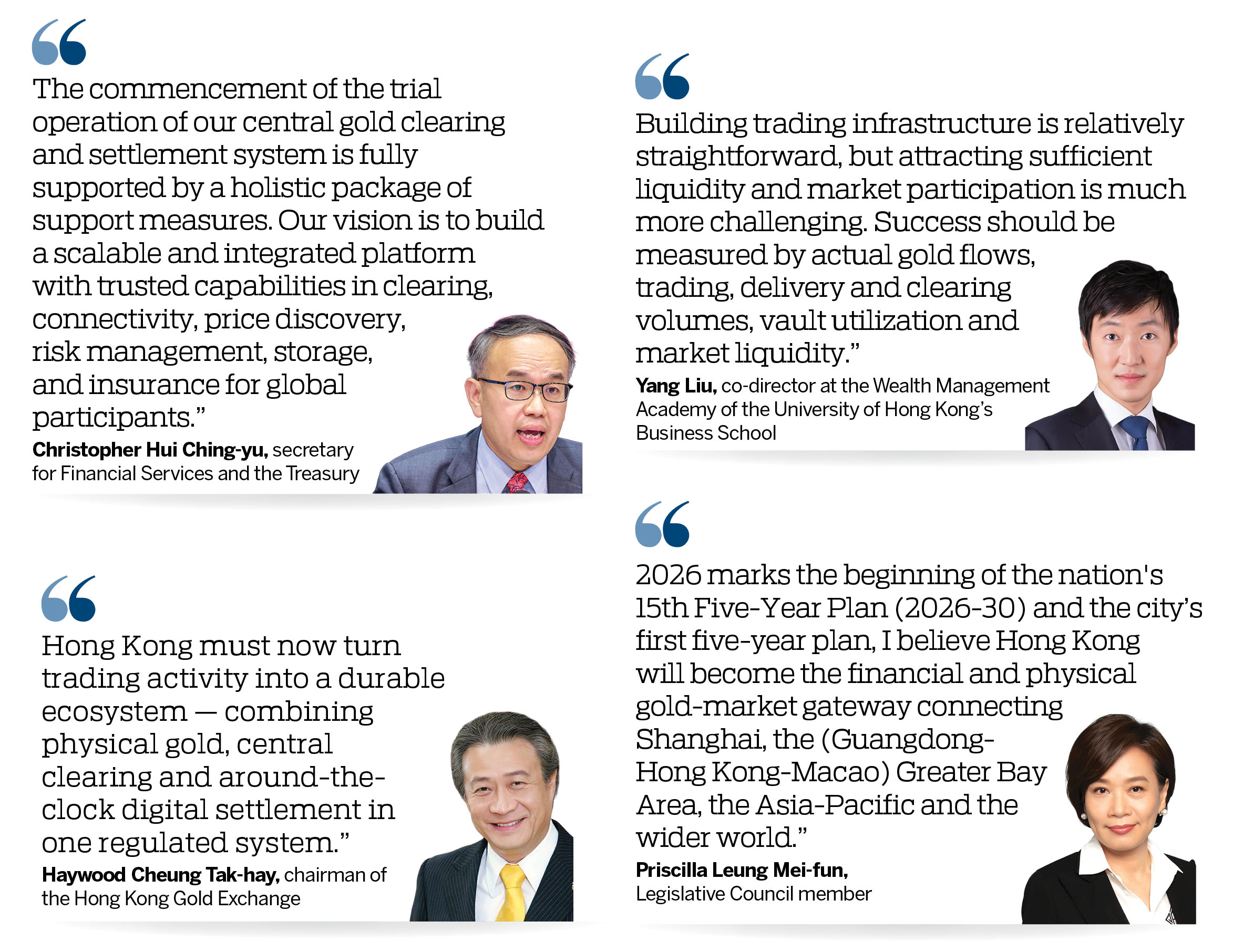
The agreement represents a resolute commitment to translating the spirit of the Central Financial Work Conference, advancing quality financial opening into concrete action while fostering synergistic development of Hong Kong and Shanghai as premier international financial and gold markets, according to Secretary for Financial Services and the Treasury Christopher Hui Ching-yu.
The nation has signaled its backing. People’s Bank of China Governor Pan Gongsheng said the central bank supports Hong Kong’s gold market. Eleven banks are provisional direct participants in the trial operation, and the system is due to be officially commissioned in the first quarter of next year.
2 tons versus 2,000
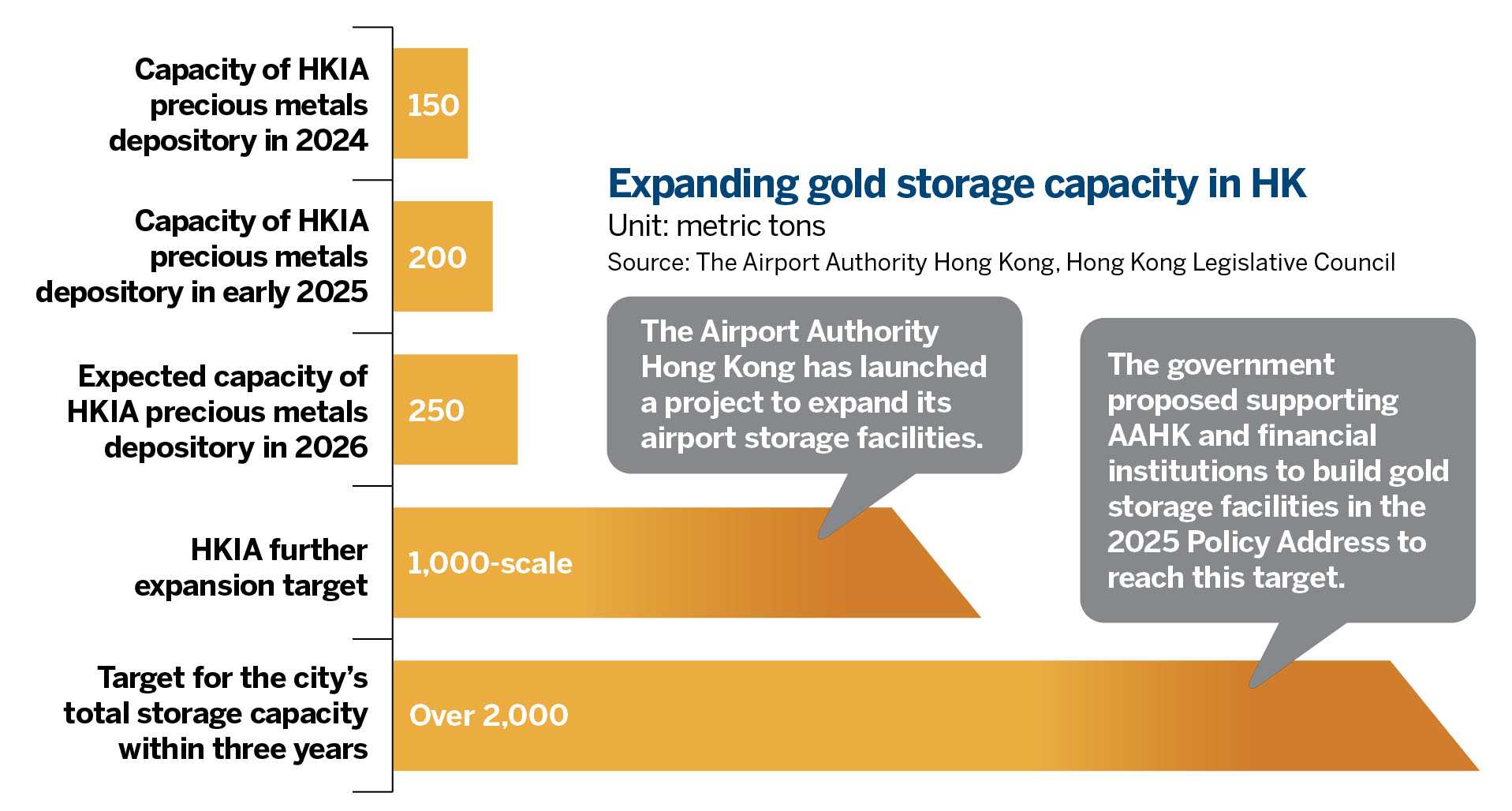
The HKSAR government’s stake was small in 2023 and 2024. The Hong Kong Exchange Fund — the primary investment arm of the Hong Kong Monetary Authority — held 66,800 ounces, or about two tons, at the end of 2024. The airport vault’s storage capacity rose from 150 tons in 2024 to 200 tons in early 2025 and is expected to reach 250 tons by the end of this year. Separately, the government’s 2025 Policy Address set a target of expanding Hong Kong’s total gold storage capacity to more than 2,000 tons within three years, with support for the Airport Authority and financial institutions to develop storage facilities. But, most of that will be other people’s gold. “Storage capacity isn’t the same as actual gold holdings,” explains lawmaker Priscilla Leung Mei-fun.
Leung says she believes the target of establishing more than 2,000 tons of gold storage capacity “is ambitious but achievable, provided that infrastructure development is matched by institutional and market reforms”.
Yang Liu — co-director of the Wealth Management Academy at the University of Hong Kong’s Business School — put it more bluntly. “Building up vault capacity is like building parking lots,” he says. What matters is whether there’re “cars on the roads”. The expansion is, in effect, a bet on future demand rather than a response to existing holdings.
Liquidity gap persists
After the policy push, gold trading surged, but liquidity remains a challenge. According to the Hong Kong Gold Exchange, the daily turnover in Loco London gold, quoted in US dollars, averaged $3.5 billion in 2024 and $8.3 billion last year. The figure nearly doubled from the third to the fourth quarters of last year — from $6.7 billion to $12.2 billion. Turnover in 99 tael gold, quoted in Hong Kong dollars, more than tripled in 2025 to HK$2.9 billion ($370 million) a day.
HKGX Chairman Haywood Cheung Tak-hay says the exchange’s trading volume has kept rising and liquidity is improving, with an average daily turnover from HK$100 billion to HK$150 billion. The exchange’s own figures are consistent. Turnover in Loco London gold in the first half of 2026 reached $15.2 billion a day — about HK$118 billion at the dollar peg — before adding 99 tael gold.
According to the World Gold Council, London’s over-the-counter market averaged $223 billion daily in the first half of 2026. On that basis, Hong Kong’s turnover is roughly 6 to 9 percent of London’s although the definitions differ.
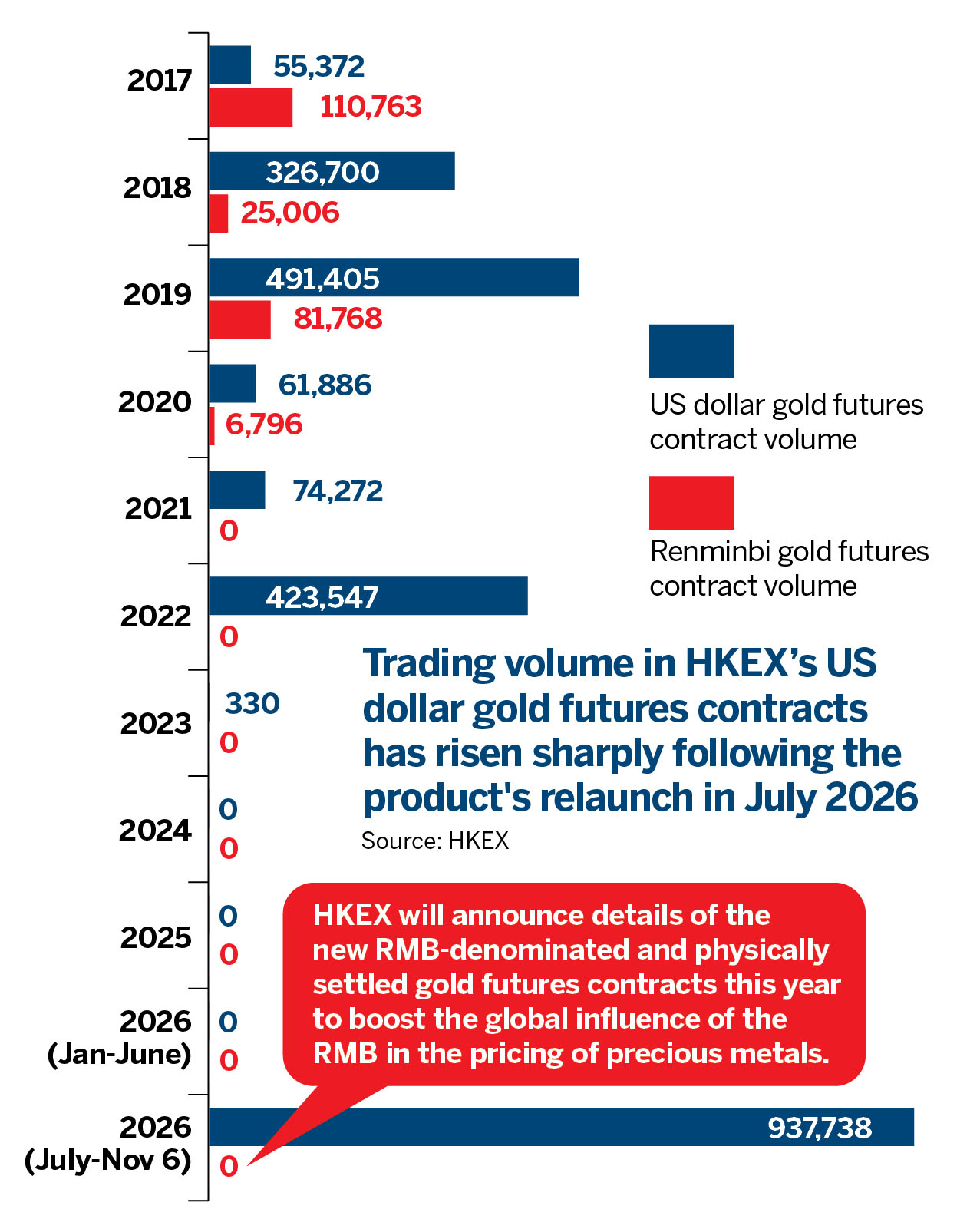
Futures trading presents a more mixed picture. Hong Kong’s US dollar gold futures recorded 423,547 contracts in 2022, but just 330 in 2023 and no trading in 2024 or 2025. According to the HKEX data, turnover recovered to 937,738 contracts between July and Nov 6, following the product’s relaunch.
“The biggest challenge is market depth and liquidity,” says Yang. “Building trading infrastructure is relatively straightforward, but attracting sufficient liquidity and market participation is much more challenging.” He remains optimistic as Asia still accounts for much of the global physical gold demand. “I believe these flows will naturally gravitate toward Hong Kong if we’ve the infrastructure and ecosystem right.”
Last year, London carried 43.4 percent of the $373 billion in average daily gold turnover; COMEX — a New York-based futures and options market for metals like gold and silver — had 35.2 percent; and Shanghai’s two exchanges carried 17.4 percent, making a total of about 96 percent, according to the World Gold Council.
Hong Kong has no line. Those three venues handle roughly $358 billion of the $373 billion traded each day.
Its first tool is HAU — a price reference developed with Bloomberg, launched in July this year, and now carried on the Bloomberg and London Stock Exchange Group platforms.
The details of new renminbi-denominated, physically settled gold futures contracts are expected to be announced this year. But Leung says HAU is just a reference, not yet a benchmark, as pricing influence “requires sustained international participation, genuine liquidity and credible price discovery”.
ALSO READ: Hong Kong Gold Exchange tests tokenized deposits for synchronized settlements
Settlement may be the differentiator. The HKMA said its Project Ensemble, which was launched in 2024 to advance Hong Kong’s tokenization ecosystem, supports 24/7 interbank settlement in tokenized central bank money, with 12 banks taking part.
According to Hui, an interbank project would issue gold tokens, each tied to a 400-ounce bar and priced on HAU. Cheung and Yang argue that linking physical gold, central clearing and around-the-clock digital settlement in one regulated system could set the city apart.
The first stage, in 2023, was market-led. The test now is whether the capacity that policy has built since 2024 can pull the market in an organic and sustainable way. Three tests will show whether capacity fills — a full-year 2026 split between re-exports and local use; vault utilization once the airport facility reaches 250 tons; and who joins the 11 provisional banks before the clearing system is formally launched next year.
Yang’s yardstick is: “Success should, therefore, be measured by actual gold flows, trading, delivery and clearing volumes, vault utilization and market liquidity.”
Next Actions
- Completing the full-year 2026 breakdown between re-exports and local use to determine whether rising imports reflect genuine local storage, trading and investment demand.
- Tracking airport vault utilization as capacity expands from 250 tons toward 1,000 tons and beyond, rather than treating storage capacity itself as evidence of market success.
- Monitoring which institutions would join the 11 provisional direct participants before the central clearing and settlement system is formally commissioned in the first quarter of 2027.
- Measuring Hong Kong’s progress by actual gold flows, delivery and clearing volumes, market liquidity and international participation.
Source: Interviews and research
Contact the writer at jessicachen@chinadailyhk.com
