

Hong Kong youth’s growing addiction to smartphones is becoming an ever greater concern, as more youngsters become dependent on the internet and video games. Debate is intensifying over how to address the issue, including through legislation. Wu Kunling reports from Hong Kong.

An avalanche of government and research data on a growing number of Hong Kong children keeping themselves glued to the small screen has kept public debate simmering. Families, schools, the authorities and the wider community are clamoring for support, legislation and regulation to pull children back from their screens.
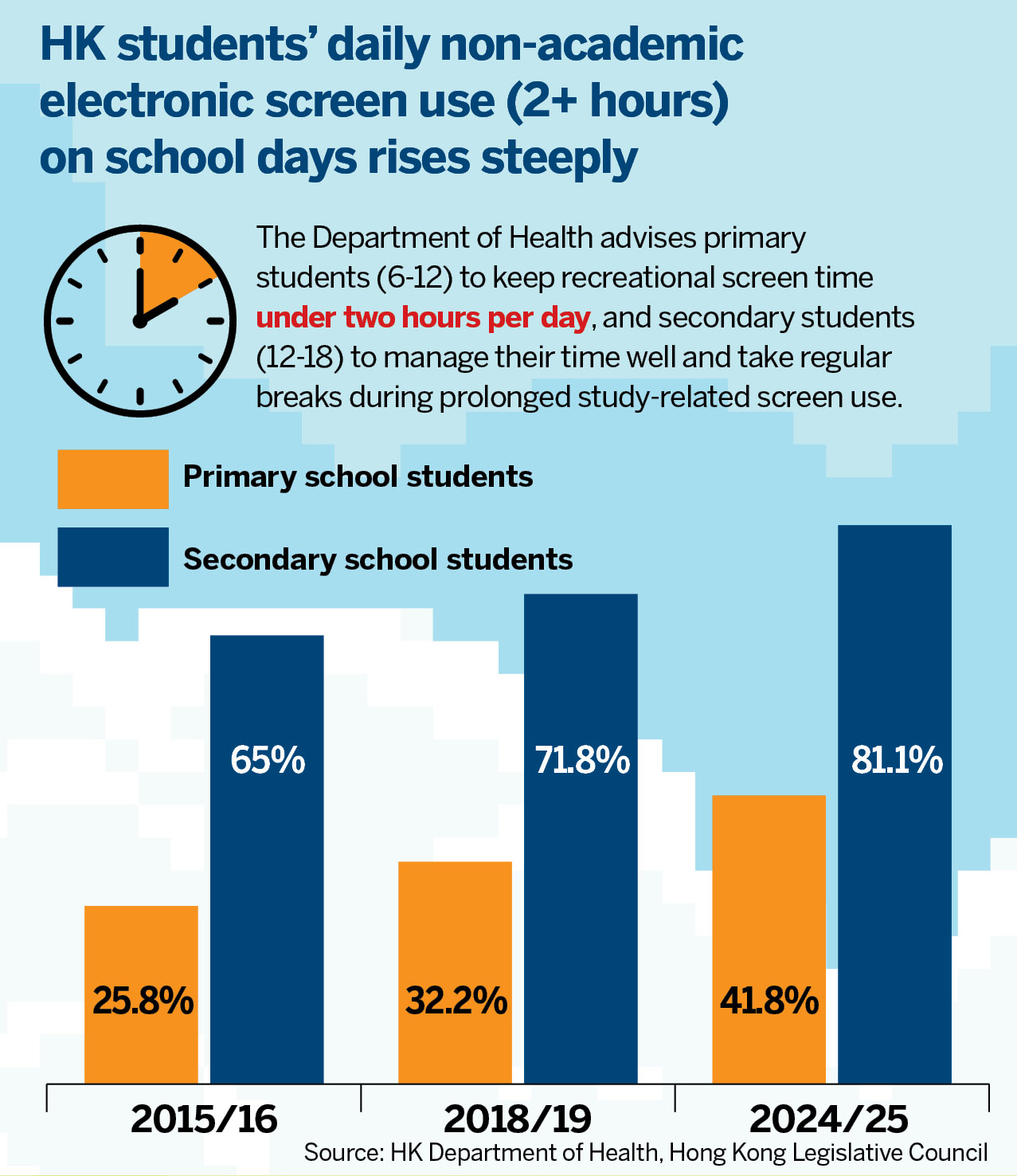
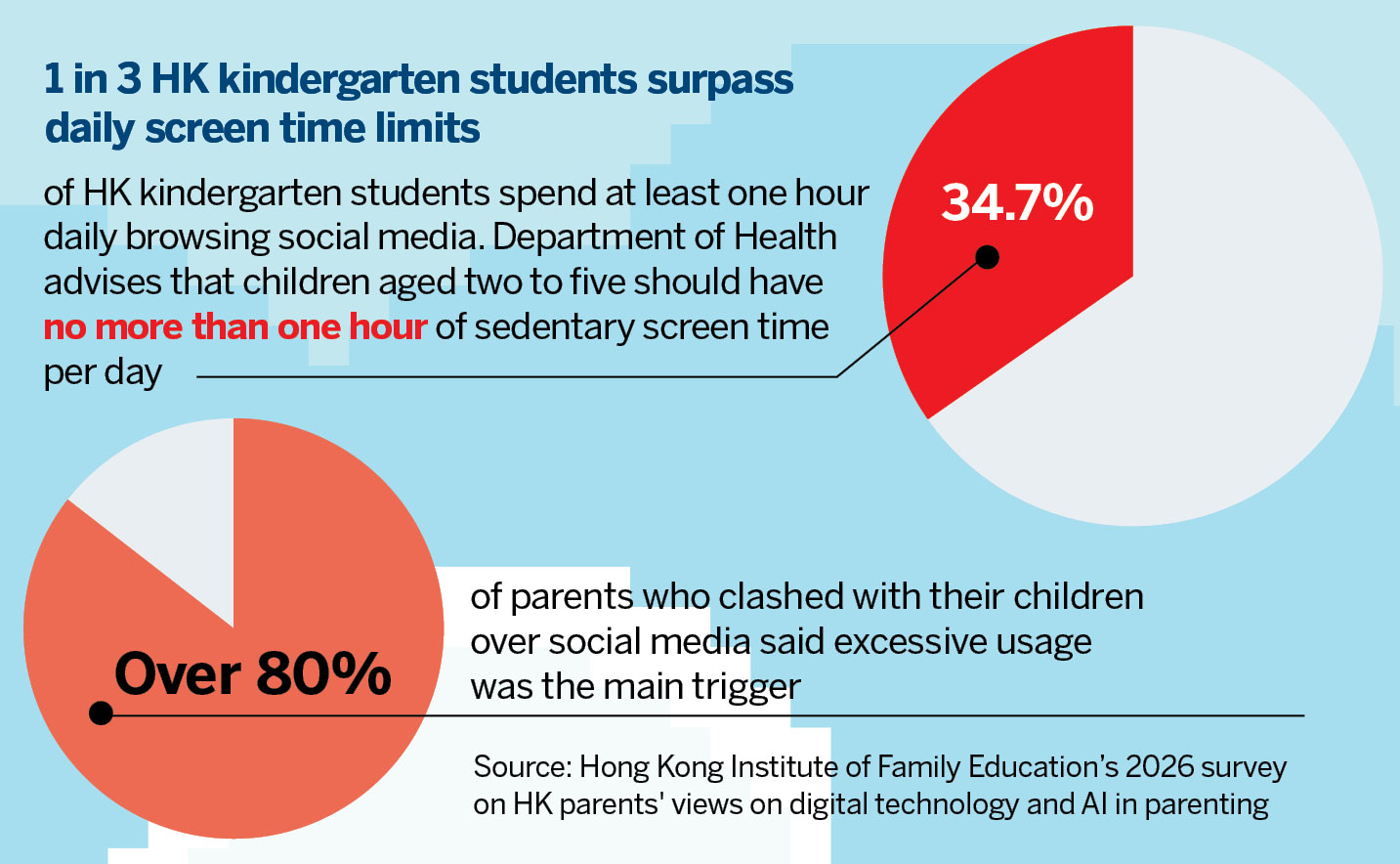
The numbers are staggering and hard to ignore. A recent survey found that nearly 35 percent of kindergarten children spend more than an hour a day on social media alone. Official figures show that during recreation on a typical school day, nearly 42 percent of primary school students reported spending two hours or more on the internet, using computers, tablets, smartphones and video game devices, as well as watching television.
Scholars, citing multiple surveys, say Hong Kong teenagers spent an average of six to seven hours behind a screen daily during the 2024-25 academic year — nearly doubling that of adults. The revelations fly in the face of guidance set by the Department of Health — no internet for children below two years old; an hour daily for those aged two to five; and two hours for those between six and 12 years old.
Meanwhile, spiraling cases of cyberbullying, family conflicts and health problems linked to excessive internet use have sparked public concern.
Narrowing gender, age gap
Internet addiction is affecting younger children and narrowing the gender gap — trends social worker Joe Tang Chun-yu has seen during a decade working at Online New Page, an online addiction counseling center run by the Hong Kong Christian Service.
Operating since 2005 and one of Hong Kong’s longest-running centers of its kind, it serves mainly young people aged six to 24 and their parents, and has dealt with about 100 new cases annually in the past decade.
According to Tang, who’s in charge of the center, almost half of the number of adolescents it has dealt with are Secondary 1 to 3 students. In the past decade, cases involving primary school pupils have surged from almost zero to about 30 percent in recent years, while the proportion of cases involving girls has also catapulted from near zero to nearly 30 percent, narrowing the gender gap. For online activities, the gender and age boundaries are blurring too. While specific choices vary, the vast majority of children spend most of their online time on games, streaming platforms, social media and short videos.
As their addiction worsens, many have skipped classes or suspended studies altogether. In worse cases, some have shut themselves at home for years, away from the outside world, while others have had physical fights with parents, requiring police intervention. Another worrying trend, says Tang, is the growing overlap between internet addiction and other mental health conditions, including developmental disorders, depression and other acquired conditions, with many needing medication or hospitalization.
He warns that internet addiction can erode adolescents’ self-confidence, deepen social anxiety, drain their enjoyment of real life and strain family relationships. These are the harms caused by addiction, but also the reason they sink deeper into it — a vicious cycle that’s difficult for youth to escape from.
Many youngsters find little sense of achievement in their studies and have no other outlet. Seeing no room for growth in life, they turn to games or social media for likes. They struggle to get along with people around them and find little joy offline, while only online friends seem to accept them and only the internet keeps them occupied. Their parents, who’re closest to them, only make demands and give orders. Tang says this partly explains why lower secondary students form a bigger number of cases as the transition from primary to secondary school piles up academic and social pressure on them.
With the rapid evolution of the internet, the psychological mechanisms have remained largely unchanged, says Tang. More young people now confide in artificial intelligence, which is a new shift, but it still reflects the online-offline imbalance caused by harsh realities.
What are the possible solutions? Online addiction calls for a multipronged response involving schools, parents and social services. Schools should help students explore more diverse life paths and build up their social skills, while the community needs to expand social services and equip frontline social workers with additional expertise.
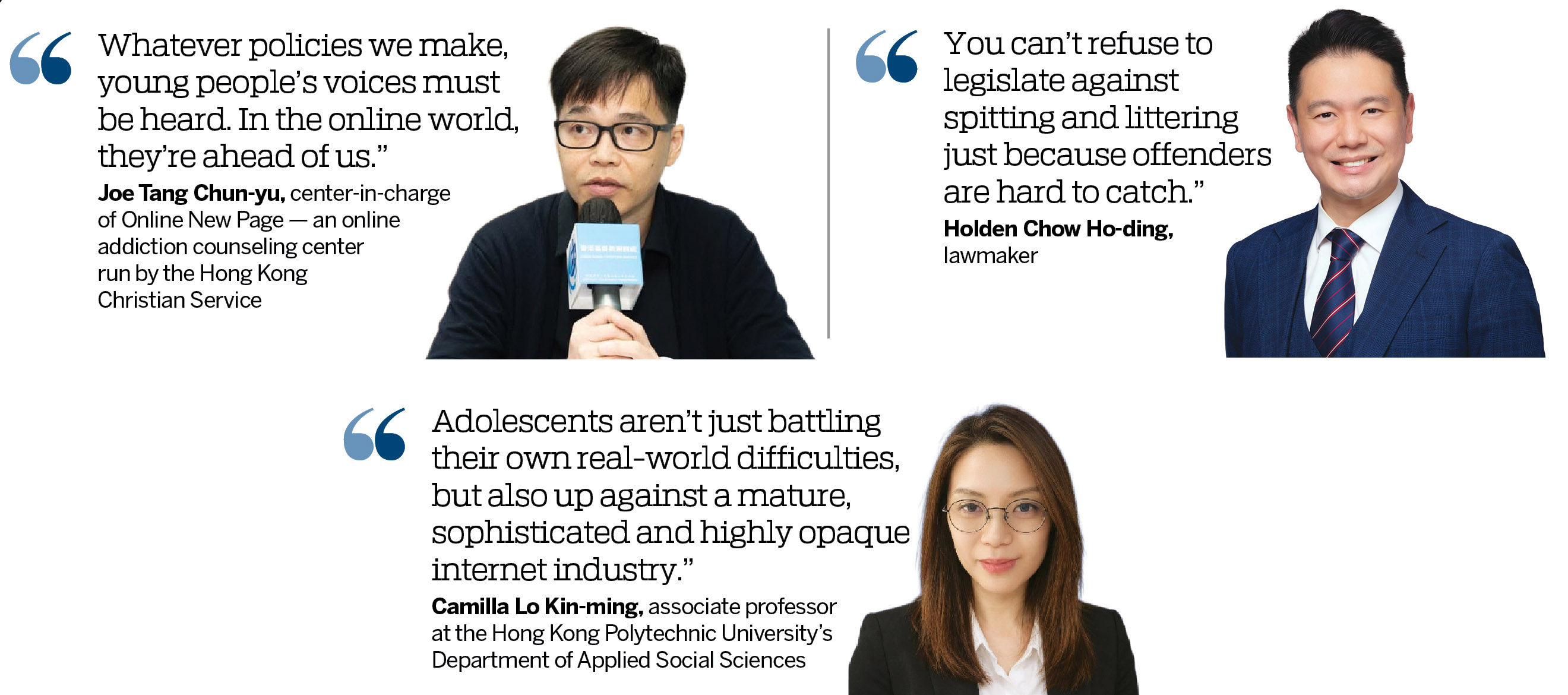
“Whatever policies we make, young people’s voices must be heard. In the online world, they’re ahead of us,” says Tang.
Outmatched by an industry
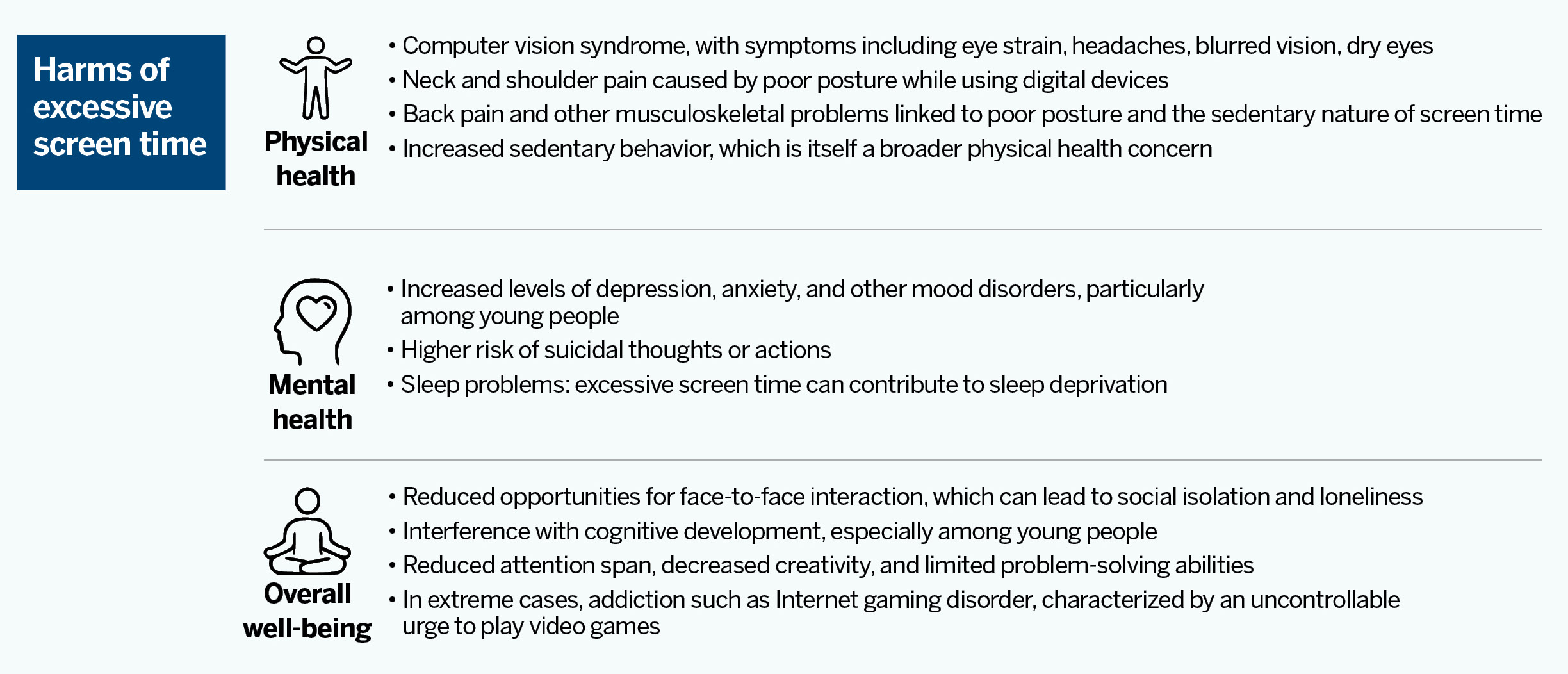
Camilla Lo Kin-ming, associate professor at the Hong Kong Polytechnic University’s Department of Applied Social Sciences, warns that prolonged screen time would harm adolescents’ mental and physical health.
Besides the effects on a person’s vision and weight, excessive addiction could divert attention and harm cognitive abilities as adolescents’ brains are still developing. Apart from duration, setting and content matter too. Screen use before going to bed is particularly harmful for young children as it disrupts sleep. Another negative effect is that children relying heavily on video games for stimulation and pleasure may struggle to regulate their emotions.
But, what many people, including some parents, fail to realize, says Lo, is that adolescents aren’t only battling their own real-world difficulties — they’re up against a mature, sophisticated and highly opaque internet industry.
Parents can only see their children playing games, but miss the vast teams behind them. The tech industry studies adolescent psychology and behavior, deploying clever designs like highly interactive features, frequent login rewards and time-based bonuses, to pull young people back again and again. Similarly, on short-video platforms and social media, children passively absorb content fed by ever-smarter algorithms. As these algorithms are so opaque, no one knows what children are exposed to, or what patterns lure them to swipe to the next post, and the next.
Lo says the tech sector must take greater responsibility, making algorithms and content operations more transparent to enable users to make “more informed, healthier” choices.
On mounting calls to regulate social media and screen time, she says she believes not all screen time is harmful. For instance, when children and parents co-use screens in a comfortable, interactive setting, it could strengthen the bonds between them and help young people mature.
To legislate, or not
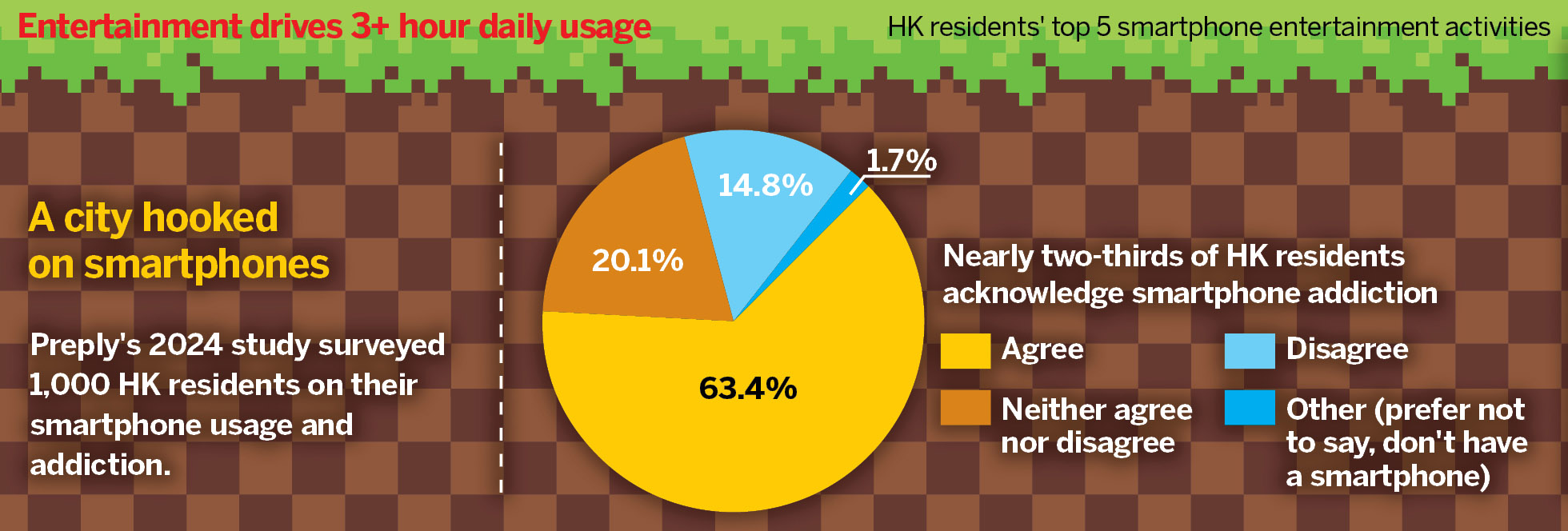
Whether or not to enforce legislation, as well as how and when, remain questions Hong Kong has long grappled with.
A Health Bureau spokesman told China Daily that any ban or restriction on internet use or content must consider factors like adolescents’ psychological and social development, Hong Kong’s innovation-technology ecosystem, free speech and information, plus overall social acceptance.
At this stage, no such legislation is in the pipeline.
It isn’t the first time officials of the Hong Kong Special Administrative Region have poured cold water on curbing or regulating internet use. In June last year, Libby Lee Ha-yun — then undersecretary for health — told a Legislative Council meeting no legislative plans were on the horizon. Instead, efforts would focus on promoting healthy internet and screen use among students, as well as diverse student development activities.
The bureau spokesman explained that the feasibility of enacting regulations remains the government’s chief concern. Even with online safety laws, there are challenges to overcome concerning age verification, enforcement of cross platforms and borders, and whether measures could overly restrict platforms from entering or expanding in the city.

These issues require in-depth public discussion and a clear consensus before more specific measures can be formulated, the spokesman said. Instead of hard regulation, the government is taking a soft-touch, advisory-led approach.
The bureau said an interdepartmental task force set up in October last year — having reviewed the latest scientific evidence, overseas experience and input from stakeholders and experts — hoped to issue updated health recommendations this year, based on the Department of Health’s 2018 recommendations.
A nonbinding motion to address excessive use of internet and electronic products by children and adolescents was passed by the Legislative Council in June last year.
Lawmaker Holden Chow Ho-ding, who moved the motion, says it’s aimed at reflecting public opinion, raising awareness and pushing for further government action, such as stronger publicity, guidelines and, ultimately, legislation.
Hong Kong’s legislative process, in this regard, is lagging, he says.
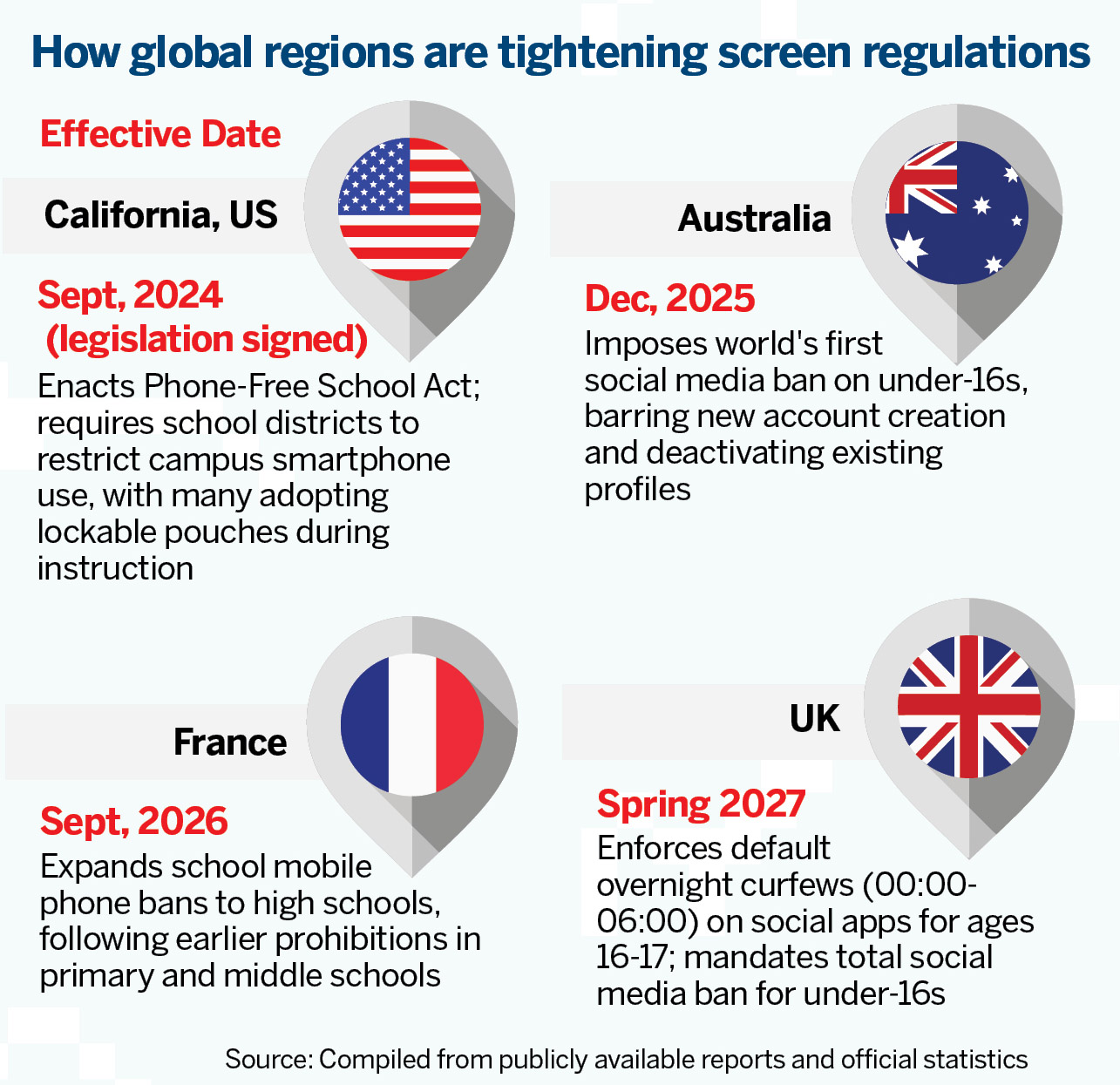
Chow calls legislating on the issue a “global trend” as more countries and regions are restricting adolescents’ screen time by curbing social media and the use of cellphones. He says he believes legislation would have a deterrent effect and help foster a more serious attitude toward screen time in society. It would also underpin follow-up measures, such as giving parents a stronger basis for management. Parenting is key to tackling the issue.
The legislator agrees that enforcement and regulatory feasibility have to be considered, but says this shouldn’t block legislation. “You can’t refuse to legislate against spitting and littering just because offenders are hard to catch.”
Feasibility isn’t all or nothing, says Chow.
Citing overseas examples, he says he believes that even if some minors evade social media bans through measures like using false identities, a ban would still help curb excessive use among a substantial number of minors and would not be entirely ineffective.
He’s also against the idea that enforcing regulation would harm Hong Kong’s innovation ecosystem, as socially responsible tech companies would be willing to cooperate. While local tech firms remove content suspected of fraud and other violations after police complaints, there are no rules requiring them to cooperate in more detailed issues, including adolescents’ screen time.
Chow says he will keep pushing for legislation through various means, like meetings with government departments and during LegCo question-and-answer sessions. He will gather more information through legislative panels and academic seminars, while the legislature continues to monitor the effectiveness and enforcement challenges of regulations imposed overseas.
“How we approach the problem may differ. But I believe that regulating through legislation is the right direction and we will not stop.”
Next Actions
• Diversifying life planning and expanding social skills training in schools
• Requiring greater algorithm and content transparency from tech platforms
• Following the global trend of legislating screen time
• Expanding social services and equipping frontline social workers
Source: Interviews and research
Contact the writer at amberwu@chinadailyhk.com
