

Amid the global investment boom in artificial intelligence, financial services industry practitioners have warned that given the risk associated with the “AI bubble” a more prudent and diversified approach is necessary.
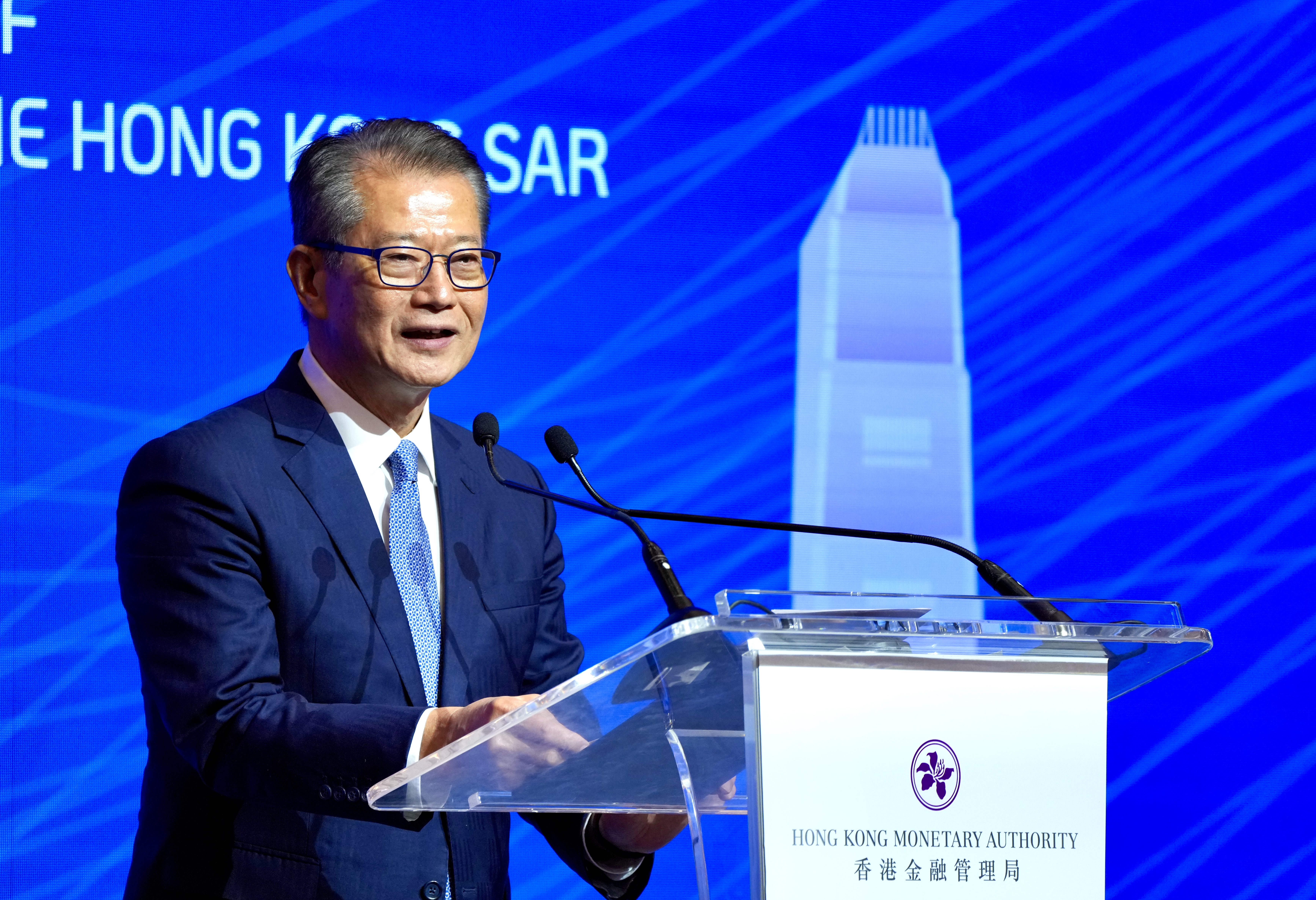
Government officials and financial regulators in the Hong Kong Special Administrative Region as well as global leaders expounded their views at the fifth edition of the Global Financial Leaders' Investment Summit organized by the Hong Kong Monetary Authority. The two-day event attracted some 280 prominent global financiers, including about 120 group chairpersons and CEOs.
Themed "Rethinking the Playbook", the summit aimed at building financial market resilience amid extended episodes of geopolitical conflicts, sticky inflation, fiscal challenges and rapid AI expansion.
Morgan Stanley Chairman and CEO Ted Pick said capital investment in the AI segment over the next 10 years may reach up to $15 trillion, of which $2 trillion to $3 trillion has already been implemented or put into use.
PIMCO CEO Emmanuel Roman was more cautious, saying the AI industry may generate about $2 trillion in funding needs annually for capital expenditure, while the US bond market is just worth approximately $12 trillion. “The funding will eventually become too large, and sooner or later there will be a receding tide, and then problems will arise, with rising US interest rates, the war in the Middle East, and even the Eurozone crisis potentially triggering a turning point.”
State Street Corporation Chairman and CEO Ronald O’Hanley said currently it is difficult to view AI as a bubble as market demand supports massive investment. He believes the real question is whether AI will become so efficient in the future that all the capacity currently being built will become unnecessary.
ALSO READ: Rethinking the investment playbook
Blackstone President and Chief Operating Officer Jon Gray said capital misallocation is not surprising amid the current investment bubble, with five companies in the S&P 500 now accounting for 40 percent of total market capitalization, reflecting a problem of "concentration”. But he remains confident of AI infrastructure and said impending productivity gains and changes in consumer behavior should not be underestimated.
As the international investment market may be disrupted by the potential “AI bubble”, global financial leaders emphasized the need for diversification in investment allocation.
David Soloman, chairman and CEO of Goldman Sachs, said a diversified asset allocation and balanced portfolio strategy that avoids reliance on a single investment is advisable, as not all AI investments will yield long-term positive returns.
“Gold is a safe-haven asset and an excellent tool for hedging against inflation, possessing unique value that other assets do not have, fully demonstrating the strong market demand for gold as a diversified asset,” HSBC Group CEO Georges Elhedery noted.
“The renminbi-denominated treasury bond will play a bigger role in global investors’ asset allocation decisions because this asset is safe and liquid, has low correlation with European and US treasury bonds and a stable exchange rate,” said Zhang Hui, vice-chairman and president of Bank of China.
READ MORE: HK urged to establish regulatory framework for agentic AI, tokenization
Speaking at the summit luncheon, Hong Kong SAR Financial Secretary Paul Chan Mo-po said: “We use AI to assess investments, analyse information and improve efficiency. The issue is not simply whether a company uses AI, but whether AI is changing how it operates, serves customers and generates revenue.”
The finance chief added that the Chinese economy will offer the greatest opportunities in AI application. “Across the Chinese mainland, factories, hospitals and logistics networks provide extensive opportunities to test AI and develop new businesses. The country’s comprehensive industrial base and wealth of real-world applications make it fertile ground for AI-native growth.”
Chan said the special administrative region is adopting a "Finance+" strategy through financing innovation and growth as well as building global enterprises.
“We will continue to uphold openness, clear rules and investor protection on which confidence depends,” he said.
