

Experts say Ottawa seeking to diversify away from US amid tense ties with Washington, ban on imports
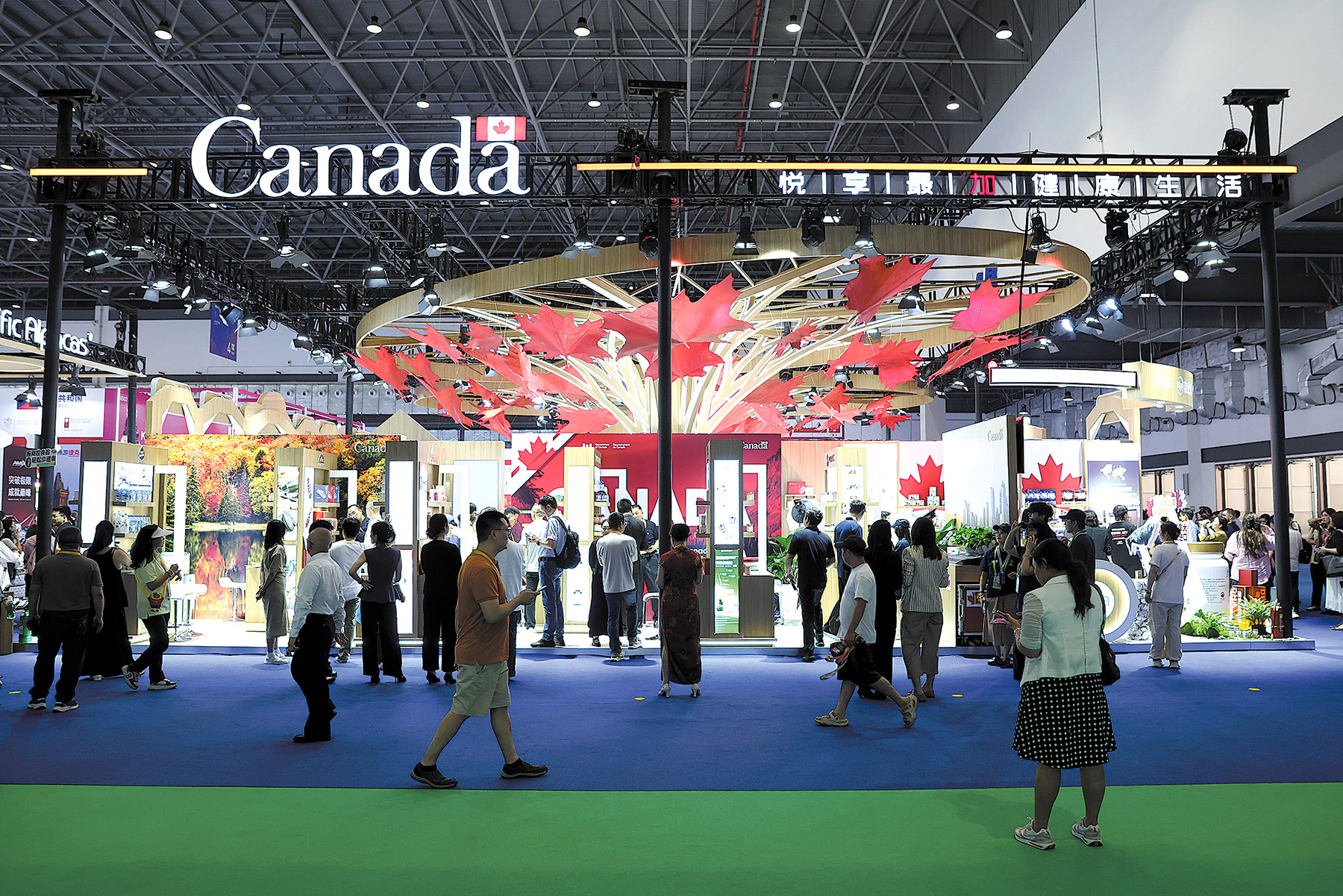
Canada is stepping up efforts to diversify its trade as a renewed tariff confrontation with the United States puts fresh pressure on Ottawa to broaden its economic relationships.
The US imposed a 50 percent tariff on C$27.6 billion ($19.6 billion) worth of Canadian goods effective Aug 22, prompting Canada to impose matching counter-tariffs on selected US products from Sept 8.
The Canadian government has since emphasized the need to diversify trade and reduce dependence on any single partner.
On Sept 29, a US ban on nearly $1 billion in annual imports from Canada took effect, targeting most Canadian alcoholic beverages, some dairy products and certain motorcycles.
US President Donald Trump recently described Canada as “very difficult to deal with” and said: “Canada would like to make a deal, but we’re not satisfied with it.”
Ron Stagg, a professor of history at Toronto Metropolitan University who studies Canadian-American relations, said the Canadian response to the latest US tariffs was being driven not only by economic considerations but also by growing frustration with what Ottawa sees as continuing demands from Washington.
“Up until now the Carney government has treated the American government as a tough negotiator that will respond to conciliatory steps,” Stagg told China Daily.
“However, it is clear now that every time Canada gives a little, the US makes new demands,” he said.
He said the trade confrontation would reinforce Canada’s efforts to build an economy that was less vulnerable to US pressure.
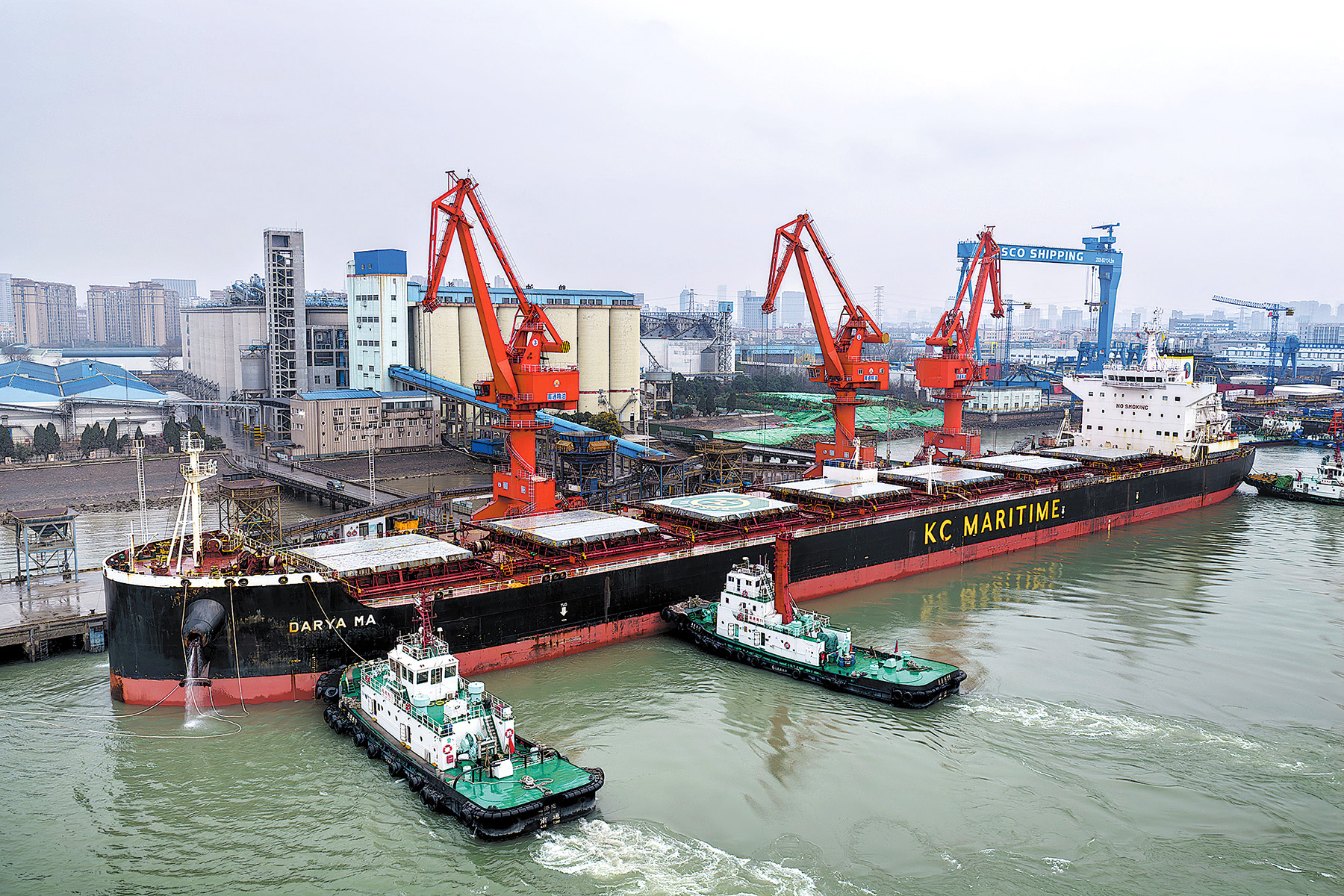
China has emerged as one of the most significant destinations in that effort, with bilateral trade showing stronger export momentum in the first half of this year and both governments moving to restore market access in several areas.
Canadian exports to China rose 30.1 percent year-on-year to C$21.74 billion in the first half of 2026, while imports from China fell 5.8 percent to C$44.86 billion, according to a report released by the Canada China Business Council and the China Institute at the University of Alberta.
Total merchandise trade reached C$66.6 billion, up 3.6 percent from a year earlier.
Bijan Ahmadi, executive director and COO of the Canada China Business Council, told China Daily that the “most significant takeaway from the first half of 2026 is that Canada-China trade became more export-oriented”.
But the change in imports does not necessarily point to a broad retreat from Chinese products, he said.
“The import decline was not a uniform retreat from Chinese supply: consumer goods and electronics weakened, while machinery, batteries and vehicles continued to grow,” Ahmadi said.
The report described the relationship as expanding “selectively rather than uniformly”.
On the export side, however, the picture remains heavily focused on natural resources.
Energy products accounted for 35.8 percent of Canada’s domestic exports to China in the first half of the year, while metal ores and nonmetallic minerals accounted for another 22.6 percent. Together, the two categories made up 58.4 percent of Canadian domestic exports to China.
Crude petroleum exports to China more than doubled to C$5.96 billion, while copper ore and concentrate exports increased by C$949 million to C$2.64 billion.
Alberta and British Columbia accounted for 92.3 percent of the net increase in Canada’s exports to China, driven overwhelmingly by energy and mineral products.
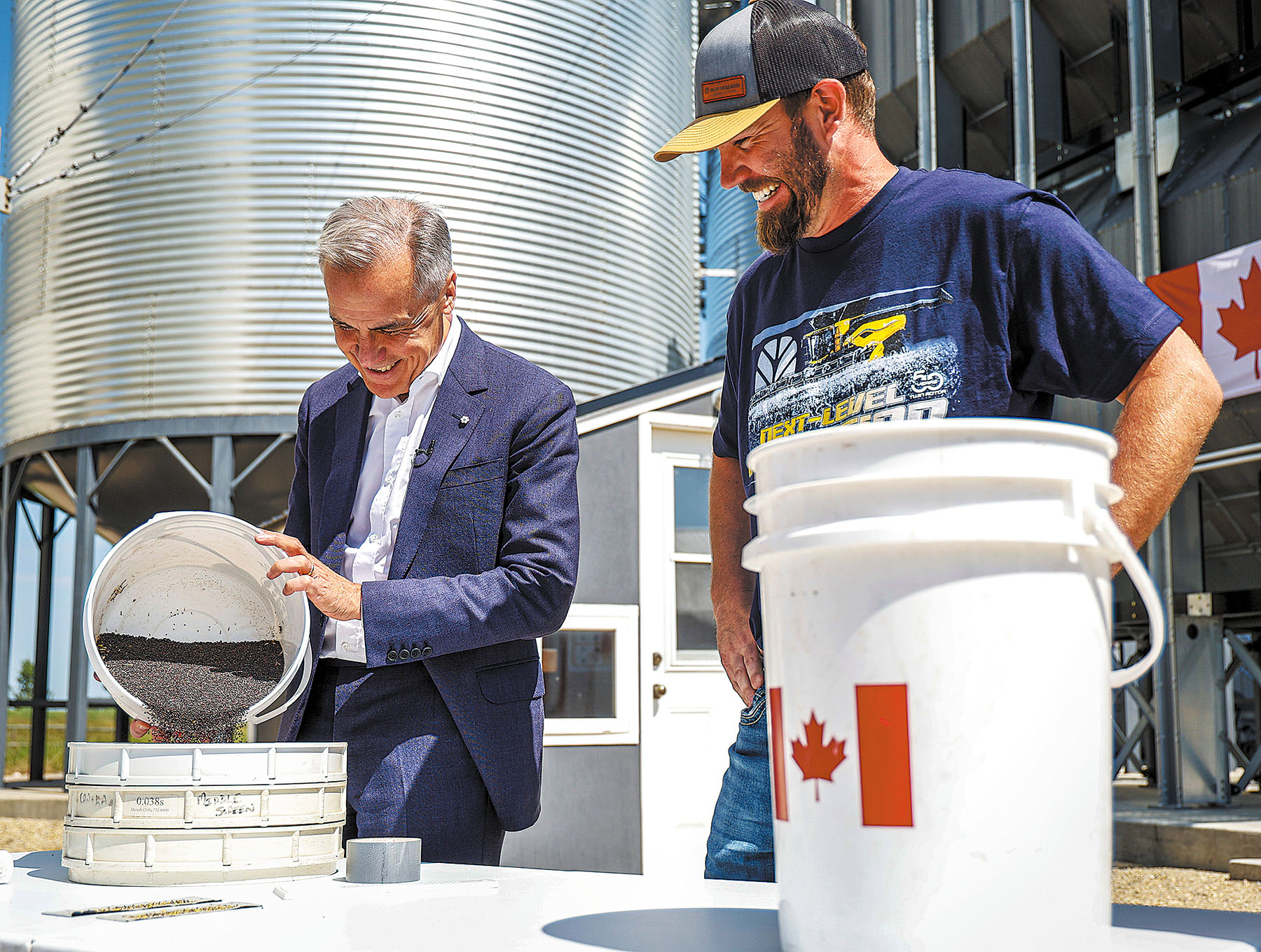
Agriculture also showed signs of recovery following improved market access. Canola seed exports rose 19.4 percent to C$1.42 billion, while frozen boneless beef exports increased sharply after market access was restored.
Canada has set an objective of increasing exports to China by 50 percent by 2030. Ahmadi said that target was achievable and could potentially be exceeded, but argued that future growth would need to extend beyond the sectors currently driving the trade relationship.
“Achieving this growth sustainably, however, will require broader participation across the sectors involved in Canada-China economic relations,” he said, pointing to agriculture and agri-food, forestry, consumer products, value-added manufactured goods, clean technology and services.
He also identified stable and predictable commercial relations, durable market access, efficient trade infrastructure in Canada and stronger promotion of Canadian products in China as important conditions for further growth.
That question is also reflected in the views of Canadian businesses.
A survey released by the Canada-China Chamber of Commerce in September found that 68 percent of respondents expected trade with China to increase over the next two years, up from 52 percent in the previous year’s survey.
Nearly half, or 48 percent, viewed China as a strategic market for their sector or business.
The survey also found that 64 percent of respondents viewed Chinese investment in Canada as ultimately advantageous for the Canadian economy, compared with 48 percent in the previous year.
At the same time, the survey pointed to practical challenges facing Canadian businesses.
The share of respondents who considered it difficult for businesses in their industries to do business with China fell to 29 percent from 41 percent a year earlier, while respondents continued to identify trade policies and regulatory challenges among the obstacles to greater engagement.
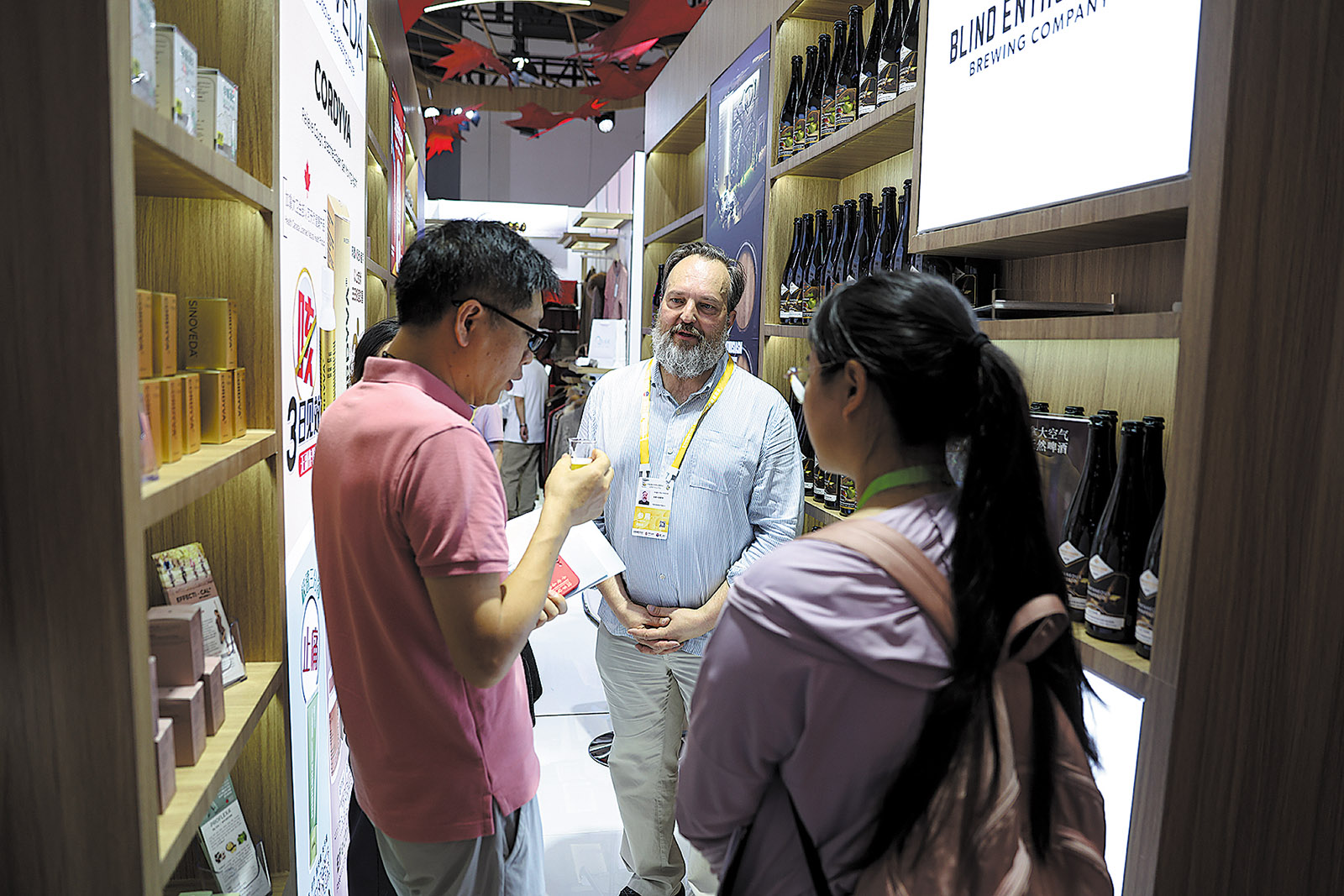
Julian Karaguesian, an economics professor at McGill University in Montreal, said the need for diversification is becoming more pressing as Canada looks for new sources of growth.
“We need fundamental transformation of our trading relationships,” Karaguesian said at a Canada-China roundtable in Vancouver this month.
He said the two economies have complementary strengths that could support a broader economic relationship.
“We … are a natural resource superpower. China is a manufacturing superpower,” Karaguesian said.
“We’re also wonderful potential investment partners,” he said.
Canada’s trade with China could be significantly larger if geopolitical factors were less restrictive. “Our trade with China could be three times what it is today,” Karaguesian said.
The potential for cooperation in newer industries also featured prominently in remarks by Jiang Wenran, president of the Canada-China Energy and Environment Forum.
Jiang said the relationship had gained new momentum since Canadian Prime Minister Mark Carney’s visit to China in January, but “the new momentum is very fragile. The old certainties are gone but the new architecture is yet to be built”.
He said the immediate challenge was to translate political agreements into concrete economic activity.
Jiang called for bilateral working groups at the central level in areas including critical minerals and agriculture, as well as rules and mechanisms governing investment. “We need to think beyond the current sectors of trade,” he said.
He pointed to advanced electric vehicles, hydrogen, green vehicles, critical minerals, quantum technology and broader high-tech and science cooperation as areas that could shape the next stage of the relationship.

Green supply chains could be one such area, said Lu Hai, a professor of accounting at the Rotman School of Management at the University of Toronto.
Lu said China’s green transition could have direct implications for Canadian companies because of their supply-chain links with Chinese manufacturers.
“Chinese supply matters for Canadian firms’ decarbonization,” he said, noting that many Canadian companies source machinery, electrical equipment, base metals, manufactured goods, textiles and apparel from China.
He said Canadian companies should look beyond the purchase price when choosing suppliers and increasingly consider both carbon emissions and supply-chain resilience.
Lu also pointed to China’s development of renewable energy and zero-carbon industrial parks as examples of areas where the two sides could learn from each other.
“I think Western countries and China sometimes need more communication, as many issues are due to misunderstandings,” he said. “I think there are some things we can really learn from each other.”
Former Canadian finance minister Bill Morneau also pointed to investment as an important part of the diversification equation.
“There is a lot of space, so there are lots of opportunities,” Morneau said.
He said Canadians are increasingly willing to consider diversification and greater engagement with Chinese investment, although he acknowledged that Canada would have to navigate its relationship with the US.
“We do have the challenge that we can’t be offside with the US, so we can only go so far,” he said.
Jiang also argued that diversification should be treated as a long-term strategy rather than something that changes with each turn in the geopolitical cycle.
He cited Canada’s earlier experience with Chinese investment in the energy sector as an example of how economic ties can develop over time when governments and businesses create mechanisms for cooperation.
China is already a major trading partner for Canada. The next challenge is whether the momentum in bilateral trade can be broadened into more sustained cooperation across investment, agriculture, critical minerals, advanced technology and green industries.
Contact the writers at gaoyang@chinadailyusa.com
