

Cooperation between Fujian and Ningxia lifts thousands out of poverty
Mabel Chinomona, president of the Senate of Zimbabwe, visited Northwest China's Ningxia Hui autonomous region in July, a trip she described as "valuable" as she got to witness first-hand one of the most remarkable success stories of poverty alleviation and rural transformation in contemporary history.
During the tour, Chinomona, who is also a Political Bureau member and secretary of the Women's League of ZANU-PF, the African nation's ruling party, visited a paddy-fish ecological park, a green energy supply station and a coal-based new materials technology company. "The achievements we have witnessed in Ningxia provide practical evidence of the effectiveness of Xi Jinping Thought on Socialism with Chinese Characteristics for a New Era, particularly its emphasis on people-centered development and the pursuit of common prosperity," Chinomona said.
What impressed her the most was the partnership between Southeast China's Fujian province and Ningxia, which has become one of China's most celebrated examples of East-West paired assistance in poverty alleviation.
READ MORE: Once-barren region now a growth hub
In 1996, the Communist Party of China Central Committee launched a program to promote poverty alleviation cooperation between the more developed eastern region and the less-developed western region, as part of a broader national strategy to narrow regional development gaps and promote common prosperity.
Under this program, Ningxia and Fujian were paired together. President Xi Jinping, then deputy secretary of the CPC Fujian Provincial Committee, oversaw the progress of the cooperation. Under his leadership, the two regions took the lead in establishing a joint conference mechanism and initiating mutual exchanges of officials through temporary assignments.
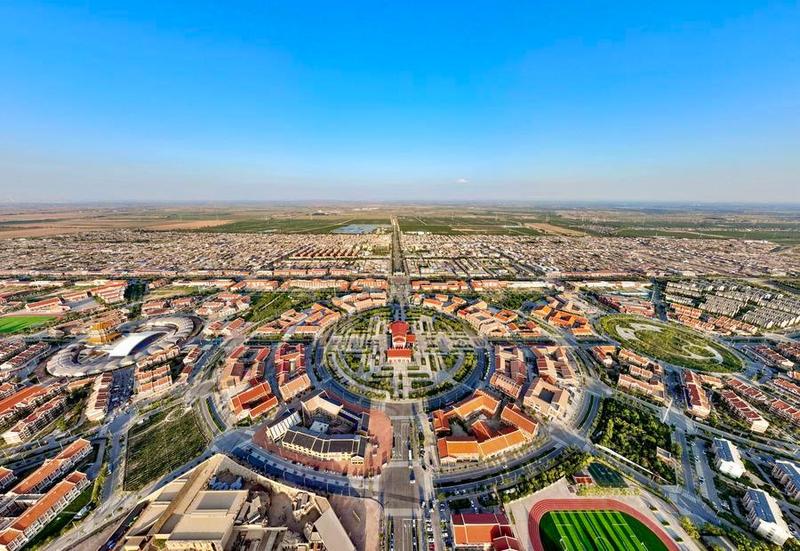
This cooperation gave birth to Minning township, the name combining the Chinese abbreviations for Fujian, which is "Min", and Ningxia, which is "Ning". Thanks to the sustained efforts of officials and residents of both regions, what was once a desolate wasteland is today a prosperous township of 66,000 people, where as of 2025, relocated residents boasted a per capita disposable income of more than 20,000 yuan ($2,945).
By 2020, all 803,000 impoverished people in the autonomous region had been lifted out of poverty. With China entering a new phase of high-quality development, Fujian-Ningxia cooperation is moving steadily toward higher-quality growth.
"These achievements illustrate how visionary leadership, targeted poverty alleviation, industrial policy and environmental sustainability can work together to deliver lasting prosperity for the people," said Chinomona.
For Zimbabwe, she said, these experiences offer invaluable lessons. "The success story of Ningxia inspires us to explore innovative models that can be adapted to our own circumstances, particularly in rural communities where sustainable livelihoods remain central to our national development agenda," she added.
This year marks the 30th anniversary of the East-West pairing assistance program. In June, President Xi made instructions on steadily advancing cooperation between China's eastern and western regions, urging further efforts to boost coordinated regional development and secure solid progress in advancing common prosperity for all.
He called for efforts to draw on and apply the valuable experience gained from the cooperation between Fujian and Ningxia, refine the cooperation mechanisms, and broaden the scope of cooperation.
It is important to promote industrial complementarity, personnel exchanges, mutual learning in technology, sharing of ideas, and mutual learning in work styles between the eastern and western regions, thereby achieving mutual benefit, win-win outcomes and common development, Xi said.
Yaomo, once an impoverished mountain village in Guyuan city, Ningxia, has undergone a remarkable transformation.
"With government-provided preferential loans and subsidies, the villagers ventured into the cool-season vegetable industry. Under the guidance of resident agricultural experts, the vegetable industry has thrived, and our incomes have steadily increased," said Guo Shaoling, a farmer from the village.
Guo said that local government also supported the villagers by establishing an online sales plat-form for agricultural products, helping them navigate market risks. "With this comprehensive support system, the vegetable industry has evolved from simple greenhouse farming to a full-fledged industrial chain."
In the past, the village's poverty drove young people to seek opportunities elsewhere. However, the success of the vegetable industry has drawn many of them back. "Now, more and more young people are returning to join us in cultivating vegetables and developing the industry. The once-struggling village is now a thriving community, full of hope and opportunity," Guo said.
ALSO READ: Xi calls for more coordination of regional growth
Mohammed Ouzzine, vice-president of the House of Representatives of Morocco, said China's comprehensive governance model for poverty alleviation has left a deep impression on him.
A significant amount of fiscal resources has been mobilized to support poverty alleviation projects, and a package of innovative measures has been implemented, including developing industry, relocating people, promoting education and improving the social security network, Ouzzine observed.
Noting that poverty is a common challenge faced by all of humanity, he called for strengthening international cooperation on poverty reduction.
Ghulom Halimzoda, chairman of the Socialist Party of Tajikistan, said the core lesson from China's experience in reducing poverty is to uphold the people-centered development philosophy, which is of utmost importance.
The journey of Chinese modernization and the development path of Tajikistan both powerfully demonstrate that as long as a nation remains focused on the well-being of the people and progresses steadily, the goals, no matter how ambitious they are, can eventually be met, he said.
Contact the writers at caodesheng@chinadaily.com.cn
