

Uncle King dedicates his life to hand-carving ‘vividly beautiful’ mahjong tiles that mass production can never replicate. Gary Chiu reports, with photographs by Andy Chong.
Editor’s note: Hong Kong’s Intangible Cultural Heritage Inventory currently lists more than 500 items. China Daily presents a photo series exploring some of these traditions. The first batch features four parts, with the third installment focusing on hand-carved mahjong tiles. More to follow; stay tuned.
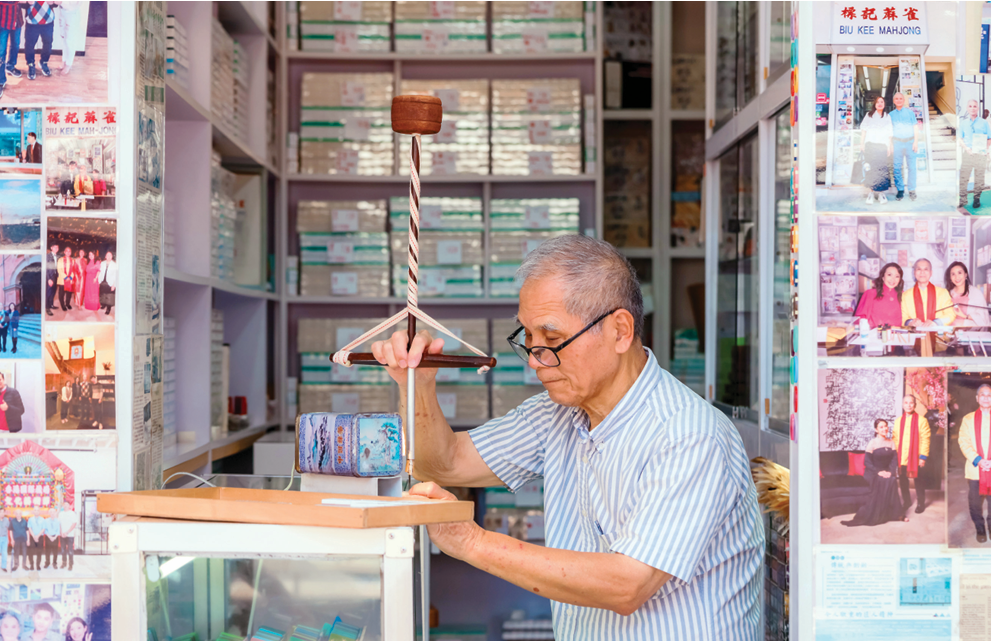
Just opposite the archway of Temple Street night market on Jordan Road — a busy thoroughfare in Yau Ma Tei — lies a tiny understairs shop: Biu Kee Mahjong. Undisturbed by the hustle and bustle outside, master Cheung Shun-king, fondly known as Uncle King, is fully immersed in his craft, meticulously hand-carving intricate patterns on acrylic tiles. It is a classic example of a “flow state”, where the background noise seems to fade away, and only the seasoned artisan and his virtuosity exist.
“The noise is unavoidable in such a busy neighborhood. I have been used to it for years,” says Uncle King, who inherited the business from his father. Despite relocating several times over the decades, Biu Kee Mahjong has never left Jordan Road, where Uncle King grew up, helped his father and eventually took the reins.
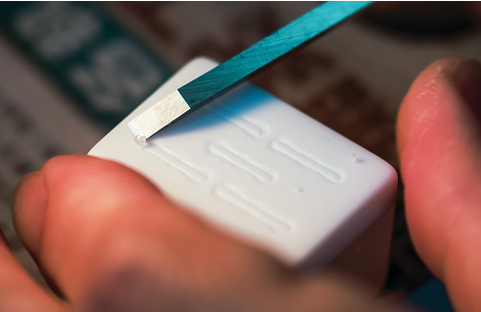
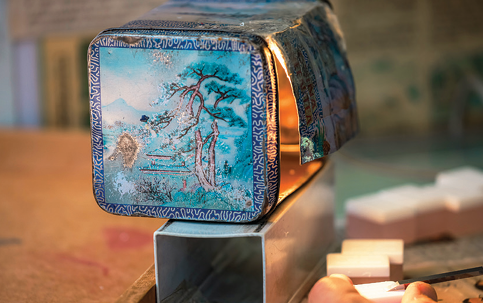
His compact shop combines a retail space, a hand-carving workshop and a display cabinet for his “retired” tools —including a wooden drill used for decades, a self-made light box fashioned from a tea tin, and gravers bearing traces of wear and tear. “I can’t bring myself to throw them away,” Uncle King tells China Daily. He finds deep satisfaction in creating unique tools that the commercial market could not offer.
Tools are the extension of an artisan’s hands, requiring constant care. But when eager to carve a few more tiles, Uncle King sometimes skips sharpening blunt gravers. “They slip on the tile and cut my finger,” he admits, with a laugh.
Drawing on his decades-long craftsmanship — a combination of sharp eyesight, skillful hands and a focused mind — Uncle King says the most painstaking part of his work is engraving mahjong character suits, which are carved at right angles and depths to accentuate calligraphic aesthetics in each stroke of Chinese characters.
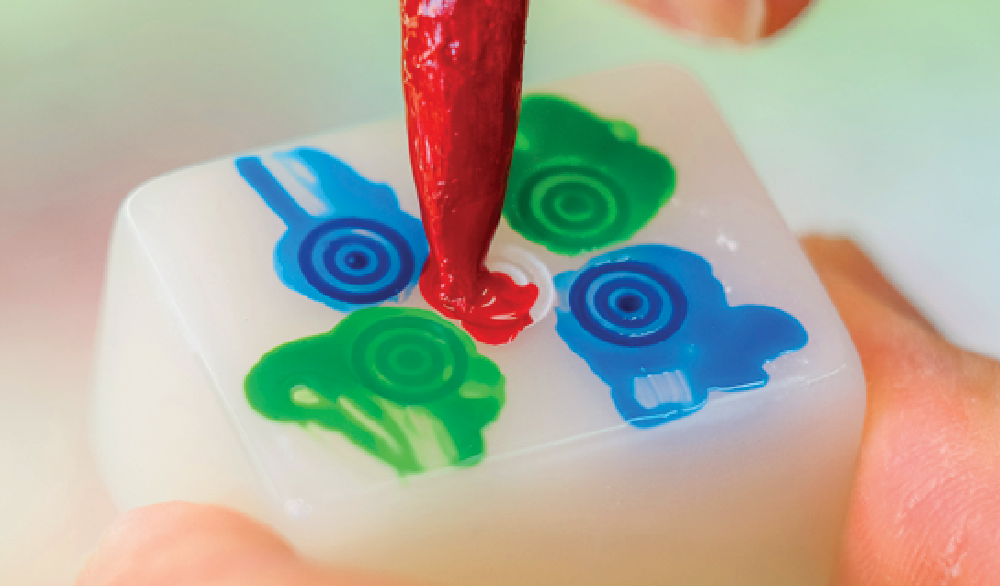
While mass-produced tiles look perfectly uniform, they lack the imperfections that define the handicraft. “The same pattern on two hand-carved tiles looks slightly different, depending on my mood or energy that day,” Uncle King explains, describing machine-made tiles as “evenly beautiful, not vividly beautiful”.
Now in his 70s, Uncle King never considers retirement, dedicating himself to the artistry with a lifelong affection. “I only take one day off a year — the first day of Chinese New Year,” he says proudly.
The hand-carving craft is recognized as part of Hong Kong’s intangible cultural heritage, fueling a trend of nostalgic appreciation. “Now you can still see authentic hand-carved tiles, and a few remaining artisans are still here,” he says.
“It would be sad if people could only learn about the craftwork through documentaries.”
Yet Uncle King calmly views the cultural heritage’s fate. “There is no point in feeling sorry. All we can do is prolong its life so that more people can have the opportunity to admire the craft,” he says.
Contact the writer at garychiu@chinadailyhk.com
