

Master Wu Chi-kai keeps HK’s neon lights glowing through exquisite craftsmanship and a serious quest for excellence. Gary Chiu reports.
Editor’s note: Hong Kong’s Intangible Cultural Heritage Inventory currently lists more than 500 items. China Daily presents a photo series exploring some of these traditions. The first includes four parts, beginning with neon light crafting. More to follow, stay tuned.
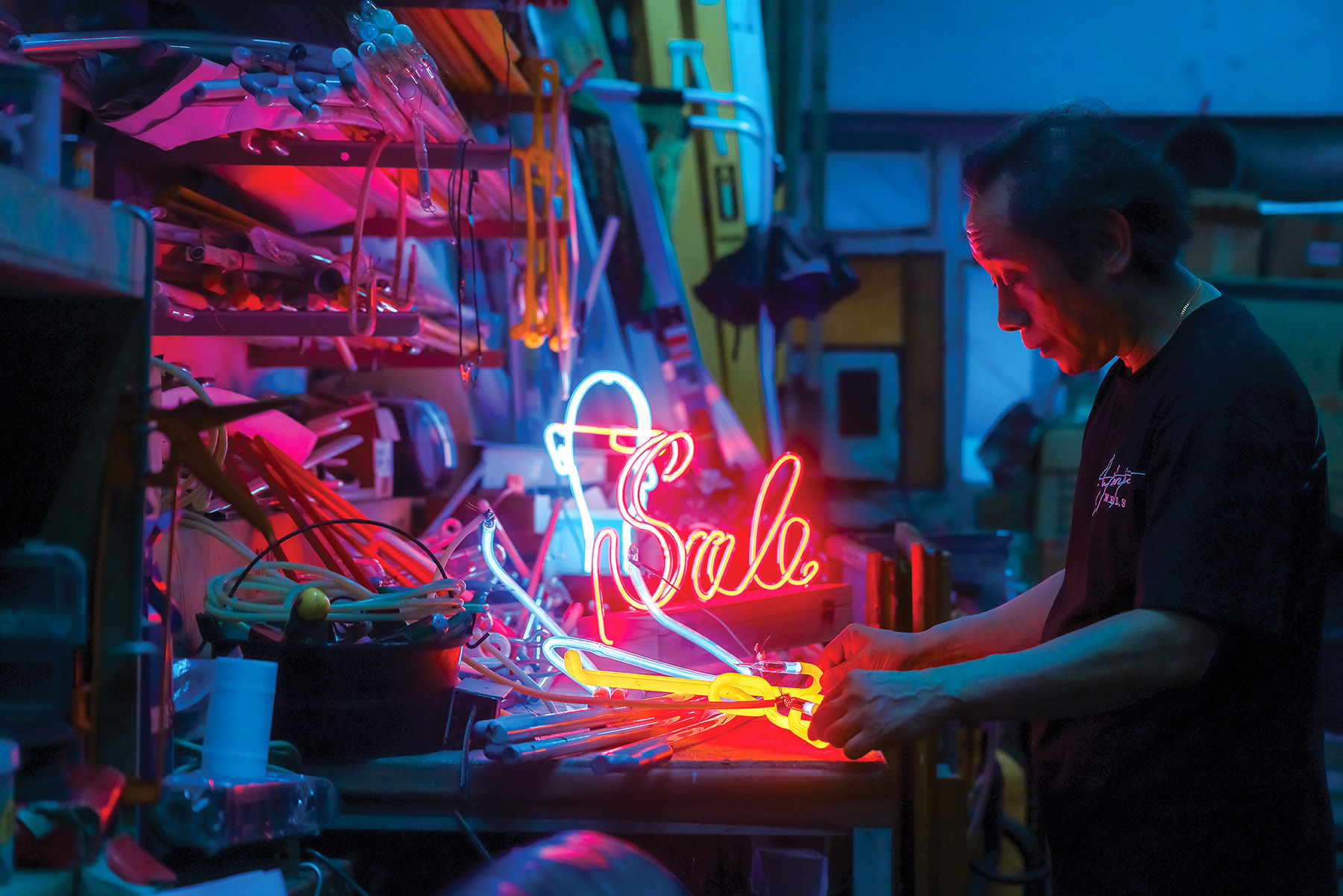
A searing blue flame pierces his studio as neon light master Wu Chi-kai heats a glass tube lined with fluorescent powder. Giving a gentle blow, Wu bends the softened glass into a precise curve, his weathered hands moving with fluidity. From welding components to extracting air, every step showcases his effortless mastery. Infusing the tube with inert gas, Wu presses a button. Instantly, the brilliance of old Hong Kong ignites the room, casting a cinematic glow on his face.
The making of the finest neon lights is a fusion of art and science, relying on physical and mental coordination forged through years of practice, patience, and pain. Guided by nearly four decades of experience, Wu, one of Hong Kong’s few remaining accomplished craftsmen, knows exactly when the softened glass is ready to merge. “When having a barbecue, we cannot have the food cooked only on one side. Glass tubes need to be evenly melted to fuse,” Wu told China Daily.
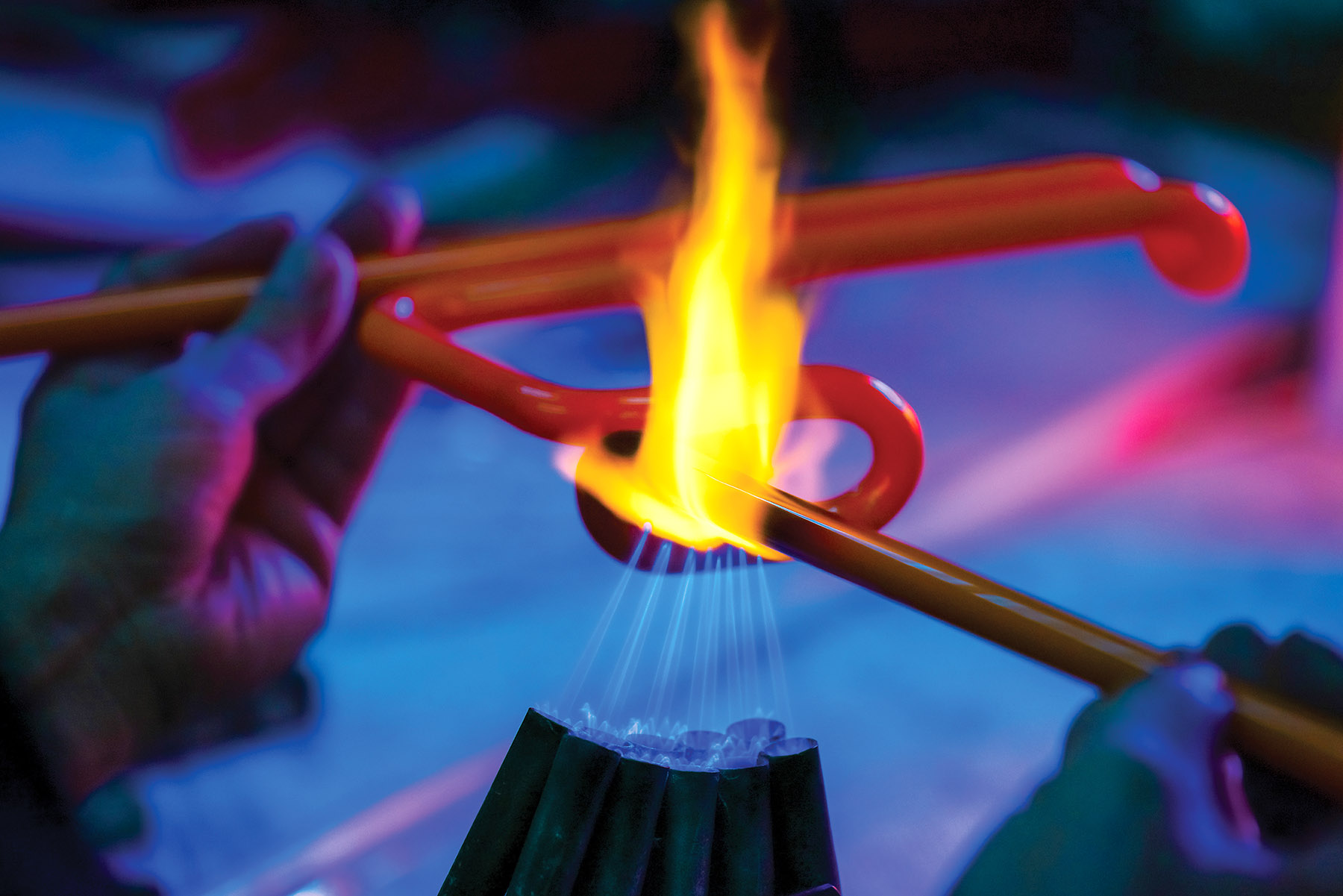
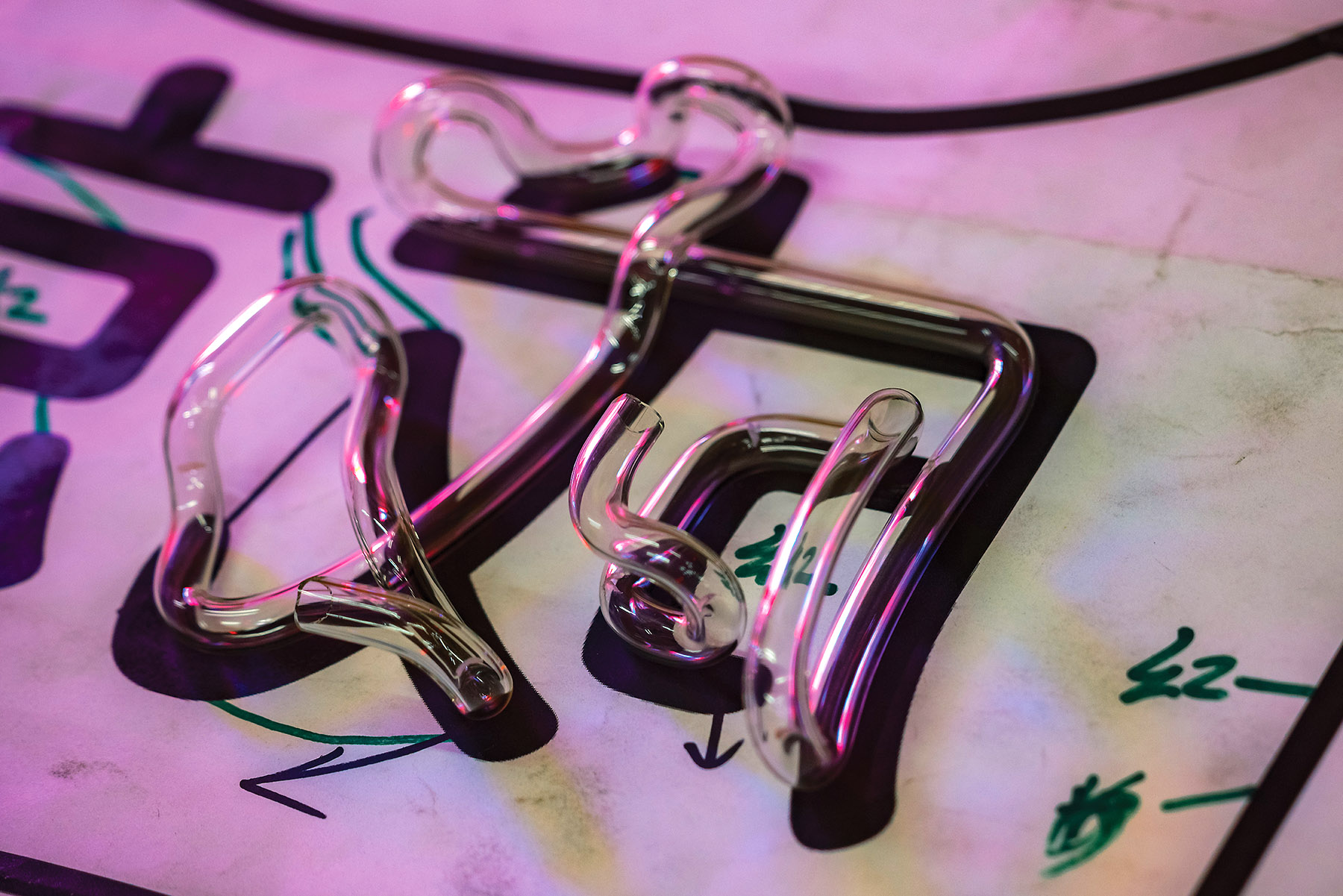
Throughout his career, scars and blisters were unavoidable. Yet, Wu found deep satisfaction in his work. “It is as if I have breathed life into the neon light,” he says. “A straight tube can be twisted into different shapes and finally beam, leaving a lasting impression.”
During the peak of his business from the 1980s to the 1990s, Wu’s work was dominated by crafting two-dimensional signs for commercial clients. However, since completing his apprenticeship in six months he had always envisioned possibilities beyond making flat signboards. His first side project — a three-dimensional installation of a human head wearing glasses — was ahead of its time, though he admits people may not have initially appreciated his creativity.
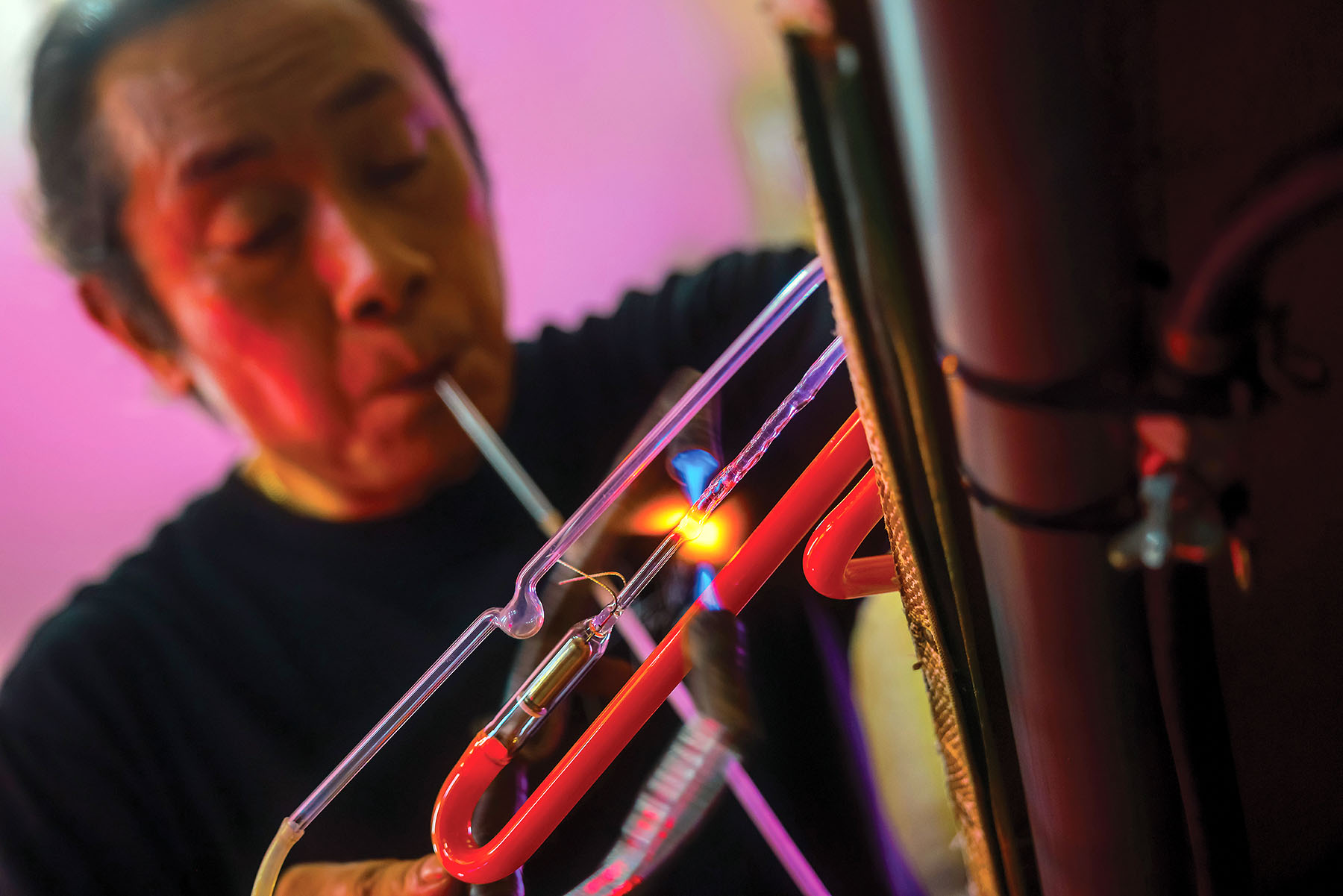
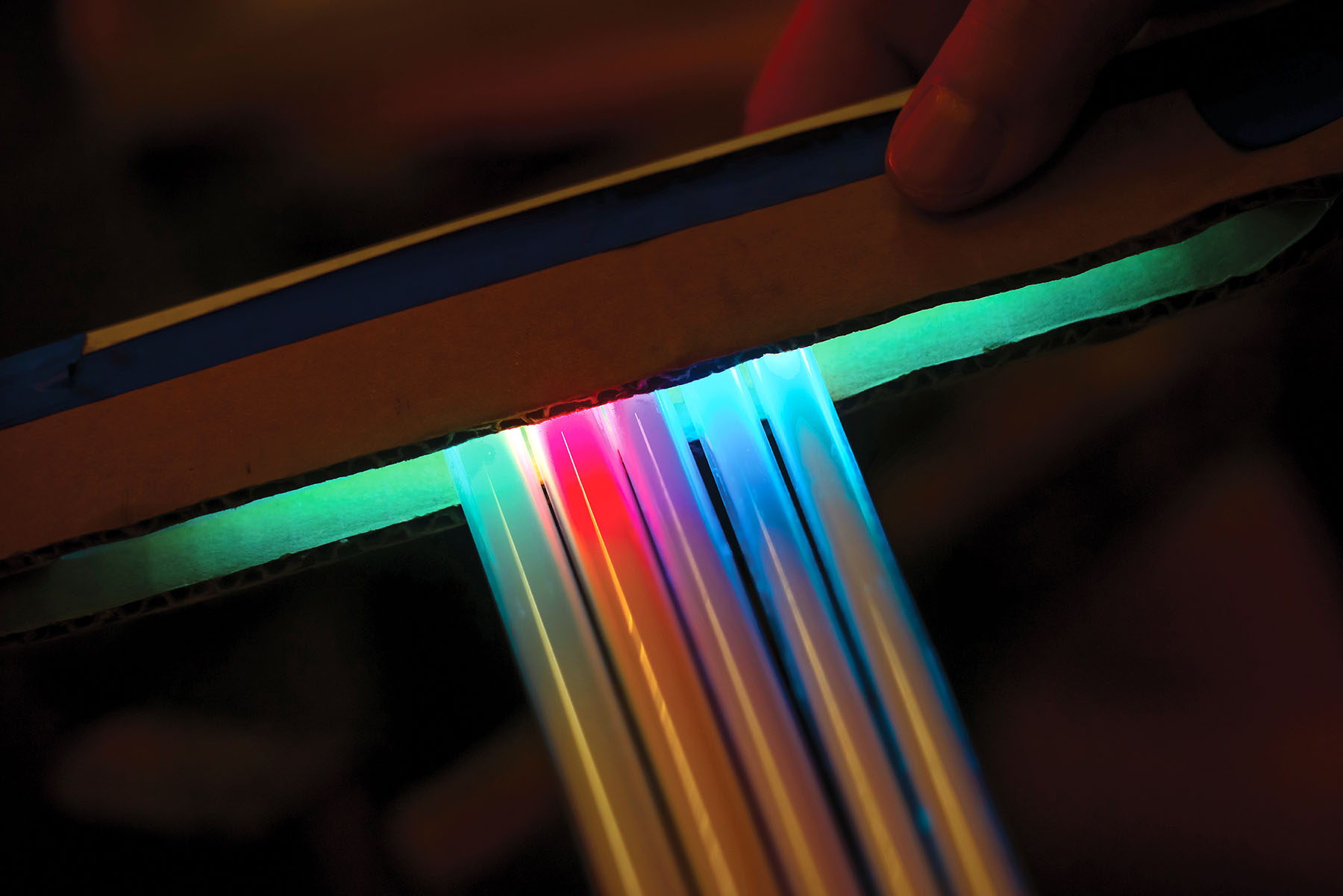
Today, giant neon signs have dimmed in Hong Kong to comply with the government’s removal order. Wu accepts this without regret: “This is a change of times, and change is inevitable.”
In recent years, uses of neon lights have shifted from outdoor practicality to indoor aesthetics, and Wu has been commissioned to create 3D installations, home decor, and customized pieces. “As an artisan, I am responsible for achieving perfection,” he says with a sense of calling. “When people find my works fascinating, they will realize their value and appreciate craftsmanship.”
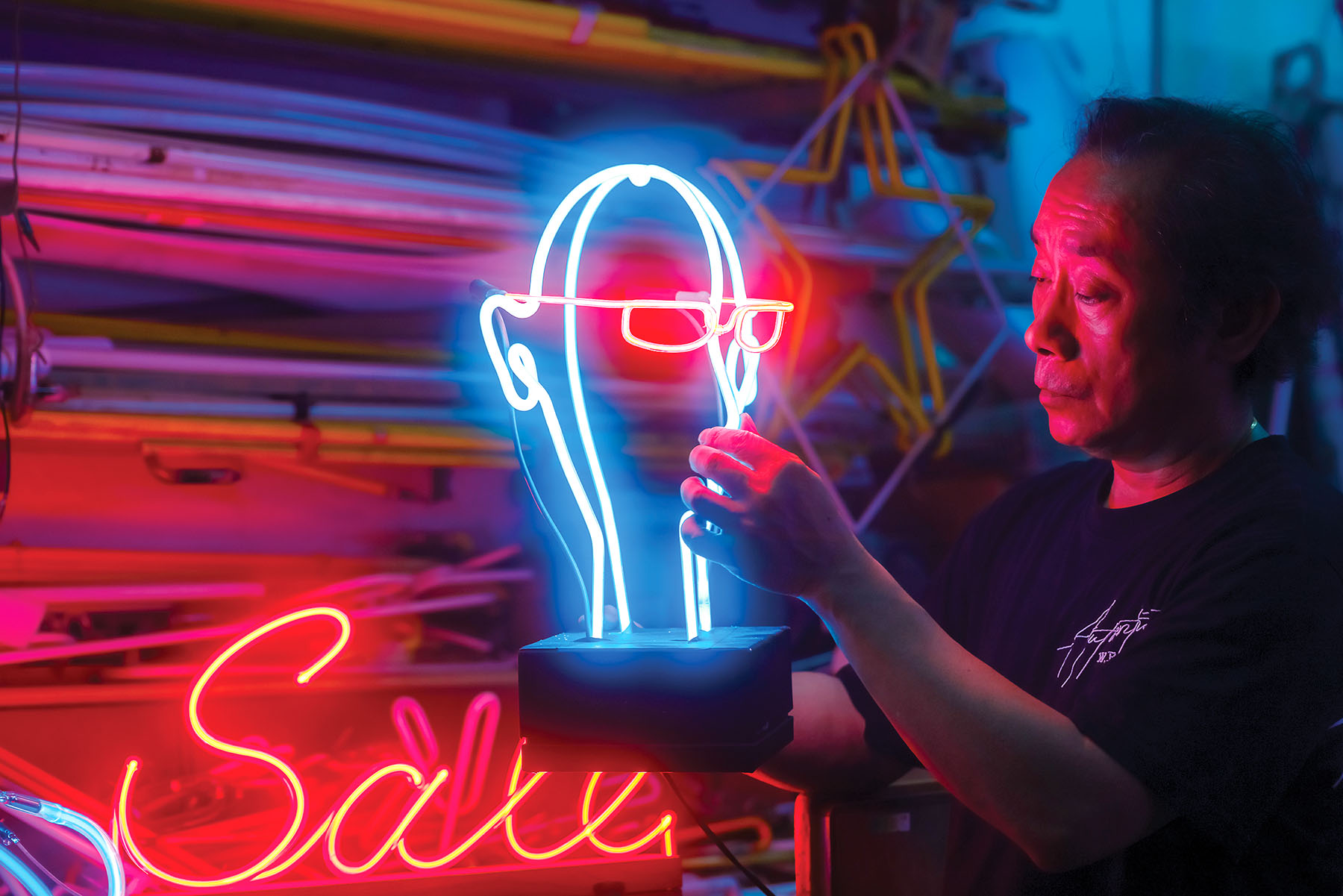
In 2024, neon-tube-making techniques were inscribed into the city’s intangible cultural heritage inventory — a “consolation prize”, Wu calls it, as the honor came after neon signs began disappearing.
Invited to share his expertise at a local university, Wu says preserving the craft required a relentless pursuit of perfection. “If I don’t find my works outstanding, how can I expect others to admire them?” he says. “Only when I do my best can this craft be passed down to the next generation.”
Contact the writer at garychiu@chinadailyhk.com
