

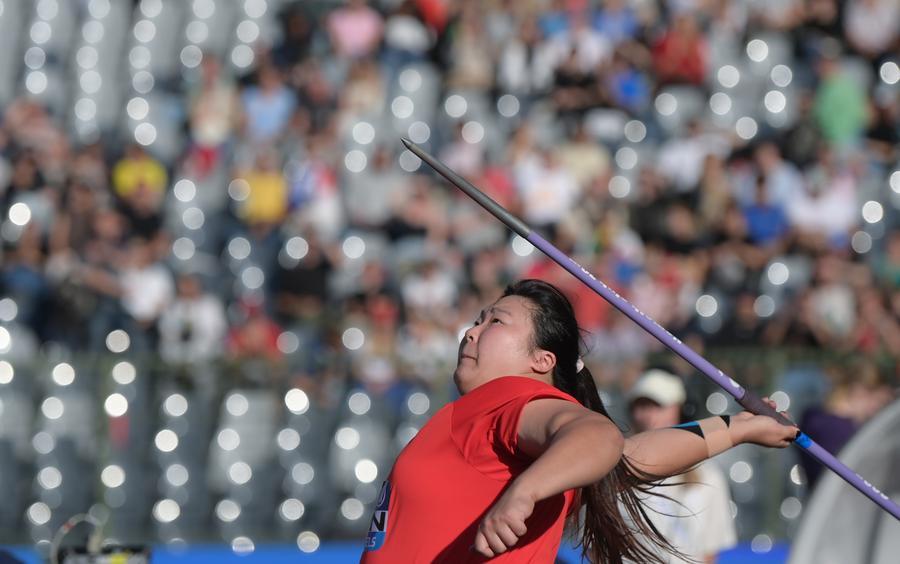
A rising javelin star, a teenage sprint sensation and a group of seasoned champions will form the core of China's athletics campaign at the Aichi-Nagoya Asian Games, as the team looks to combine medal ambitions with the transition to a new generation.
China will send 72 athletes — 36 men and 36 women — to compete in athletics from Sept 23-29, with 18-year-old javelin thrower Yan Ziyi and 17-year-old sprinter Chen Yujie among the team's most closely watched newcomers.
They arrive in Japan with strong credentials, but their Asian Games debuts will also provide an early test of how China's emerging talents handle the pressure of a major multisport event.
At the Diamond League meet in Xiamen in May, shortly after turning 18, Yan produced a stunning first throw of 71.74 meters. The mark broke both the Asian and world U20 records and became the world-leading performance of the season. It was also the second-best throw in history, just 54 centimeters short of the world record of 72.28m set by Czech legend Barbora Spotakova.
Yan subsequently won the Diamond League meets in Oslo, Paris and Monaco before taking the title at the Diamond League Final in Brussels, completing a perfect five-for-five record in the 2026 series and securing the overall championship.
Her breakthrough has made her a leading gold-medal hope for China in Nagoya.
But her latest outing also highlighted the importance of her recovery and consistency ahead of the Games.
At the inaugural World Athletics Ultimate Championship in Budapest on Saturday, Yan threw 68.05m with her opening attempt to take silver behind Japan's Olympic champion Haruka Kitaguchi, who won with 68.92m and set a Japanese national record.
Yan withdrew after the second round because of an injury to her right foot.
The setback came after a similarly uneven performance at the Diamond League Final, where she fouled twice in her first three attempts and managed only 62.21m with her valid throw, before recovering to win with 68.42m.
The two competitions highlight the challenge awaiting Yan in Nagoya: maintaining her health and consistency while carrying the expectations that have accompanied her rapid rise.
She will face Kitaguchi again in Nagoya, setting up another high-profile meeting between the Olympic champion and one of the sport's fastest-rising stars. China will also field Dai Qianqian in the event.
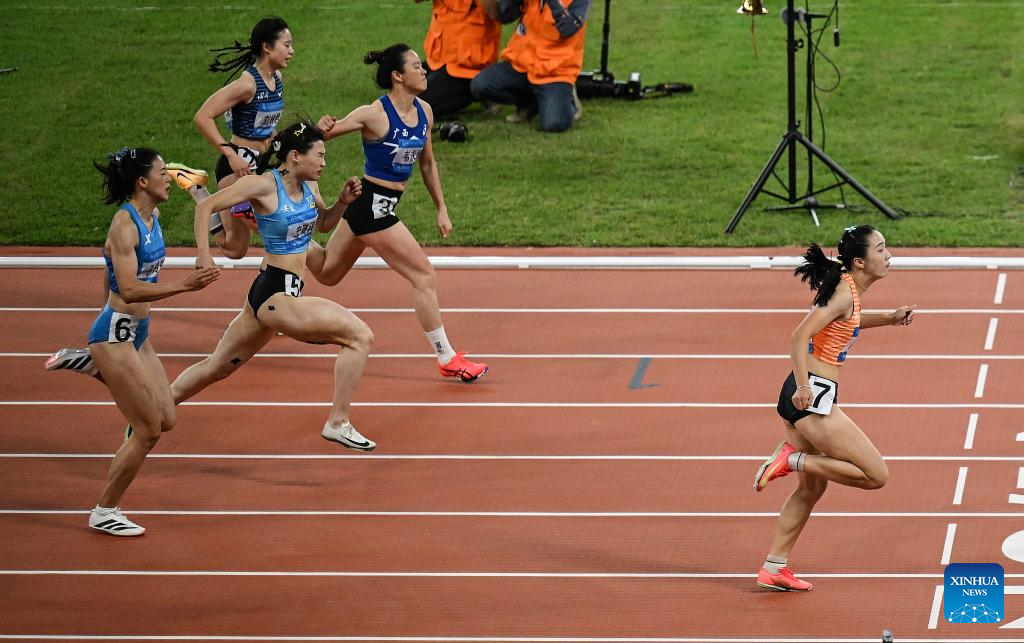
Chen Yujie is another high-profile flag-bearer of China's next generation.
The Ningbo native won the women's 100m at the 2025 National Games in 11.10 seconds at just 16, becoming the youngest woman to win the event in the Games' history.
She lowered the mark to 11.08 at this year's National Athletics Championships in August, setting an Asian U20 record and recording the fastest women's 100m time in Asia this year.
In Japan, Chen will compete in the 100m,200m and 4x100m relay. The schedule will test not only her speed but also her ability to manage multiple rounds and events at her first Asian Games.
Chen, however, has kept her ambitions focused on performance rather than expectation.
"My goal is to produce my best performance at the Asian Games, stay healthy, represent my country and strive to reach the top of the podium," she said.
For Chen, Nagoya will be a first major test on the senior international stage and an important step toward her longer-term goal of competing with the world's best at Los Angeles 2028.
While Yan and Chen represent the future, China will continue to rely on experienced athletes to anchor the team.
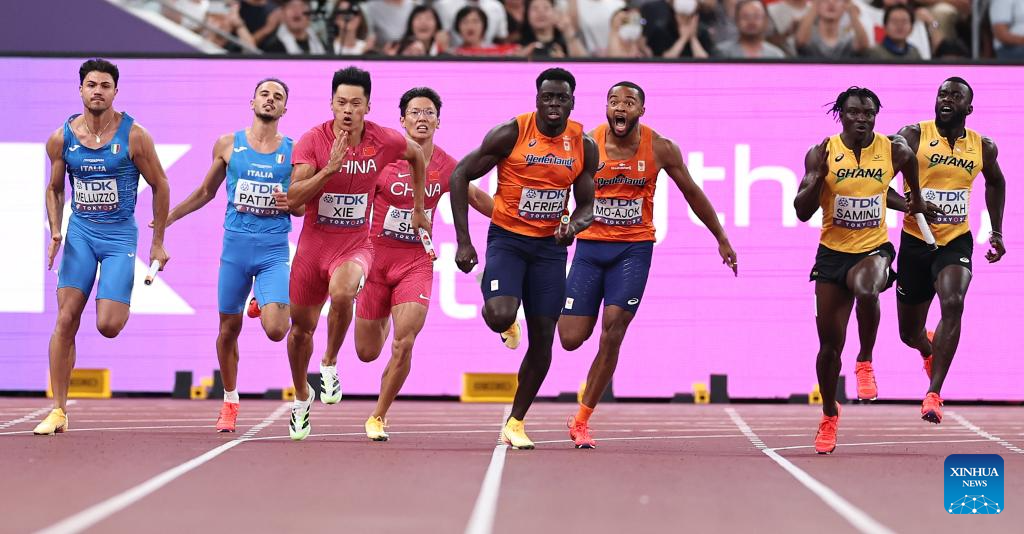
Xie Zhenye remains a key figure in both the individual sprint events and the relay squads. At the Hangzhou Asian Games, Xie won the men's 100m in 9.97 seconds and he also won the men's 100m at this year's National Athletics Championships.
Now at 33, Xie may no longer be at his individual peak, but his experience and relay expertise remain important to a team undergoing generational change.
China won the men's 4x100m relay at the Asian Relay Championships in 38.08 seconds, providing encouragement ahead of Nagoya.
With Japan enjoying home advantage and considerable depth, China will need to be sharp in the baton exchanges and tactical execution.
The women's 4x100m relay will also bring together different generations, with experienced sprinters Ge Manqi and Liang Xiaojing joined by Chen.
Athletics commentator Chen Chen said veterans could help younger athletes deal with the psychological pressure of major competition.
"An athlete with experience at major events can pass on that experience and help younger athletes manage performance anxiety and build confidence," Chen Chen said.
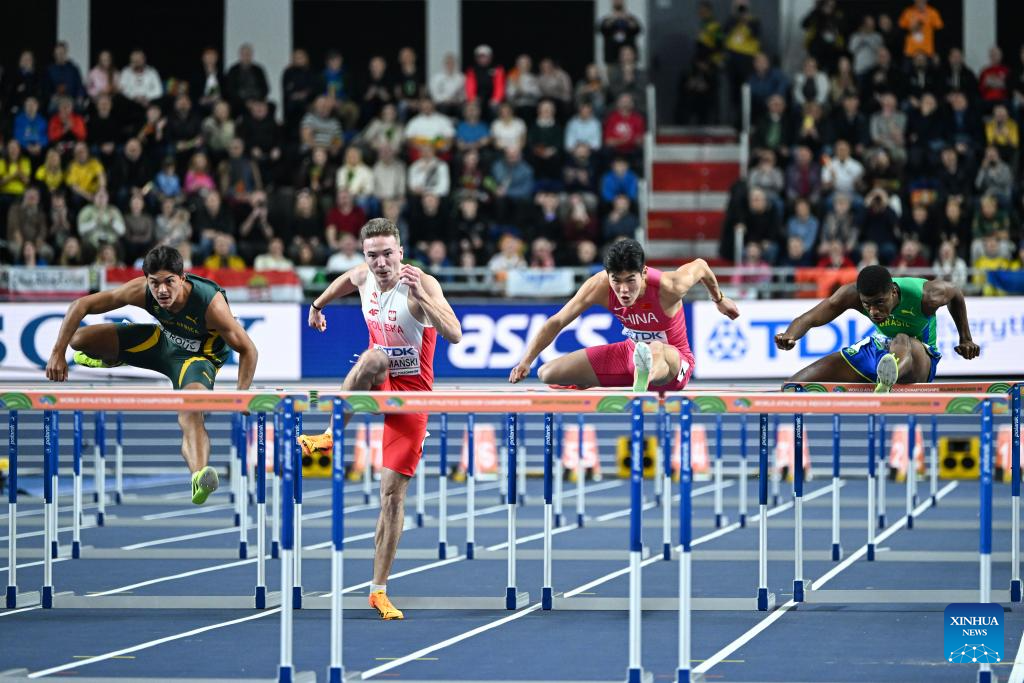
Elsewhere on the track, Wu Yanni and reigning Asian Games champion Lin Yuwei will compete in the women's 100m hurdles, while Chen Yuanjiang has posted a personal-best 13.13 seconds in the men's 110m hurdles.
Middle-distance runner Xi Xiaoheng will double up in the men's 800m and 1,500m after setting a national record of 1:45.48 in the 800m at the 2025 National Games.
China's medal prospects also extend across several field events.
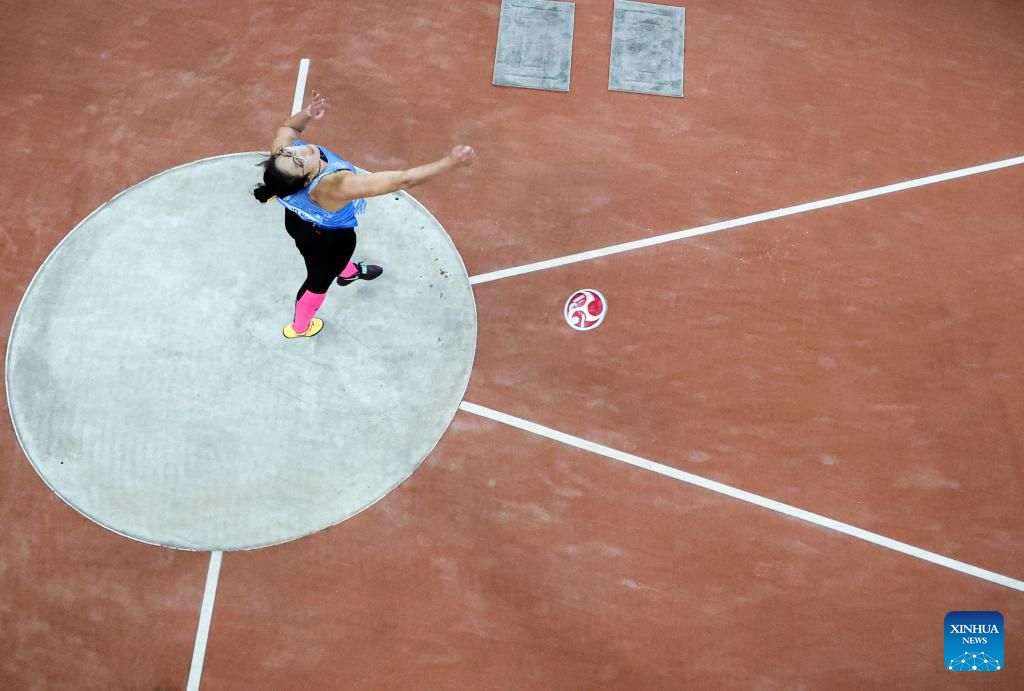
In the women's discus, veteran Feng Bin will seek to defend her Asian Games title after winning the National Athletics Championships with a 62.51m throw, and then producing a personal season-best 67.46m to win the Diamond League Final.
The women's hammer throw has emerged as another major medal prospect for China. Zhang Jiale, 19, further surpassed the Asian record of 78.64m with a throw of 79.62m at the national hammer throwing championships in Huai'an, Jiangsu province, on Sept 12, less than a month after setting the previous mark of 78.64m at the National Athletics Championships.
Zhang Linru, meanwhile, produced an Asian season-leading 19.63m in the women's shot put at the National Championships, while Song Jiayuan remains another medal contender and Niu Chunge will look to build on her Asian-record 4.73m clearance in the women's pole vault.
From teenagers making their Asian Games debuts to veterans continuing to compete at the highest level, the next few weeks will provide a snapshot of where Chinese athletics stands between generations.
With the Los Angeles Olympics less than two years away, Aichi-Nagoya 2026 will be an important test for both China's established medal contenders and the young athletes expected to lead the team into the next Olympic cycle.
