

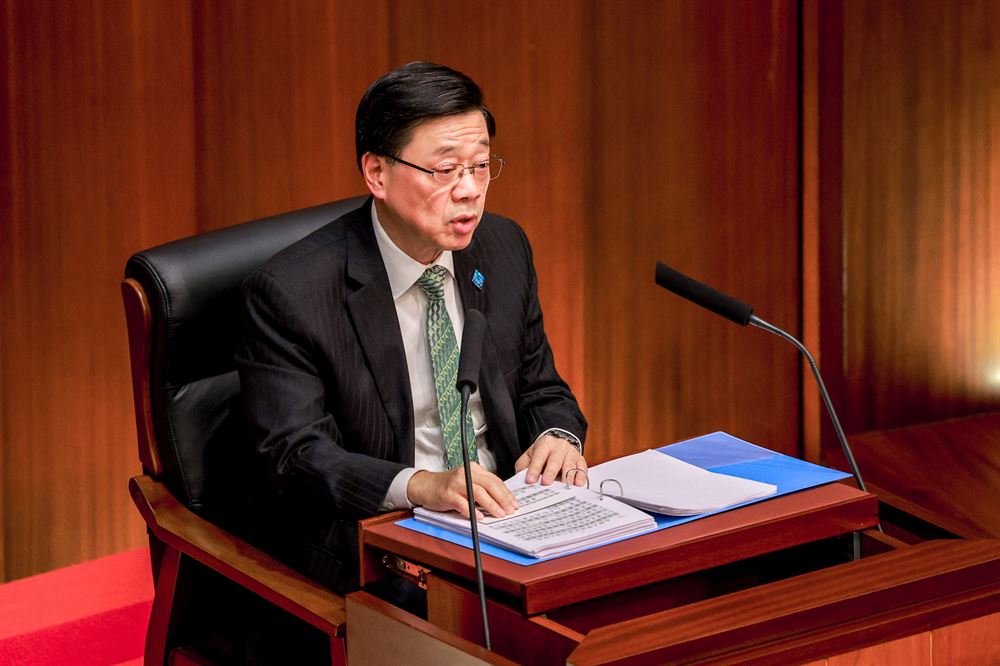
Chief Executive John Lee Ka-chiu outlined specific measures in his Policy Address on Wednesday to reinforce Hong Kong’s strategic position, concentrating heavily on driving the city's growth as an innovation and technology center and an international education hub under the “Four Centers and One Hub” framework.
“The Innovation, Technology and Industry Bureau will set up a new Task Group on Frontier Technology to plan for the development of frontier technologies covering AI, new energy, new materials, aerospace technology, quantum technology and other areas to explore technology and industry development,” Lee said in his annual policy outline.
The group will report its findings to the Committee on Innovation, Technology and Industry Development, assisting in policy formulation and industry planning, he added.
LIVE: HK blueprint eyes enhancing livelihood, economic breakthrough
The administration is taking comprehensive action to coordinate the application and risk governance of artificial intelligence by appointing a commissioner for AI, promoting AI adoption across key sectors and implementing a seven-point risk-governance strategy.
Support for livelihoods, fertility
In the Policy Address, Lee announced the launch of a youth employment scheme, increased newborn baby bonuses, and an expansion of voucher schemes for the elderly.
The two-year “30,000 Youth Employment and Internship Programme” is designed to facilitate youth employment and development, especially among those with limited or no work experience.
The CE said the government will mobilize the business sector, including major employer and trade associations, to provide an additional 10,000 full‑time jobs lasting six months or more within a two‑year period starting from the first quarter of next year. The jobs will be open to young people newly entering the workforce, with the government providing a portion of the wages.
RELATED ARTICLES
- HK's 5-year plan lists 105 indicators to build ‘open, prosperous’ city
- Hong Kong targets innovation spending at 3% of GDP after 2030
- HK's 5-year plan, Policy Address aim to improve housing, help grassroots
- Northern Metropolis at heart of five-year plan, Policy Address thrust
- HK highlights innovation-industry integration in GBA collaboration
In addition, the Home and Youth Affairs Bureau (HYAB) will launch an International Young Talent Exchange Base before the end of the year. The base will offer a new HYAB-United Nations Youth Leaders Internship Programme, providing internship placements at various United Nations agencies.
Eleven measures in total were outlined to promote fertility in Hong Kong. These include an extension of the HK$20,000 newborn baby bonus for another three years, and an increase in bonuses for a second or subsequent child from HK$20,000 to HK$30,000, with the increase taking effect immediately for children born today or later.
The relevant tax allowance for a second or subsequent child will increase from HK$140,000 to HK$160,000, with this rate being effective for two years following childbirth.
In addition, eligible families purchasing a residential property within the period of one year preceding or two years following the birth of a child will be granted a stamp duty waiver of up to HK$20,000. The maximum mortgage loan-to-value ratio for White Form family applicants with newborns will be raised to 95 percent starting from the next Home Ownership Scheme sales exercise.
The Hospital Authority will increase the provision of in-vitro fertilization treatment in phases over the next three years to 1,900 treatment cycles per year, and the Primary Healthcare Commission will gradually extend its free pre-pregnancy, antenatal and postnatal classes to all District Health Centres (DHCs) and DHC Expresses. The Family Planning Association of Hong Kong will launch a publicity campaign this year to promote healthy fertility.
Other measures include setting up three more aided standalone child care centers, which are expected to provide around 1,800 additional day care places for children under the age of three by the end of 2030. The School-based After School Care Service Scheme will be regularized starting from the 2027-28 school year, and professional support for the After School Care Programme for Pre-primary Children will be strengthened.
The SAR government will strive to foster a sense of security and worth among senior residents, in adherence with the principle of promoting “ageing in place as the core, with institutional care as back-up”, said the CE.
The number of Community Care Service Vouchers for the Elderly will be increased by 2,000 to 18,000 in the 2027-28 financial year, while the number of Residential Care Service Vouchers for the Elderly will rise by 1,000 to 8,000.
Five new subsidized day care facilities, providing about 200 services places, and five new Neighbourhood Elderly Centres, expected to serve about 5,000 persons each year, will be set up. Three new residential care homes for the elderly will also be set up, providing about 400 places.
A sum of HK$100 million will be earmarked for the launch of the Gerontechnology Promotion Scheme, which will support local technology enterprises in developing elderly-care products and solution. In addition, a mobile version of the JoyYou Card will be launched before the end of this year, bringing added convenience to elderly users.
AI City Brain
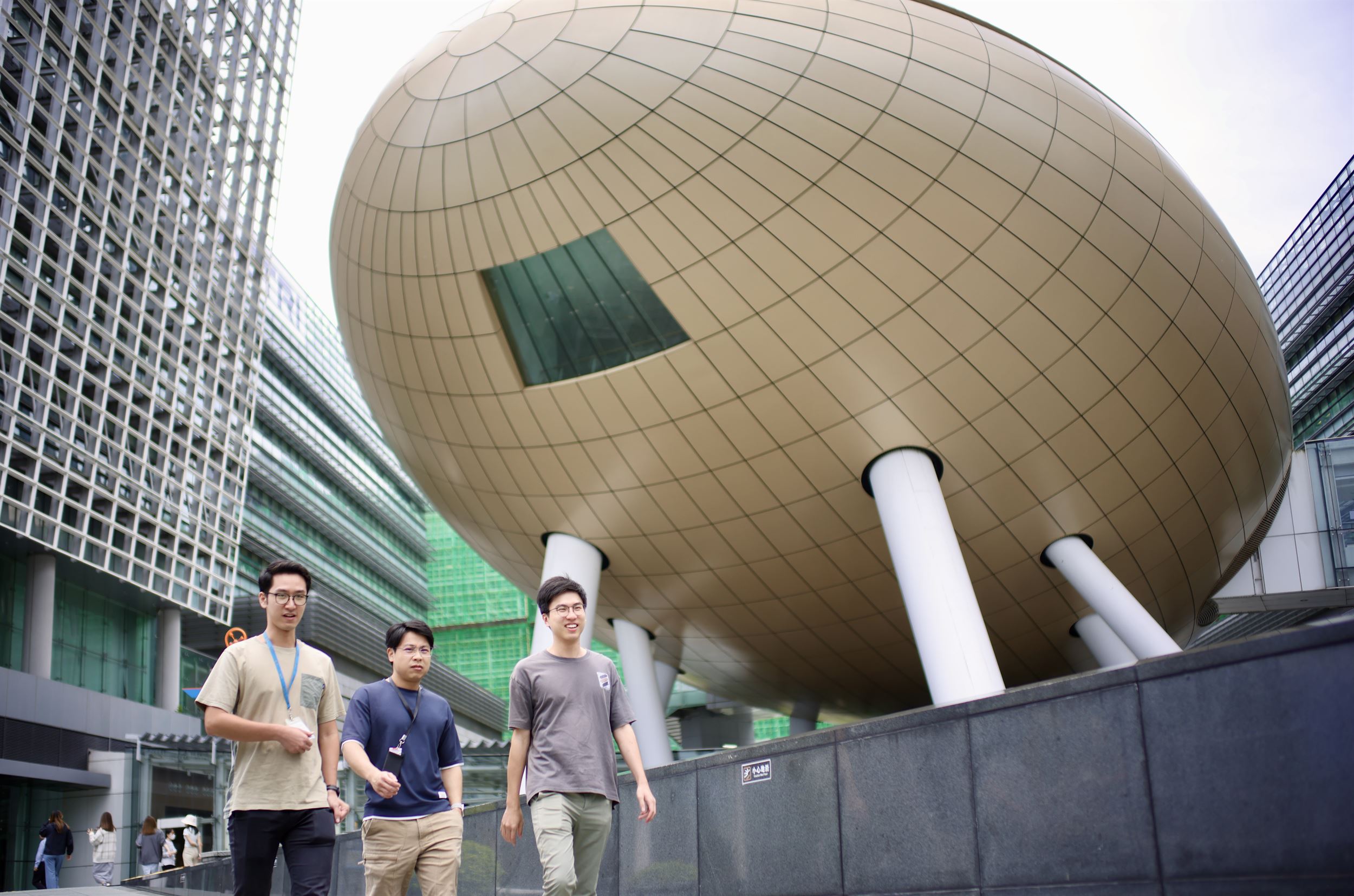
An “AI City Brain” integrated city management system will anchor Hong Kong’s upgraded governance framework, Lee announced in his Policy Address.
The AI-driven system will link big data across government works, the environment, transportation and emergency response to create a data-sharing environment for multi-directional empowerment – an initiative that will enable departments to receive real-time information, strengthening their capabilities in day-to-day city management and emergency handling.
A dedicated Task Force on the “AI City Brain” System will be formed to examine and develop the platform, with the digital infrastructure of the Security Bureau’s Emergency Monitoring and Support Centre scheduled for integration in the first phase, he added.
AI will be deployed to optimize broader public services under the “AI+” initiative, the CE said, adding that the government will improve public rental housing estate management using AI technologies, while the Hospital Authority will leverage them to facilitate service arrangements and reduce average triage times.
Development of low-altitude economy
To drive growth of the low-altitude economy, an Action Plan will launch cross-boundary logistics trial flights and initiate drafting legislation for heavy unconventional aircraft.
Its main functions will also include progressively expanding the low-altitude cross-boundary logistics network across the Guangdong-Hong Kong-Macao Greater Bay Area, advancing the technical study on low-altitude infrastructure facilities and beginning the development of the Smart Low-altitude Traffic Management System, with a target for progressive implementation from 2028.
Talent ecosystem
To power the city’s talent ecosystem, the HKSAR government is deepening the development of Hong Kong as an international education hub, Lee said.
He said a pilot arrangement allowing graduates from the Greater Bay Area campuses of Hong Kong universities to seek employment in Hong Kong under the Immigration Arrangements for Non-local Graduates will be extended for two years with the view to supporting non-local talent retention.
The SAR administration is also actively expanding student accommodation by putting the first dedicated student hostel site up for sale within this financial year and supporting the Hong Kong Direct Subsidy Scheme Schools Council to formulate a Code of Practice for Operating Student Hostels.
He also said sites in the Northern Metropolis or other areas will be allocated next year for international school development.
Boosting international advantages
Vowing to strengthen Hong Kong’s international advantages, Lee said the SAR government will strive to deepen the city’s development as an international legal and dispute resolution services center, a regional intellectual property trading center, and an East-meets-West center for international cultural exchange.
Regarding dispute mediation and resolution, he said that the HKSAR government will support the International Institute for the Unification of Private Law in establishing its inaugural overseas liaison office in Hong Kong, support the Judiciary in advancing the development of the International Commercial Court in Hong Kong, and advance construction of the Hong Kong International Legal Service Building.
Programs organized by the Hong Kong International Legal Talents Training Academy will also be expanded, and it will explore research on cross‑jurisdictional topics, he added.
Regional IP trading center
On developing Hong Kong as a regional IP trading center, he said that in order to ensure solid legal protection of outcomes from research and development, innovation, and cultural and creative efforts, the in-house examination capacity under the city’s original grant patent (OGP) system will be strengthened. Pilot facilitation measures for OGP applications in major technology fields will be introduced next year, he added.
A public consultation on the regulatory framework for local patent agents will be held before the end of this year. Specific legislative proposals will be formulated next year, he said.
The Hong Kong Intellectual Property Academy will officially launch in the fourth quarter of this year, he added.
Deepening national ties
In his Policy Address, Lee focused on deepening regional collaboration with the mainland, while simultaneously boosting international exchanges, cooperation and participation to promote Chinese standards and the Belt and Road Initiative.
To foster synergistic development and regional connectivity, the integration of the HKSAR into the Guangdong-Hong Kong-Macao Greater Bay Area will be strengthened. Key initiatives include supporting high-quality development of cooperation platforms in Qianhai and Nansha.
The SAR government will further enhance Qianhai’s role as a vital liaison point, boosting connections between Hong Kong’s legal and professional services and GBA enterprises by leveraging the city’s unique professional strengths to help mainland enterprises “go global.” Hong Kong will also back Nansha’s development as a national pilot area for climate investment and financing within the bay area.
Boosting connectivity
The HKSAR government will continue to broaden international exchange networks and high-quality cooperation under the B&R Initiative, focusing specifically on the “five areas of connectivity”, the CE said, stressing that the SAR government will promote diverse, comprehensive and pragmatic collaboration while supporting community organizations in expanding international networks to achieve extensive consultation, joint contribution and shared benefits
The Green Technology Bridgehead Programme, to be launched by the HKSAR government, will bring together technology firms from the mainland and overseas, utilizing Hong Kong’s legal, financial and environmental expertise as a springboard to export green solutions to B&R countries, he added.
To attract exceptional talent, the annual quota for the B&R Scholarship will increase to 200 places starting from the 2027-28 academic year. The scholarship scheme attracts outstanding students from B&R regions to pursue higher education in Hong Kong. As of the 2025-26 academic year, the initiative has benefitted students spanning 57 countries, according to him.
International platforms
Lee highlighted plans to deepen cooperation with the International Chamber of Commerce to elevate Hong Kong’s status as an international financial rule-maker, with the goal of attracting more global financial institutions to establish a presence in the city.
The HKSAR government has dedicated full support to organize the upcoming Asia‑Pacific Economic Cooperation Finance Ministers’ Meeting, scheduled to be held in the city in October, he said.
Art & culture
The SAR government will expand the scale of arts, culture and the creative industries in Hong Kong, while reinforcing the city’s role as an international arts trading platform, he said, adding that the WestK Performing Arts Centre, featuring four performance venues built to top international theatre standards, will open next year.
The newly established WestK Academy will organize an international fellowship program for auctioneers and offer courses on Chinese arts and heritage conservation.
The HKSAR government will inject HK$200 million into the Arts & Sport Development Fund (Arts Portion) to promote sustainable development and the industrialization of the performing arts, he added.
Enhancing infrastructure
To boost infrastructure reliability, the SAR government will launch a water supply network upgrading program to replace or rehabilitate 350km of aged water mains with higher leakage risks over the next five years. This represents an average rate of 70km per year – doubling the target for 2026-27 – with an initial focus on Shau Kei Wan, Wong Tai Sin and Kwai Tsing.
An Intelligent Water Network Closed-loop Management Chain will also be established to perform AI predictive maintenance.
Meanwhile, public services under the 1823 hotline will be upgraded to achieve “prompt referral and successful resolution”. A lead department will be designated and authorized to coordinate inter-departmental service requests and complaints, while each department will assign a directorate officer to monitor handling efficiency.
The system will leverage AI to identify recurrent problems for departments to review, shifting government response from post-complaint management to a proactive approach. The Deputy Chief Secretary will review progress regularly and brief the Steering Committee on District Governance.
Drone applications will be expanded across emergency response and crime prevention to safeguard citizens, the CE said.
In aerospace, the Innovation and Technology Commission will launch a new round of Special Call on Aerospace Technology, with an emphasis on supporting technology research related to national space missions, covering satellite technologies, space exploration instruments, aerospace materials, remote sensing and other areas.
By the second quarter of 2027, the United Nations Industrial Development Organization will establish its first Asia-Pacific center of excellence on global advanced manufacturing in the city, according to the CE.
