

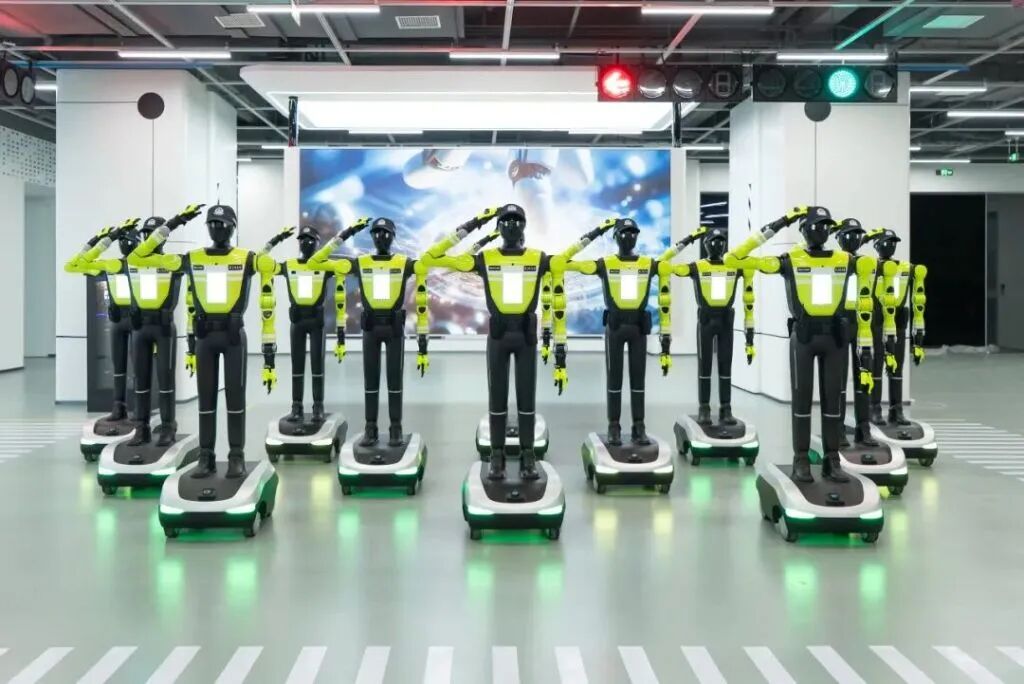
China's first traffic-management robot squad has received a new round of upgrades, giving the machines greater autonomous patrol and public-service capabilities, Hangzhou traffic police said on Monday.
The upgraded robots will be deployed mainly around the West Lake scenic area in Hangzhou, the capital of Zhejiang province, during the autumn tourism season and will be dispatched according to real-time pedestrian and traffic flows.
The 15-robot squad, known as "Hangjing Zhixing", began full-scale operations during the May Day holiday. Working alongside traffic police, they help direct traffic, discourage violations by pedestrians and non-motorized vehicle users, and provide directions to tourists.
ALSO READ: China's robot police patrol cities during Labor Day holiday
The latest upgrades are designed to address more complex real-world traffic scenarios.
Previously, the robots largely remained fixed in one direction while on duty, limiting their ability to monitor other sides of an intersection. A new panoramic motion-control function now allows them to turn flexibly and adjust their orientation in response to changing traffic conditions.
READ MORE: Robot on the line
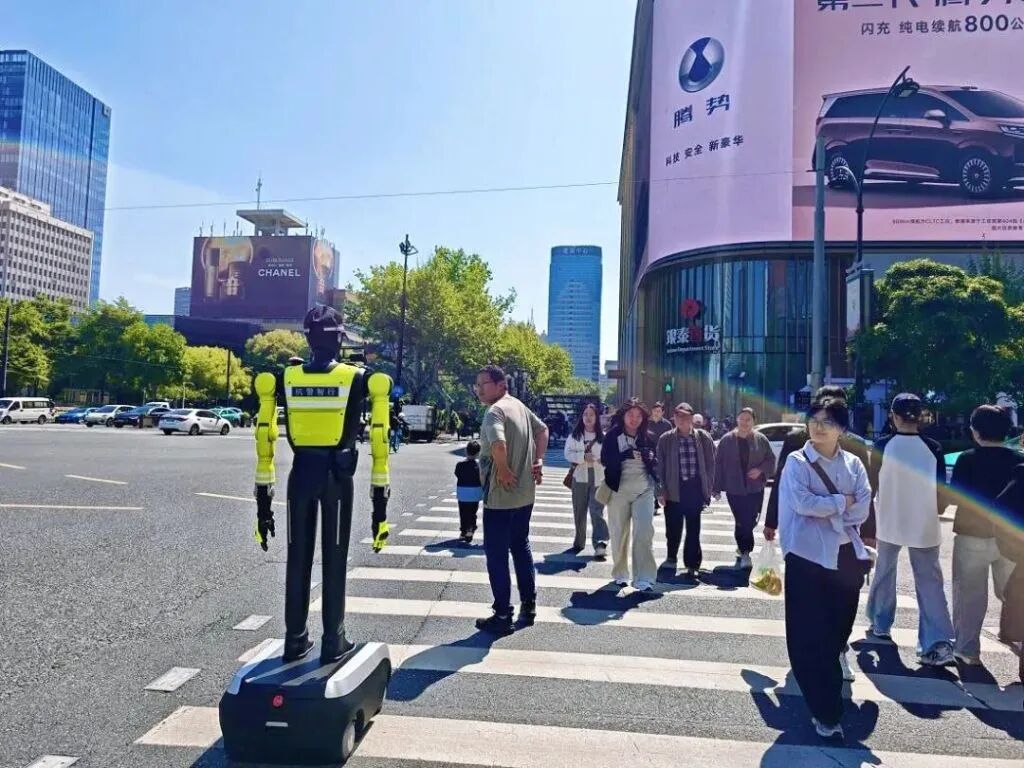
Upgraded multimodal positioning technology has improved their positioning accuracy and ability to move autonomously across different intersection environments. The robots can plan routes on their own, dynamically avoid obstacles, stop automatically when detecting obstacles and obey traffic signals when crossing pedestrian crossings, local traffic police said.
The improvements have paved the way for round-the-clock autonomous patrols and a shift from fixed-post duty to area patrols.
Public interaction has also been improved. Directional noise-reduction microphones help the robots pick up speech in noisy street environments, while a large language model allows them to better understand less precise questions and ask follow-up questions when necessary.
READ MORE: Foreign visitors touch future in Shenzhen
The robots have screens that display navigation maps, information on tourist attractions, and real-time weather updates. The upgraded system supports questions and answers in Chinese and English, making them accessible to foreign visitors.
Since entering service more than four months ago, the robots have worked more than nine hours a day on average, provided over 11,000 public services, and gave more than 230,000 reminders over traffic violations, authorities said.
The robots are intended to take on repetitive, physically demanding tasks while working alongside human officers, freeing police personnel to focus on emergencies and public services.
