

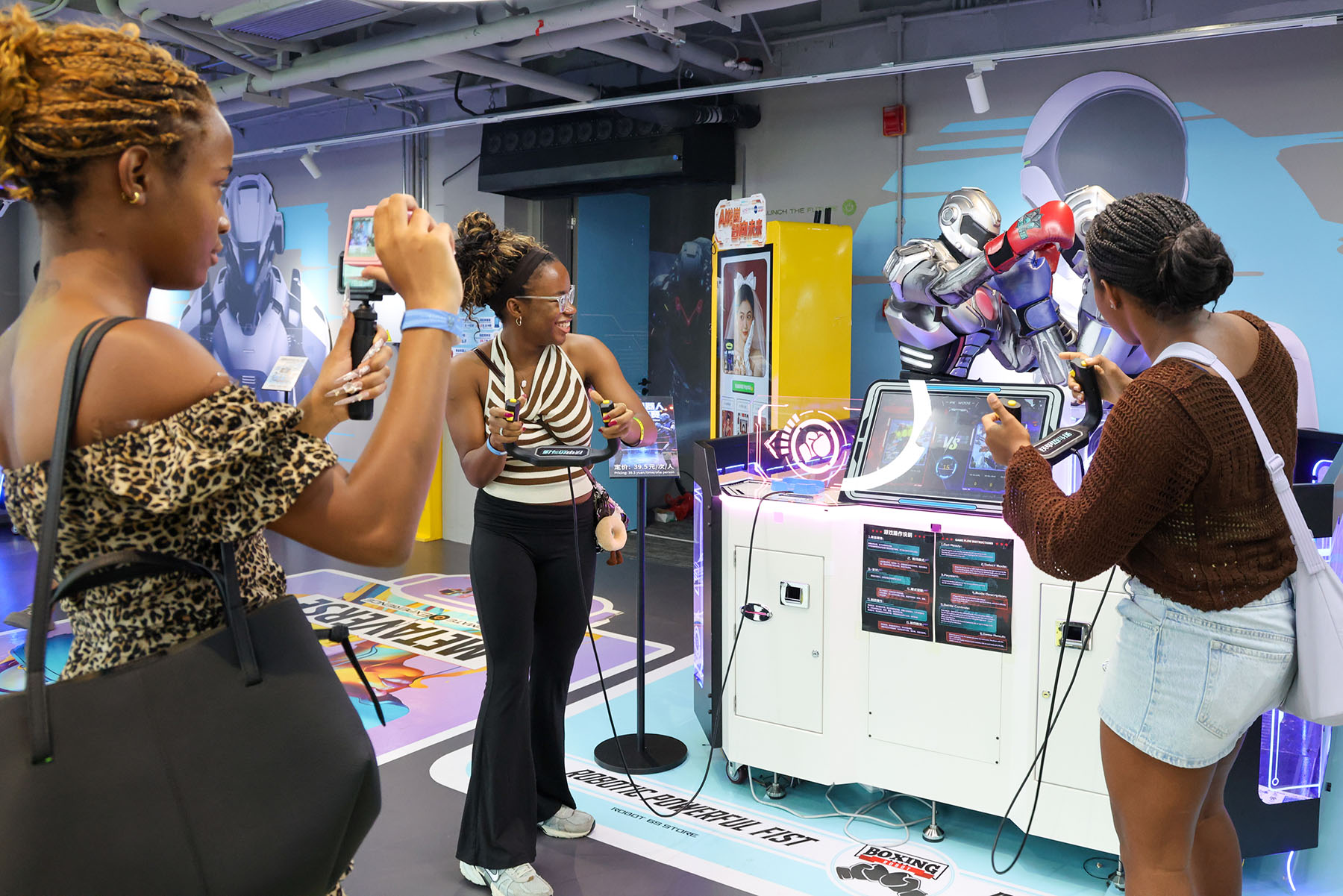
The buzz of tiny motors and mechanical clicks draws cheers as a robot mixes and pours a drink for a visitor at a high-tech showroom. Artificial intelligence-powered eyeglasses take another visitor into the future. Electronic soccer keeps a few others glued to a different pitch.
Move over conventional sightseeing. Innovation tourism is the new crowd magnet in Shenzhen, Guangdong province. Across China's leading tech hub, visitors are gladly paying for an immersive experience of cutting-edge engineering and applications — from humanoids and quadrupeds to self-driving vehicles and delivery drones.
The four-story robot 6S store in Shenzhen's Longgang district is among the key attractions. The store, which claims to be the world's first of its kind, opened in July last year. A basic tour costs 49 yuan ($7.26) while a full-access pass can be bought for 568 yuan. On display are humanoids and service robots designed for use at homes, restaurants, healthcare facilities and elderly care centers. The future is not a distant reality at the store, but something that visitors can see, touch and interact with. They can guide robotic dogs through obstacle courses, take part in robotic boxing, and watch machines cook and serve food.
READ MORE: Shenzhen developing into high-tech hub
Prabesh, who hails from Nepal but lives in the Hong Kong Special Administrative Region, said that he travels to Shenzhen several times each month, but visited the 6S store for the first time on Tuesday. "The robot made me a drink. I was so impressed. The technology here is next level," he said.
Store manager Zhou Fangzheng said they receive about 500 visitors daily, and the number exceeds 1,000 during holidays.
Foreign visitors account for more than 30 percent of the foot traffic, Zhou said, adding that the figure doubles during summer.
Tourism often translates into sales, the manager noted. Foreign customers account for 30 to 40 percent of people buying products priced up to 10,000 yuan. Desktop robots, smart wearables and exoskeleton devices are among the store's most popular products.
Nicole Bellaiche, a tourist from France, said that she had already purchased some electronic products during her trip to Shenzhen, but was now considering buying robotic toys for her grandchildren after visiting the store.
The growing appetite for immersive tech experiences was palpable at the Shenzhen Science and Technology Museum in the city's Guangming district. The spacecraft-shaped building houses 950 exhibits on AI, brain science, communications and low-altitude flying. Most of these exhibits are interactive in nature.
Zheng Yongchun, director of the museum, said that people from outside the Chinese mainland account for around 20 percent of the visitors during peak periods.
Travel companies are responding to the increasing demand for innovation tourism.
Pan Shunyou, general manager of Shenzhen Wanyue Travel Service Co, said that over the past two years, he has noticed a growing interest in tech-themed programs among the company's Southeast Asian customers. The company has tailored itineraries to include the 6S store, the science museum, the Huaqiangbei electronics market, and experiences such as food delivery by drones and rides on self-driving buses, he said.
"Visitors are no longer satisfied with just conventional sightseeing. They want to experience China's technology as much as its culture," said Pan, adding that the company's tech-themed travel packages have received positive reviews.
ALSO READ: How long before robots become part of daily life?
The trend is unfolding amid a surge in inbound tourism. Between the start of the summer travel season and July 21, bookings made by overseas visitors for Shenzhen attractions increased more than 70 percent year-on-year, according to the city's information office.
For Damir Dastre from Croatia, the appeal of China and Shenzhen in particular lies in closing the gap between seeing technology on a screen and trying it out in person. Dastre said that he had seen similar products on YouTube and other social media channels several times before, but experiencing them in real life was much more amazing.
Contact the writers at guoyanqi@chinadaily.com.cn
