

When artificial intelligence can produce an essay, computer program or business plan within minutes, it is tempting to ask whether education is becoming less important. The opposite is true. The cheaper answers become, the more valuable good questions, sound judgment and human responsibility are.
 This is the new mission for Hong Kong’s education system in the artificial-intelligence era. Young people should not be trained to compete with machines in speed, memory or routine production, but to direct AI, challenge its conclusions, combine it with professional expertise, and remain accountable for the consequences. The future belongs to those who can organize effective human-AI collaboration or co-creation. Hong Kong has made an encouraging start.
The Blueprint for Digital Education Development in Primary and Secondary Schools, released in June, places AI literacy, teacher development, infrastructure and cross-sector collaboration within one framework aligned with the country's 15th Five-Year Plan (2026-30) for high-quality development. Publicly funded schools are required to incorporate digital education into their development or annual plans in the 2026-27 school year. Teachers will complete at least 30 hours of digital education training within each three-year professional development cycle, while the Education Bureau will offer at least 50,000 training places annually for three years. These measures deserve support. Yet the deeper task is to move beyond digitizing the existing classroom to redesigning how students learn, how teachers teach, and how achievement is assessed.
Two honest tensions should be named. First, digital transformation can widen gaps between well-resourced and underresourced schools; the School Efficiency Grant helps, but AI-era education must actively prevent a new digital divide. Second, 30 hours of training sits within an already demanding professional development load, and teachers need protected time — not only training quotas — if the blueprint is to succeed in practice.
AI literacy must not be reduced to writing better prompts. A student may generate an impressive report without knowing whether its claims are accurate; a graduate may use AI efficiently, yet be unable to judge whether the answer is lawful, ethical or commercially sensible.
The intelligent economy needs a three-layer talent model: professional depth in a chosen field; fluency in AI, data and the limits of models; and human judgment — creativity, empathy and responsibility. In other words, Hong Kong does not simply need more AI specialists. It needs more AI-enabled doctors, engineers, teachers, financiers, lawyers, designers and public administrators.
The most valuable person will not necessarily be the one who can build the largest model, but the one who can translate an industry problem into a task that humans and machines can solve together. Education must therefore establish a “third space” for AI. Blanket prohibition is unrealistic; uncritical adoption can replace learning with the appearance of learning. Schools and universities should permit AI use, but require disclosure, source verification, evidence of reasoning, oral defense and auditable AI-use logs or process portfolios of the kind several local universities are already testing. Assessment should focus less on the final answer and more on how the learner framed the problem, tested the output, and made the ultimate decision.
This transformation cannot be completed by educators alone. Course approval cycles will never move as quickly as AI development. The most workable model is project-based learning supported by dual mentors: one from academia and one from industry. Universities provide intellectual foundations; companies, hospitals, professional firms and public bodies provide authentic problems, properly governed data, and measurable outcomes. Students should graduate not only with transcripts but with verifiable AI project portfolios showing what they built, how they tested it, what risks they identified, and what value they created.
The Guangdong-Hong Kong-Macao Greater Bay Area gives Hong Kong an exceptional setting in which to build this model. It should be treated as a distributed campus and industrial laboratory rather than merely a collection of exchange destinations. Hong Kong contributes world-class universities, common-law institutions, multilingual capability, and globally connected financial, and professional-services sectors. Shenzhen, Guangzhou, Dongguan, and other partner cities contribute engineering depth, complete industrial chains and deployment at scale. Connecting these strengths would allow a student to study responsible AI in Hong Kong, test a prototype in Shenzhen, understand manufacturing in Dongguan, and bring the solution to international markets through Hong Kong.
This requires more than occasional study tours. Building on existing frameworks — Qianhai's talent-flow arrangements, the Hong Kong University of Science and Technology (Guangzhou)'s dual-campus model, and the Hetao cross-boundary data pilot programs — Hong Kong and partner cities should jointly create an AI challenge bank containing authentic problems from strategic industries; expand paid cross-boundary apprenticeships; introduce portable microcredentials recognized by universities and employers; and develop dual-supervision programs for students working across campuses and companies. The test of education-industry collaboration is not how many agreements are signed, but how many learners solve operational problems and how many solutions enter deployment.
The policy foundations are emerging. Hong Kong is advancing the integrated development of education, technology and talent, expanding its “Study in Hong Kong” brand and developing the Northern Metropolis University Town, with three sites at Hung Shui Kiu launched in September 2026. During the 2025-28 triennium, publicly funded universities are introducing 27 new undergraduate programs related to STEAM (science, technology, engineering, arts, and mathematics), including AI, the creative industries, and data science. These measures should form a single talent pathway: Attract people to study in Hong Kong, develop them through Greater Bay Area projects, retain them through credible careers, and enable them to serve national and international markets.
Institutions such as the Hong Kong AI Research and Development Institute, Cyberport, and the universities can support secure educational sandboxes using local computing capacity and sovereign AI models. This is particularly important in finance, healthcare, law and public services, in which students must learn not only what AI can do, but also how data, auditability, security and accountability determine whether it can be trusted. Hong Kong’s advantage is not simply that it can teach AI in English and Chinese; it can teach how AI operates across languages, professions, legal systems and markets — a capability that directly supports the country's pursuit of sovereign AI and high-quality development, while keeping Hong Kong’s international character intact.
It is worth situating this effort in context. Singapore has moved early with its “AI for Education” initiative; the mainland is advancing "AI+ education" under the 15th Five-Year Plan, with Shenzhen rolling out AI curricula in K-12 schools. Hong Kong's distinctive contribution is not to match any of these on scale alone, but to combine them — trusted-model access, common-law governance, bilingual instruction, and Greater Bay Area industrial depth — in ways no other city can replicate.
Talent attraction cannot rely on promotion alone. People stay where research becomes products, products enter markets and careers have room to grow. Education policy must therefore connect with industrial policy. Without strong industries, apprenticeships become visits and graduates leave; with them, the Greater Bay Area becomes a classroom, laboratory and career platform.
Hong Kong has long been playing the role as a superconnector. In the AI era, education must help the city become a super value-adder — not merely moving talent between the nation and the broader world, but improving that talent through trusted institutions, cross-disciplinary training, and authentic industrial experience, so that a graduate leaves Hong Kong more employable, more accountable, and more globally deployable than when they arrived.
AI will undoubtedly complete more tasks that people once performed. But it cannot decide which problems deserve attention, whose interests should be protected, or who should bear responsibility when decisions go wrong. Hong Kong’s educational mission is therefore not to produce graduates who can race against AI. It is to nurture people who can set the direction, use AI to accelerate progress, and keep human hands firmly on the wheel.
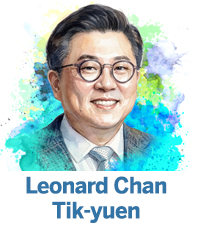
The author is founding chairman of the Hong Kong Innovative Technology Development Association.
The views do not necessarily reflect those of China Daily.
