

Thirty years on, it has boosted regional connectivity, commerce and tourism
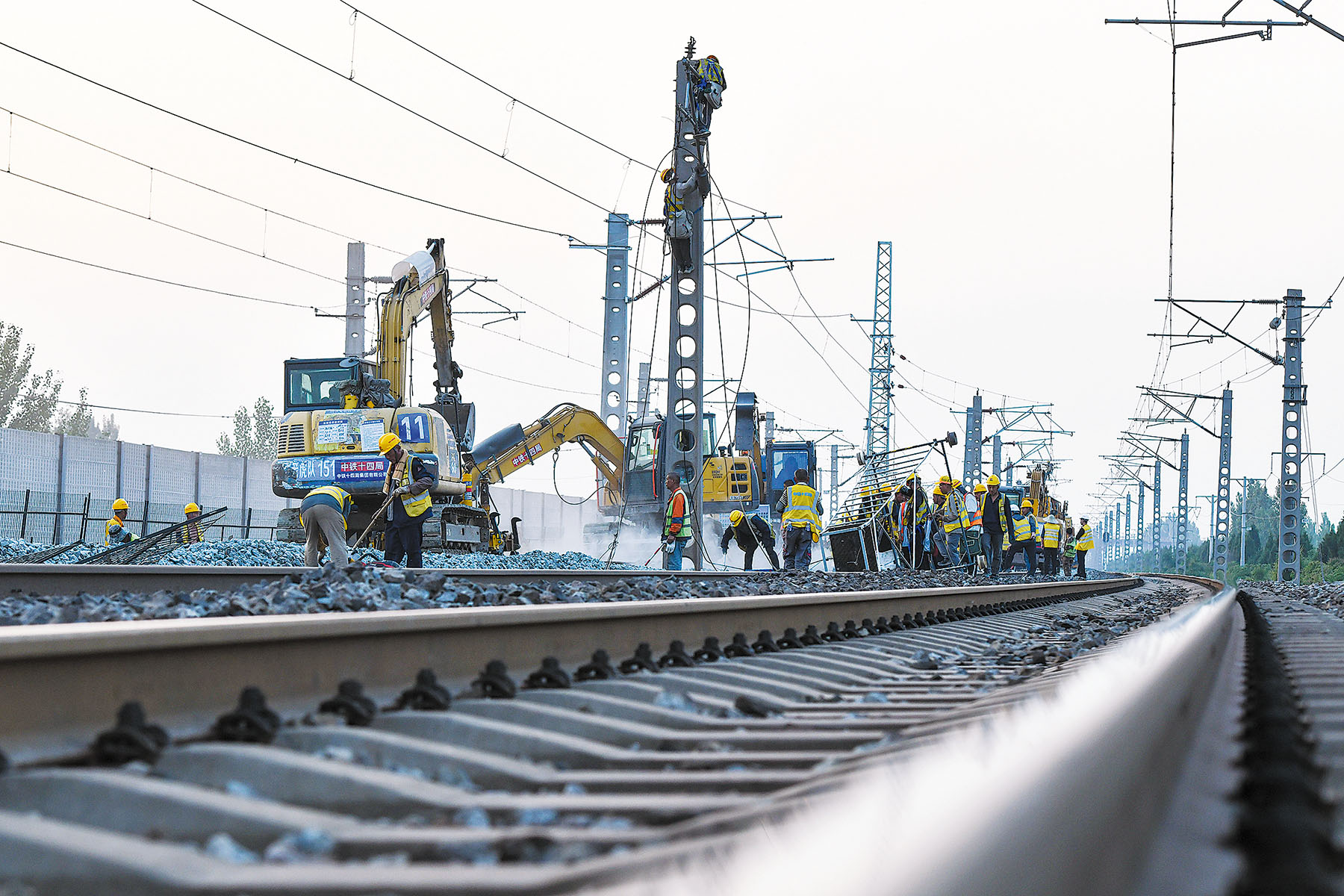
Over the past three decades, the Beijing-Kowloon Railway has evolved from a route built to ease pressure on China’s north-south transport network into a major corridor connecting inland communities with major cities, coastal markets and international trade.
Tuesday marked 30 years since the railway opened. During that period, it handled 1.77 billion passenger trips and 1.05 billion metric tons of freight, according to China State Railway Group, the national railway operator.
The 2,397-kilometer railway starts at Beijing West Railway Station, passing through Beijing and Hebei, Shandong, Henan, Anhui, Hubei, Jiangxi and Guangdong provinces before reaching Shenzhen. Trains can continue to Hong Kong via the Guangzhou-Kowloon Railway.
When it opened on Sept 1, 1996, the railway was China’s largest railway project and the country’s longest trunk railway built in a single phase, according to China State Railway Group.
READ MORE: High-speed sleeper train service between Beijing, Hong Kong begins
The line was built as China’s north-south transport capacity came under growing pressure. In addition to creating another national corridor, it brought railway services to mountainous and relatively less-developed areas, including the Dabie Mountains and southern Jiangxi, linking them more closely with major cities and coastal markets.
Over the years, the railway has undergone five rounds of speed upgrades, increasing the maximum speed of passenger trains from 60 km per hour to 160 km/h. Upgrades have cut travel time between Beijing and Shenzhen from 49 hours to less than 22 hours, while annual passenger traffic on the line reached a peak of 95.1 million trips, more than four times the level in its early years.
The railway has also expanded access to education, professional exchanges and employment opportunities for communities and institutions along the route.
Before the line opened, most students at Gannan Medical University came from within Jiangxi, said Luo Xiaolin, a senior administrator of the university’s School of the Third Clinical Medicine. Students from the region also depended heavily on long-distance buses when traveling for internships or returning home.
“Those long bus journeys were exhausting,” Luo said. “After the railway opened, it became much easier for students to travel for internships, academic exchanges and job opportunities. It also helped us attract and retain talent from other parts of the country.”
Tourism businesses have similarly benefited from increased visitor flows. In Xingguo county, a former revolutionary base area in Jiangxi, the 60-hectare Hongxinggu study camp combines local history with educational and outdoor programs.
“This summer, we received more than 200 study tour groups, and about 70 percent came from Guangdong and Fujian provinces,” said Gong Chunbin, head of the camp. Many participants now arrive using the Beijing-Kowloon Railway and the newer Beijing-Hong Kong high-speed railway corridor.
The railway has also developed into an important freight route for inland manufacturers, energy suppliers and agricultural producers.
Ganzhou International Land Port, built around what was once a small railway station, has operated more than 1,700 China-Europe freight trains. Its services connect with more than 100 cities in over 20 countries.
In Ji’an, coal trains use the railway to supply the Huaneng Jinggangshan Power Plant, which has an installed generating capacity of more than 2.5 million kilowatts. The plant has generated more than 170 billion kW-hours of electricity since it began operating, supporting households and manufacturers across central and southern Jiangxi.
“For our plant, the Beijing-Kowloon Railway is a lifeline,” said Ke Hongming, deputy director of the power plant. “It provides the steady coal supplies we need to keep generating electricity.”
ALSO READ: Express Rail Link optimizes cross-boundary travel arrangements
The railway has also given agricultural producers broader access to consumer markets across China. Navel oranges from southern Jiangxi, Taihe black-bone chickens, tea and other local products can be transported more efficiently to major cities, while improved passenger links have supported hotels, restaurants and rural tourism.
The changes along the route mirror China’s broader economic transformation over the past three decades, as transport infrastructure has helped integrate inland areas into national and international markets. The line now supports connections between northern China, central regions and the Guangdong-Hong Kong-Macao Greater Bay Area.
With more sections of the Beijing-Hong Kong high-speed railway corridor entering operation in recent years, conventional and high-speed services now complement each other, adding capacity to one of China’s most important north-south transport corridors.
Contact the writers at luowangshu@chinadaily.com.cn
