

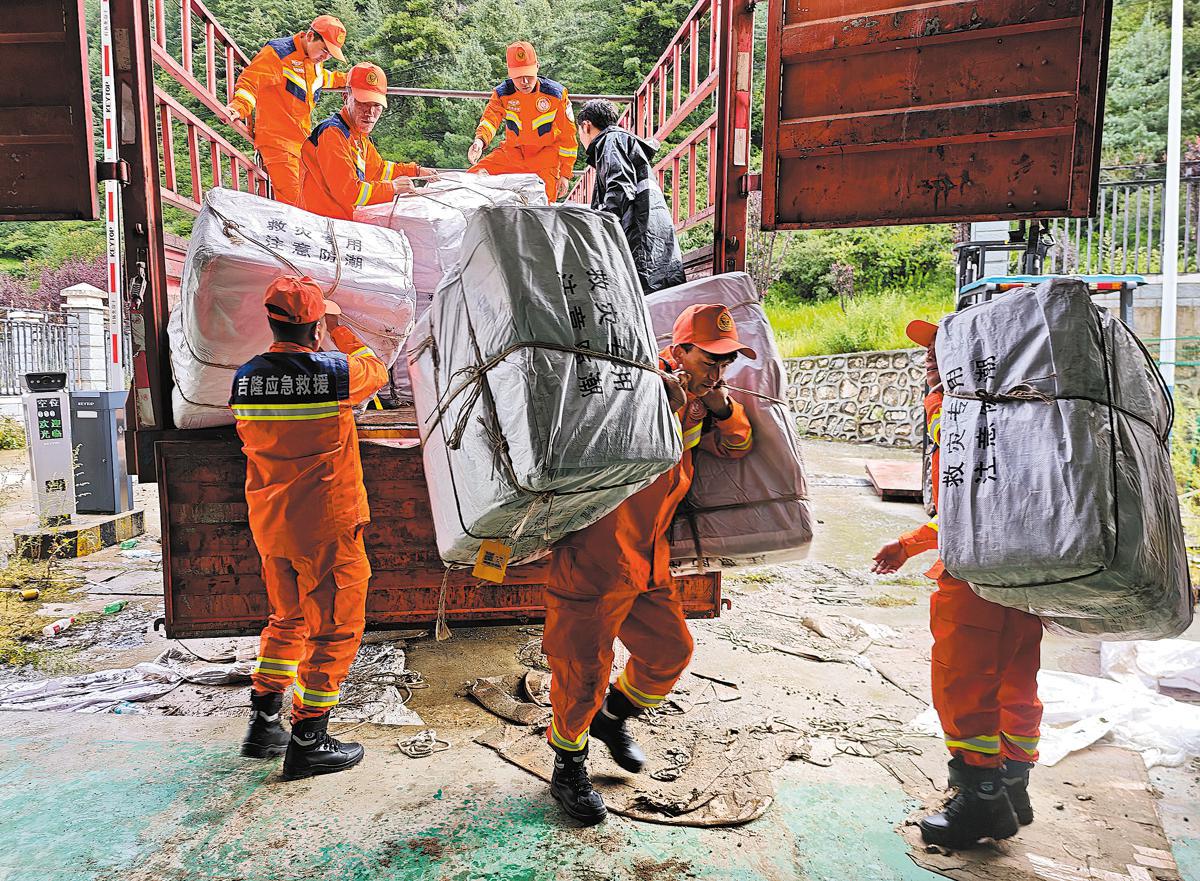
Rescue efforts were ramped up on Thursday at the Gyirong border port in Shigatse, Xizang autonomous region, after a massive mudslide in Nepal caused extensive damage to the port area on Wednesday.
As of press time on Thursday, three people had been reported killed, 558 others remained missing, and two local villagers had been rescued. Among the missing were 260 foreign nationals.
After the mudslide struck Gyirong, a major land port linking China and Nepal, at around 10:30 am on Wednesday, Chinese authorities activated emergency response mechanisms and scaled up the deployment of rescue teams, equipment and relief supplies to assist those who have been affected.
Entrusted by President Xi Jinping, Premier Li Qiang led a group of senior officials from relevant departments to guide and oversee relief operations after arriving in the mudslide-hit area on Thursday afternoon. They also visited affected residents and rescue workers.
ALSO READ: Chinese premier arrives at mudslide-hit area in Xizang
On Thursday, a guidance team of the Chinese People's Liberation Army Western Theater Command arrived at a high-altitude airport in Xizang aboard a Y-20 transport aircraft to join local rescue efforts, with more than 500 personnel, four helicopters and multiple drones deployed, according to China Central Television.
An elite fire and rescue team, sent by the Ministry of Emergency Management and the National Fire and Rescue Administration, brought more than 500 sets of equipment for detection, lifesaving, demolition, communications and medical support, along with four search-and-rescue dogs, to the area hit worst by the disaster.
Rescue forces from China Anneng Construction Group, a State-owned enterprise specializing in engineering and emergency response, have dispatched 310 technical experts and rescuers, including geologists and engineers, from cities including Beijing, Chengdu in Sichuan province, Chongqing and Lhasa, the capital of Xizang, to the port. Their mission is to assist with on-the-ground relief operations, focusing on restoring damaged roads, communications and power supplies.
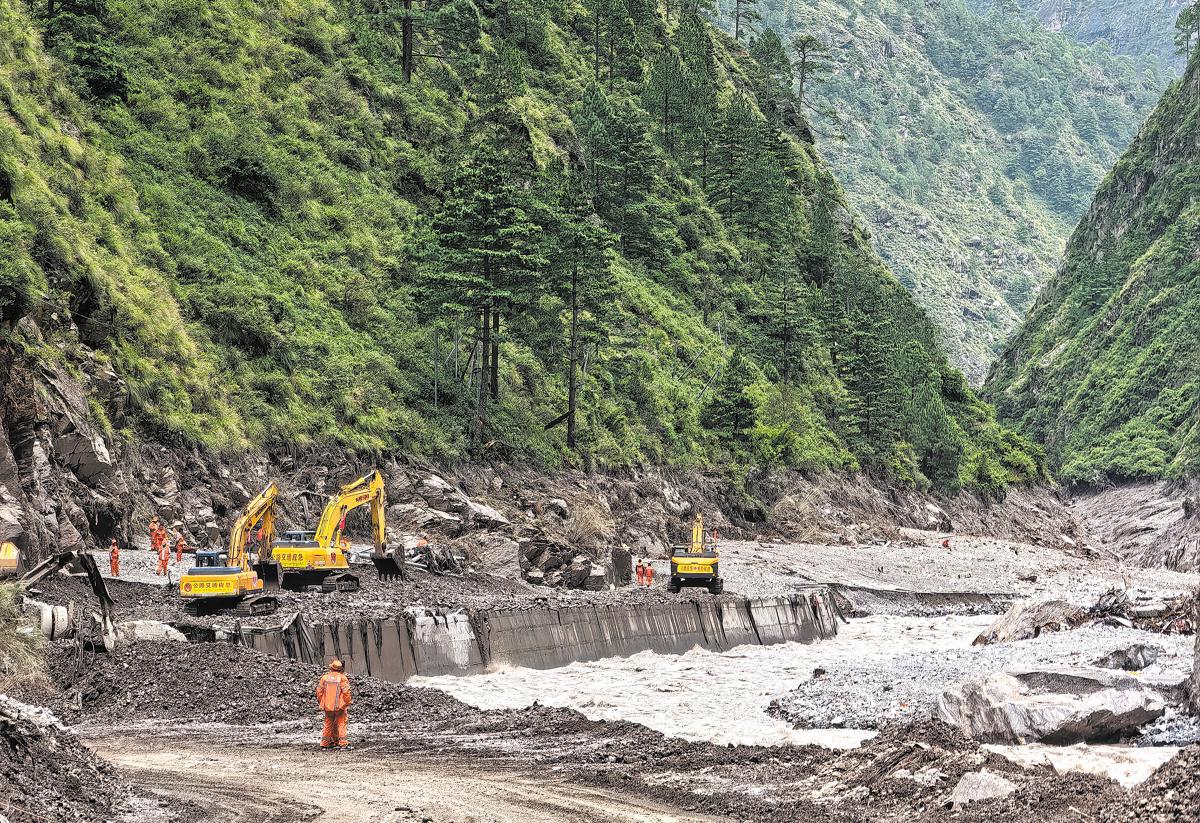
As of 6 pm on Thursday, about 800 meters of the 3-kilometer section of road leading to the Gyirong port had been cleared. To navigate the remaining section, Xizang's transportation department dispatched four emergency buses and three trucks for transporting personnel and rescue materials.
The China Anneng rescue team rushed to the hardest-hit area, bringing 120 sets of advanced equipment, including multifunctional survey drones, 3D laser scanners, life-detection devices, large excavators and loaders.
Foreign Ministry spokesman Lin Jian said on Thursday that China and Nepal are in close communication and coordinating efforts for search and rescue operations.
Police authorities in Nepal said that as of 5 pm on Thursday, the death toll from flash floods there reached 359, with hundreds more people still missing.
Lin said that nearly 100 Chinese nationals remained missing on the Nepalese side of the border after the mudslide, adding that the Chinese embassy is seeking further verification from the Nepalese authorities.
Beijing is ready to provide emergency assistance based on the needs of Kathmandu, said the ministry spokesman.
According to China's Ministry of Natural Resources, the disaster began with a high-altitude glacier collapse in Nepal. The falling ice and rock traveled rapidly down a mountain slope, collecting loose glacial debris along its path and developing into a debris flow before becoming a mudslide.
"The flow then struck facilities at the Gyirong port and areas beyond the border, continuing downstream and causing heavy casualties on both sides," said Guo Zhaocheng, an expert associated with the ministry who is in charge of geological disaster monitoring.
The debris flow generated by the glacier collapse traveled at about 50 meters per second, which left virtually no time for warning, and its impact stretched over 20 kilometers, resulting in devastating losses, Guo added.
Local resident Karma Dondrub, who routinely monitors border activity, was on duty and patrolling Lapher village when the mudslide struck. "Suddenly, the house began to shake and the trees were swaying," he said.
"Within seconds, floodwater came rushing down from the mountain above me into the river below," he added. He then made his way from the village to the nearby safe haven of Saleg township.
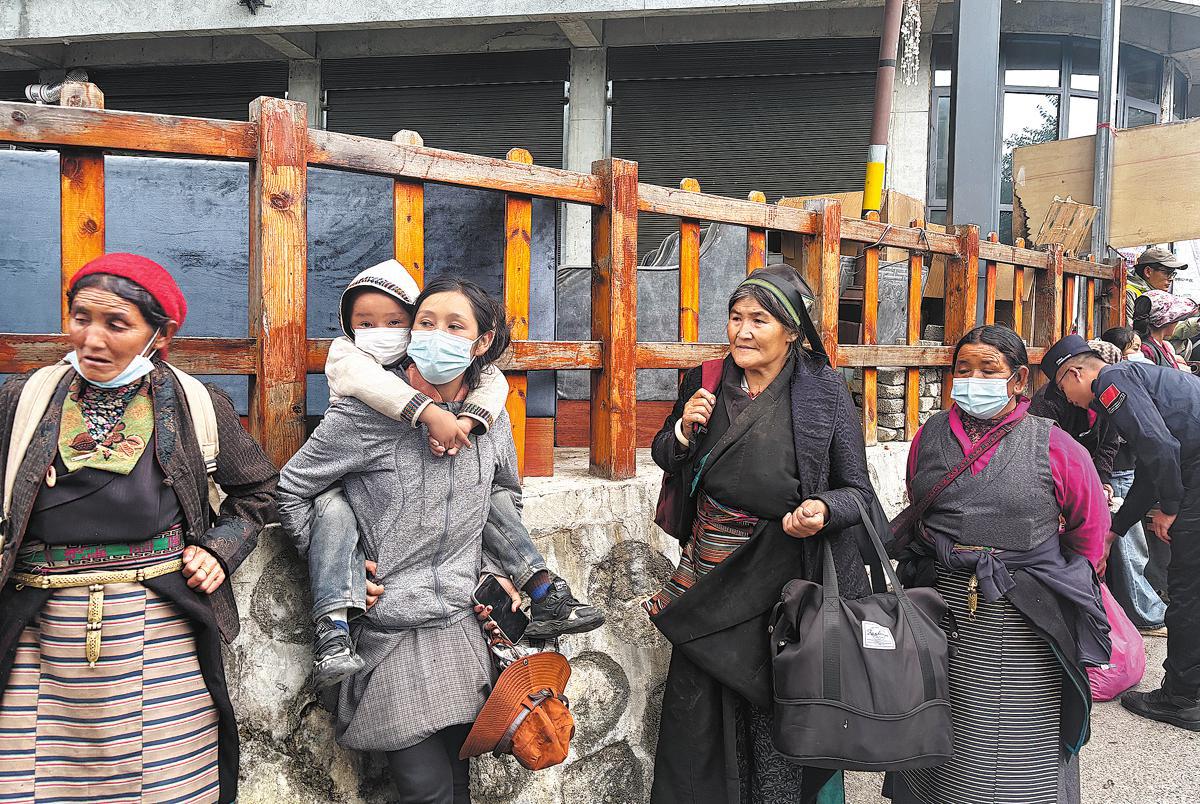
The Red Cross Society of China has sent a working group and relief supplies to regions affected by the disaster, along with a total of 2,500 relief items, including tents, family kits, hygiene packs, quilts, folding beds and winter jackets.
Search and rescue operations were progressing but faced challenges due to the complex terrain and hydrological conditions in the affected area.
READ MORE: Xi urges all-out rescue efforts after casualties at Xizang border
A barrier lake that was created after the mudslide near a river confluence in the severely hit area had collected an estimated 2 million cubic meters of water and was already in overflow condition, the Ministry of Water Resources said.
Another 3 million cubic meters of water could flow into the lake over the next three days, posing a high risk of a breach.
To support emergency rescue and relief work, the Ministry of Natural Resources is closely monitoring the lake's development and conducting calculations and analysis regarding the risk of an outburst flood.
