

As the national 15th Five-Year Plan (2026-30) kicks off, the nation is accelerating its march toward Chinese modernization by increasingly advancing and leveraging new quality productive forces, which to a large extent count on technological self-reliance in various fields.
 Contributing to the nation’s technological self-reliance is one of the areas in which the Hong Kong Special Administrative Region can align its own high-quality development with national strategies. To that end, Hong Kong must deepen the integrated development of education, science, and talent. Hong Kong should proactively deepen synergistic cooperation with partner cities in the Guangdong-Hong Kong-Macao Greater Bay Area by breaking down institutional barriers and promoting industry-academia-research integration, while strengthening international collaboration.
The Northern Metropolis University Town, situated close to Shenzhen, is at the forefront of connecting with the Greater Bay Area’s innovation and technology industry chain. Hong Kong’s tertiary institutions can establish industry-research bases there to seamlessly connect with high-tech enterprises on the Chinese mainland side of the Greater Bay Area. This will not only significantly enhance the commercialization of research and development outcomes but also inject an inexhaustible stream of momentum and talent into the development of new quality productive forces in Hong Kong. Concurrently, mainland universities should be encouraged to set up laboratories and research centers in Hong Kong to advance the sharing and commercialization of research and development outcomes and the cultivation of high-end talent. The HKSAR government should refine relevant policies, streamline approval processes, and provide financial and policy support to encourage international and mainland research institutions to establish branches in Hong Kong, thereby attracting more domestic and overseas scientific research talent to develop their careers here.
In terms of talent cultivation, Hong Kong should actively encourage top-tier overseas and mainland institutions to establish branch campuses or jointly run programs in the Northern Metropolis University Town, with a particular focus on advantageous disciplines such as aviation, artificial intelligence, and biotechnology, to elevate teaching and research standards. Meanwhile, the city should encourage cross-institutional and cross-disciplinary cooperation in frontier fields and establish joint master’s or doctoral degree programs to continuously strengthen the nurturing of high-end talent.
Empowering education through technology is also a vital trend for future development. The 15th Five-Year Plan emphasizes the need to accelerate the building of a digital China and comprehensively implement the “AI plus” initiative. In line with this national strategy, Hong Kong should promote the coordinated development of digital education in the Greater Bay Area and seek to establish a regularized and institutionalized mechanism for digital education exchange and cooperation. For instance, primary and secondary schools in the region with outstanding achievements in AI education could be selected to form a Greater Bay Area digital education demonstration school alliance. Regular immersive exchange programs could be organized for Hong Kong teachers and students to visit mainland demonstration schools and experience their advanced teaching models firsthand. Simultaneously, encouraging mainland teachers and students to visit Hong Kong’s schools with distinct digital education features will help broaden the perspective of all students and enhance mutual understanding.
Furthermore, the HKSAR should jointly develop AI education curricula and standards with Greater Bay Area characteristics to promote the co-construction and sharing of educational resources. Experts, scholars, and front-line teachers from Guangdong, Hong Kong, and Macao could be organized to compile AI textbooks suitable for Greater Bay Area students, formulate unified evaluation standards for digital literacy, and build a regional resource-sharing platform. In particular, digital textbooks for the humanities that can be used synchronously across the three places should be developed, focusing on themes such as patriotism, national geography, Lingnan culture, and the Maritime Silk Road.
Guided by the 15th Five-Year Plan, the country is marching toward modernization at an unprecedented pace, and Hong Kong can play a significant role in advancing the national strategy of technological self-reliance by unleashing the power of its education sector and building a pool of global talent
The 15th Five-Year Plan also underscores the need to advance high-standard opening-up. As an important window for the country’s opening-up and an East-meets-West hub for international cultural exchanges, Hong Kong should make good use of its institutional and geographical advantages. The city must act not only as a superconnector but also as a super value-adder, using international language and a global perspective to actively tell the good stories of the nation and the HKSAR.
To further consolidate Hong Kong’s role in the country’s high-standard opening-up, the HKSAR government should strive to build an international education hub and a gathering place for high-end talent. Hong Kong possesses an internationalized education system, with several universities ranking among the world’s top 100 and a vibrant academic atmosphere. The government should take the lead in organizing local universities to conduct promotional campaigns in Association of Southeast Asian Nations and Belt and Road Initiative participating countries, while providing more preferential policies to attract overseas students to stay and develop in Hong Kong, thereby assisting the country in building an education hub with global influence. At the same time, it is necessary to strengthen cooperation between local and overseas universities, deepening collaboration in various fields such as academic research and student exchange.
Additionally, Hong Kong’s status as a hub for cultural exchanges between East and West and a bridge for Chinese culture to reach the broader world must be solidified. To tell the positive stories of China and enhance the international influence of Chinese culture, the key lies in cultivating a new generation equipped with both a sense of national identity and an international perspective. The government should continuously optimize the education of Chinese history and culture to enhance students’ cultural confidence and national pride. Concurrently, Hong Kong should fully leverage its international advantages to host more international youth cultural exchange activities, allowing teachers and students from around the world to experience the profoundness of Chinese culture firsthand and helping Chinese culture go global.
Guided by the 15th Five-Year Plan, the country is marching toward modernization at an unprecedented pace, and Hong Kong can play a significant role in advancing the national strategy of technological self-reliance by unleashing the power of its education sector and building a pool of global talent.
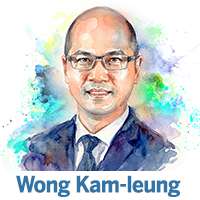
The author is a Hong Kong deputy to the National People’s Congress and a member of the Legislative Council.
The views do not necessarily reflect those of China Daily.
