

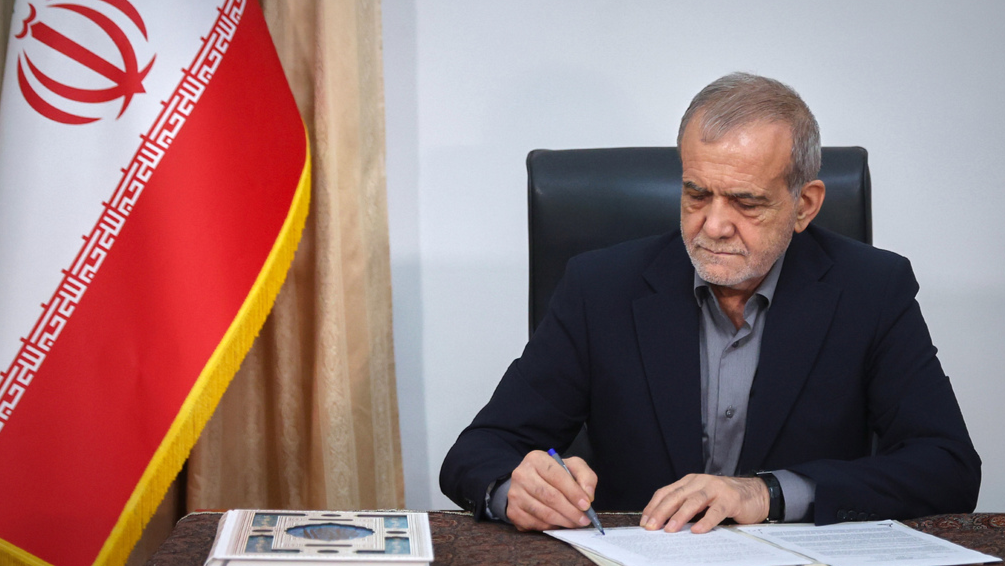
TEHRAN/MUSCAT/ABU DHABI – Iranian President Masoud Pezeshkian said Saturday Tehran will keep pursuing the path of peace under the memorandum of understanding (MoU) signed recently with the United States, provided that Washington helps build an atmosphere of trust.
Iran is trying to move on the "path of peace" based on the "paragraphs" in the MoU, Pezeshkian said at a press conference, adding, "Now is the best time to reach an agreement, as there is solidarity, power and unity in the country."
"We are determined to ... use the MoU as the basis provided that the United States lets go of the atmosphere of distrust it has created, and an atmosphere of trust is formed," he said.
He highlighted reciprocity in negotiations with the United States, saying Iran will match its commitments to the level of US compliance.
ALSO READ: Report: US top general looking for off-ramp from conflict with Iran
If the other side seeks to resort to force, Iran will not acquiesce to that, he said, adding that the basis for Iran's action will eventually be Supreme Leader Mojtaba Khamenei's decisions.
In June, Iran and the United States signed the MoU on ending the war on all fronts, including Lebanon. The two sides were scheduled to hold negotiations within a 60-day period to reach a final agreement, but recent escalation in the region has left the talks' fate uncertain.
Tehran, Muscat ‘very close’ to agreement on temporary Hormuz route
Also on Saturday, Iranian Foreign Minister Seyed Abbas Araghchi said that Iran and Oman are "very close" to an agreement on the designation of a temporary route for maritime traffic in the Strait of Hormuz, according to the official news agency IRNA.
He said that negotiations have been held between the two countries' military and naval forces based on available maps. Following the talks' conclusion, the new route will be designated, he said in an address to reporters.
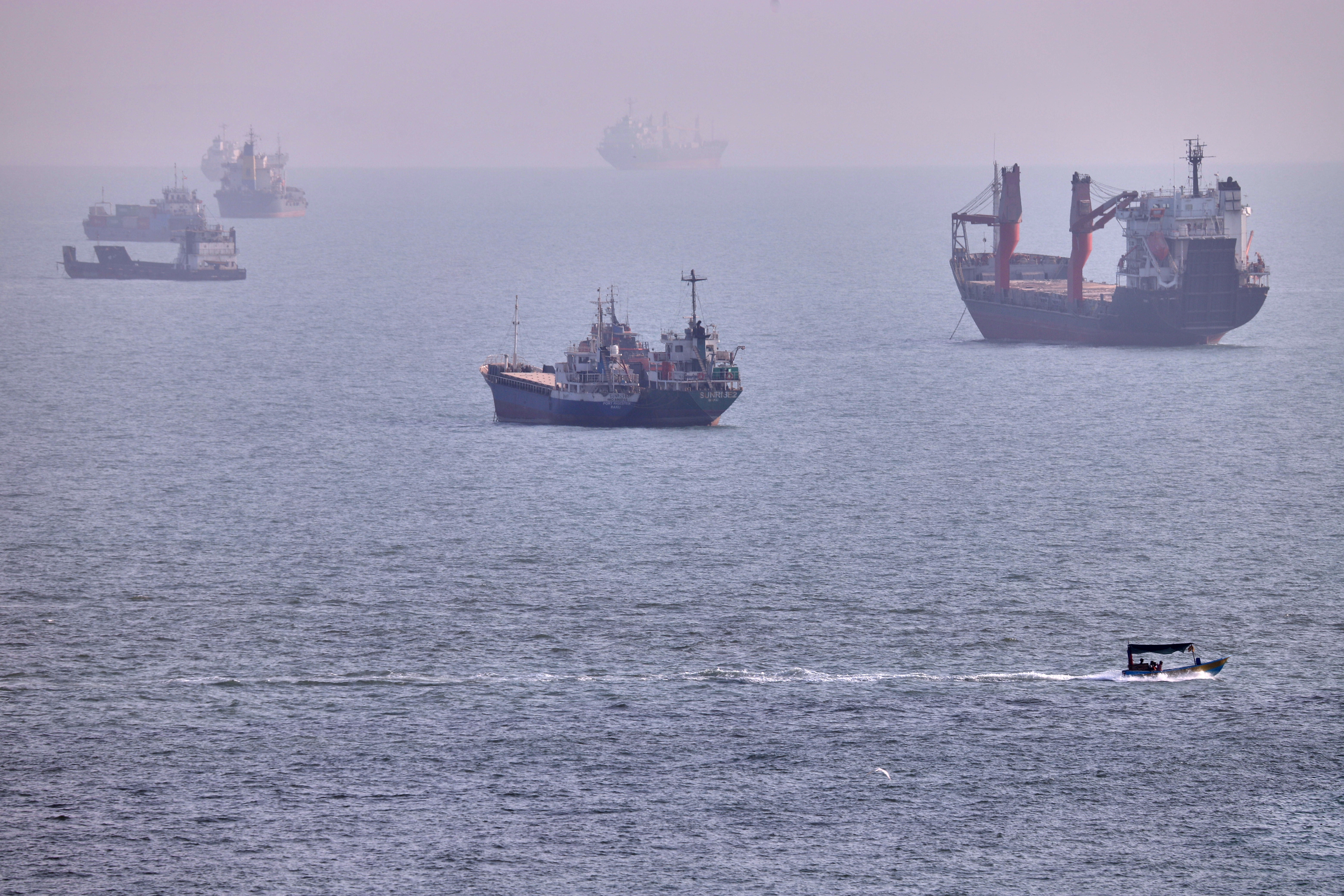
He added the strait's reopening, however, hinges on other conditions, including compensation by the United States for its violations of the MoU signed between Tehran and Washington in June.
Araghchi said Iran no longer considers the previous traffic separation scheme (TSS) or route in the strait acceptable for vessel traffic, emphasizing the need to designate a new TSS, "which involves extensive technical and legal complexities."
He added given the technical and legal complexities, the two countries are currently negotiating on a temporary route, which would serve as the basis for the main permanent route to be designated later.
ALSO READ: Report: Iran, Oman reach understanding on Hormuz Strait reopening deal
On the same day, Oman's Foreign Ministry said in a statement that ongoing negotiations over arrangements concerning navigation in the Strait of Hormuz are proceeding in a "positive and constructive atmosphere," while condemning repeated attacks on vessels transiting the waterway.
Earlier on Saturday, the United Kingdom Maritime Trade Operations said it had received a report of a vessel being struck about 18 nautical miles off Khasab, Oman.
UAE says tanker targeted by missile in Hormuz Strait
In a statement, the Ministry of Foreign Affairs of the United Arab Emirates (UAE) said one of the vessels belonging to UAE's Abu Dhabi National Oil Company was targeted by a missile while transiting the strait early Saturday.
The ministry said that an Iranian missile targeted the ADNOC tanker and condemned the attack as "hostile."
The company confirmed that no injuries have been reported, and the situation has been brought under control, according to the official Emirates News Agency.
READ MORE: Hormuz discussions show some progress
The state-owned ADNOC is one of the largest oil and gas producers in the world, serving as the primary driver of the UAE's economy.
Iran tightened its grip on the strait on Feb 28, barring safe passage of vessels belonging to or affiliated with Israel and the United States following their joint strikes on Iranian territory.
In June, Iran and the United States signed the MoU on ending the war on all fronts, including Lebanon. The two sides were scheduled to hold negotiations within a 60-day period to reach a final agreement, but recent escalation in the region has left the talks' fate uncertain.
Iranian news agency releases rare video of Supreme Leader Mojtaba
Meanwhile, Iran's semi-official Mehr news agency on Saturday released a video of Iran's Supreme Leader Mojtaba Khamenei on social media platform Telegram.
In the video, Mojtaba Khamenei, surrounded by several people, appeared to be speaking to those around him.
The Mehr report did not specify when or where the video was recorded, nor did it identify the people surrounding him.
On Feb 28, the United States and Israel launched joint attacks on Tehran and other Iranian cities, killing Iran's then Supreme Leader Ali Khamenei, senior military commanders and civilians. Iran responded with waves of missile and drone attacks on US and Israeli bases and assets in the region.
Mojtaba Khamenei, son of Ali Khamenei, was selected as Iran's new supreme leader by the country's Assembly of Experts in early March.
