

On July 16, officials from 29 countries signed an agreement in Shanghai establishing the World Artificial Intelligence Cooperation Organization (WAICO) — an independent intergovernmental body headquartered in Shanghai, answering the Global South's call for an international AI platform built on openness and mutual benefit. With United Nations Secretary-General Antonio Guterres attending and Foreign Minister Wang Yi signing for China, President Xi Jinping called its founding a milestone in the history of AI, pledging 5,000 AI training opportunities for developing countries over five years and cooperation centers with the Association of Southeast Asian Nations, the League of Arab States, the African Union, the Community of Latin American and Caribbean States, the Shanghai Cooperation Organization, and BRICS.
 WAICO signals that the global AI race has entered a decisive new phase. The question is no longer which model has the most parameters. It is simpler: Whose AI can the world actually trust? In this contest, the Hong Kong Special Administrative Region stands at a historic window of opportunity.
The AI industry has moved through three phases. First came the capability race, fought over benchmarks. Then the governance and deployment race, fought over safety compliance. It’s now in the third and most consequential phase: the sovereign AI infrastructure race, where models compete on trust. What is contested is no longer any single model's IQ, but whether a nation can build an ecosystem in which data is self-owned, capability self-controlled, and security self-assured. Default reliance on offshore models exposes enterprises to compounding risks — the stronger the model adopted, the greater the risk accumulated.
The old narrative that Chinese models trail Western ones is obsolete. Leading Chinese systems — DeepSeek V4, Alibaba's Qwen family, Moonshot's Kimi K3, and Z.ai's GLM-5 series — now match or surpass top US models on widely used reasoning and coding benchmarks. Adoption confirms the shift. China's Ministry of Industry and Information Technology confirmed in July that cumulative global downloads of Chinese open-source AI models have surpassed 10 billion. According to the State of Open Source on Hugging Face: Spring 2026 report, Chinese models accounted for the plurality — roughly 41 percent — of downloads on the platform over the preceding 12 months, overtaking US models for the first time. Alibaba's Qwen family alone now anchors more than 113,000 derivative models on Hugging Face, more than Google and Meta combined.
If the city co-defines a "Hong Kong standard" within WAICO, its role will far exceed that of an ordinary financial center. It becomes the trusted bridgehead through which China's AI reaches the world — and the most compelling proof of what "one country, two systems" means in the digital era
The real bottleneck is therefore no longer a tech gap but a compliance gap, and beneath it, a trust gap. The European Union AI Act carries penalties of up to 35 million euros ($39.8 million) or 7 percent of global turnover, with deliberate extraterritorial reach. Add the Gulf Cooperation Council’s data localization, Vietnam's AI Law, and ASEAN's emerging frameworks, and the conclusion is clear: Overseas adoption depends less on leaderboard scores than on who will underwrite credibility. Gulf sovereign funds and ASEAN ministries increasingly name compliance certification, not benchmark performance, as the gating criterion in AI procurement.
WAICO moment: HK's unique fit
WAICO appears to operate outside existing Western frameworks. Enterprises will have to navigate two increasingly distinct regulatory ecosystems at once — and that is where Hong Kong's opportunity crystallizes. Why Hong Kong rather than Shanghai, Singapore, Dubai, or Geneva? The headquarters settles the political question of leadership, not the market question of technical execution and cross-jurisdictional credibility. Singapore has neutrality but lacks direct access to the Chinese mainland’s compute, models, and standards influence. Dubai has capital and Global South reach but no common law tradition. Geneva has its merits but no operational proximity to the world's largest AI production base. Hong Kong sits at the intersection of four attributes: common law, Chinese sovereignty, Global South convening power, and mainland technical depth. Crucially, at its establishment, WAICO had not yet announced detailed operating rules, binding regulations, certification systems, or specific technical standards — leaving the operational architecture open to whichever city moves fastest.
Skeptics will argue that a Hong Kong certification cannot be neutral under Chinese sovereignty. The answer is empirical. Hong Kong arbitration awards are enforceable in more than 150 jurisdictions under the New York Convention; its listing standards are recognized by regulators from the US’ Securities and Exchange Commission to the UK’s Financial Conduct Authority to the Monetary Authority of Singapore; its common-law judgments are cited by courts from London to Sydney. Neutrality in practice is measured by whether institutions are trusted to deliver — and by that measure, Hong Kong has been delivering for decades.
Hong Kong's domestic foundation is real. Services based on the Hong Kong Generative AI Research and Development Center’s (HKGAI) foundation model are already piloted by more than 40,000 civil servants across all bureaus — one of the strongest possible in-market trust endorsements.
The infrastructure is in place: the HK$3 billion ($383 million) Frontier Technology Research Support Scheme, HK$1 billion for the Hong Kong AI Research and Development Institute in 2026, and Cyberport's AI Supercomputing Centre operating since December 2024. On June 3, HKGAI launched HKGAI-V3, a DeepSeek-V4-based model that supports running on domestic chips, sustaining uninterrupted agent runtime of up to 28 hours in a single session on its Agent Workshop platform.
The field for AI certification is not empty, but neither is it settled. Singapore is a strong contender and the most credible incumbent. Its AI Verify framework, launched by IMDA and stewarded by the AI Verify Foundation, has assembled premier members, including IMDA, Aicadium, IBM, Microsoft, Google, Red Hat, and Salesforce, with more than 60 general members from Adobe and DBS to Meta and SenseTime.
The HKSAR is nonetheless the better platform for the WAICO-era certification role, for three reasons. First, AI Verify is a voluntary testing toolkit, not the binding, cross-recognized certification passport WAICO operational partners will need to issue. Second, Singapore sits outside China's technical supply chain: No direct access to mainland compute, model weights, or standards processes — precisely the inputs a WAICO certifier must audit. Third, the wider landscape leaves room: The NIST-anchored American approach is too closely identified with US strategic interests to be seen as neutral by Global South buyers; the EU AI Act approach is too onerous for many emerging markets; and no emerging market has yet built the institutional depth to fill the gap. The HKSAR's opportunity is to adopt what Singapore has proved, a credible testing methodology, and combine it with what only Hong Kong offers: common-law enforceability, mainland technical depth, a seat inside the WAICO tent, and the ability to move from voluntary self-declaration to binding cross-recognized certification.
Hong Kong should build a "Hong Kong trusted AI" passport, package compliance-as-a-service as a product rather than a burden; and bid to host WAICO's certification and testing center, a Southeast Asia cooperation office, and a flagship joint-research initiative. The geography follows WAICO's own map: First the ASEAN/Guangxi corridor, alongside Pakistan, Kazakhstan, and Russia; then the Gulf; finally the EU and Australia, where a Hong Kong stamp bridging WAICO norms and EU AI Act requirements may decide market entry.
Turning governance advantage into industrial advantage
Whoever writes the rulebook for the non-Western AI market writes the price list too. China's core AI industries already exceeded 1.2 trillion yuan ($177.2 billion) in 2025, supported by more than 6,200 AI enterprises nationwide.
This is not about picking a side but about setting the standard. A realistic assessment must acknowledge the headwinds: WAICO operates outside the UN system amid intensifying geopolitical rivalries, and ongoing Sino-US “decoupling” and export controls — some reaching Hong Kong entities directly — mean a Hong Kong certification will need to earn Western acceptance rather than assume it.
If the city co-defines a "Hong Kong standard" within WAICO, its role will far exceed that of an ordinary financial center. It becomes the trusted bridgehead through which China's AI reaches the world — and the most compelling proof of what "one country, two systems" means in the digital era.
The measurable test is twofold: If by the end of 2027, Hong Kong has secured some form of partnership with WAICO, stood up a certification center, and issued certifications recognized by at least some WAICO member jurisdictions covering leading Chinese-origin models, the city will have converted a diplomatic opening into a durable industrial position. If it does not, someone else will — and the opening will not come again. For Hong Kong, this is not merely an opportunity, it is a responsibility that cannot be delegated.
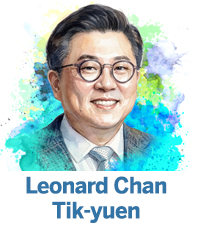
The author is founding chairman of the Hong Kong Innovative Technology Development Association.
The views do not necessarily reflect those of China Daily.
