

The hunt for talent to propel Hong Kong’s electric-vehicle market is underway, with a Chinese energy technology giant firing the first salvo to equip the city with the expertise to steer the industry into top gear. Stacy Shi reports.
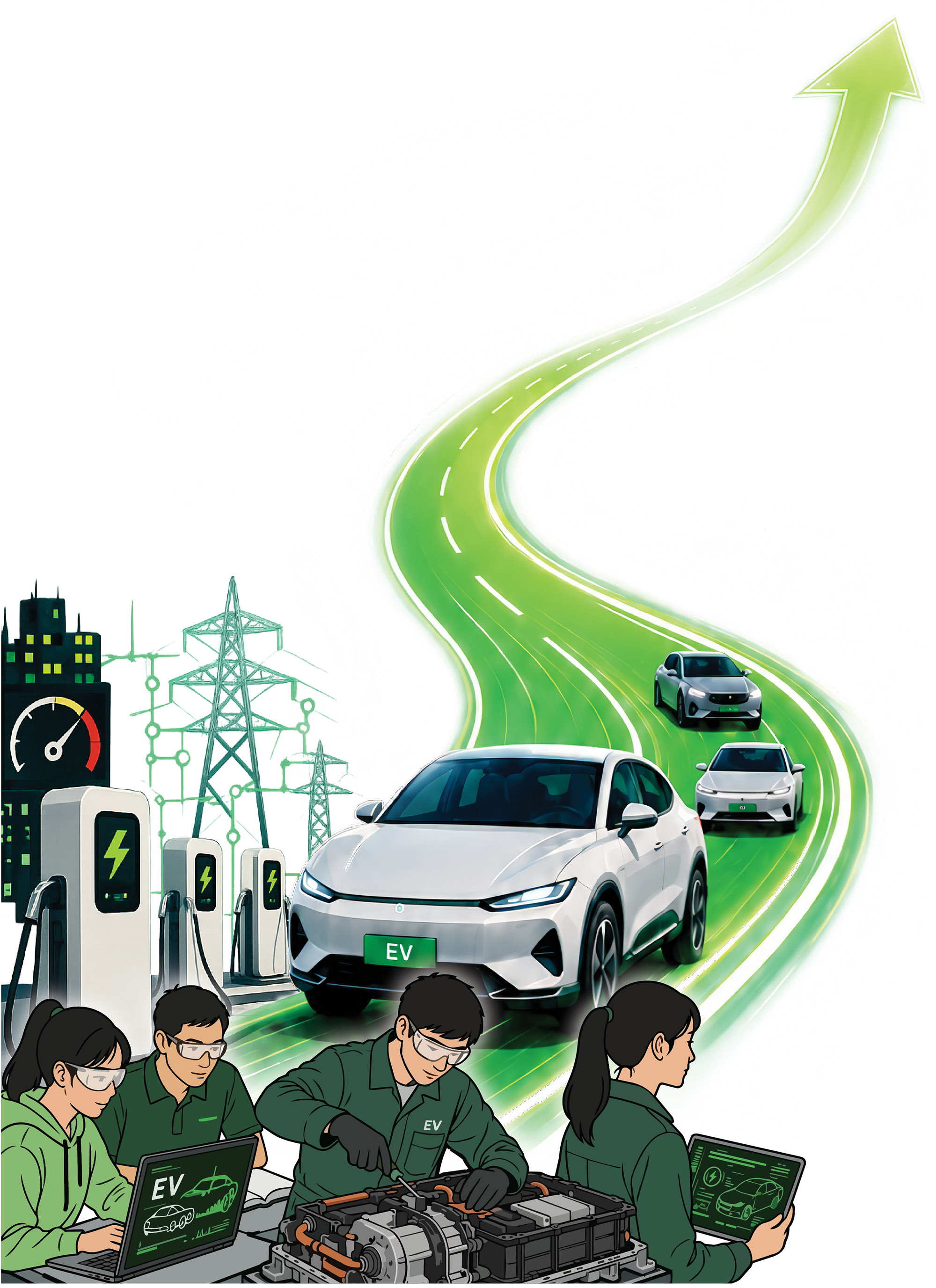
Hong Kong’s streets are going green at an astonishing pace — with new electric vehicles (EVs) making up 70 percent of the city’s automobile sales. But the quiet hum of progress presents problems — Hong Kong has no tradition of automotive engineering, its charging grids are struggling to keep pace with demand, and not a single bachelor’s degree in EV engineering has been awarded until this year.
EV advocates are trying to rewrite the story.
Driving green innovation
Hithium — a world leader in new energy technology — moved into Hong Kong Park in the Hetao Shenzhen-Hong Kong Science and Technology Innovation Cooperation Zone in April by leasing a 40,000-square-foot (3,716-square-meter) plot at the park in the northern New Territories as a transformation base. The company, based in Xiamen, Fujian province, is the world’s second-largest lithium-ion energy storage battery shipper, aiming to generate HK$750 million ($95.7 million) in output value in the next five years.
Total investment exceeds HK$200 million, with about HK$80 million in funding from the Hong Kong Special Administrative Region government.
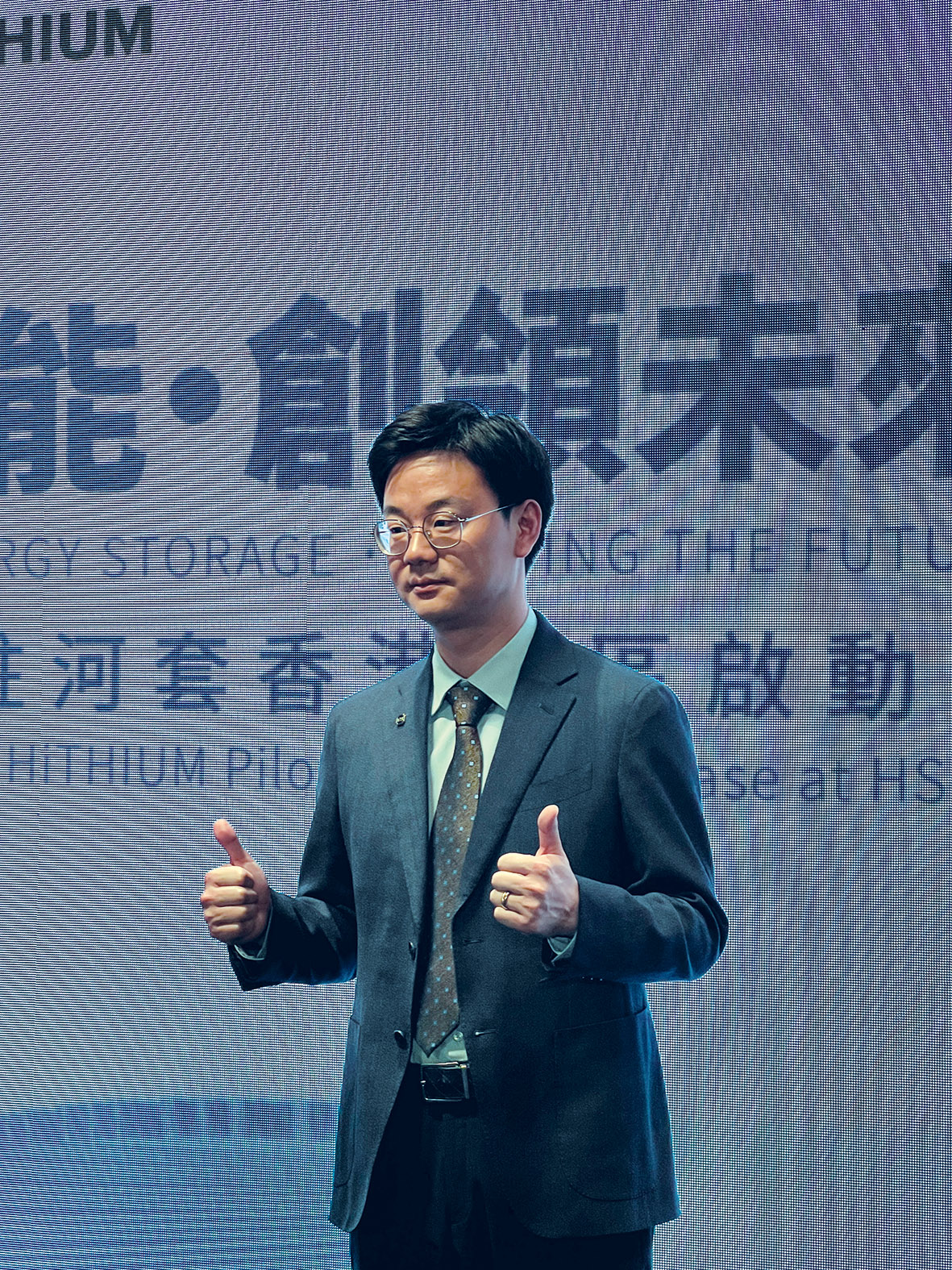
Hithium Vice-President Yi Ziqi says that although the company’s business doesn’t cover electric-vehicle energy storage, the urge for all-around expertise in the industry is complementary.
Yi said that for Hithium to establish itself in the SAR, talent across multiple disciplines is key, covering material science, electrochemical reactions, physics, chemistry, software algorithms, battery management systems and artificial intelligence, as well as lean manufacturing, delivery, management, integration, and supply-chain expertise. “It isn’t just about one person knowing all these. We need more interdisciplinary staff,” he says.
Hithium has launched a diverse recruitment drive. “We have to bring in professionals from everywhere. Hong Kong’s engineering workforce, especially in the production of lithium batteries, is still relatively scarce. So, I’ll have to transfer some workers from our headquarters to Hong Kong besides recruiting staff locally and globally,” Yi says.
About 200 high-skilled jobs are up for grabs. For overseas recruitment, the company is eyeing Europe, the United States, and Australia where energy storage is well developed. Yi sees Hong Kong universities as a rich source of fresh graduates and doctoral candidates, given their strong presence in new energy research.
The executive has visited Hong Kong educational institutions like the Chinese University of Hong Kong and the Hong Kong Polytechnic University, with the Hong Kong University of Science and Technology and the University of Hong Kong also on his list. He hopes to pick an institution to co-establish a research platform and talent cultivation base. “We want to combine academic strengths with our industrial advantages to realize the cultivation of interdisciplinary talent.”
Likewise, other global industry players are also hunting for Hong Kong’s academic talent. A recruitment team from the US technology and clean-energy giant Tesla was at PolyU recently for academic and technical exchanges, exploring collaboration in talent cultivation, sustainable energy and autonomous driving technologies. PolyU scholars presented research on EVs, noise control and green energy storage, while Tesla shared its cutting-edge work in vehicle control software and powertrain engineering.
Beyond research and development, Tesla is actively hiring engineering talent from PolyU, creating a strong pipeline for knowledge transfer and workforce development.
According to an automobile human resource report by the Vocational Training Council’s Automobile Training Board, traditional garages had problems last year dealing with electric vehicles’ high-voltage systems, batteries and electronic components.
“Mechanics and electricians are in short supply, a situation worsened by an aging workforce and a lack of young entrants. Furthermore, the relatively challenging working environment discourages young people from joining the trade,” the report said.
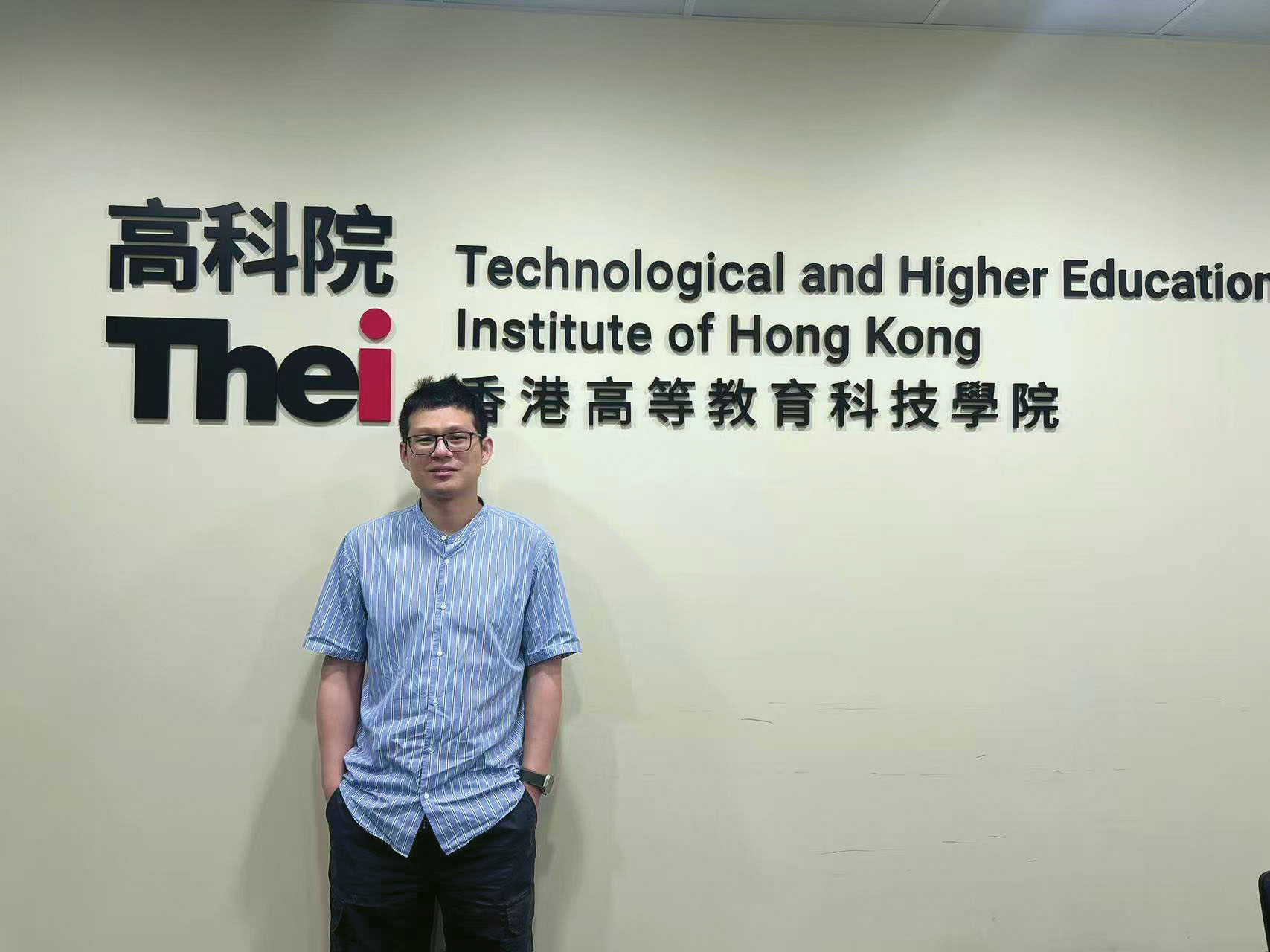
Zhao Yang, a senior lecturer at the council’s vocational college — the Technological and Higher Education Institute of Hong Kong’s (THEi’s) Department of Construction, Environment and Engineering — says the talent gap is huge. “For example, standard electric cars run on 400 volts, while new models from renowned Chinese brands Xiaomi and BYD reach 800 volts, posing serious risks, such as replacing faulty battery modules, without proper training.”
Beyond electrification, modern EVs have intelligent cockpits with AI voice assistants and touchscreen systems — areas that are largely unfamiliar to traditional car users and maintenance technicians.
Besides vehicle engineering, there’s demand too for charging-network operators who can manage grid loads, software developers for smart charging, battery recycling specialists, and experts in vehicle-to-grid integration. “Setting up a supercharging station isn’t just about hardware,” Zhao says. “You need people who understand grid dynamics and load balancing.”
Moreover, Hong Kong’s right-hand-drive, dense urban roads, high humidity, heat and coastal salt spray make it an ideal testing ground for EV localization, generating a wide range of job opportunities.
“Mainland automakers usually test in extreme cold or desert conditions. Hong Kong offers tropical heat and high humidity — conditions that are perfect for battery thermal management and corrosion resistance,” Zhao says. For international brands entering Asia and Chinese brands going global, Hong Kong is a natural bridgehead.
Concerning actual talent shortages on job recruitment websites, EV-related career opportunities span vehicle manufacturing, charging infrastructure, maintenance, and product operations. Beyond hands-on roles, research positions are available at PolyU’s EV research center, the Hong Kong Productivity Council’s Centre of Advanced Power and Autonomous Systems, as well as research-and-development centers set up in Hong Kong by the Chinese mainland’s new energy giants.
Addressing talent shortages
To deal with the acute dearth of talent even as companies pour high-tech jobs into the SAR, THEi started the city’s first bachelor’s degree in EV design and technology to tackle the gap from the education side. Before the program’s launch in the 2026-27 academic year, Hong Kong offered no bachelor’s-degree courses for electric vehicles, lacking a pathway for undergraduates to bridge associate degree and master’s programs at PolyU.
“We saw many associate-degree students wanting to advance their studies, but there was no institution for them to go to,” says Zhao, who is also the new program’s director.
The course offers a four-year track starting from the first year and another two-year program starting from the third year. Enrollment is underway, with more than 40 nonlocal and 100 local applications for first-year entry received as of mid-June, and over 20 applications for third-year entry.
The four-year course will begin with two years of foundational engineering, covering mathematics, physics, mechanics and introductory courses on EV components and vehicle dynamics. In the final two years, students dive into three core pillars — electrification of vehicles, intelligent vehicles, covering AI, connected cars, vehicle-to-grid system, renewable integration, and manufacturing and quality management. The 10 electives will allow students to specialize further, including in hydrogen fuel cells and charging-network management.
A distinctive feature is the 126-hour work-integrated learning requirement. While students are encouraged to find their own internships, the institute has signed memorandums of understanding with multiple companies in the Guangdong-Hong Kong-Macao Greater Bay Area, including the HKSAR. One local partner is Halo Energy — a charging services provider, whose CEO sits on the program’s advisory board. “They’ve started asking if we have students wishing to enroll there, but the course has yet to begin,” Zhao says.
On the mainland, cultivating talent for EVs is accelerating too. In May, a central-government-backed training program for EV professionals was launched at Tsinghua University, focusing on AI-powered vehicles, digital marketing and global expansion, while Shenzhen Polytechnic University has teamed up with BYD to build a joint industry-academy institute for EV talent.
THEi has also partnered with Shenzhen Polytechnic University, although without binding itself to any single corporate partner, as their goal is to offer students the most common and transferable EV technologies instead of focusing on one brand. “If we teach students just a single company’s products, they might struggle if they don’t end up working there,” Zhao says. “We want them to succeed anywhere.”
In Hong Kong, efforts are equally multipronged. Beyond degree programs, the Vocational Training Council set up an Electric Vehicles Training Centre at its Institute of Vocational Education (Tsing Yi) campus in 2024, equipped with high-voltage system simulators and battery testers to replicate real garage environments. Under strict safety supervision, trainees practice shutdown, restart, diagnosis, and repair procedures, ensuring they are job-ready upon graduation.
The private sector has also stepped in. The KMB Academy, under Kowloon Motor Bus, which operates Hong Kong’s largest electric bus fleet with over 80 EV buses, launched a course on the diagnosis, testing and repair of high-voltage EVs this year, with a components certificate after introducing safety awareness and low-voltage certificates in 2024. Both courses are recognized by the Electrical and Mechanical Services Department, making KMB the first private institution in Hong Kong to offer a complete three-tier EV maintenance training program.
Hong Kong’s first EV lithium-ion battery recycling facility, developed by Chun Yang International — a subsidiary of Envision Greenwise Holdings — will begin operating this month. The facility isn’t merely about starting a battery recycling process, but aims to get more people into the city’s EV ecosystem and boost the new energy talent pool, says Shirley Kwok Ho-yee, Chun Yang’s managing director.
The project is expected to recruit 30 to 50 people initially, seeking talent across various sectors, such as engineering, logistics and transport, and administration, with the highest demand for technical and R&D talent.
“The new energy industry was once little-developed in Hong Kong. The facility can now serve as a platform to attract talent and provide space for universities and research teams to commercialize their work,” Kwok says.
As to whether Hong Kong needs a more complete talent development system, Zhao says: “There had been no program integrating automotive engineering, combustion engines and EVs in the past. The authorities should strongly support EV talent training. These cross-disciplinary fields benefit not just vehicles, but also the grid, low-carbon energy and AI development.”
Contact the writer at stacyshi@chinadailyhk.com
