

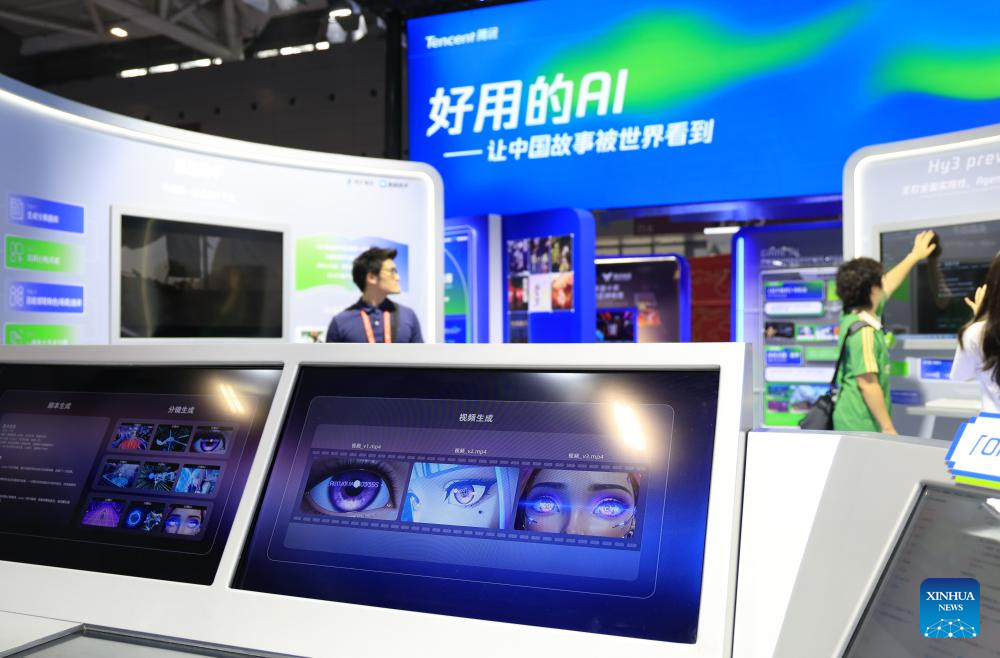
Chinese mainland technology company Tencent Holdings has issued the largest batch of dim sum bonds in Hong Kong since last year, underscoring the important role of the special administrative region’s equity market to facilitate bond financing for major Asian technology, media and entertainment, and telecommunications (TMT) companies.
On Wednesday, Tencent listed several US dollar-denominated and offshore renminbi-denominated bonds on the Hong Kong stock exchange, including a $1.75 billion 10-year bond, a $700 million 20-year bond, an 11 billion yuan ($1.62 billion) 10-year bond, and a 4 billion yuan 30-year bond.
“As the largest dim sum bond issuance since 2025, this transaction represents a significant development in the offshore renminbi bond market and reflects the issuer's continued confidence in raising RMB funds through Hong Kong,” Hong Kong Exchanges and Clearing Ltd said.
“This issuance also underscores HKEX's important role in serving the bond financing of leading Asian TMT companies, supporting issuers in raising funds in multiple currencies and maturities while connecting with a broad investor base,” HKEX said.
The bourse added that the issuance further enriches the activity of HKEX's debt market and solidifies the SAR’s position as a leading international financing and bond listing platform.
Tencent is a major mainland-based internet services provider and a global leader in video games, with a diversified portfolio of cash-generating businesses.
The Wednesday bond issuance is part of Tencent’s $30 billion multicurrency global medium-term note program. The technology titan intends to use the net issuance proceeds for general corporate purposes.
ALSO READ: Tencent gets conditional approval to acquire Ximalaya stake
As of March 31, the company's capital structure included 127.8 billion yuan of senior unsecured debt issued by the parent entity and 259 billion yuan of bank borrowings, according to S&P Global Ratings.
The United States-based credit rating agency said it forecasts that Tencent will maintain a marginal net cash position over the next two years, given the company’s low debt ratios.
“We project Tencent's annual EBITDA (earnings before interest, taxes, depreciation, and amortization) will be 330 billion yuan to 360 billion yuan in 2026 and 2027, moderately higher than 316 billion yuan in 2025. Its free operating cash flow will likely remain healthy at close to 200 billion yuan per year, despite a surge in capital expenditure for artificial intelligence infrastructure investments,” the credit rating agency said.
“We maintain our HK$800 ($102.5) fair value estimate for wide-moat Tencent. We view shares as significantly undervalued, with the market overstating the threat of ByteDance displacing Tencent in an AI-driven world,” said Ivan Su, senior equity analyst at US financial service firm Morningstar.
Su added that the company controls both the durable advantages of distribution and data, anchored by its 1.4-billion-user network and proprietary data that reinforce the performance of AI applications.
