

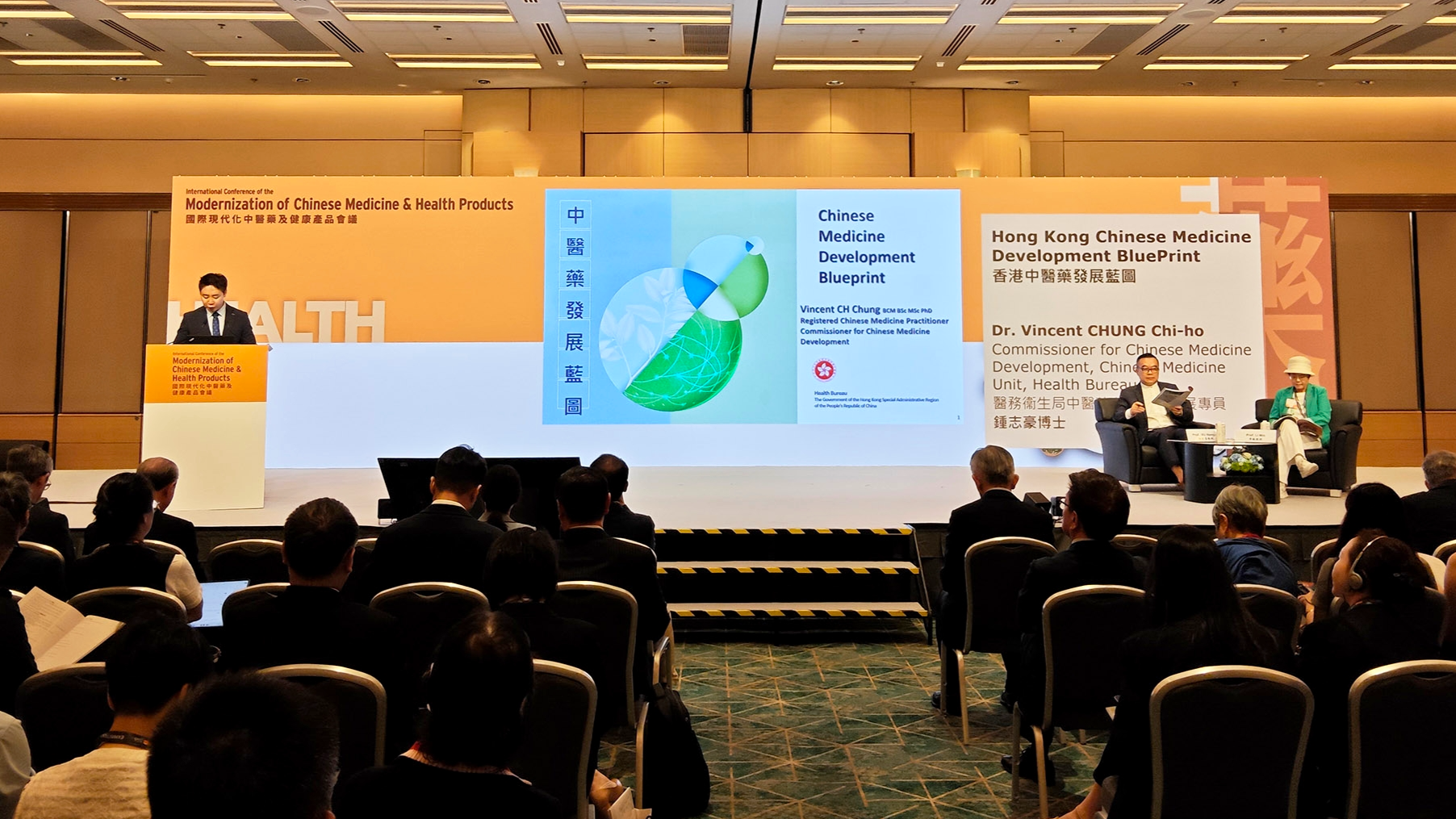
Hong Kong is poised to integrate Chinese medicine into the international healthcare landscape by leveraging the expertise and resources of the motherland to transform care and improve outcomes, according to Vincent Chung Chi-ho, the city’s commissioner of Chinese Medicine Development, on Thursday.
Addressing the opening of the 25th International Conference of the Modernization of Chinese Medicine and Health Products, Chung said that the goal of Hong Kong’s Chinese medicine development is to inherit the wisdom of traditional medicine while establishing the city as a bridgehead to expand its impact both locally and globally.
Bian Zhaoxiang, chief executive of the Chinese Medicine Hospital of Hong Kong (CMHHK) and director of the Centre for Chinese Herbal Medicine Drug Development at Hong Kong Baptist University (HKBU), said the opening of CMHHK is a significant milestone in integrating Chinese medicine into the city’s public healthcare system. Since its launch in December, the hospital has been well-received by the public, with users praising the professionalism of its services. CMHHK is preparing to introduce 24-hour inpatient services by the end of this year.
ALSO READ: TCM on verge of expansion, AI main driver
Yeung Kin-wai, a senior chemist at the Government Chinese Medicines Testing Institute (GCMTI) within the Department of Health, said that the GCMTI is dedicated to developing scientific testing methods, such as DNA and chemical analysis, to authenticate genuine herbs and ensure the safety and quality of Chinese medicine, while addressing challenges in finding suitable reference standards and reducing research and development costs.
Li Min, dean and chair professor at the School of Chinese Medicine at HKBU, stressed the importance of training Chinese medicine professionals in empathy, ethical judgment, and holistic care — qualities that artificial intelligence cannot replicate. “This is exactly the direction we must pursue in cultivating CM practitioners, especially in the age of AI.”
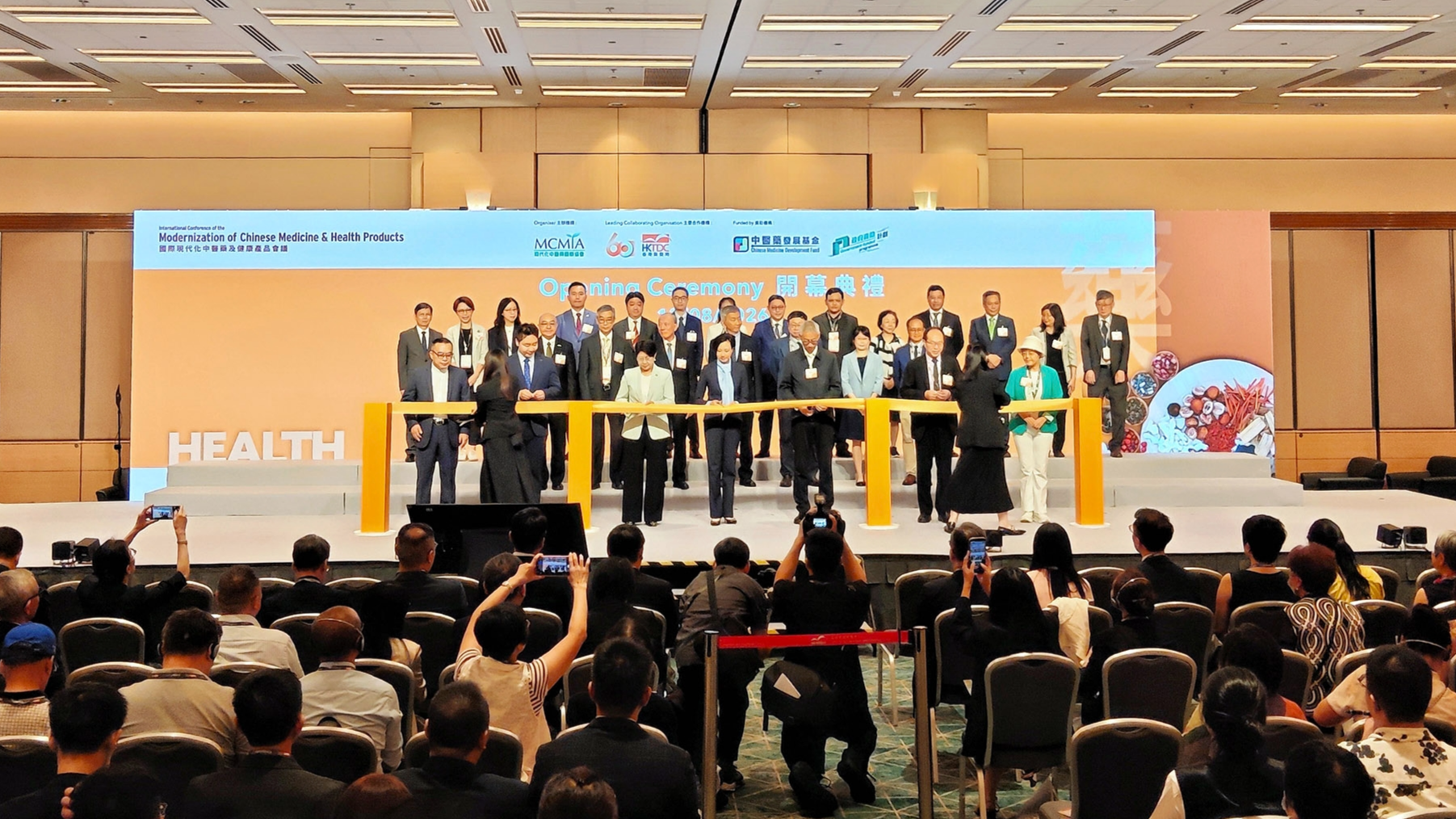
In an interview with China Daily, Xu Hongxi, the moderator of the event, chairman of the Belt and Road Alliance for Traditional Medicine, and honorary dean of Shanghai University of Traditional Chinese Medicine, said that accelerating the international recognition of CM is a key focus under the nation’s 15th Five-Year Plan (2026-30) as the global healthcare landscape evolves.
The World Health Organization’s decision to elevate traditional medicine from a “complementary” therapy to an “integrative” standard of care is a significant milestone in this effort, Xu said, adding that this development bridges CM with international regulatory frameworks, fostering mutual standards and solidifying its role in the global healthcare system.
READ MORE: China to boost inheritance, innovation of traditional Chinese medicine
China’s extensive CM clinical database — which records over 1 billion consultations annually — is crucial for real-world research and the development of an evidence-based system, he said. By leveraging data science and AI, he stressed that this vast resource provides robust validation for CM therapies, positioning China to play a pivotal role in data-driven medical innovation.
To lead this modern evolution, Xu backs the concept of “New Chinese Medicine”, adding that this initiative focuses on the products developed from traditional Chinese medicinal resources using modern science and technology. These products undergo rigorous pharmacological screening and research and development to meet market approval standards and regulatory requirements.
Xu also discussed the Greater Bay Area’s leadership in CM’s international integration by establishing unified standards for quality control and testing. Models such as “Macao registration, Hengqin production” streamline the transition from innovation to global delivery, particularly in Portuguese-speaking nations, he said.
The conference, organized by the Modernized Chinese Medicine International Association and the Hong Kong Trade Development Council, was supported by academic institutions and industry associations across Hong Kong, according to the organizer.
Contact the writer at irismuk@chinadailyhk.com
