

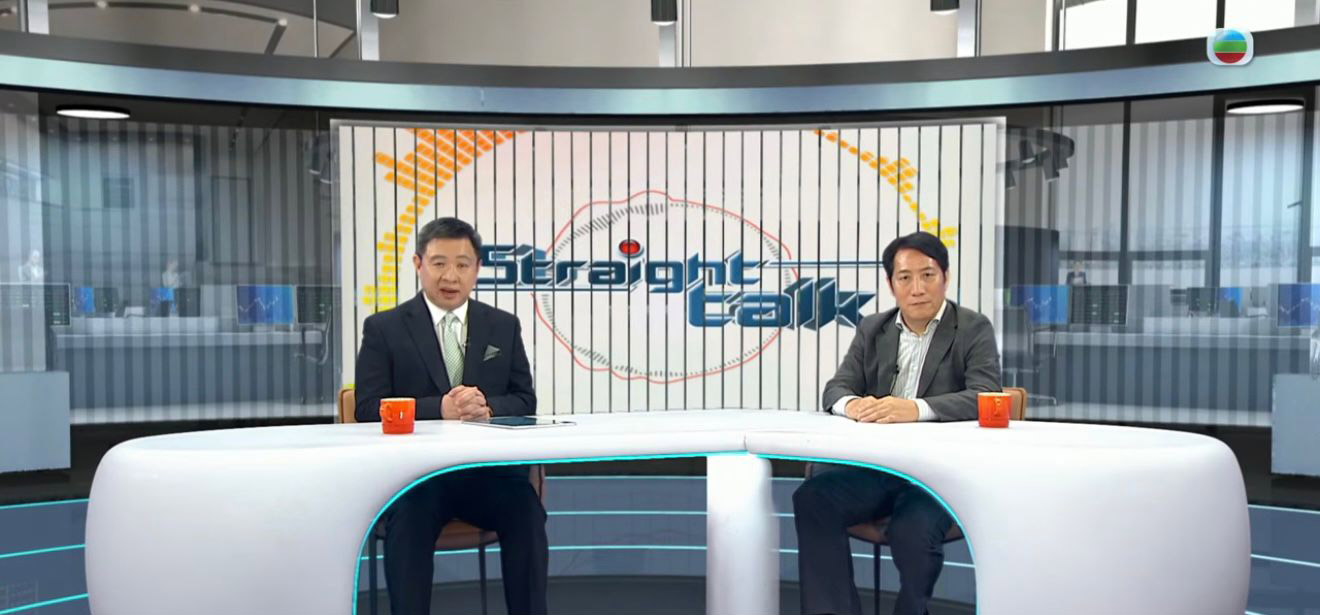
On Straight Talk this week, Li Yiliang, a professor of astrobiology at the University of Hong Kong, talks about Lai Ka-ying — our very first astronaut in space and what that means for Hong Kong.
Check out the full transcript of TVB’s Straight Talk host Eugene Chan’s interview with Li Yiliang:
Chan: Welcome to Straight Talk. I'm Eugene Chan. Joining us this evening to talk about Hong Kong's first space woman's odyssey is Li Yiliang, professor of astrobiology from the Department of Earth and Planetary Sciences at the University of Hong Kong. Li serves as a key scientific team member for China's Tianwen-1 & Tianwen-3 Mars Missions. His research focuses on the origins and evolution of life on Earth as well as the search for possible life on Mars. He previously served as an associate research scientist at NASA Astrobiology Institute and is a fellow of the American Geophysical Union and the Geological Society of America. Welcome to Straight Talk, professor.
Li: Thank you.
The launch
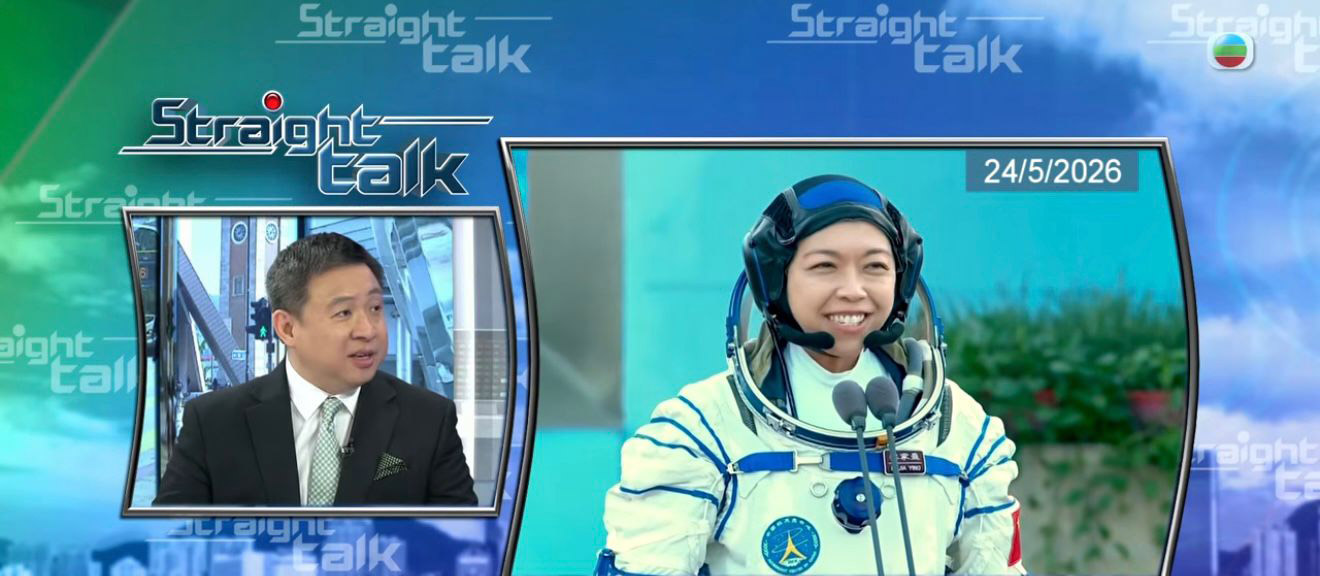
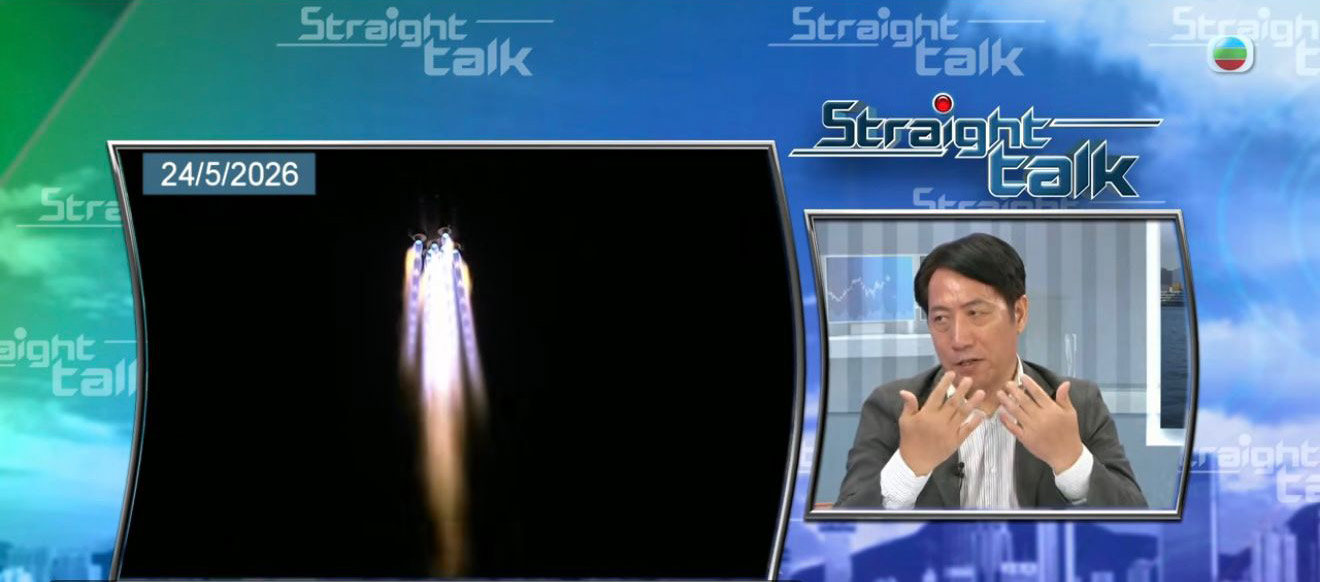
Chan: Professor, just days ago, the whole of Hong Kong city erupted with celebration as Lai Ka-ying, our very first astronaut, blasted off about the Shenzhou XXIII spacecraft and is now at the Tiangong Space Station. It must have been a breathtaking moment because I know that you're actually at Jiuquan Satellite Launch Center. Can you tell us more about how you feel at that moment?
Li: Yeah, that's very exciting and very stunning, because especially the launching moment. It's a very tall rocket and with tons of explosives burning at the bottom and the astronauts were sitting at the top. That's the setting of the rocket. And the rocket is about 1.5 kilometers away. And when it's began to uplift, we can see the explosion of fuels. And then after a few seconds, we can feel the sounds coming to us. We can feel these sounds coming to our face and to our body. So, the noise is very loud and very stunning.
Chan: Right. I mean, we are all in Hong Kong, everybody watching from the television. And we're very excited seeing our own astronaut. I mean, like Lai, not only she is a police superintendent, I think she's a first Hong Kong person, the first Hong Kong astronaut. And she's also the fourth Chinese woman in space. And actually, the first Chinese female payload specialist. Yeah, so there's a lot of the most first times of Hong Kong. How do you feel? Because she's also your HKU alumni.
Li: That's great for us. Yeah, we feel very excited.
Chan: If you look back at the whole experience. Do you have anyone moment that you're a bit worried when the rocket going up?
Li: Oh yeah, when it's uplifting, it's a very phenomenal. It's very stunning. So, that's a, I think, many people are very kind of nervous because we don't have experience on that.
Chan: How would you imagine Lai and the other two astronauts feel inside the rocket during the lift-off?
Li: Well, I think they're already very tough. I don't think they feel nervous. They probably were just already ready for that.
Chan: We know Lai was selected in 2022 as part of China's fourth batch of astronaut trainees. And has actually undergone really strong training. What would be the sort of the physical challenges that one must overcome so that she's qualified for this mission? You just said that they were more prepared. How do you think they would have been trained?
Li: I don't know the details, but what I believe is that they are at the very edge of the all kind of animals in terms of the physical condition.
Chan: And you know, I'm sure when they're trained, they have to look at maintaining the mental focus and also the emotional stability. Can you imagine living in such a high-pressure, isolated environments actually for many months ahead? How do you think all that can be done?
Li: Oh, well, I think that's something we probably can never feel as average people.
Chan: It's not easy, is it?
Li: I think it's very difficult. It's testing of every boundary of human being or an animal on earth.
Chan: Yes. And also she's the first Chinese female payload specialist. I mean, to many viewers, they do understand what an astronaut is, but they don't understand what a payload specialist is. What exactly does it refer to?
Li: Yeah, well, payload specialist is actually a scientist. So, he will work on all those experiments designed right for the space station.
Chan: And also, I'm sure the viewers will be asking. Apart from being the payload specialist, they have to go through sort of new life even at the Tiangong space station, right? How do you think they're gonna manage basic needs like nutrition, hygiene, or even sleep under zero gravity?
Li: Well, as a, there are some space medicines they have, I think, they have some proxies for them to, they probably need to live on those proxies, right? And probably also something very fun, very interesting.
Chan: Yeah, I was told by some of the government officials that Lai will be up there for 6 months. Yeah, and actually because we wanted her to be on Straight Talk after, yeah, you have done the introduction, it looks like she’ll be monitored by for help for another 6 months. Yeah, so it's quite a long journey, isn't it?
Li: Yeah, it is. And it's so high, about 400 km above us.
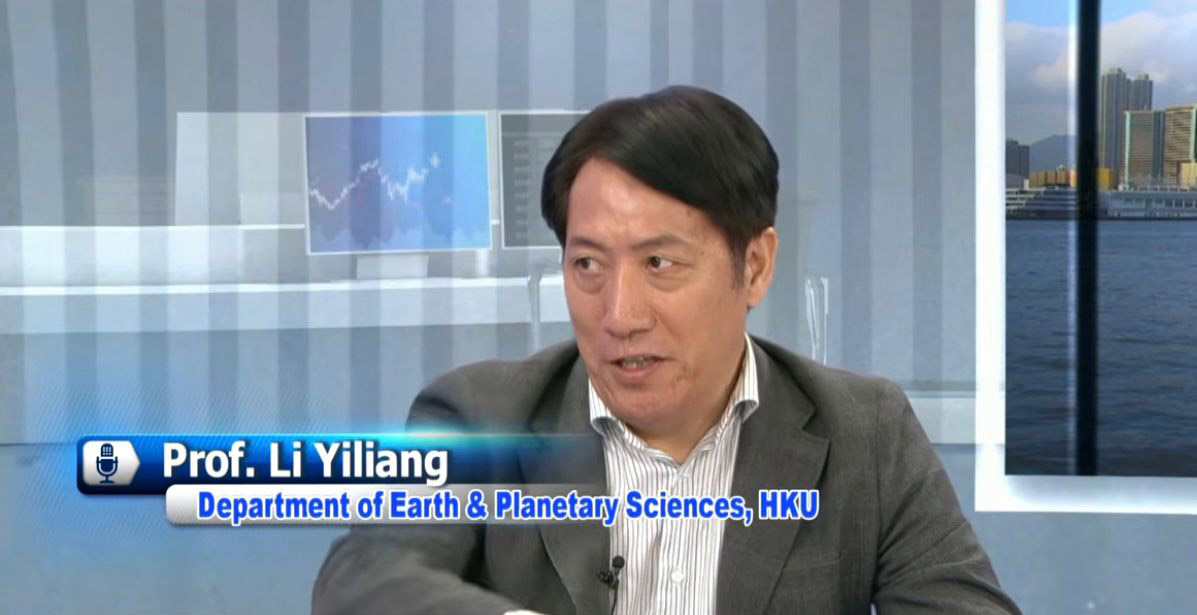
Tianwen-3 Mars mission
Chan: Right. And also read that her family actually have moved to Beijing to support her as well. So, okay, I think it's very meaningful, a very special story for a Hong Kong person being in space for the first time. So, let's move on to your work because you're not training as an astronaut, but you're very close to the work I mentioned earlier. You're with Tianwen-1 & Tianwen-3. There's a Chinese mission to Mars. But now we have a Hong Kong astronaut. Does it make you more excited now because we're getting even closer to it, because we actually have something actually going up?
Li: Yeah, it's more exciting and it's really closer to our goal of the study of Mars.
Chan: And you know, in Hong Kong, I mean, apart from Hong Kong, you understand the UST and also another university which also have space programs. Where do we stand actually in terms of all this space research for rest of the world?
Li: Well, I think we have a very good condition now. For the people from the HKU, we focus on science. People from PolyU, they focus on like a space survey, remote sensing. And people from UST, I think they have very good experts on space robots.
Chan: You see Hong Kong, I mean, I think we are very proud. Five out of eight universities are in the top 100. So, would you say our space program is also up there with the rest of the world?
Li: Yeah, I think we're, what we're doing now, it's already some leading program.
Chan: So, what other programs are you aware that's happening in Hong Kong right now?
Li: Those people from UST and from PolyU, they have big groups working on those Chang’e series. Exploration over the moon. And we have group here from the University of Hong Kong and also people from PolyU working on Mars.
Chan: See, you have your own piece of big news. Let's go to your piece of big news called the Tianwen-3 Mass mission. Out of so many elite institutions overall the nation, HKU’s Short-Wavelength Infrared spectroscopy, I can’t read it properly, which you're actually leading it. What exactly is it and why is it so special that Hong Kong can be up there?
Li: Okay, so, this is a spectrometer. Simply say, we call it a camera. It's the infrared spectrometer. It would be installed on the orbit. So, the first function is to serve as a monitor to forecast the dust storm when the Tianwen-3 is landing. The first function. The second one is to map the surface of the ground so that we can find out the very highly scientific, valuable place to land. And the third function is after the accomplishment of the mass sample return, we’ll work for five more years with that spectrometer to study further the details of the surface of Mars.
Chan: Right. I understand that you will aim to bring some samples back from Mars back to earth. How long would it take?
Li: It will take about 7 months. So, from Mars to us.
Chan: Is there, I mean, since Hong Kong, we're, I mean, we're very proud of the fact that you have a spectrometer up there helping over the project. Any challenges that you face when you develop this spectrometer?
Li: Yeah, now it still has some challenge because all our progress needs to be along with the progress of the whole program, so that we need to finish the prototype spectrometer in probably 1 or 2 months from now on. And then we need to finish the space, Euro space level, Euro space grade camera in 2027.
Chan: Let's go for a short break now. We'll be back with more Straight Talk.
Chan: Welcome back to Straight Talk. We are talking to Li Yiliang, professor of astrobiology from the University of Hong Kong, about Lai Ka-ying, our very first astronaut in space, and what that means for Hong Kong. So, professor, thank you for sharing with us your firsthand feeling of being at the launch site. And how excited did we see a Hong Kong person up in space? And then you also told us about your research work, where Hong Kong is heading. As part of our mainland, I'm sure we work closely with our counterparts over the mainland, so that we have advantages. Is HKU working with any universities and universities in mainland on space projects?
Li: Yes. For this spectrometer, we collaborate with Zhejiang University and also Changchun Institute of Optics, Fine Mechanics and Physics.
Chan: So, how do you feel? I mean, does it make Hong Kong sort of able to fill the gaps? Or you think, are we leading them? How do you define your labor work?
Li: Alright, now we work on the scientific part; they work on the hardware. And in the future, we will also build a lab here. We probably also do some, build some parts of the prototype in a Hong Kong laboratory.
Inspiration for HK’s aerospace future
Chan: So, that sort of started Hong Kong on a new foothold, isn't it? Yes. And you know, nowadays with now you're working on Tianwen-3, and Lai on orbit, it seems like Hong Kong is no longer just a spectator for all these space programs. So, is it fair to say, we are moving from the sidelines to being a serious player in sort of a national space science?
Li: Well, I think Hong Kong is moving very fast. Like in our department now, we have quite a few world-leading scientists who study planetary science and for PolyU and HKUST. They have world-leading scientists in space robots.
Chan: So, we are definitely a serious player. That's why you're saying yes. And you know, in the past when people thought of Hong Kong, if you watch Straight Talk enough, we talk about real estate, we talk about banking, we talk about finances, but never rocket science. First time we're there. So, the Hong Kong (Special Administrative Region) government has been tasked with a new job of the Five-Year Plan of the I&T center. But do you think Hong Kong truly can be an aerospace hub, or we just having a niche academic pursuit right now?
Li: Yeah, I believe so, because we can organize the scientific study and engineering study in a technical approach very quickly. So, I think it can be a very real leading position.
Chan: Even in Hong Kong?
Li: Yeah, Hong Kong. Yeah, right.
Chan: See, people talk about AI and all that nowadays. And a lot of young students, when they want to decide what they want to do, they all also look at the job opportunities used to be in finance, in medicine, in law, whatnot. So, when you talk about talent retention, do you have difficulty recruiting Hong Kong students to join your faculty? Because it's a long process, isn't it? Takes time for things to develop and be successful. Do you have any problems in that?
Li: I don't see problems because we have quite a big pool of students who are very interested in space astronomy, cosmology, all those things.
Chan: So, are there many jobs available when they graduate?
Li: I don't know. It's developing. So, it's a new frontier altogether.
Chan: New frontier, right. You told me earlier you have been, I mean, you were working in this, you graduated from the mainland. You were in the States a few years. Hong Kong is now your home for 18 years, right? Have you seen more and more resources put into astrobiology and space? By the government and by the university.
Li: Yes, it does. It's increasing very fast. And HKU provides positions for world-leading scientists and other universities are also doing the same thing.
Chan: So, apart from the spectrometer, what are the projects that you can close to the viewers? I'm sure you have something along the line. What, in what direction would you be developing your new equipment?
Li: Yes, it does. We have professors working on another mission, which is toward Jupiter. That will be Tianwen-4. We have professors working on that already and we also have professors working on Tianwen-2. The spacecraft is going to the asteroid.
Chan: So, no wonder you said Hong Kong nowadays can be a hub because there're mainly scientists from different universities, because you said robots, and even Jupiter.
Li: Jupiter and some asteroids.
Chan: I see when I see. So, where do you see Hong Kong? I mean, as I said earlier, we have all, they have never been into space, we never into science. So, this time, Hong Kong is really moving to that direction. Do you think we need more funding from the government?
Li: Yes.
Chan: Right. So, when you say funding, do you mean that you have to apply for the funding or you think the government have to pour the funding into this field so they can do better? What do you think?
Li: Both. Yeah, we propose and the government needs to review carefully what we are supposed to do.
Chan: How do you compare HKU and other mainland universities in terms of funding or even technical support or even your talents? Is Hong Kong being competitive compared to the mainland universities like Zhejiang University?
Li: Well, I think Hong Kong is very competitive when comparing to those mainland universities. Yeah, because we can organize these projects very quickly and the government review of this procedure is also very fast.
Chan: So, no wonder you say Hong Kong is moving very fast. Yes. So I'm gonna ask you something out of the context of this space mission. You have been in Hong Kong for 18 years. You've been in the States. You've seen our astronauts growing up now. Hong Kong now is moving into the I&T center. But as you said, a lot of things are unknown. We don't know whether there'll be jobs available. But who would be the sponsors? Who will be the beneficiaries of all the space program? Because there will be where the money is coming from, right? Who do, which or corporation will benefit from all this work?
Li: Well, I think this is one of the things we can do here in Hong Kong for many benefits of this typical Hong Kong feature, because we can have support from the government, from the private sector, from the mainland, from some international sources.
Chan: So, what will be your next goal in life? I mean, now you are working with a spectrometer in Tianwen-3 for yourself. What will be your next goal?
Li: Well, next probably you will see some people doing; they will be the leading scientists for Tianwen-4.
Chan: What's Tianwen-4 again?
Li: Jupiter.
Chan: Yeah, right. So, will men actually go to fly to Jupiter that far away? You think that will happen?
Li: Yeah, that will happen. The space, not man, right. The spacecraft will be designed to fly for many years, like quite a few years to Jupiter to explore the planet and its satellites.
Chan: But Professor Li, I mean, so far we have gone through a lot of your work and then we know that you'll be planning even to go to Jupiter, as you said earlier. I'm just thinking, I mean, if Hong Kong is a new place for all this space industry and all these technologies, would there be sort of an added advantage if all the other universities are working together? Then we'll have a cumulative effect. Is that happening?
Li: Yeah, it's already happening now. So, now we have, I have a lot of collaborations with professors from PolyU on the selection of the landing site for the Tianwen-3 Mass sample reconditioning. And also we just have close collaborations with people from HKUST about the robotic facilities on the moon.
Chan: So, this is really a Hong Kong joint effort for the Mars mission, isn't it?
Li: Yes, the Mars mission and also the study of the moon.
Chan: Just now you mentioned landing sites. Yeah, just for a matter of interest. I thought you could lend your spectrometer. Anyway, why do you have to select the landing site and what would be the most ideal landing site?
Li: Yeah, this is a very interesting, very exciting scientific question. Because we want to know if there is any life on Mars now and in the past, right? So, we want to find out a place with very high scientific value, and we want to have a very precise landing to that spot so that the lander can drill to the depths, collect the deep sample, and bring it back to Earth. And we use a laboratory to have a high-precision analysis.
Chan: This is a very quick question, needs quick answer. Is there life on Mars?
Li: I believe so.
Chan: Still there?
Li: Yes.
Chan: Right. So, they're actually Martians. We can see them.
Li: Yeah, I hope so.
Chan: I think we have to leave it there for now. And make sure if you see the Martians, let us know. We’ll do another program on Mars again.
Li: Okay. If we saw that, we would declare here from Hong Kong.
Chan: Okay, thank you for a most entertaining conversation. I think the question now is whether this historic mission is just a singular moment of pride or becomes the inspiration for a new chapter in Hong Kong's scientific and technological journey. Have a good evening, and see you next week.
