

From international researcher to Hong Kong innovator, scientist Zhang Hua sees the special administrative region as the ideal launchpad for cleaner air with huge potential for commercialization. Atlas Shao spoke with the scholar about his accomplishments in clean energy.
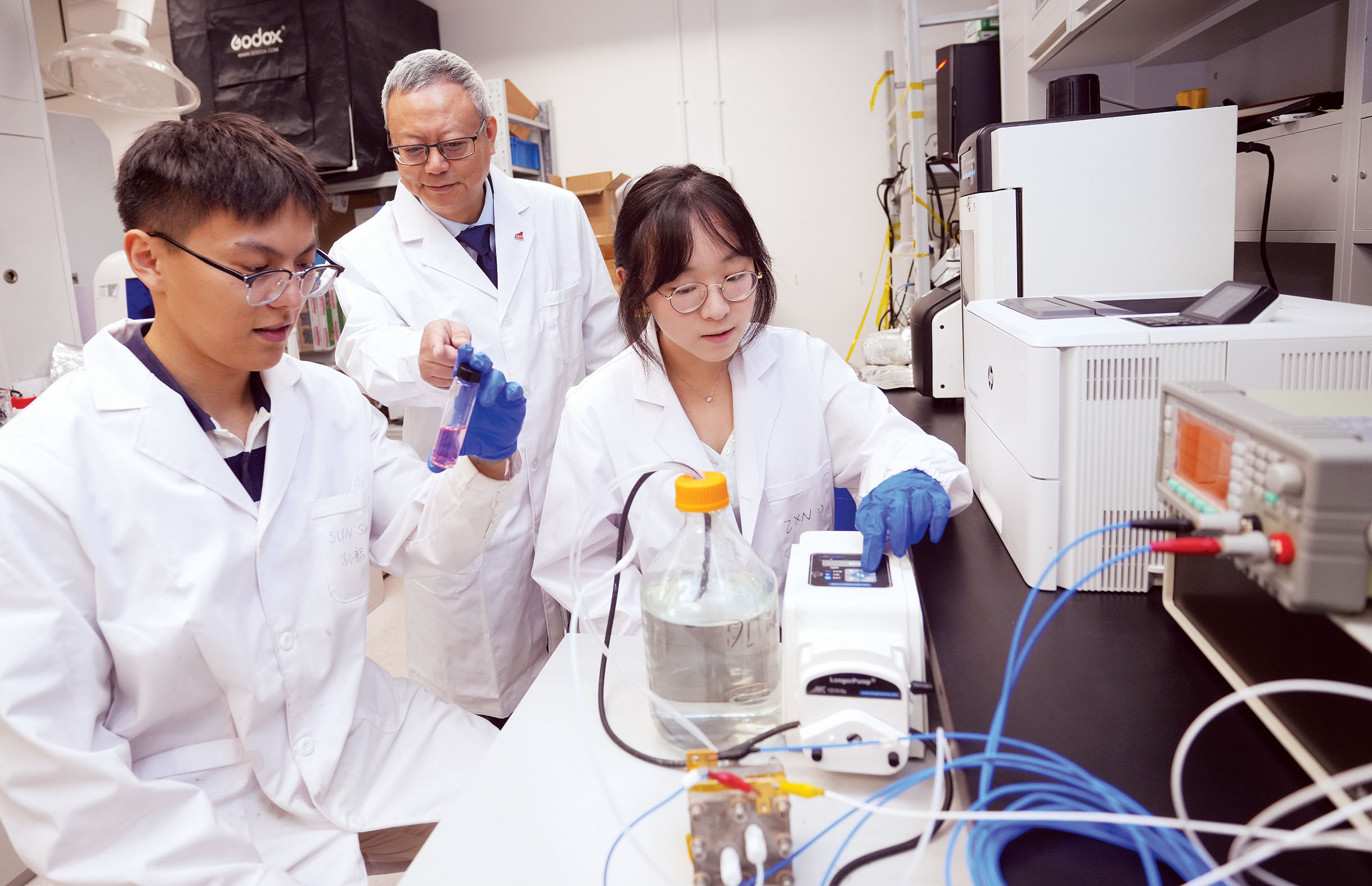
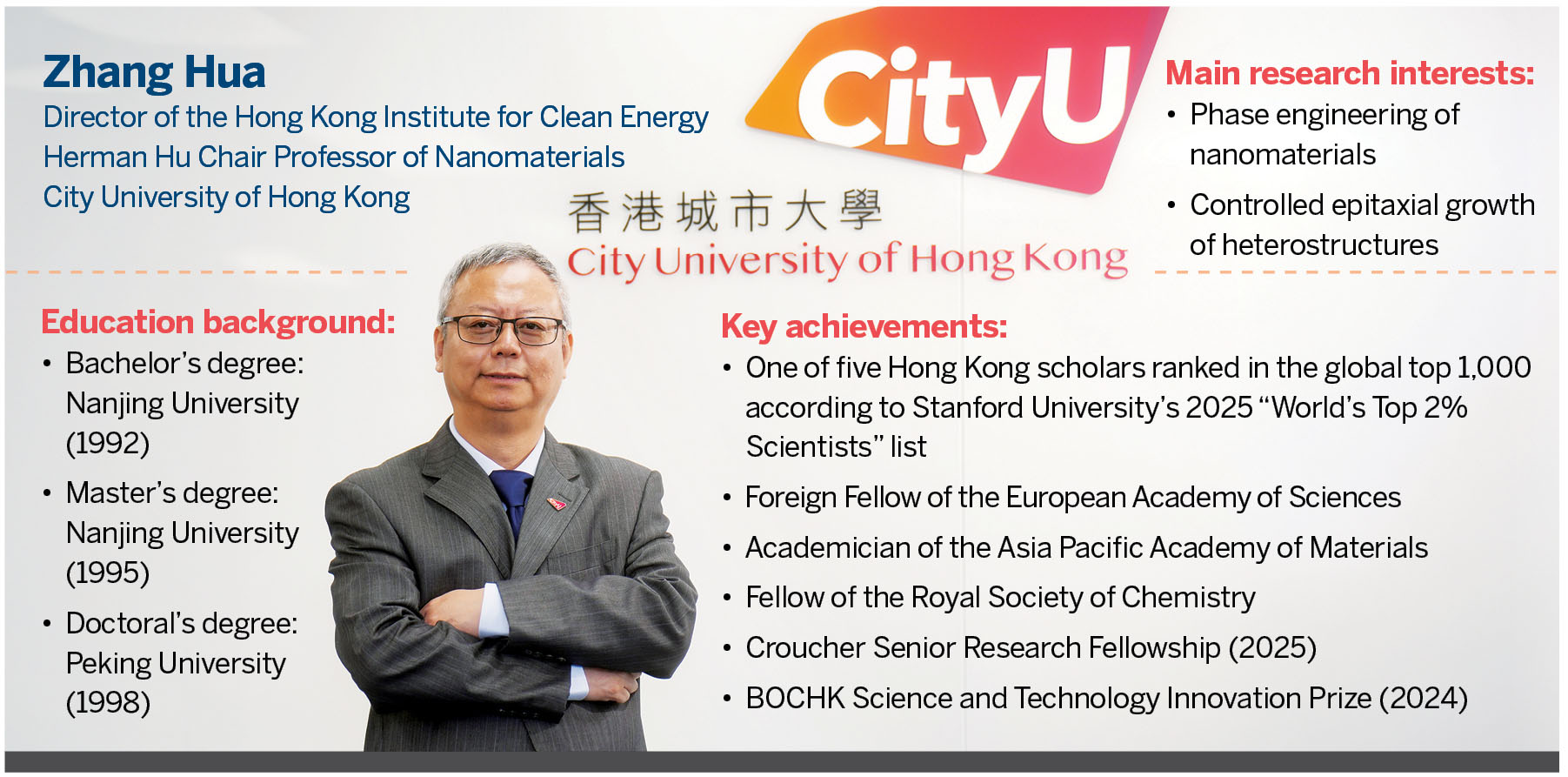
Having traversed numerous cities at home and abroad, renowned intellect Zhang Hua — one of five Hong Kong academics ranked among the world’s top 1,000 according to Stanford University’s 2025 “World’s Top Two Percent Scientists” list — has sunk his roots in Hong Kong, a vibrant hub where Chinese and Western cultures converge.
More than seven years into his stay in the city, he calls it a place that is “boundlessly rich in opportunities”.
Hailing from Jingdezhen in Jiangxi province — widely known as China’s “porcelain capital” — Zhang helms the Hong Kong Institute for Clean Energy at the City University of Hong Kong. During his time in the special administrative region, he has made several breakthroughs in the clean energy sector.
Rising oil prices, driven by geopolitical turbulence in the Middle East, have made clean energy more significant and commercially viable, he says. The sector has drawn strong global attention, particularly on the Chinese mainland.
Zhang’s team has secured a patent on synthesis methods for high-entropy alloy nanostructures that can contribute to developing low-cost, efficient and stable electrocatalysts with unconventional crystal phases, paving the way for large-scale industrial applications.
The researchers have also developed an electrocatalyst that significantly enhances hydrogen production through electrochemical water splitting at lower costs, offering substantial commercial potential for the clean energy industry. While clean energy cannot fully replace fossil fuels in the short term, Zhang believes it can complement them. Hydrogen-powered buses are running on Hong Kong streets, proving that scaling up clean energy solutions delivers immediate and significant environmental benefits.
Why choose HK
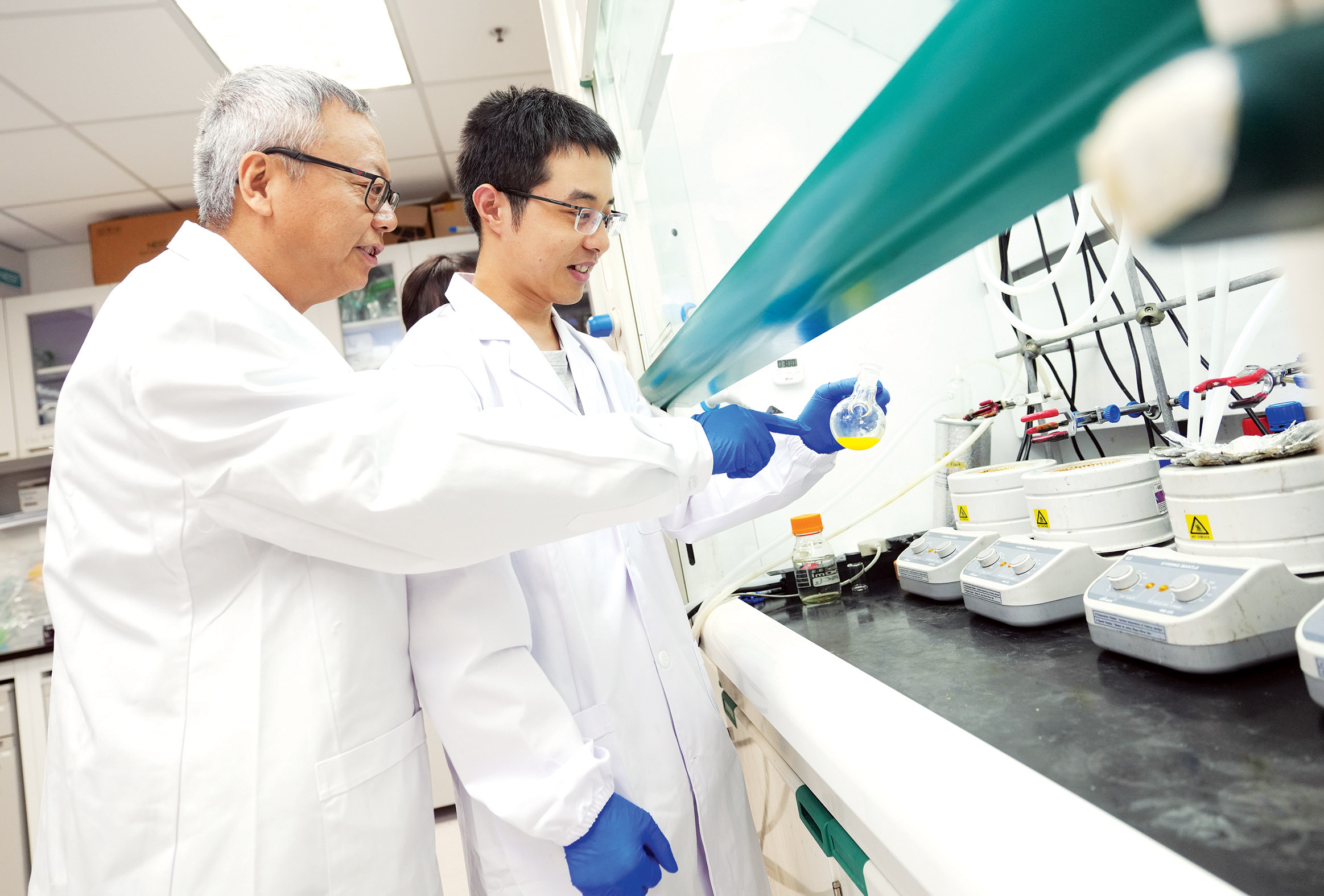
Having worked in US, Singapore and Europe, the nanomaterials expert says his decision to call Hong Kong his base is driven by the city’s international environment and close links to the mainland’s industrial supply chain.
Under the “one country, two systems” framework, Hong Kong serves as a global hub for companies turning scientific research into practical applications. It also offers a unique “dual-circulation” model for research and development, aligning with world standards while serving national strategic needs, says Zhang. “What impresses me most is Hong Kong’s efficiency and purity in research.”
As an international financial center, the SAR has well-established systems for intellectual property protection and the rule of law, giving it a significant edge in original innovation and talent attraction, he says. The city’s deep integration with the mainland and other cities of the Guangdong-Hong Kong-Macao Greater Bay Area allows it to commercialize original innovations across the boundary.
Conducting fundamental research in Hong Kong also helps scientists to benefit from the vast mainland market and the Greater Bay Area’s efficient commercialization ecosystem, says Zhang, citing the Hetao Shenzhen-Hong Kong Science and Technology Innovation Co-operation Zone — a major regional platform for innovation and entrepreneurship — as an example of how both cities can be better connected.
The HKSAR government, aligning the city with the nation’s 15th Five-Year Plan (2026-30), has offered significant policy support for innovation, particularly in the integration of industry, academia and research, to encourage original innovation and further commercialization.
Hong Kong has reserved space in the Hetao zone for university research, and his own team will conduct research into advanced materials there, says Zhang. “Ultimately, we hope to establish a company there to enable technology transfer, and then directly enter the Greater Bay Area and other regions on the mainland, as well as the global market,” he says. This will benefit Hong Kong, the Greater Bay Area, the mainland and the world.
Future vision
Hong Kong has invested significantly in science and technology research, with funding from the city’s Research, Academic and Industry Sectors One-plus Scheme (RAISe+), as well as from organizations such as the University Grants Committee. Such support, which provides research funding up to HK$100 million ($12.75 million), enables researchers to transform and commercialize their promising research results, says Zhang.
Zhang and his team have proposed a new concept of phase engineering of nanomaterials — an emerging research direction in materials science. By carefully controlling these structures at the atomic level, it can create materials with entirely new behaviors.
Using this methodology, the team has developed a material with superior performance and catalytic capability. Compared with conventional materials, it improves catalytic efficiency, reduces the use of precious metals, and brings down costs, making it highly viable for industrial applications.
ALSO READ: CityU's AI institute to drive innovation
Looking ahead, the researchers aim to integrate more artificial intelligence into scientific research design.
Asked about the key to staying innovative, Zhang stresses the importance of original research over chasing publication numbers.
On artificial intelligence, he says, although it excels in handling data and following formulae, it cannot replace the human ability to ask probing questions or propose brand-new ideas.
“AI can be a copilot for the work, but you should stay the one in control. It can be technology to help you work, but keep your own ideas at the center of everything you do,” he says.
The future belongs to young people and in order to grow, they should embrace challenges and not fear difficulties, Zhang says. “Everyone fails at some point in life.”
Contact the writer at atlasshao@chinadailyhk.com
