

Chinese research teams use digital tools to develop new era of movement
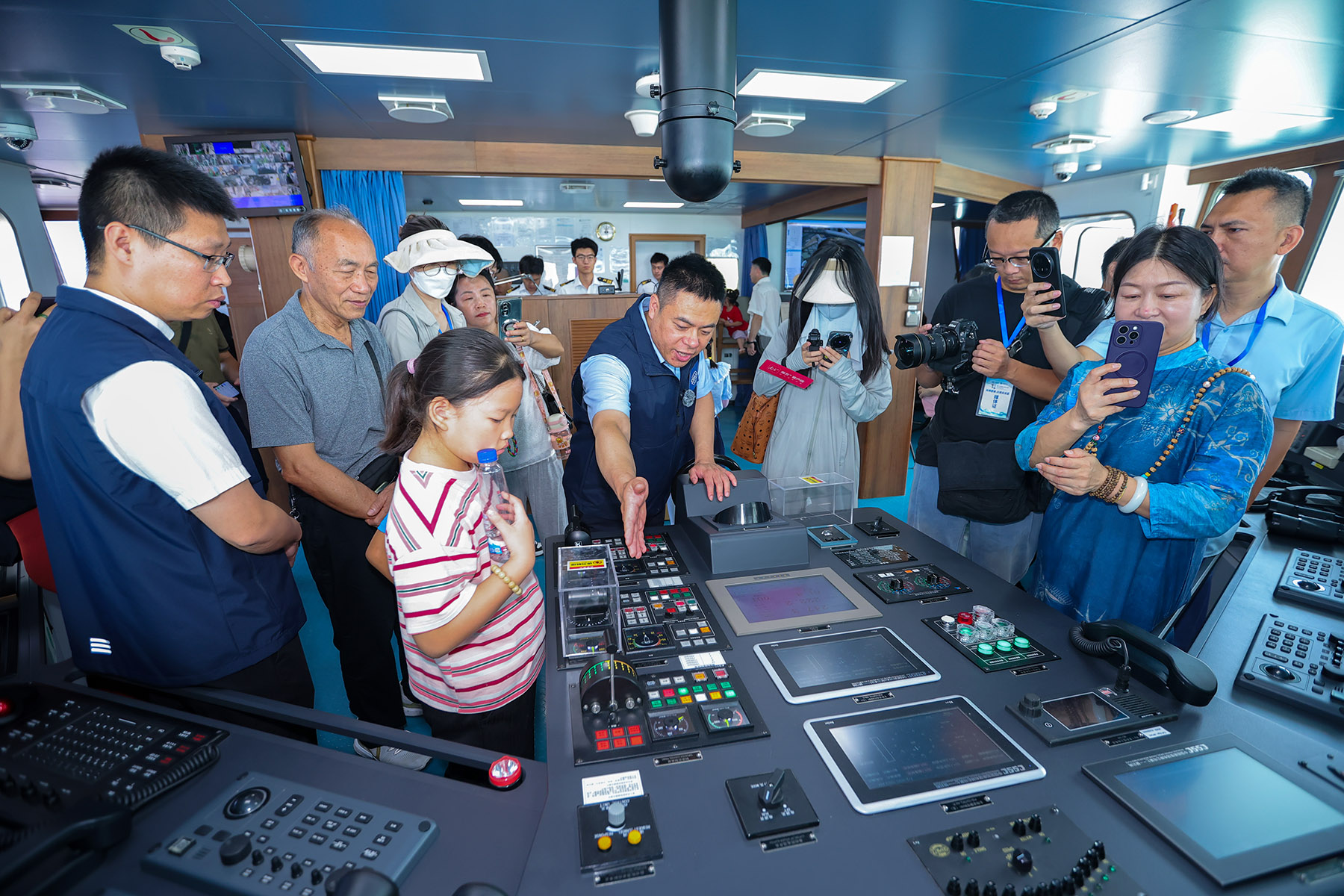
After decades of rapid infrastructure expansion, China is placing greater emphasis on making its vast transport network safer, more efficient and more intelligent through the application of digital technologies.
These developments, including those in the research stage and those already rolled out in the real world, are causing major operational shifts in how things are moved via land, sea and air.
From highways and ports to waterways and deep-sea equipment, researchers are working to solve how to better manage large-scale traffic flows, how to identify risks earlier, how to support safer navigation in complex waters, and how to make critical equipment more reliable and self-dependent.
Roads reading traffic
At the State Key Laboratory of Intelligent Transportation Systems in Beijing's Tongzhou district, researchers are exploring how roads can be made safer, more efficient and less congested.
By using sensing networks and cloud platforms, the researchers are able to enable roads themselves to become an active, responsive participant in the transport network. Via these sensors, roads can provide instant updates to connected vehicles and drivers informing them of accidents, traffic, weather conditions and detours.
"Road to vehicle coordination is not simply about connecting vehicles and roads," said Wang Lin, deputy director of the laboratory and director of the intelligent transport research center at the Ministry of Transport's highways research institute. "It is about changing the way people travel."
Wang said the goal is to make "vehicles understand roads, and roads remind vehicles", so that common bottlenecks in road transport can be mitigated and even avoided altogether.
"In the past, roads were mainly 'read' by people," Wang said. "Now, we are using machines and automated systems to read roads, so that vehicles, roads and cloud platforms can work together."
Another major factor in connecting roads and vehicles together is the reduction of risks caused by human error.
"Human factors are involved in about 95 percent of all traffic accidents," Wang said.
He gave the example of vehicle platooning — "The distance between vehicles may be reduced from the current level of around 200 meters to 20 meters or even 10 meters, which could greatly increase the capacity of a single lane," he said.
Despite China having built one of the world's largest road networks, congestion hot spots are an inevitability, so researchers are working on a shift from building roads to managing them better.
At the Tongzhou laboratory, researchers are testing out these intelligent transport systems to make them reliable enough for real-world use.
In a 250-meter tunnel, rain can be made to fall at the push of a button, while fog, low visibility and water-covered road surfaces can be repeatedly recreated.
Li Zhenhua, a senior engineer at the laboratory, said the facility allows researchers to bring dangerous weather conditions indoors, instead of waiting for them to appear on real roads.
"Extreme weather on real roads is difficult to predict and even more difficult to test safely," Li said. "Here, we can reproduce the same scenario again and again, compare the data and improve the system step by step."
An eight-degree-of-freedom traffic safety simulator with a 360-degree panoramic projection system, surround sound and a motion platform, is used to recreate different vehicle types, roads and weather conditions, including rain, snow, fog and wind. This system allows the researchers to test driving behavior and intelligent transport technologies without exposing vehicles or people to real danger.
The lab also has an automated driving test track covering road scenarios including expressways, urban roads, national and provincial highways, and rural roads. It includes intersections, ramps, toll stations, bus stops and a simulated tunnel, supporting the research, evaluation and demonstration of automated driving technologies.
Predicting the way of water
In the port city of Tianjin, researchers are applying a similar logic to water transport by making risks visible before they potentially turn into accidents.
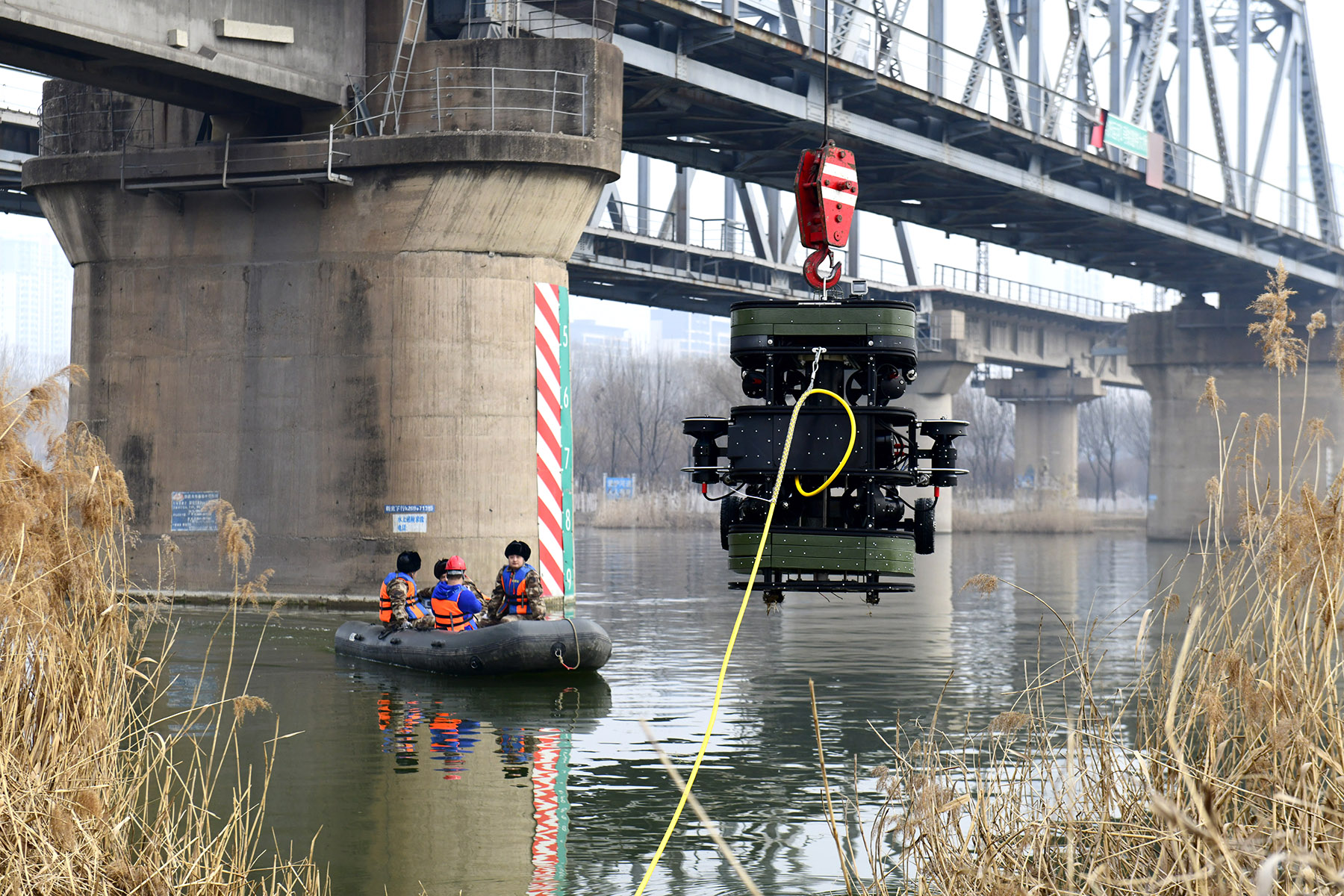
At the Ministry of Transport's Tianjin Research Institute for Water Transport Engineering, a huge wave flume stretches 450 meters long and 5 meters wide. With a water depth of 8 to 12 meters, the flume can produce waves as high as 3.5 meters, simulating some of the most extreme sea conditions.
The flume is used to study coastal engineering disaster prevention, sediment transport, wave-structure interaction and the dynamic response of large floating structures.
Chen Hanbao, chief scientist at the institute, said the flume is useful because coastal engineering projects can develop unexpected problems that can be avoided with wave impact testing.
"Large-scale tests allow researchers to better understand how ports, breakwaters and offshore structures behave under real wave conditions," Chen said.
The same facility also supports the development of intelligent dredging robots.
In the past, dredging often meant removing sediment after it had already accumulated. With a better understanding of tides, currents and sediment transport, precise preventive measures can be enacted.
Dangerous goods
Another lab at the Tianjin institute is looking into ways that the transport of dangerous goods can be handled more safely.
China transports more than 1.4 billion metric tons of dangerous goods through its waterways each year, accounting for about 40 percent of the country's total dangerous goods transport volume.
While they are essential for industrial production and economic activities, these goods also bring risks, especially when cargo is falsely reported, concealed or transported under unsuitable conditions.
According to Lu Linlin, an associate researcher on the institute's safety team, the lab has built a full-process technical support system covering material properties, transport conditions, risk warning and emergency response.
Researchers can simulate temperatures ranging from — 40 C to 80 C to test the strength and sealing performance of dangerous goods packaging. A handheld identification device can determine the identity of a liquid within seconds, helping inspectors screen risks earlier.
For port safety, the key is not to find out what a dangerous material is after something goes wrong. Rather, it is to know before the cargo enters the transport chain what it is, whether it can be transported, how it should be packed and under what conditions it may become unsafe.
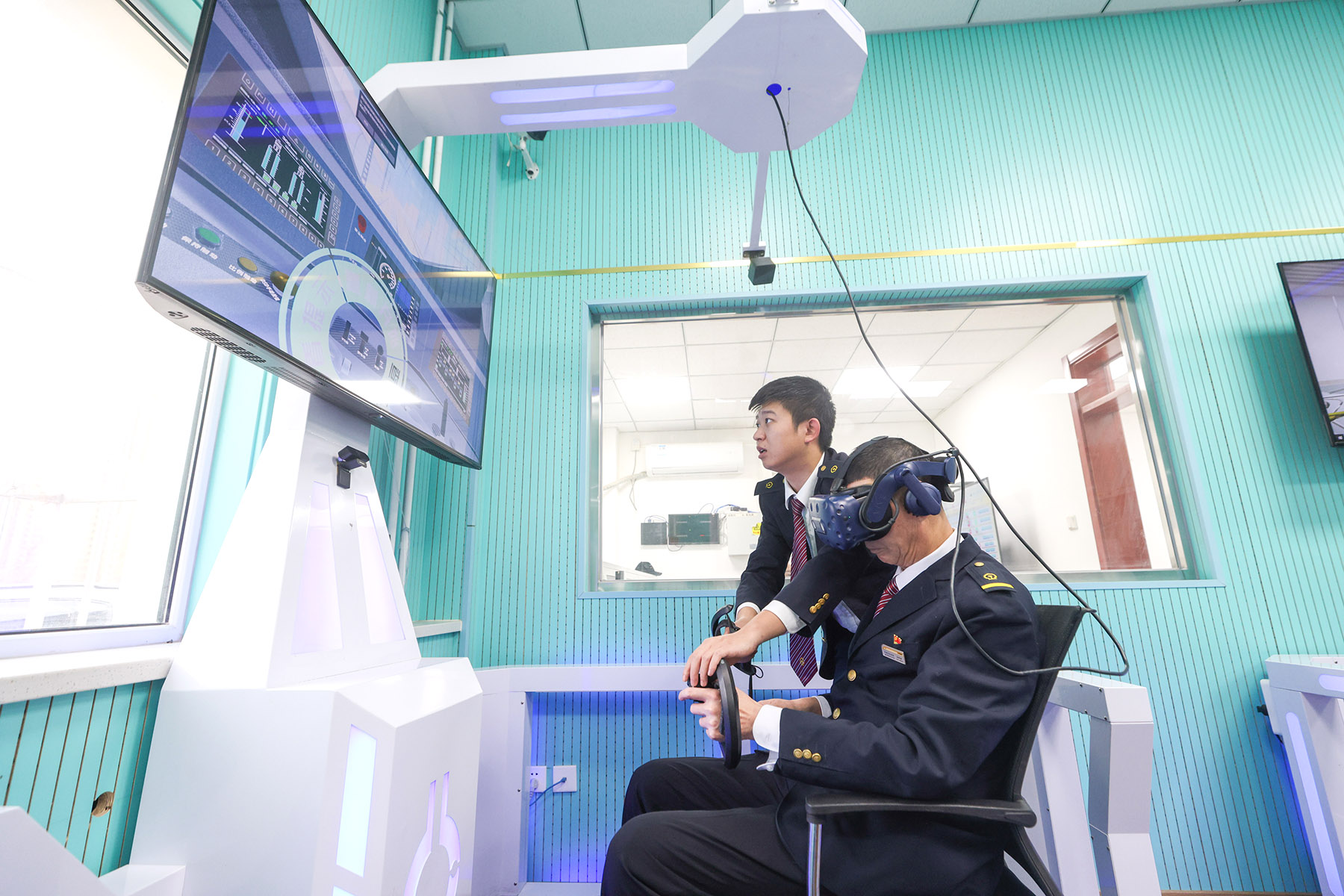
At the Tianjin institute's navigation safety lab, data on adjacent Bohai Bay's wind, waves, currents and tides are displayed in real time. An intelligent platform supports safe port entry for fully loaded 400,000-ton vessels, night navigation for 200,000-ton vessels and emergency night entry for liquefied natural gas carriers.
Smart technologies are steering waterway management from experience-based judgment to data-driven coordination.
Ship to shore
At Dalian Maritime University in Dalian, Liaoning province, this focus has extended from ports and waterways to intelligent shipping and deep-sea equipment.
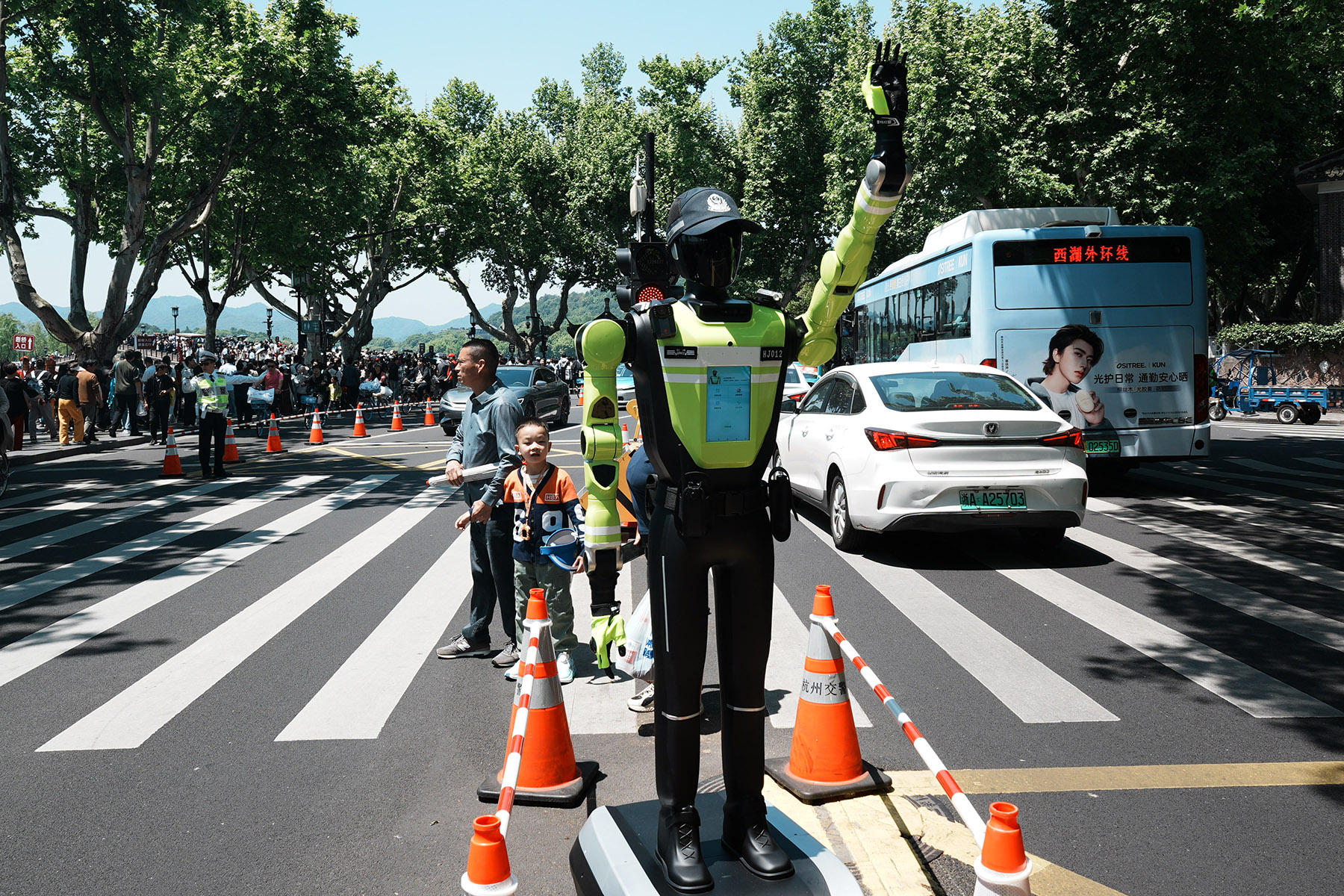
The university and China COSCO Shipping have co-developed the Xin Hong Zhuan, the world's first intelligent ship that integrates remote control, autonomous sailing and teaching practice.
In June last year, the vessel embarked on a landmark 4,000-nautical-mile mission to test its smart systems, as well as the university's shore-based digital platform.
The platform serves as a "shore-based cockpit" for intelligent vessels. In open waters, ships can rely more on autonomous systems; in narrow waterways, bad weather or emergencies, shore-based operators can provide remote support or take control.
Yin Yong, a professor at Dalian Maritime University's Navigation College, said the system can give captains real-time advice on speed and course, while also supporting autonomous navigation in open seas.
"It is not just a system on shore," Yin said. "The laboratory has one set, and the vessel has one set as well. The two sides can work together. The system can advise the captain what speed to take, what course to follow and, when the ship reaches the open ocean, support autonomous navigation."
Yin said intelligent shipping is not simply about installing sensors on vessels or removing crews overnight. Instead, it is about building coordination among ships, shore-based platforms, AI systems and human operators.
ALSO READ: AI set to transform high-speed rail, adviser says
In deeper waters, Chinese researchers are also pushing forward with domestically developed deep-sea equipment. A full-ocean-depth winch system developed by a team led by Li Wenhua, a professor at Dalian Maritime University, is providing a "lifeline" connecting scientific research vessels with deep-sea equipment.
"Lowering equipment into the deep sea is like flying a kite at a depth of 10,000 meters," Li said. The cable must be light, strong, stable and orderly, while also transmitting power, control signals and images, and safely retrieving samples.
The technologies seen in these laboratories are not confined to research papers or demonstration screens. Many have already been applied in highways, ports, waterways, ship operations and deep-sea exploration, offering practical solutions to real challenges facing China's transport system.
As AI, intelligent sensing, digital platforms and advanced equipment move into real transport scenarios, China's transport development is entering a stage focused on extending infrastructure networks and improving the intelligence, safety and resilience of the entire system.
Contact the writers at luowangshu@chinadaily.com.cn
