

The humanities economics sub-forum of the Forum on Building up China’s Cultural Strength 2026 held recently in Shenzhen set out a simple proposition: Cultural soft power has to convert into economic hard support, or it stays decorative. The conversion factor, however, is not the technology bolted onto the culture. It is the depth of the humanities the technology is asked to amplify. For Hong Kong, mandated in the 15th Five-Year Plan (2026-30) to lead East-meets-West cultural exchange, the smart move is a contrarian doubling down on what machines cannot read for us — history, languages, living philosophy, ethics, and craft traditions.
 The city’s instinct so far has been to layer artificial intelligence onto everything. The 2026-27 Budget allocated HK$50 million ($6.38 million) for public AI training, HK$2 billion for school AI, and introduced 27 new undergraduate STEAM (science, technology, engineering, the arts, and mathematics) programs spanning AI, creative industries and data science across University Grants Committee-funded universities. By June 2025, 82 percent of primary and secondary schools had adopted AI modules under the UBTECH-University of Hong Kong (HKU) partnership, with a 95 percent target. None of this is wrong. But the hype, that cultural professionals become valuable by mastering tools that are themselves rapidly commoditizing, is backward. The graduates who will define the next decade are not those who prompt fastest, but those who decide what is worth prompting about.
The market is already saying so. Columbia Business School research found participants valued art labeled AI-generated 62 percent lower than identical human work; the same study found the presence of AI pieces actually raised the perceived value of human-made art shown alongside them. UNESCO projects revenue losses of up to 24 percent for music creators and 21 percent for audiovisual creators by 2028. Yet the same forces compressing prices for generic output push up the premium on human work: The World Economic Forum reports 63 percent of employers now call the skills gap their biggest barrier to transformation. The next growth tranche for Hong Kong’s cultural industries depends on authenticity — Cantonese literacy, Chinese cultural traditions, and bilingual journalistic and pop-culture archives. None of that can be taught by a chatbot.
The most encouraging institutional moves already point this way. HKU’s School of Future Media, established in October 2025, offers Asia’s first Master of Arts in AI Filmmaking, but its premise is that journalism and storytelling come first and AI is the tool. The Hong Kong Polytechnic University’s Digital Art Curation Talents Training Program, the first Hong Kong tertiary initiative backed by the China National Arts Fund 2025, takes the same posture: Curation is the discipline, digital is the modifier. These are the right instincts, and the under-resourced ones.
Hong Kong needs to stop sidelining them and build around them. When the next five-year plan is drafted, what will matter is not how many AI modules the city ran, but whose stories the rest of the world is still listening to
The task is to make those instincts the city’s default, not its exceptions. It takes three moves. First, ringfence a substantial share of the HK$2 billion school AI budget for humanities-integrated pedagogy, not hardware: Chinese literature taught with AI as an analytical companion, history projects built on generative-source verification, ethics threaded through every digital module. The UBTECH-HKU Greater Bay Area AI School Alliance, already in 82 percent of local schools, is a major delivery vehicle.
Second, mandate a cultural-literacy spine in every UGC-funded AI and STEAM program. The 27 new undergraduate offerings should carry a substantive humanities component co-designed with literature, history and philosophy faculties, not bolted on as a general-education credit.
Third, build an Asia-wide quality assurance standard for AI in cultural education. With five of its eight UGC-funded universities in the world’s top 100, the only city globally to achieve this, and a bilingual common-law system, Hong Kong is the only credible candidate to set the Asian equivalent of frameworks like the International Society for Technology in Education Seal.
None of these moves requires new money. Each redirects resources the city has already committed. The question is priority: Do humanities sit at the center of Hong Kong’s cultural strategy, or at the margin of a tech-first agenda?
The forum framed the challenge. The budget paid for it. But the resource that will decide the next decade still gets treated as optional — the humanities. Hong Kong needs to stop sidelining them and build around them. When the next five-year plan is drafted, what will matter is not how many AI modules the city ran, but whose stories the rest of the world is still listening to.
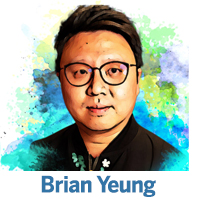
The author is a co-founder of Brandstorm Communications, a consultancy specializing in education, philanthropy, arts and culture, and innovation and technology.
The views do not necessarily reflect those of China Daily.
