

Financial chief outlines initiatives to attract overseas funds, renminbi cash
The Hong Kong Special Administrative Region government is considering expanding the scope of renminbi-denominated financial products and deposit services, as part of efforts to strengthen the city’s role as the world’s leading offshore renminbi hub.
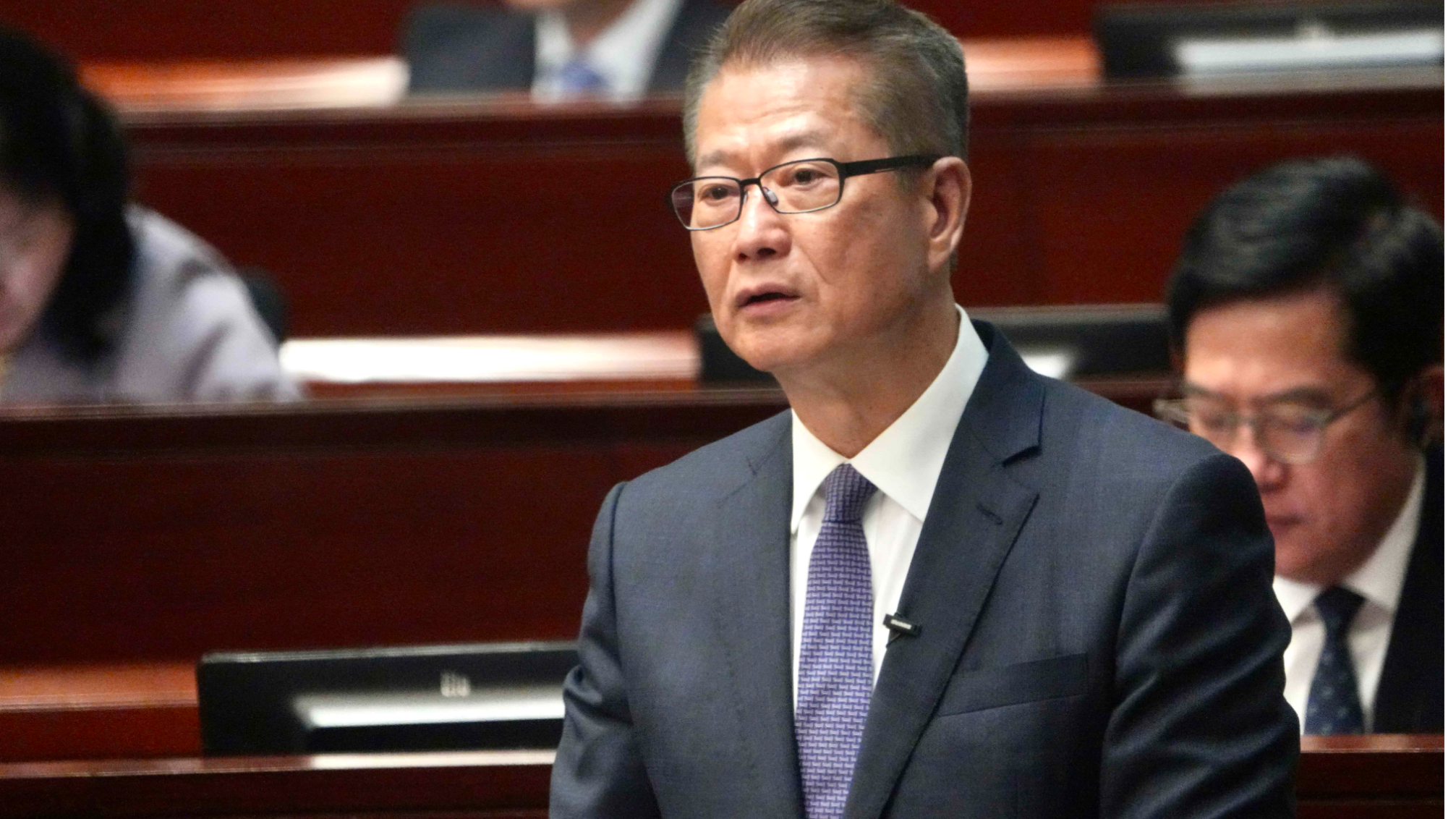
Financial Secretary Paul Chan Mo-po made the remarks on Monday at a meeting of the Legislative Council’s Financial Affairs Panel, focusing on Hong Kong’s latest overall economic situation and short-term outlook.
He said the initiative seeks to encourage overseas enterprises and investors to consider depositing their renminbi cash in Hong Kong.
Chan said these funds also need to “be held in custody” — referring to money or assets safeguarded by a third-party financial institution. Such services have traditionally been handled by European and American financial institutions.
“But now, considering geopolitical and sanctions risks, there is a need for enterprises and investors to reduce risk,” he said.
ALSO READ: Central government issues first sovereign green bond in HKSAR
He added that, in addition to deposits, market participants are considering developing various derivative instruments and using these funds as collateral.
Chan also briefed the meeting about the government’s proposal for establishing an offshore renminbi venture capital fund under the Hong Kong Investment Corp (HKIC), which he previewed in his Sunday blog.
The fund will focus on supporting mainland technology firms going global, and Chinese entrepreneurs developing cutting-edge technologies worldwide.
These HKIC-led investments can revitalize offshore renminbi funds, he said, adding that the offshore market offers advantages such as liquidity and free convertibility.
Since its founding in 2022, the HKIC, with assets of $62 billion, has invested in over 200 projects, spanning hard technology, life sciences, new energy, and green technology. For every HK$1 (12.8 US cents) invested by the HKIC, it can attract HK$8 in long-term market funds, Chan said.
He also highlighted the further revitalization of Hong Kong’s equity and property markets in 2026.
READ MORE: Chan: HKIC trying to bring entrepreneurs with HK DNA to global stage
In the stock market, the average daily turnover of share trading in the first four months of 2026 has reached HK$270 billion, higher than the HK$250 billion for the entire last year. Funds raised through initial public offerings in the first four months also increased sixfold year-on-year to HK$151.4 billion.
Chan said that more funds from the Middle East and Europe, especially those in wealth management and family offices, are expected to increase their investments in Hong Kong.
Regarding the property market, Chan reported increases in both transaction volume and prices across buying, selling, and leasing activities. The retail shop leasing segment also has stabilized, as rent reductions significantly narrowed compared with last year, and rent levels have rebounded to those seen at the end of 2025.
On the real economy, Chan said the SAR government is closely monitoring the effects of rising energy prices and changes in interest rates on local inflation.
READ MORE: Multiple HKIC-invested firms consider Hong Kong IPOs
While Hong Kong’s energy supply remains stable, he warned that “energy price increases are inevitable because of the Middle East crisis”, and the government will continue adjusting its response policies as needed.
He said that the current market interest rates in Hong Kong are at a suitable reference level, which are expected to be sustained for some time.
Contact the writers at oswald@chinadailyhk.com
