

Humans should maintain independent thinking and make rational use of digital technology, while promoting human-artificial intelligence collaboration to create high-quality Chinese cultural content, experts and industry leaders said.
They shared their insights at the Forum on Enhancing the Cultural Strength of the Greater Bay Area in the Age of Digital Intelligence in Shenzhen on Friday, which is one of the sub-forums of the Forum on Building up China’s Cultural Strength 2026.
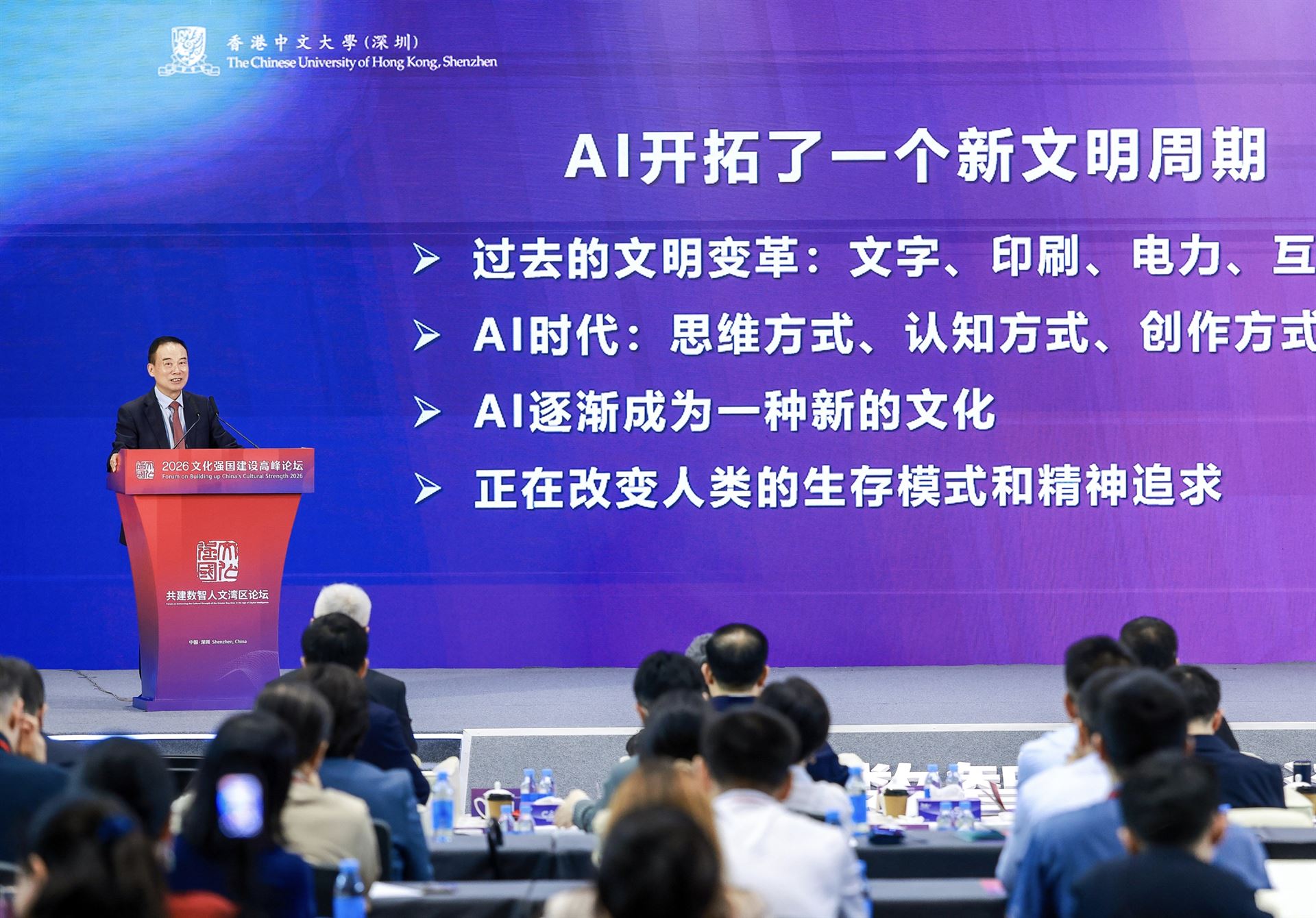
AI is far more than a cutting-edge technology, but has evolved into a new cultural form shaping the digital intelligent era, said Xu Yangsheng, president of the Chinese University of Hong Kong, Shenzhen.
“Rather than being merely a technological tool, AI blends new ways of thinking, behavioral norms and value judgments,” he said.
“It is quietly changing people’s mindset, lifestyle, and even social values. It has blurred the line between humans and machines, opened the door for public creativity, and changed how people socialize and connect with one another.”
ALSO READ: Passing on cultural heritage and tradition, pursuing cultural innovation and creativity
Xu noted that young people stand at the heart of the AI cultural revolution, acting as both main participants and trailblazers of the era of change.
“Youths have led every cultural and technological shift and the AI age is no exception,” he said. “Free from rigid old mindsets, young minds adapt faster to AI.”
Xu urged the younger generation to master AI tools, maintain independent thinking, stick to moral bottom lines, and embrace the digital era with reason, responsibility, and cultural sensitivity.
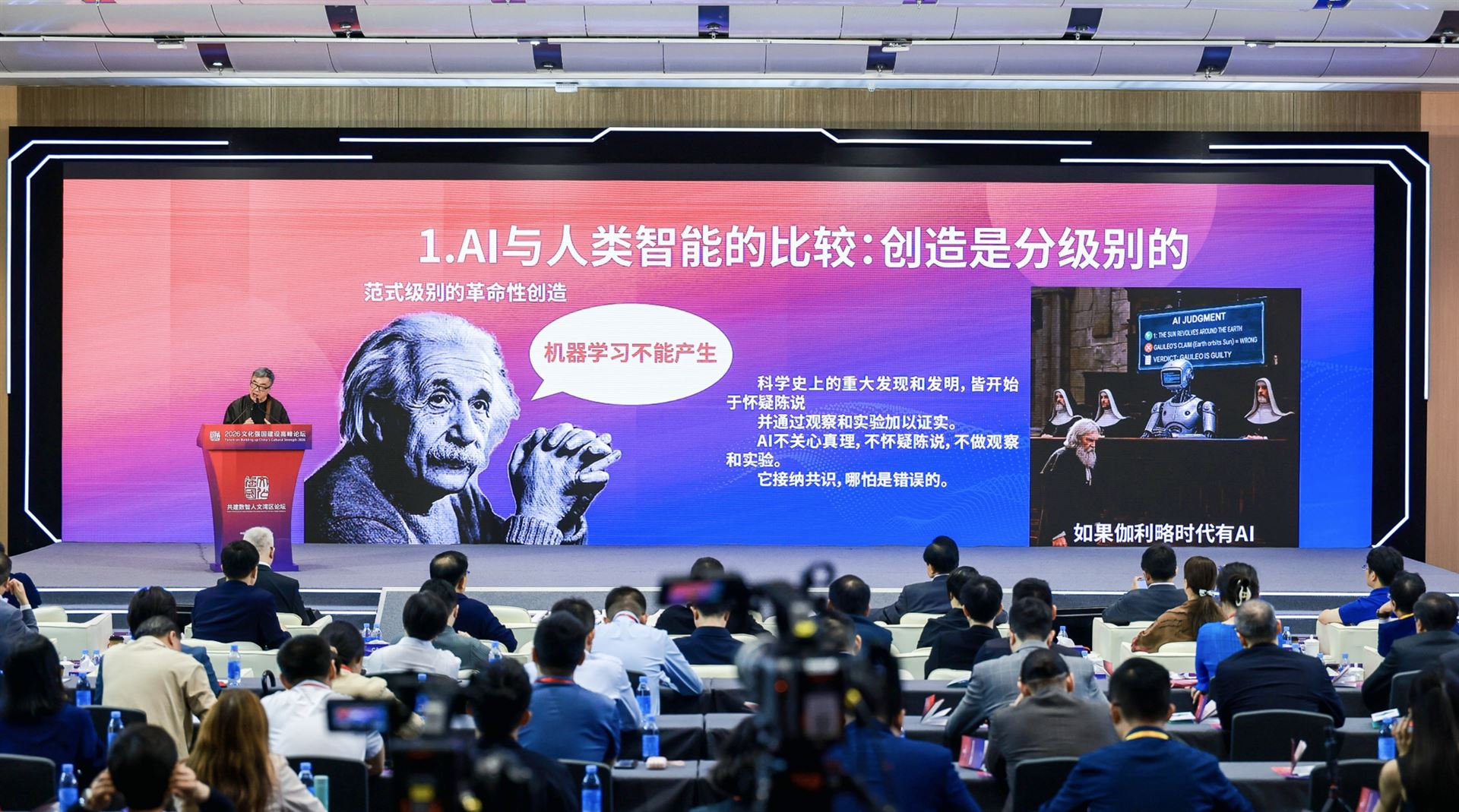
Zhou Guoping, a research fellow at the Institute of Philosophy of the Chinese Academy of Social Sciences in Beijing, stressed that AI can never take the place of real human value, despite its swift technological advances.
Noting that AI is a tool running on data and algorithms, Zhou said it can handle knowledge storage, calculation, and routine work more efficiently, “but it has no real life, consciousness, emotions or moral sense”.
“It can only simulate human feelings and follow existing rules, rather than thinking independently or pursuing spiritual truth.”
Zhou stressed that what makes humans unique is creativity, imagination, inner feelings, empathy, and the ability to question and innovate. Instead of relying blindly on AI, people should use it as a helper while holding fast to humanistic warmth, moral judgment and spiritual pursuit that machines can never replicate, he said.
READ MORE: AI brings new changes in cinema
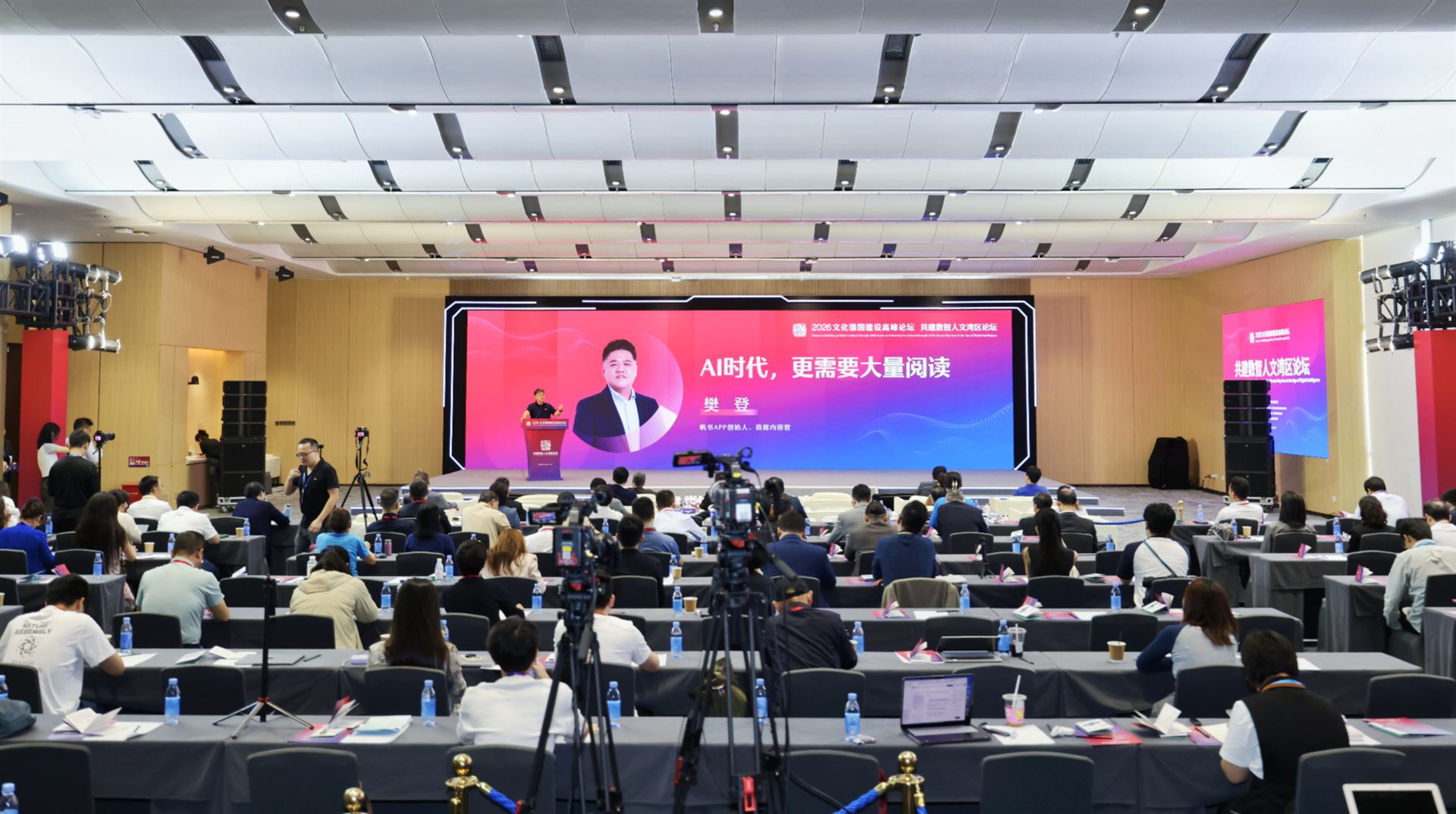
Fan Deng, founder and chief content officer of Fanshu App, said that he believes traditional reading, especially physical books, matters more than ever amid the AI boom.
He explained that printed books offer a unique sense of control that digital reading cannot match. They help readers jump out of cognitive blind spots that AI can never uncover.
“Information absorption from AI recaps and audio book talks is merely 10 percent of the speed of reading printed text. People who read paper books can gain knowledge far more efficiently,” he said.
Fan urged the public to keep reading printed books and maintain independent thinking in the intelligent age.
Liu Moxian, senior researcher of Tencent Research Institute in Shenzhen, highlighted human-AI collaboration as the key to producing high-quality Chinese cultural content.
Generative AI significantly cuts costs and time for professional creators, turning imaginative ideas into polished works efficiently. It also lowers creation thresholds, enabling ordinary people to turn over 80 percent of their ideas into fine productions, he noted.
“New business models built on token consumption and AI agent adoption have become viable,” he said. “More input in human creativity and computing power can generate higher-quality content. Creators can see their value premium multiply even hundreds of times, laying a solid foundation for the sustainable development of the industry.”
Contact the writer at sally@chinadailyhk.com
