

Young people's efforts to learn each other's tongues a testament to warm friendship, shared futures
Yi, er, san, si, wu, liu, qi, Wo de li wu zai zhe li.
A jumble of strange sounds foreign to millions of Anastasia Prytkova's Russian compatriots slip off her tongue as effortlessly as if she had been uttering them since she was a baby. Throw in a delightful melody, and suddenly the Chinese language does not seem as intimidating and as difficult as it is usually cracked up to be.
What she speaks means "One, two, three, four, five, six, seven, my gift is here."
And what a gift this is, one that has put ninth-grader Anastasia from Novosibirsk, Russia, on a path that is likely to shape her life.
For the past three years she has been studying Mandarin online with a Russian teacher, cultivating her fascination with a country she has so far had no physical contact with.
READ MORE: Education seen as key bridge in China-Russia relations
"My favorite food is kung pao chicken," she said in Chinese. The dish is a favorite in Sichuan province, the home of spicy food, and is a place she dreams of visiting. Seeing the Great Wall and the Terracotta Warriors is also on her wish list, but for now, there is still plenty of Chinese learning to do.
Anastasia is aware of the challenge ahead, even as she senses the rich rewards that await her. Her aim is to become a transportation engineer and to pursue a master's degree at a Chinese university.
Her mother, Oksana Prytkova, views China as the ideal training ground for the skills Anastasia wants to master. Pointing to her daughter's passion for robotics and programming, she said: "In these disciplines it makes sense to study Chinese, because there is a lot worth learning in China."
Great enthusiasm
Tens of thousands of young Russians share that sentiment, one that is reciprocated in China, where many young people are increasingly drawn to learning Russian, seeing the benefits it offers.
In Anastasia's hometown, the Confucius Institute at Novosibirsk State Technical University is at the forefront of promoting Chinese language and culture. The institute, established in 2007 in partnership with Dalian University of Foreign Languages in Liaoning province, is stepping up its efforts to reshape how Mandarin is taught to the city's young people.
It offers a wide range of learning methods, from large lectures to one-on-one tutoring led by a mix of Russian and Chinese staff. This year and the next have been designated as the China-Russia Years of Education. In that context, the importance of these teachers and what they do has never been clearer.
Igor Khripunov, who has directed the institute since 2013, said collaboration in education is the bedrock of the two countries' partnership.
"Over the next two years I foresee a profound acceleration in such collaboration," Khripunov said. "This will do much more than catalyze our collaboration on academics, language and talent development. It will lay a solid foundation for a new generation of professionals equipped to meet the evolving needs of our countries' partnership."
The teaching of Mandarin and the way it is offered have improved markedly in Novosibirsk, and the number of those studying the language has increased in each of the past three years, he said.
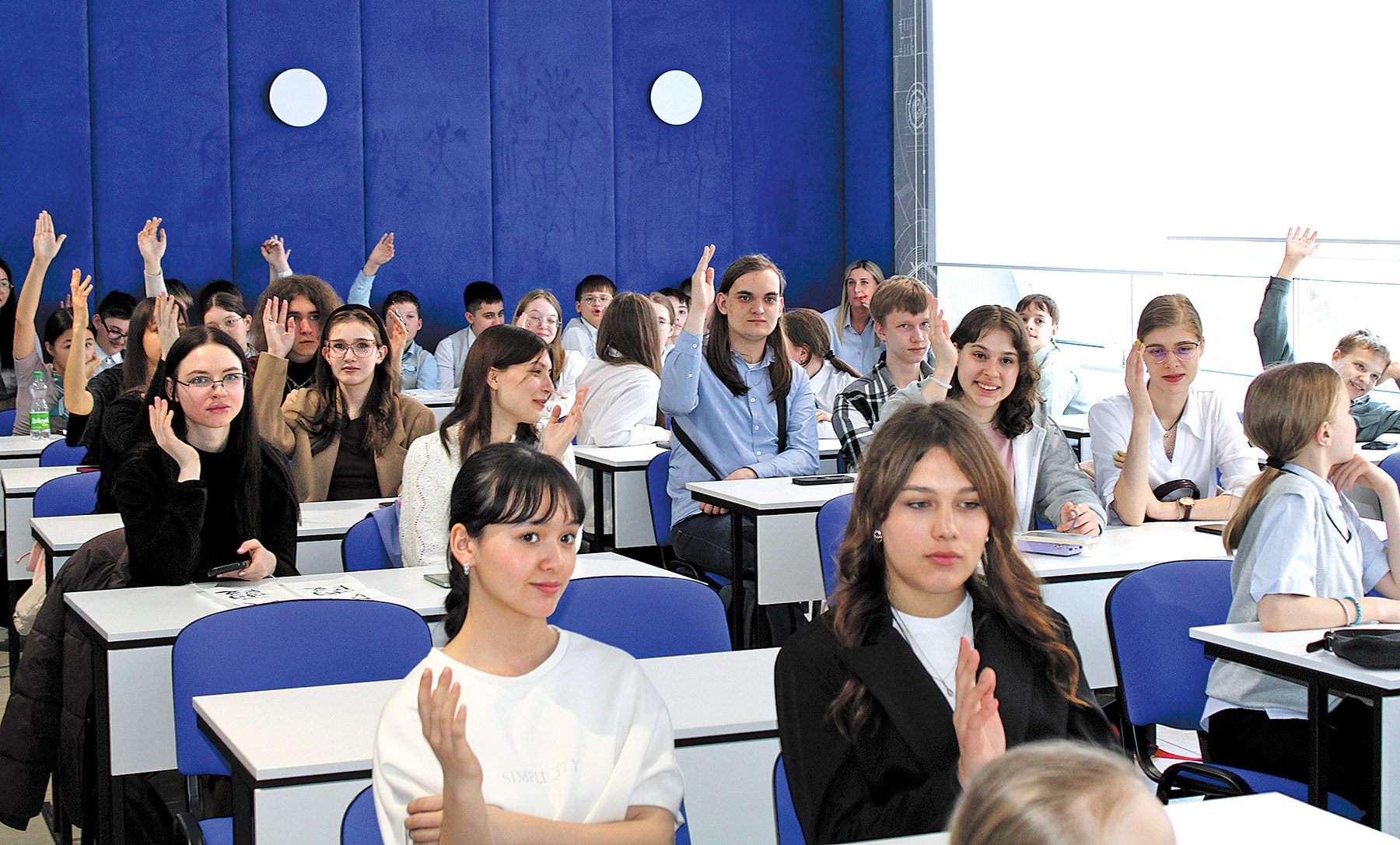
"In many schools, Mandarin is now included in the curriculum as a second language and is being included in a state exam program. An increasing number of schoolchildren are taking part in the annual All-Russian Chinese Language Olympiad," he said.
Yulia Shchepina, a Mandarin instructor at the Confucius Institute, who has eight years' classroom experience, said foreign-language learning for children is less about rigid memorization and more about visual storytelling.
She tells of a lively fourth-grade class of 9 and 10-year-olds who gasped collectively when they opened their textbooks to see a dense sea of Chinese characters. Many of them exclaimed, "This is impossible".
Seven months later the same children stood up to introduce themselves in Chinese, rattling off details about their families, hobbies and favorite colors.
Among them, three came to China to further their language studies. An ultimate test of their fluency came during a trip to the Palace Museum in Beijing, also known as the Forbidden City, when they approached local Chinese children and began chatting to them, and were understood perfectly.
They returned to Novosibirsk with even more passion for the language, Shchepina said.
Pop culture is also an important motivation for many teenage students who want to play Chinese video games and understand hit dramas and music in the original language.
Travel, Shchepina said, deepens this engagement, with family holidays to Asia becoming increasingly popular.
As Mandarin clubs sprout up in local schools, learning the language has evolved into a shared enthusiasm in which students inspire one another.
"Modern children have a clear vision of what they want to achieve. They are incredibly purpose driven," Shchepina said.
Collaboration continues
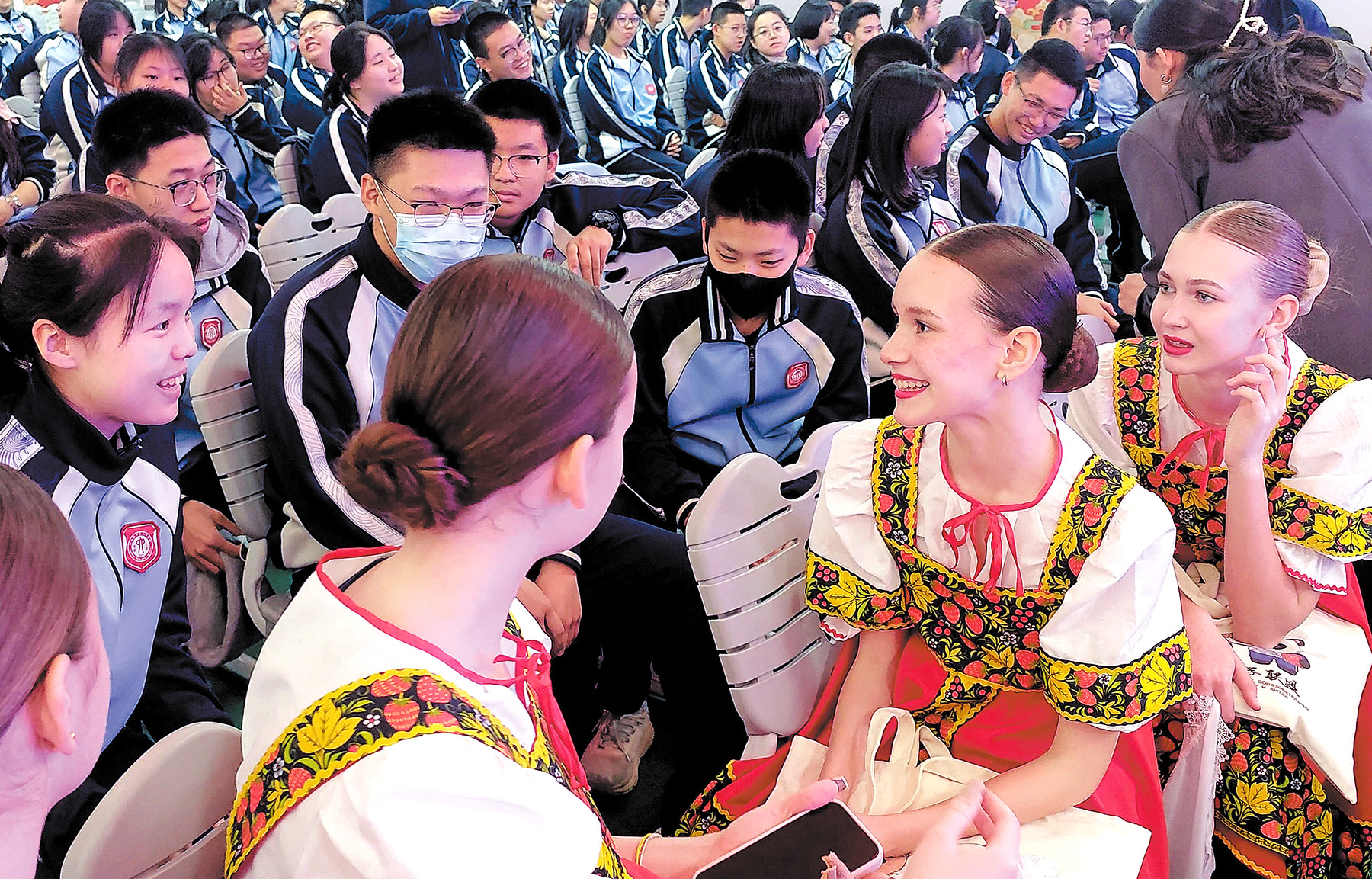
That drive is not the sole preserve of youngsters in Russia. Just as young people in Novosibirsk are both frustrated and charmed by the complexity of Chinese characters, their counterparts in China are delighting in the beauty of the Cyrillic script that helps them understand the language of Leo Tolstoy.
One such youngster is Shen Yu, a first-year student in the advanced Russian program at Harbin No 6 High School in Heilongjiang province. Her father also studied Russian in his youth, filling the family home with Cyrillic books. For Shen, learning Russian started as a daunting challenge of declensions and tongue twisters.
The study is punishing, but the payoffs are astronomical, she said."Whenever I can fluently express a complete thought, or understand a Russian news broadcast or a song without relying on a translation, the sense of accomplishment is overwhelming."
While learning Russian with native-speaking educators every Friday at her high school, she is also developing a profound kinship with her Russian counterparts.
"They face exactly the same academic pressures that we do, with the same stress over exams, but they also have the same love for video games and music," she said.
Harbin No 6 High School has a rich history of teaching Russian that goes back more than 80 years, and it hosts the Chinese secretariat of the Association of Sino-Russian Middle Schools. The association was initiated by the school eight years ago, aiming to advance educational exchanges and collaboration at the secondary level and cultivate talent, with an emphasis on biculturalism.
Wu Xia, principal of the school, said the association had 30 schools as members when it was established. It now has 145, with 50 of them in China and 95 in Russia.
The association operates as a high-level, institutionalized dialogue platform, with annual meetings in both countries attracting thousands of educators who discuss collaboration in secondary education.
It also organizes training courses for Chinese educators who teach Russian, and Russian educators who teach Mandarin. More than 700 Chinese teachers have benefited from the courses.
Stewards of tomorrow
Fu Zhaoxia, a Russian-language instructor who has taught at Harbin No 6 High School for 34 years, said the expertise of Russian academics has helped her transform her classes, which were once top heavy with rigid rote learning, into spaces of vibrant, real-life communication.
The alliance has implemented more than 30 cultural initiatives, including youth art festivals, paper-cutting contests and a cross-border postcard exchange, engaging more than 4,000 students. A program called Air Classroom delivers Mandarin instruction to more than 500 students in 15 Russian regions.
"By taking part in these activities our young people break down the initial barriers of language and culture," Wu said. "It teaches them to respect differences and embrace a global vision. This is where genuine friendship takes root. Education is the bond, but friendship is the core."
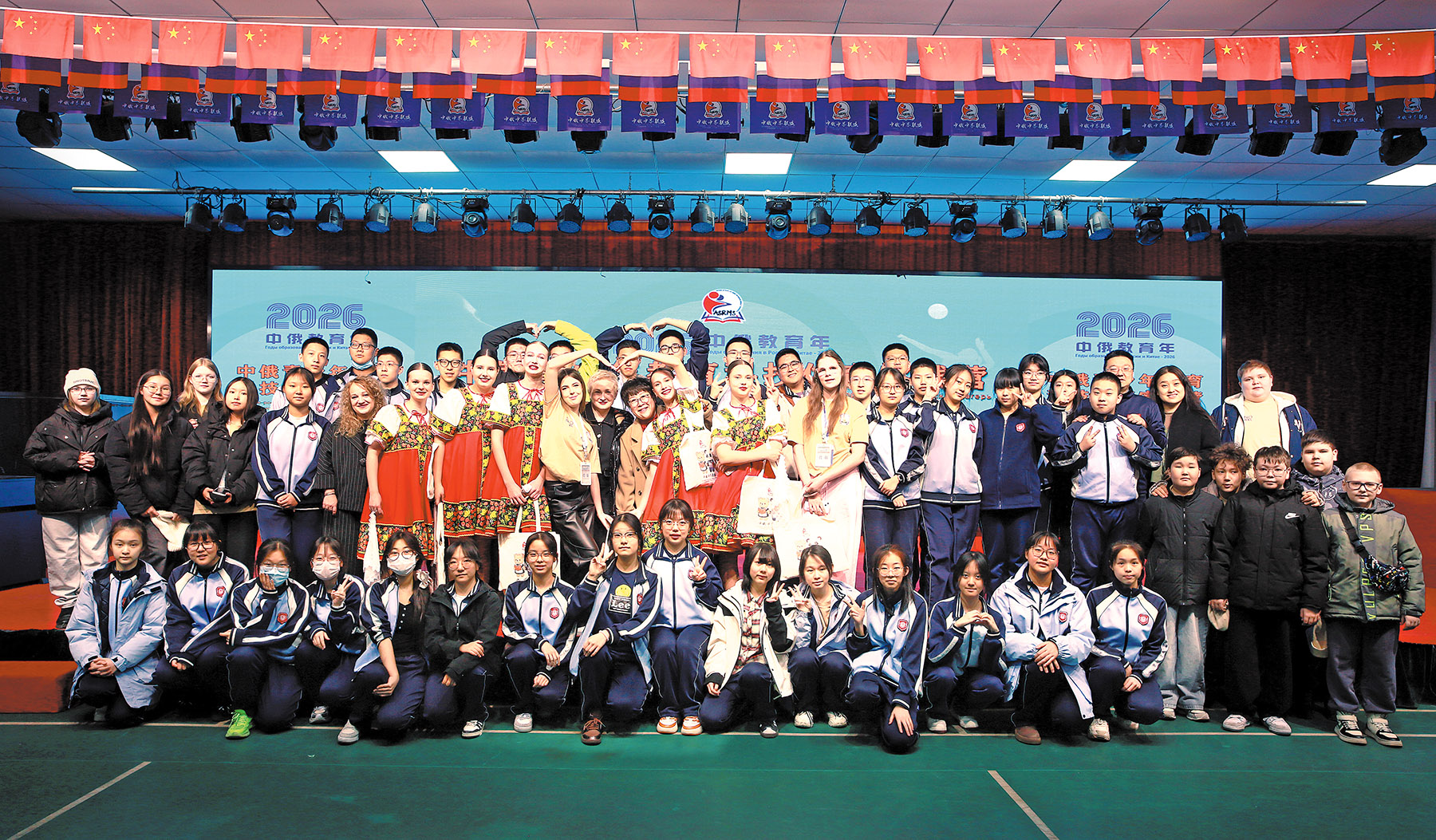
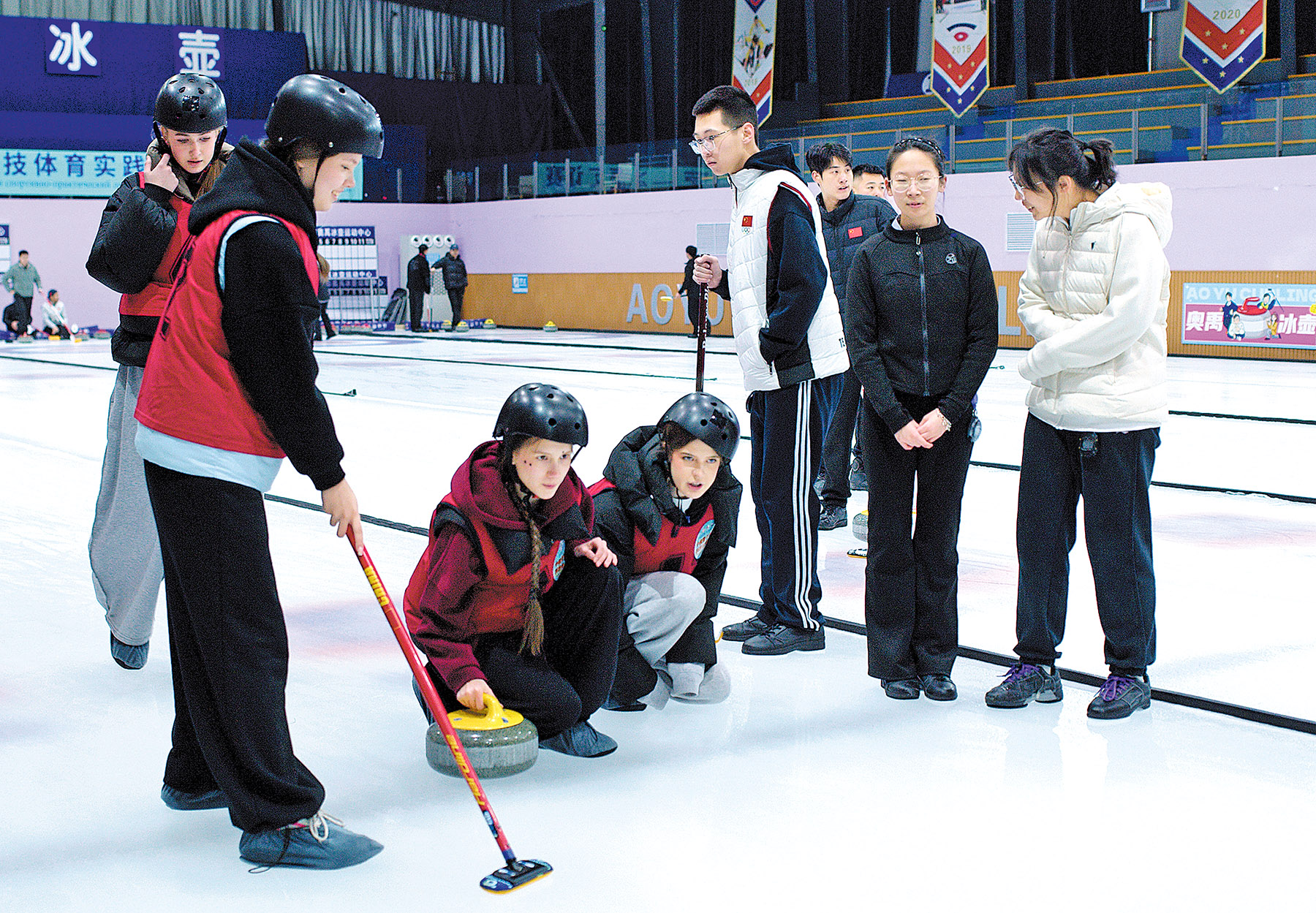
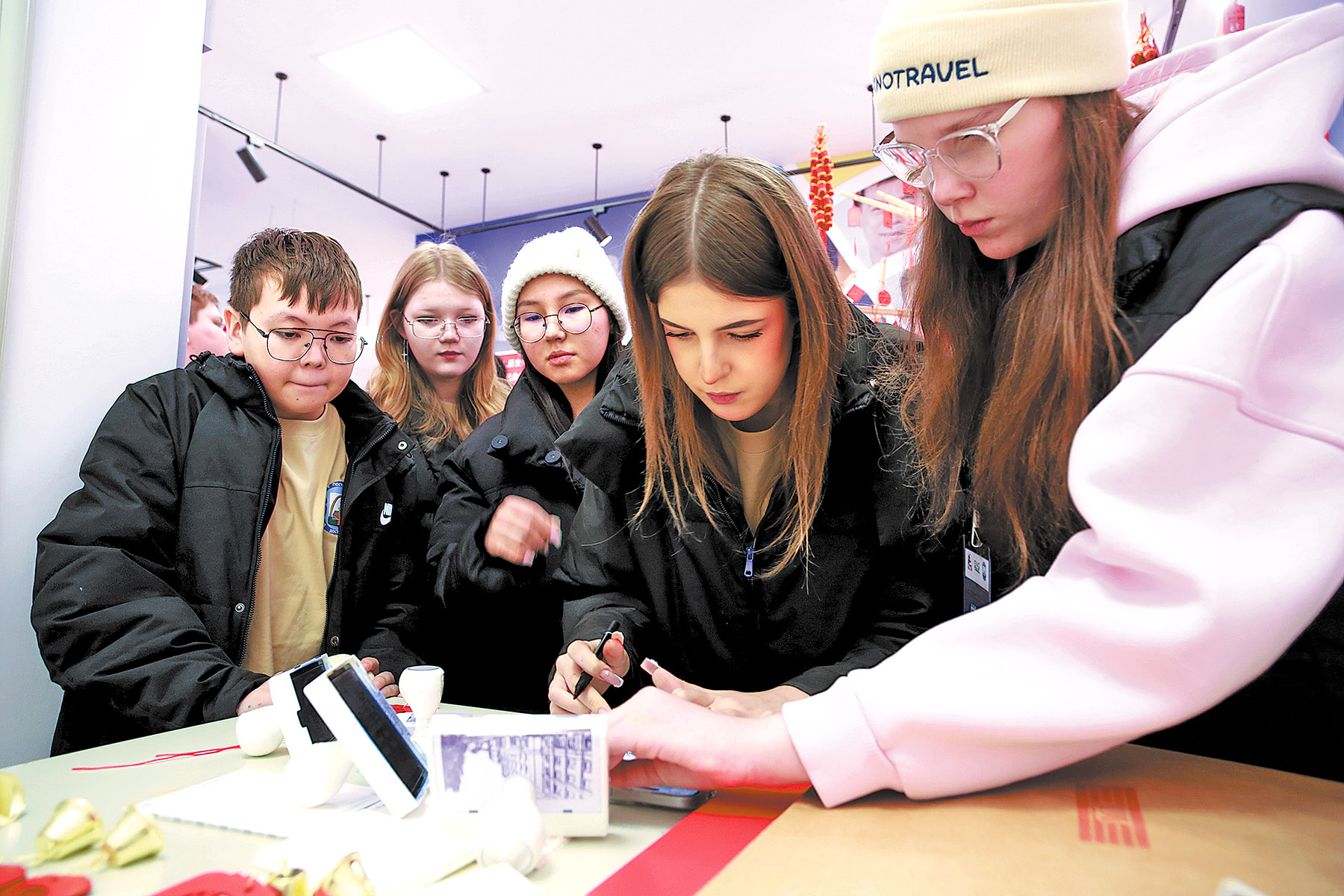
Wu cites the example of a camp in Harbin last month that hosted students from Lensk No 3 School in the Sakha (Yakutia) Republic of Russia. The shared activities with Chinese students focused on education, technology and sports.
In addition to 3D printing and curling matches, the students were given the task of crafting xiangnang, decorative sachets traditionally filled with scented herbs.
The Chinese students, familiar with making the colorful sachets, patiently worked with their Russian counterparts, explaining the cultural symbolism in embroidered dragons and phoenixes that were being used, as well as the traditional herbal fillings.
ALSO READ: China, Russia to further extend landmark friendship treaty
The awkwardness the Russians first displayed gradually dissolved, and they began weaving symbols of Harbin, such as snowflakes and ice, into their own designs. When the students finally exchanged their handmade crafts, the gesture carried a weight beyond the herbs inside.
"The sachets were no longer just ordinary pouches, but became a bond," Wu said. "You could feel this cross-border goodwill quietly flowing through hearts."
Khripunov, director of the Confucius Institute at Novosibirsk State Technical University, said he sees this generation as the future stewards of China-Russia ties.
"We are planting the seeds, and these students will inherit the responsibility of sustaining our scientific, educational and cultural exchanges. They are the ones who will forge a deeper, more genuine trust between our peoples."
Zhang Xiaomin, Zhou Huiying and Pang Yingyuan contributed to this story.
Contact the writers at wanghaoran@chinadaily.com.cn
