

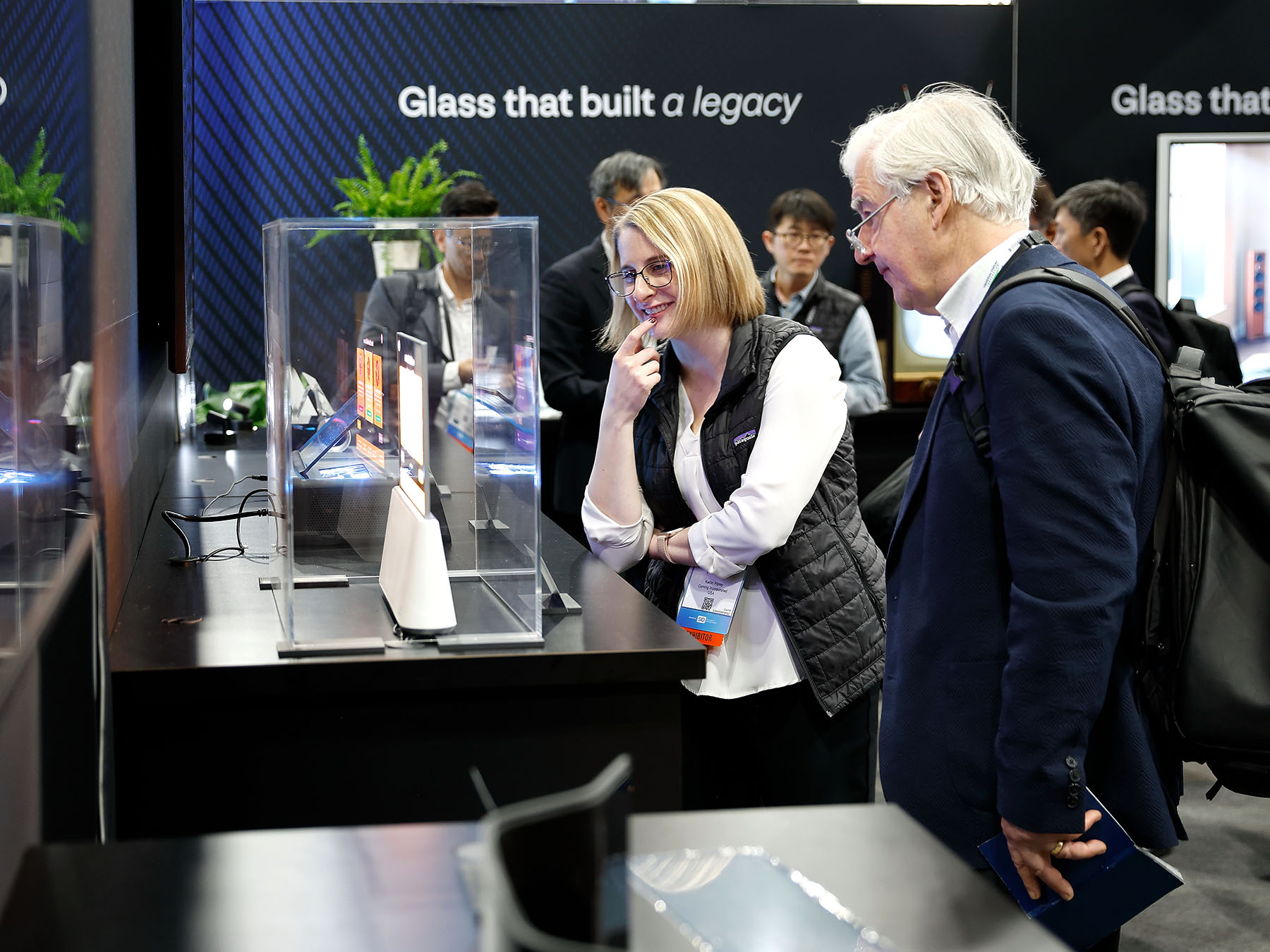
Major Chinese brands showcased a broad range of new products and next-generation applications at Display Week 2026 hosted by the Society for Information Display in Los Angeles, highlighting continued investment in innovation, research and development, and global industrial cooperation amid evolving global trade conditions.
The event, taking place from Sunday to Friday, featured more than 200 exhibitors and a record-setting 675 technical papers and sessions.
Chinese display manufacturer BOE made its 12th consecutive appearance at the event, presenting more than 30 new technologies and products, including several global and industry-first launches.
READ MORE: Chinese firms showcase tech vitality, innovation at 2026 CES
In an interview with China Daily, Si Da, BOE's vice-president and chief brand officer, said that research and development remains central to the company's long-term strategy and competitiveness.
"Geopolitical factors are something we must consider, but before considering geopolitics, we must first focus on our own technological capabilities and innovation capacity, because that is the core competitiveness behind BOE's success," Si said.
BOE invests approximately 7 percent of its annual revenue in research and development, with spending hitting nearly 14 billion yuan ($2.06 billion) in 2025.
The company also emphasized an open innovation strategy involving many players.
"We believe technological development requires coordinated collaboration across industry, academia, research institutions and application partners," Si said, adding that it also demonstrates the openness of Chinese technology companies.
Global partners also highlighted cooperation with the Chinese display maker. Yulia Kern of Dawar Technologies said the company values rapid communication and collaboration on customized applications.
TCL CSOT, a subsidiary of TCL Technology, introduced its APEX Pixel framework, which the company said is designed to unify pixel-level innovation across LCD, OLED and other display technologies.
Industry representatives attending the exhibition pointed to growing applications for advanced display technologies across entertainment, transportation and agriculture.
Bram Desmet, chief executive officer of Flanders Scientific, which supplies professional displays for filmmaking and broadcasting applications, said customers in the industry require high-performance monitors with strong color accuracy.
"It's a very niche market, very small but very demanding customers. Customers expect almost perfect performance," Desmet said.
He said he was particularly interested in tandem OLED technology, which aims to provide brighter, longer-lasting, and more efficient screens.
"It's very promising," he said. "I'm particularly excited about the tandem OLED products displayed here."
Wider applications
Advanced display technologies are also expanding into agricultural equipment and industrial vehicles.
Fred Haddad, technical product manager at CNH Industrial, said the company is exploring the use of OLED heads-up displays for agricultural machinery.
According to Haddad, technologies such as high-brightness displays and windshield-integrated systems could help improve efficiency in farming operations by assisting with seeding, watering, spraying and crop monitoring.
The exhibition also reflected ongoing concerns surrounding tariffs and supply chain adjustments.
ALSO READ: TV makers putting on big show abroad
Tianma, another Chinese display manufacturer, presented rugged displays designed to survive aviation and marine environments, including products capable of operating under direct sunlight and extreme temperatures.
Dale Maunu, director of marketing at Tianma America, said tariffs continue to affect customers and supply chain decisions.
"The tariffs definitely affect customers," Maunu said. "For customers that we ship to directly from our warehouse in Southern California, every invoice just has one more line for tariffs. Customers always pay the tariffs. It dramatically affects the supply chain."
According to Maunu, some assembly operations have gradually shifted to countries such as Vietnam and Thailand as companies seek to manage tariff-related costs and maintain competitiveness.
Contact the writers at renali@chinadailyusa.com
