

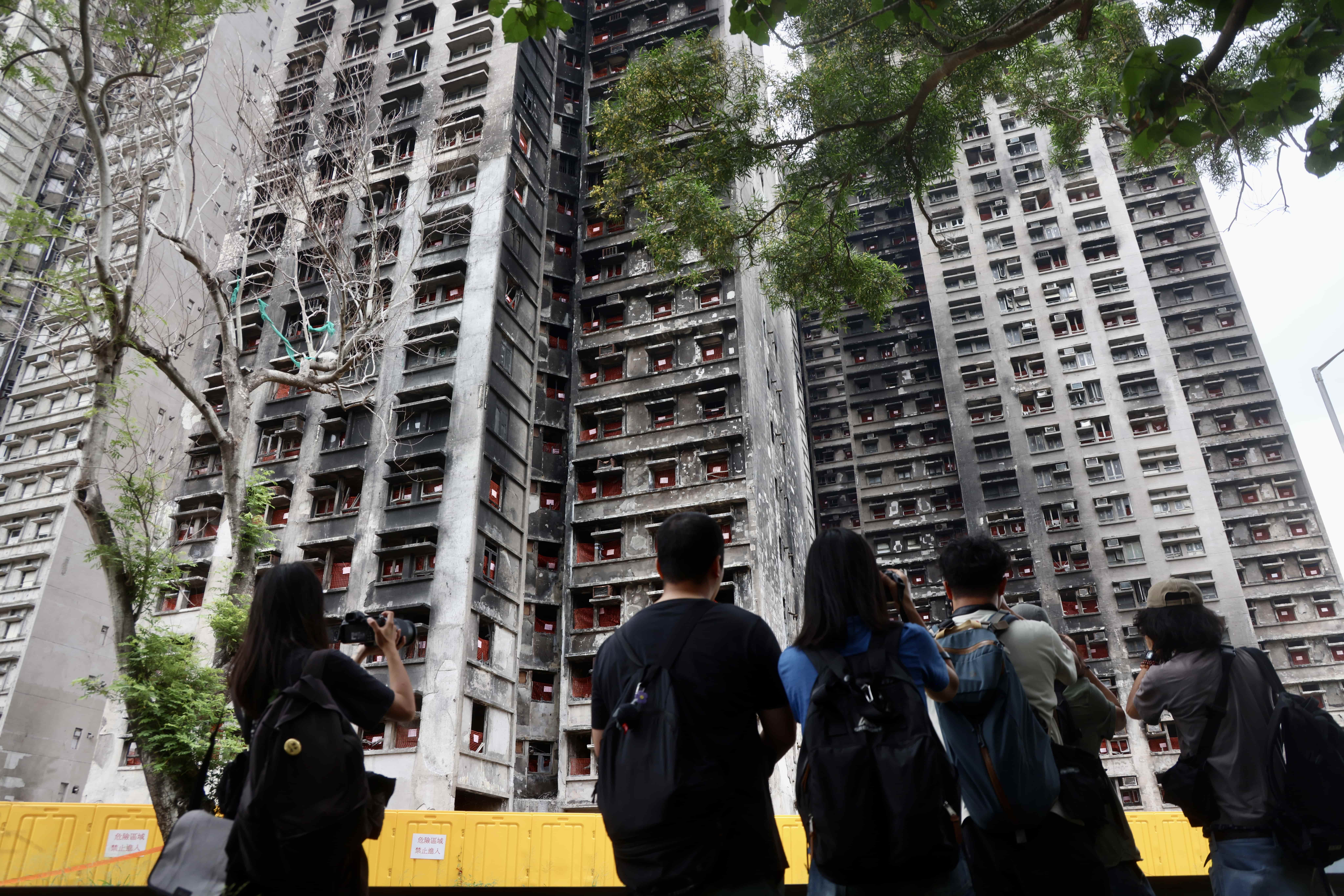
A senior fire service commander on the front-line of the Tai Po fire rescue operation on Thursday defended the decision to prioritize fire suppression over evacuation, saying that the strategy reflected the on-site realities of the disaster.
Derek Armstrong Chan, deputy director (operations) of the Fire Services Department, also said that a malfunctioning alarm system posed major obstacles to an effective evacuation. He is the highest-ranking fire officer to appear before the independent inquiry into the Wang Fuk Court fire, now in its 18th session. The November blaze claimed 168 lives.
SPECIAL PAGE: Tai Po fire inquiry hearings
The issue of evacuation has been a major focus of his testimony, as Victor Dawes, lead counsel for the independent committee, suggested that alerting residents to the fire should have been the most urgent need.
Chan said that during the incident, the FSD decided to concentrate resources on suppressing the fire, while police forces assisted with evacuations.
He said this approach — rather than launching a large-scale evacuation immediately — was intended to clear a safe passage for residents to escape the scene of the fire. He added that burning scaffolding and debris were falling from the buildings as residents attempted to flee.
ALSO READ: Wang Fuk Court: Second phase of re-entry
Alarm failures
Chan said that front-line units had tried to activate fire alarms in Wang Kin House, Wang Sun House and Wang Tao House, but they did not sound, and there was no alternative way to raise an alarm.
Although fire engines used sirens, Chan said they could not sound continuously, as that would interfere with communications.
He also addressed why the FSD did not deploy the government’s Emergency Alert System (EAS), which disseminates time-critical public announcements via mobile networks. Chan said that the situation on Nov 26 required “localized one-on-one communication with specific residents in the affected buildings, rather than a broadcast to the general public”.
He noted that public awareness of EAS fire warnings remains limited, and there was concern that a mass alert could have caused panic and worsened the situation.
If the EAS is to be used in future incidents, more public education about how to respond would be necessary, Chan said.
Chan, who joined the FSD in 1998 and has served as deputy director since 2023, also highlighted the unprecedented scale of the disaster. He said he had never encountered a fire that spread so rapidly between buildings. Seven of the estate’s eight towers were quickly engulfed.
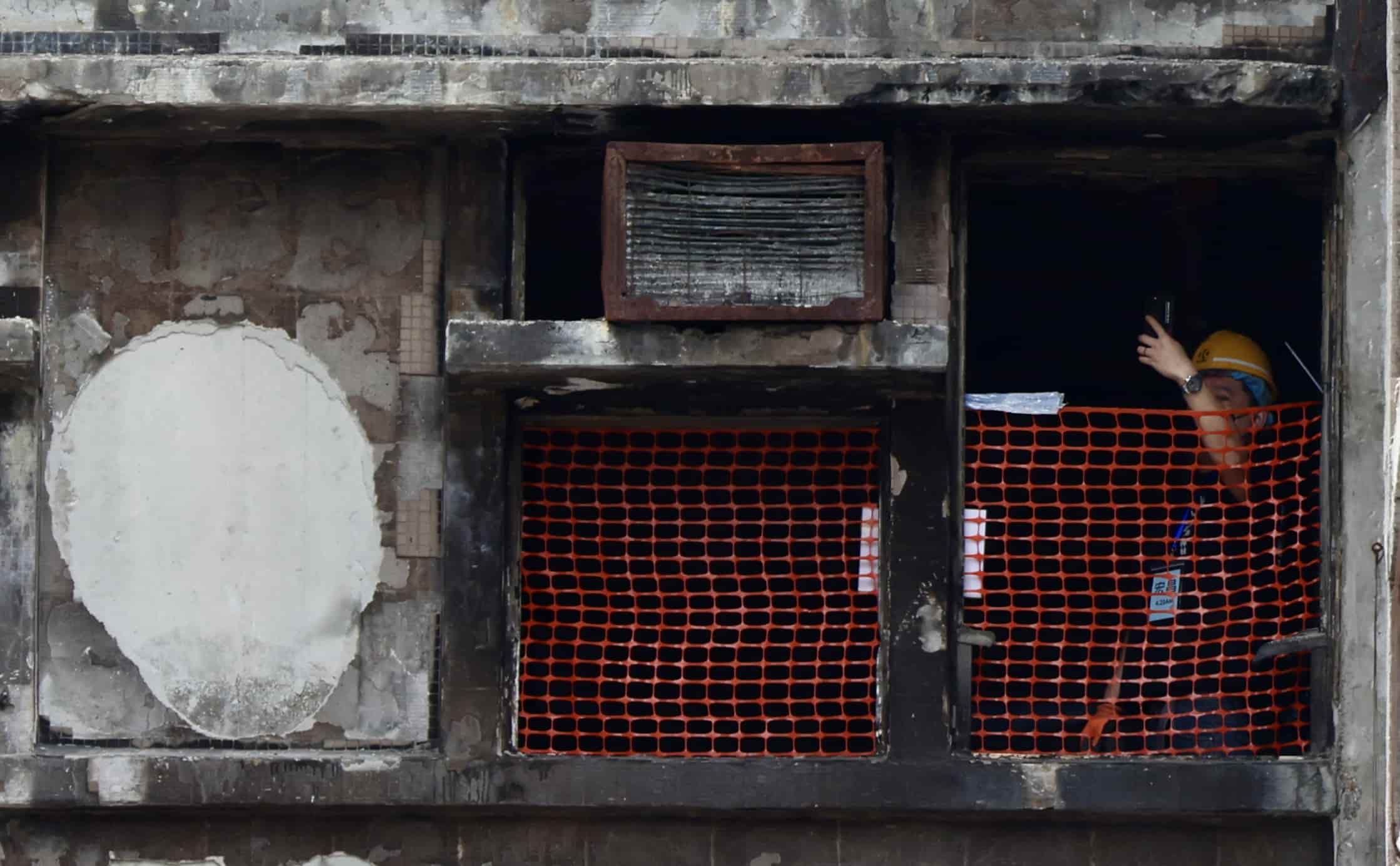
The fire broke out at 2:51 pm and was upgraded to a No 5 alarm — the second-highest alert on Hong Kong’s six-tier scale — at 6:22 pm, after remaining at No 4 for nearly three hours. In response to criticism that the escalation was too slow, Chan said that before the alarm was formally increased, resources deployed had already exceeded the requirements for a No 5 alarm.
He described the operation as one of the largest fire service mobilizations he had ever seen.
Chan added that the highest “disaster” level applies to multiple fires across the city that deplete all available resources, possibly requiring assistance from the People’s Liberation Army Hong Kong Garrison, but this was not the case in Tai Po.
RELATED ARTICLES:
- Official admits lack of clarity in handling Tai Po fire-safety complaints
- Govt to sum up Wang Fuk Court owners’ buyback choices by Aug
- Tai Po fire hearing identifies areas for improvement in safety, regulations
- Tai Po fire inquiry learns Owners' Corporation 'ill-equipped' for large projects
- Wang Fuk Court residents return to retrieve belongings
- Owners' Corp, contract violations among reasons for Tai Po blaze
Tung Wing-kei, divisional officer overseeing breathing apparatus, testified about the equipment used by firefighter Ho Wai-ho, who died during the rescue.
Post-fire inspections indicated that Ho may have entered the fire scene before an entry control point was set up. Such checkpoints provide safety checks for firefighters, confirming that their devices are activated and properly marked.
Tung said Ho’s breathing apparatus contained damaged metal components — a rare occurrence likely caused by a massive impact.
He said the FSD could not confirm whether Ho had attempted to escape onto the scaffolding through a window, but added that, given Ho’s height, he would not have been able to pass through the narrow, broken window without removing his gear.
Contact the writer at amberwu@chinadailyhk.com
