

Breakthrough high-tech products to redefine daily consumption experience
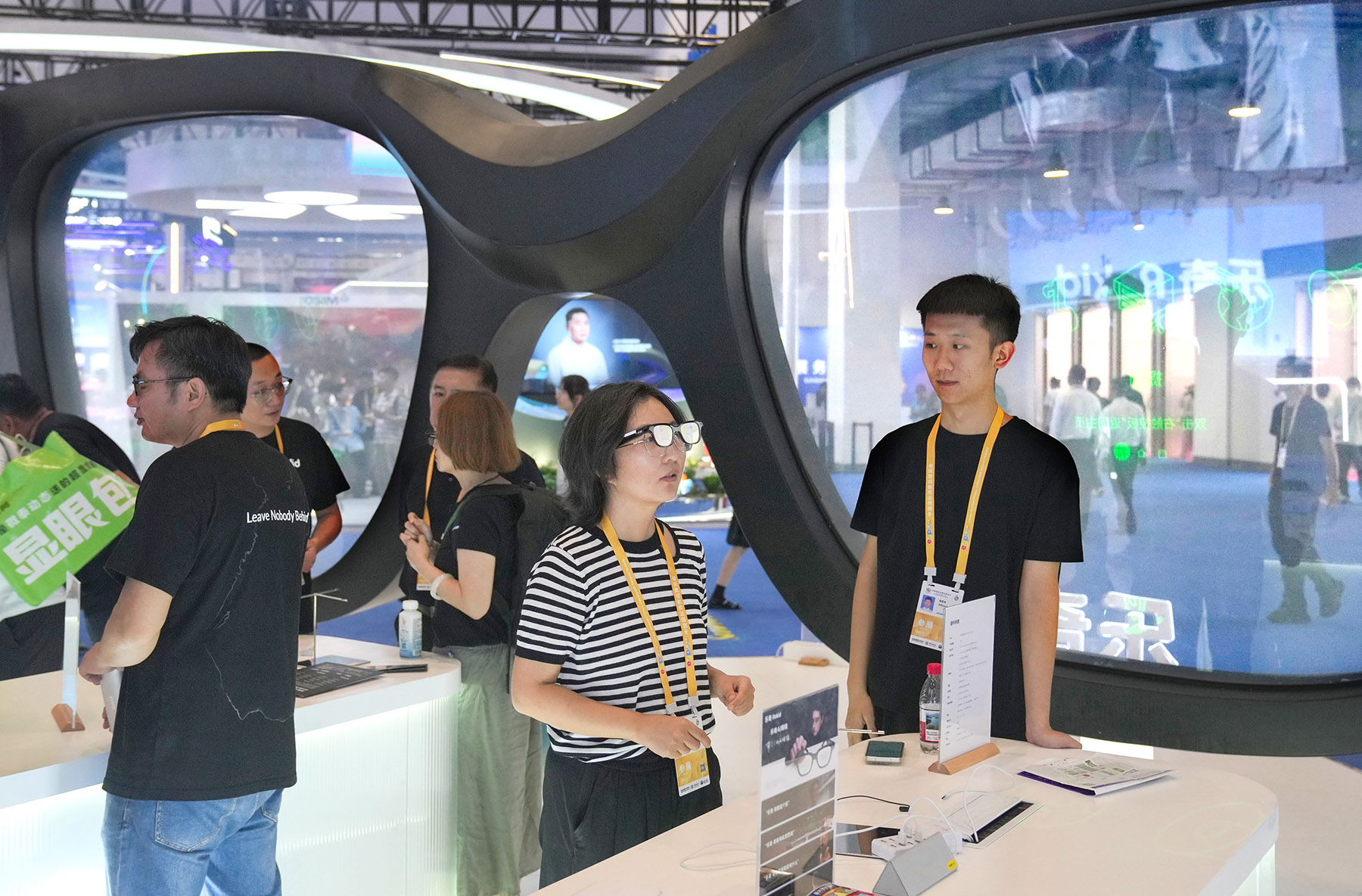
A Ukrainian visitor at the sixth China International Consumer Products Expo in Haikou, Hainan province, last week slipped on a pair of ordinary-looking glasses. Seconds later, he broke into a smile and exclaimed, "Nice!"
The lightweight device — weighing just 49 grams — had just translated a sign for him, taken a photo and displayed a navigation route. It was a small moment, but one that captured the spirit of this year's expo: technology is quietly redefining everyday life, and the world is taking notice.
The glasses, developed by Chinese brand Rokid, support photography, real-time navigation, language translation and mobile payments — all without ever requiring the user to pull out a smartphone.
READ MORE: 6th China Intl Consumer Products Expo concludes in South China's Hainan
Ye Ziling, the brand's public relations manager, said the device has attracted strong interest from international visitors. "Many foreign attendees have been drawn to it," Ye said, adding that the glasses are reshaping daily routines. For cyclists, for example, they offer hands-free navigation and the ability to capture scenic moments along the way, making rides both safer and more enjoyable. She said the product has already reached consumers in more than 100 countries and regions.
Just a few booths away, a different kind of smart product drew a crowd of Chinese consumers. Singapore-based OSIM unveiled a wellness chair that performs a facial scan in dozens of seconds to measure heart and breathing rates, stress levels and other health indicators. Based on such data, the chair designs a personalized massage routine — targeting both physical fatigue and mental tension.
The warm reception for these AI-powered products — one from China and one from Singapore — offers a vivid example of the "tech fever" defining this year's expo.
From intelligent home appliances to smart wellness solutions, the exhibition halls were filled with cutting-edge innovations that stretch the imagination of what a cool future life could be. They also highlight the vast opportunities China's consumer market presents to companies from around the world.
Analysts say that whether it is "shopping in China" or "exporting to China", what lies underneath is the country's new drivers of economic growth — and the fresh business prospects those drivers create for the entire world.
As consumption patterns evolve with new business models and supportive policies, the Hainan expo has become a key window for both domestic and foreign companies to track shifts in Chinese consumer behavior and explore fresh opportunities, said analysts and business executives.
The six-day event, which concluded on Saturday, is the first major international expo held in Hainan since the free trade port launched its island-wide special customs operations in December. Those operations offer companies a closer look at the policy environment and new investment prospects.
Chen Lifen, a researcher at the Development Research Center of the State Council, said China's consumer market is not merely expanding. It is undergoing an upgrade.
"Demand for high-quality, personalized and internationally sourced products is growing rapidly," Chen said. "Opportunities for both Chinese and global brands are expanding alongside it."
Global consultancy Accenture said in a report that "What makes China's 1.4 billion consumers so compelling is the powerful convergence of economic, demographic, technological and cultural forces reshaping their behaviors."
Accenture said its 2025 study revealed that AI has already transformed the Chinese consumer landscape and will have profound implications in the years to come.
Contrary to conventional wisdom, Chinese consumers are not becoming more acquisitive as their purchasing power grows. Instead, they are boldly redefining what a good life means and can look like, Accenture added.
The report echoes the words of Deserine Lim, who oversees headquarters management and East China operations at OSIM. Lim said Chinese consumers love new products driven by AI.
The senior executive said the expo provides a high-quality offline space for interaction.
"It allows brands to forge deeper connections with professional buyers and affluent consumers," Lim said, adding that Hainan is no longer just a free trade port in a geographical sense — it is becoming a global bellwether for consumption trends.
Meanwhile, more Chinese companies are using the expo to showcase their latest and most advanced technologies. One striking example is the flying car — something that once existed only on movie screens — now made tangible and testable at the expo.
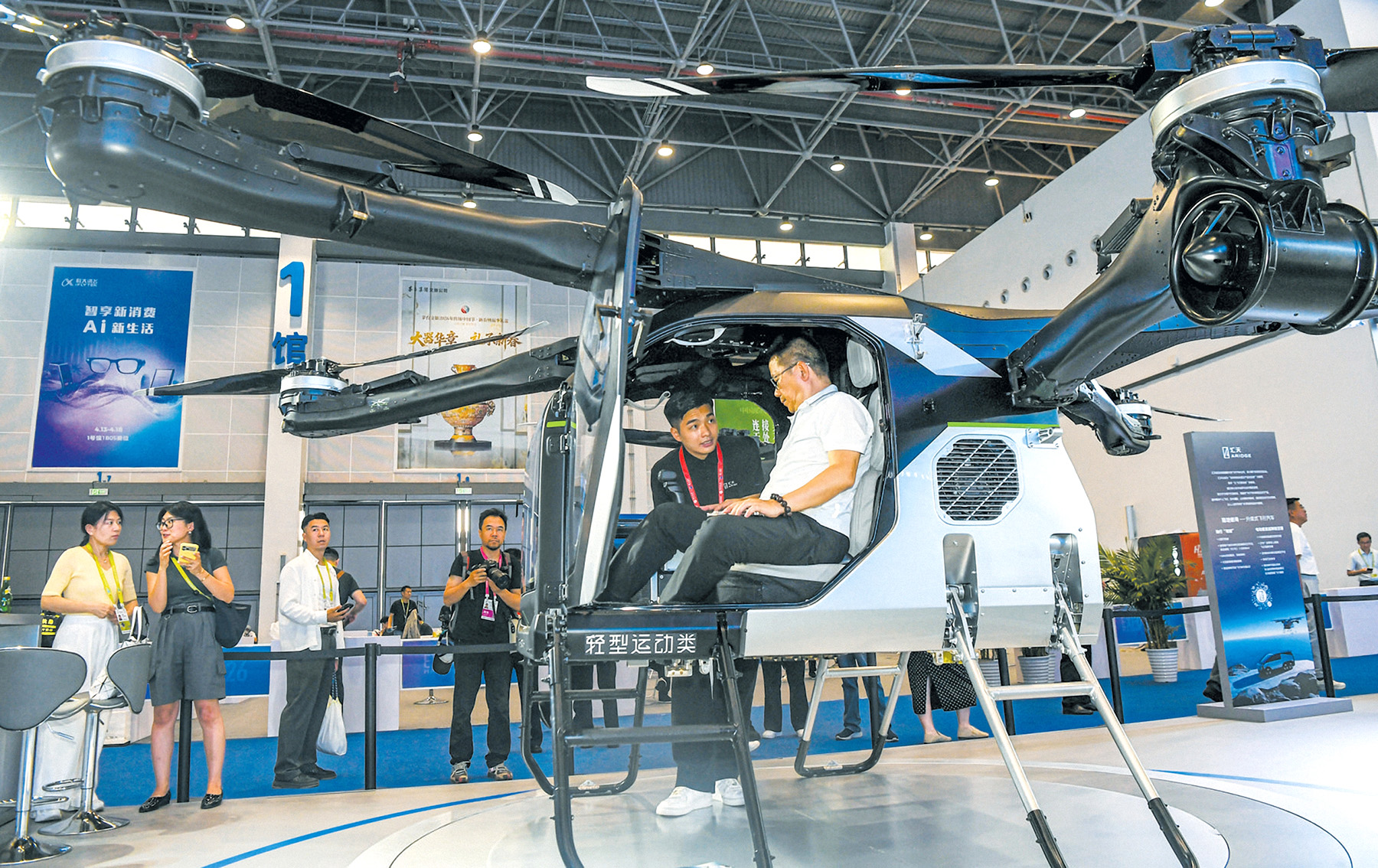
Aero HT, the aerospace arm of a Chinese new energy vehicle startup company XPeng, displayed its "Land Aircraft Carrier", the world's first split-body flying car set to enter mass production. The vehicle drew large crowds eager to take photos and see it up close.
The land-air dual-mode vehicle can automatically separate or recombine its ground module and air module in less than five minutes, solving two major pain points of traditional aircraft: difficulty in ground mobility and lack of storage space. The ground module also serves as a transporter, storage unit and recharging station. It is suitable not only for daily commuting, but also for off-road adventures, low-altitude tourism and emergency rescue missions.
Li Rui, vice-president of HT Aero, explained that the flying car uses a world-first single-stick control system paired with an intelligent flight controller, greatly simplifying operations. With proper airspace approval and guidance from an instructor, an ordinary person can learn to fly it fairly quickly. "We want to make flying an accessible lifestyle experience," Li said.
In March, at the company's manufacturing base in Guangzhou, Guangdong province, five units of the "Land Aircraft Carrier" rolled off the assembly line on the same day and completed multi-vehicle test flights. That milestone marked the transition from research and development and validation to commercial production preparation. The factory is the world's first base to mass-produce flying cars using a modern assembly line. At full capacity, it can produce one flying vehicle every 30 minutes.
So far, the company has received more than 7,000 preorders, and market enthusiasm continues to rise. With China elevating the low-altitude economy to a nationally strategic emerging sector, Li expressed strong confidence in its future. He called on more innovators to join the field, enriching the low-altitude travel ecosystem with new products and ultimately bringing more convenient travel experiences to the public.
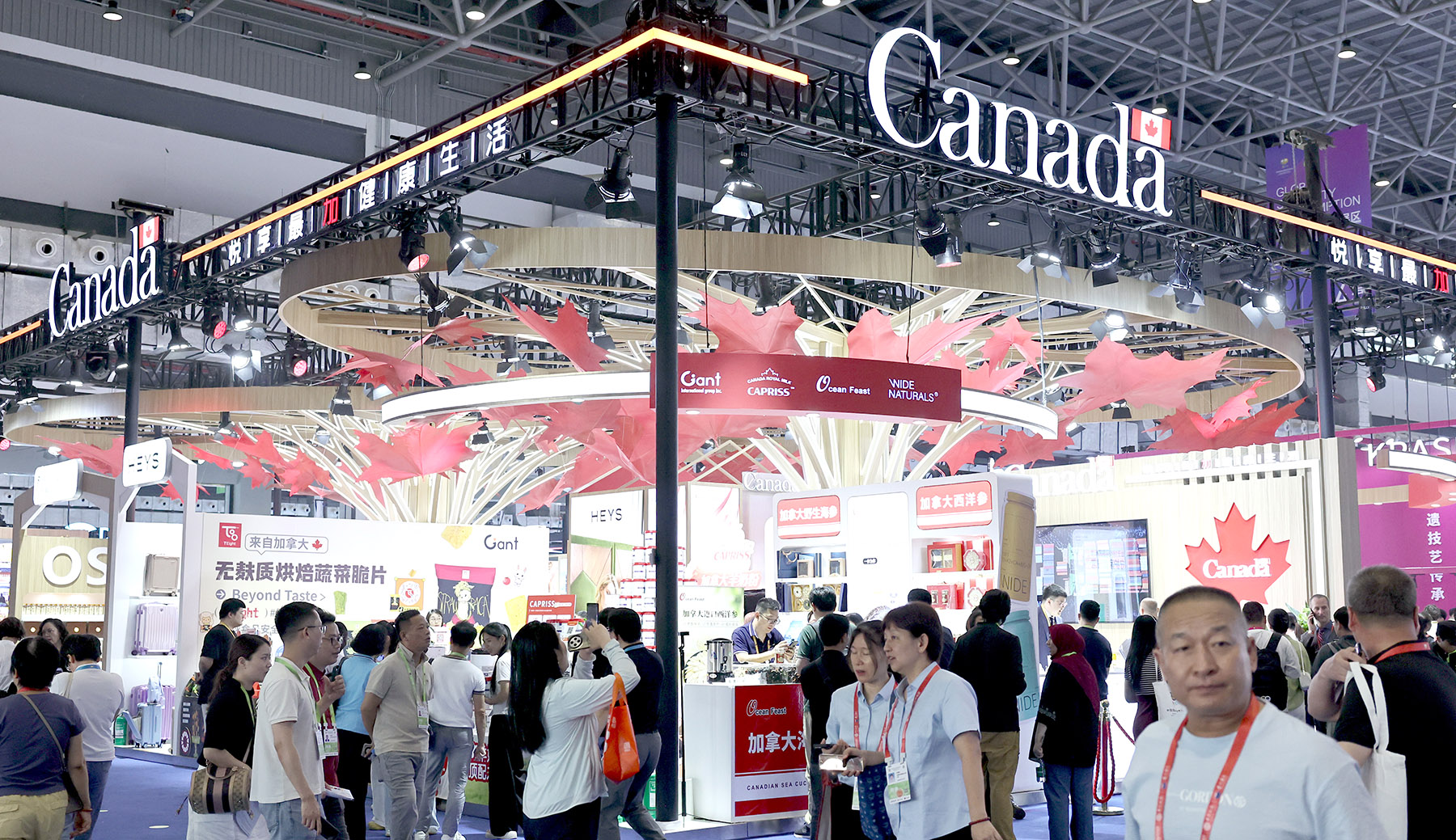
Canadian companies are also stepping up their efforts to tap into China's vast consumer market, using the expo as a launchpad for new products and deals as bilateral trade ties show signs of renewed momentum. Canada attended this year's expo as the guest country of honor, sending its largest delegation ever — about 40 companies spanning agricultural products, cosmetics, pet food, wellness products and more.
ALSO READ: Expo set to boost China biz
The expo has increasingly become a platform for foreign brands seeking market access to China — the world's second-largest consumer market and home to a rapidly expanding middle-income population.
At the opening of the Canadian pavilion, Canada's Minister of International Trade Maninder Sidhu said his country has much to offer the world — from clean technology to premium foods and world-class consumer products. Sidhu said Canada's participation reflected commitments under the China-Canada Economic and Trade Cooperation Roadmap signed earlier this year, signaling both sides' willingness to deepen economic engagement.
From AI-powered glasses and smart wellness chairs to a flying car ready for mass production, the Hainan expo has made one thing clear — the future of global consumption is being shaped not only by policy and trade talks, but also by the tangible, exciting products that are already winning over visitors from around the world, experts added.
Contact the writers at masi@chinadaily.com.cn
